Analytics & Stats
Enzo Fernández cleared to return — what Chelsea’s numbers say and the tactical questions that remain
Rosenior has cleared Enzo Fernández to return. Chelsea’s record without him reveals a complex trend.

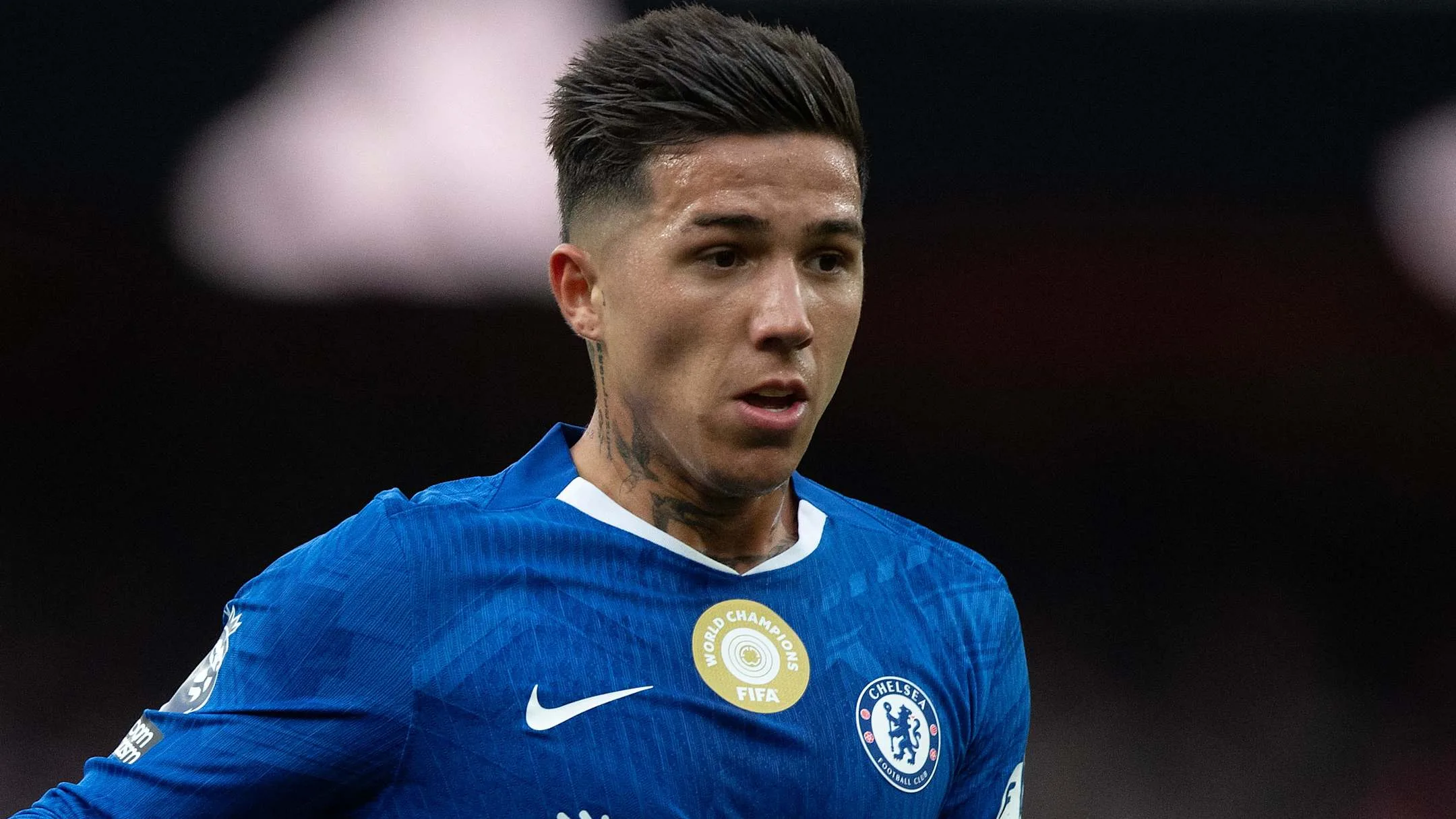
Liam Rosenior has confirmed Enzo Fernández has been cleared to rejoin the group and is back in contention for Saturday’s meeting with Manchester United. Rosenior added: “He has spoken with me, the leadership group and all of the players, and we look forward to welcoming him back.”
Fernández had been a near-permanent figure in Chelsea’s team since his January 2023 move from Benfica. He made 161 appearances for the club by the time of his internal suspension, 112 of them in the Premier League from a possible 126. Those outings produced 44 wins, 36 losses and 32 draws. Durability has been a clear strength, with only a handful of small injuries and one significant absence caused by a groin problem that ended his 2023–24 season early.
Only 14 Premier League matches have been played without Fernández. Sunday’s defeat to City was the third loss without the Argentine, with 10 wins and a solitary draw in the other games. On raw percentages the contrast is stark: with Fernández Chelsea recorded a 39.2% win rate across those 112 league appearances, while the 14 games without him produced a 71.4% win rate.
Those numbers alone, however, do not settle the debate. Under former boss Maresca Fernández developed into a box-crashing threat and left his spell under the Italian having scored 15 goals and supplied 19 assists in all competitions. He has maintained a similar output under Rosenior: in the 18 matches before his suspension he had five goals and four assists, a higher goal rate and a marginally lower assist return compared with his 79 outings under Maresca. His passing from deep and other technical qualities are regularly noted even where they do not always show in the basic stats.
Rosenior has experimented with Fernández’s position. He has been used deeper to set tempo, pushed forward to exploit scoring instincts, and even deployed on the left in the early stages of Rosenior’s tenure. That versatility is valuable but has also left tactical questions about how best to use him. For now, the managerial dilemma remains as Fernández returns to contention.





Analytics & Stats
Premier League Matchday 5: every side judged before the international break
A full Premier League Matchday 5 review before the season’s first international break arrived.

The first international pause of the season arrived with a final round that felt, in every sense, like a term-end review. Before attention turns away from the Premier League for three weeks, there was one more set of performances to assess.
Arsenal were out of the contest almost immediately. After just 18 seconds, they were forced back into their own corner from the opening throw-in and never recovered. The 3-0 defeat was made to look even heavier by Brighton’s two fine long-range efforts, but the visitors were second best throughout. It was the sort of loss that invites awkward questions.
Nottingham Forest could not settle the nerves at the City Ground. Oliver Glasner admitted that the “entire City Ground was nervous” and his side did little to calm the atmosphere in a stubborn game against Coventry. The manager was left “frustrated” and “disappointed,” emotions echoed in the stands once the tension took hold.
Tottenham continue to frustrate, only in a different way. Roberto De Zerbi sounded exhausted by another 3-2 defeat, insisting, “These players, they don’t need to play better,” before adding that what Spurs require is more “blood” and “fight.”
Chelsea’s defeat at Brentford followed a more gradual collapse. There was little obviously wrong in the opening hour, and Xabi Alonso had wanted his side to be more “boring,” but the match quickly slipped away. Ipswich, meanwhile, stayed alive despite conceding early and finishing with 10 men at Everton, where Gary O’Neil said, “The only disappointment is the result.”
Leeds had a clear chance through Dominic Calvert-Lewin, but the fresh England call-up could not convert. At the other end, James Trafford was busier than Walter Benítez in a game that ended in another encouraging clean sheet for Pierre Sage’s side.
Manchester United’s trip to Fulham brought fierce criticism, with Gary Neville saying, “I’ve watched Manchester United since the age of 5,” and that the second half’s opening 15 minutes were “the worst 15 minutes I’ve ever seen.” Fulham settled for a “frustrating” 1-1 draw, while Calvin Bassey called it “a game of luck, we both had it on our side.”
Elsewhere, Everton’s win was functional rather than elegant, Aston Villa needed a lift and got one, Bournemouth were left empty-handed, Sunderland earned admiration despite defeat at the Etihad, Newcastle held on after a nervy finish, Liverpool were second best for long spells, and Manchester City’s chaotic game left Enzo Maresca saying, “Too many goals,” before admitting, “I’m always concerned, always trying to see what we can do better.” Coventry’s long wait for a Premier League win finally ended, and Frank Lampard had every reason to enjoy it.
Analytics & Stats
What Chelsea Can Take From Xabi Alonso’s Leverkusen Start
Chelsea’s defensive issues under Alonso echo the early Leverkusen struggles that later turned around.

Chelsea’s opening spell under Xabi Alonso has already prompted scrutiny, largely because the side have made games far more open than they would like. After six matches, they have conceded 12 goals, a tally better only than Crystal Palace, Coventry City and Ipswich Town in the Premier League. The figures point to a team producing excitement, but also one that is leaving too much behind the ball.
That is not unfamiliar territory for Alonso. When he arrived at Bayer Leverkusen on Oct. 5, 2022, the club were second-bottom in the Bundesliga and had made their worst start to a season in more than 40 years. His first game brought an immediate lift, a 4-0 win over Schalke, but the weeks that followed were far less comfortable. Defeats to Porto, Eintracht Frankfurt and RB Leipzig, plus draws with Wolfsburg and Atlético Madrid, meant six games had produced 14 goals conceded.
The criticism was blunt at the time. Simon Rolfes said, “We’re conceding too many goals,” while Alonso’s response was equally direct: “Too many,” was the manager’s blunt admission.
He did not abandon his ideas. Alonso shifted Leverkusen from a four-man defence to a 3-4-2-1, kept faith with the structure and argued that understanding would come with time. “We need to better control when and how we reach the ball,” he said, stressing the need for smarter risks and clearer positioning between teammates.
That patience eventually paid off. His seventh match ended in a 5-0 win over Union Berlin, the start of a five-game winning run that reset the mood and laid the groundwork for the Bundesliga title 18 months later.
Chelsea’s own numbers show a similar balance of threat and fragility. They have scored 18 goals in Alonso’s first six games, compared with Leverkusen’s nine in the same span. Yet the concern remains the same: a side that attacks well, but has not looked solid enough.
After the 2-2 draw with Hull City, Alonso again pointed to the need to cut out a “soft” streak. He kept the message measured when speaking to club media: “It’s early days for us,” he said. “It’s one month together and in one month, we know the idea, the concepts, the mentality, but it’s too early to know it’s already built.
“It will take longer, but we need to learn from everything and from this [against Hull] as well.
“For sure, I think it will come. At the moment, we are not having that feeling we are solid enough. With work and with games, I think it will get better.
“Overall, I think we are attacking better than we are defending. In every aspect, so we know that it’s a big topic and a theme for us.”
Analytics & Stats
The 10 Most Valuable Squads in World Football After the 2026 Summer Window
Squad values after the 2026 summer window show Real Madrid top, with City, PSG and Arsenal close behind.

The summer transfer window has closed, and the latest squad valuations offer a clear picture of which clubs have built the most expensive collections of talent in world football.
Using Transfermarkt’s figures, the 10 most valuable squads now reflect a market shaped by major spending across Europe, with the Premier League again heavily represented among the elite.
Real Madrid sit top of the list with a squad valued at $1.7 billion. A huge share of that figure comes from Kylian Mbappé, Vinícius Júnior and Jude Bellingham, whose combined value is put at $581 million. Their summer business, including Yan Diomande and Marc Cucurella, was followed by further strength added through Ibrahima Konaté, Denzel Dumfries and Bernardo Silva.
Manchester City are close behind on $1.66 billion. Their total has risen after moves for Enzo Fernández, Elliot Anderson and Ayyoub Bouaddi, with the trio carrying a combined valuation of $337 million, less than what City paid to bring them in.
Paris Saint-Germain are third at $1.58 billion, with continental success continuing to lift the value of their squad. João Neves, Vitinha, Ousmane Dembélé, Désiré Doué and Khvicha Kvaratskhelia are each valued at $116 million or more.
Arsenal are fourth on $1.55 billion, ahead of Barcelona on $1.47 billion. Lamine Yamal stands out at Barcelona, where he is worth $255.6 million on his own, alongside Raphinha, Pedri and Pau Cubarsí.
Chelsea are sixth at $1.26 billion, with Bayern Munich seventh on $1.21 billion and Michael Olise valued at $197.5 million. Liverpool follow in eighth on $1.2 billion after the late addition of Bradley Barcola.
Manchester United are ninth at $1.08 billion after their midfield overhaul, while Tottenham Hotspur complete the top 10 on $941.6 million after a particularly active summer in the market.