Arsenal
FPL Gameweek 35: Priority Picks and Value Options
GW35 FPL essentials: Raya, Darlow, Bruno, Haaland and budget defenders to boost your squad this wk.

With four gameweeks left, Gameweek 35 demands careful moves. Managers still chasing mini-league gains should prioritise reliable returns and inexpensive enablers that free funds for captains in the final stretch.
Goalkeepers: David Raya (£6.0m) remains the standout option among keepers after a 10-point haul last weekend and offers value alongside Arsenal’s defence. Fulham have blanked in four of their last six league games, making a home clean sheet plausible. At the other end of the budget spectrum, Karl Darlow (£3.9m) has accrued 24 points across his last five games and faces relegated Burnley at home, serving as a low-cost enabler. For managers planning ahead to double Gameweek 36, Dean Henderson (£5.1m) is an alternative given Crystal Palace’s two fixtures next round, despite a tricky away match with Bournemouth this Sunday.
Defenders: Gabriel (£7.2m) is a must, while Nico O’Reilly (£5.1m) has become increasingly attractive for managers preparing for City’s double in the next round; he has returned 27 points from his past three fixtures and faces low-scoring Everton away on Monday. Crystal Palace options include Jaydee Canvot (£4.5m) and Chris Richards (£4.4m) as budget routes into their backline, and Daniel Muñoz (£5.8m) offers more attacking upside after scoring in the defeat at Liverpool. Leeds defensive targets such as James Justin (£3.9m), Jayden Bogle (£4.4m) and Pascal Struijk (£4.3m) are also useful given a favourable fixture.
Midfielders: Bruno Fernandes (£10.4m) stands alone as the essential midfield pick; he is chasing the Premier League assist record for a single season and has delivered returns in each of his past seven matches, even ahead of Manchester United’s home game with Liverpool. Other options highlighted are Eberechi Eze (£7.2m), who made an impact after being brought off the bench in Europe, Rayan Cherki (£6.5m) with 23 points across his last three matches, Ismaïla Sarr (£6.3m) ahead of a double, Noah Okafor (£5.6m) despite a slight injury concern, and Enzo Fernández (£6.5m) under Calum McFarlane.
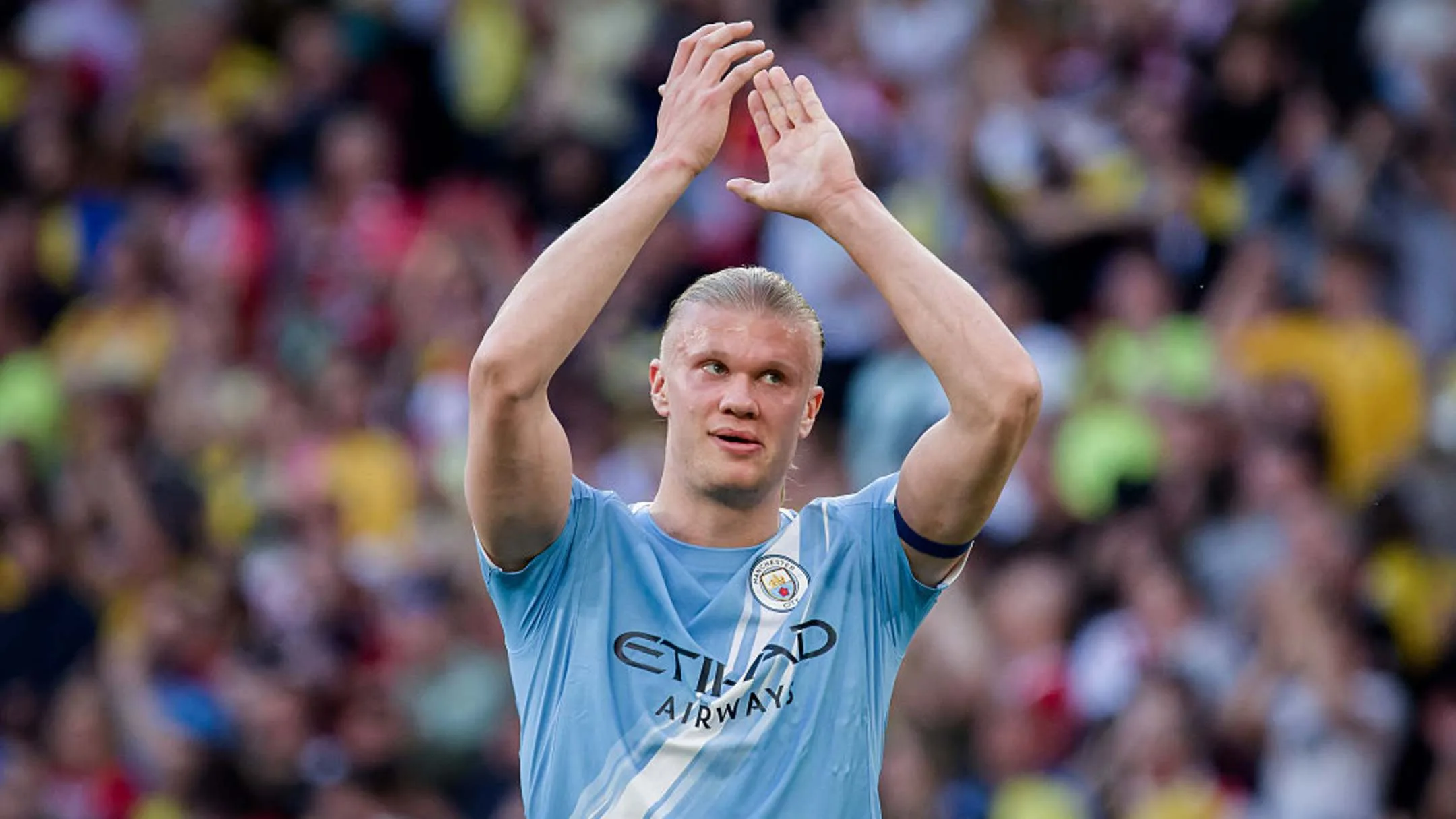
Forwards: Erling Haaland (£14.5m) is essential following recent goalscoring exploits. Support options include Dominic Calvert-Lewin (£5.7m), who could benefit from Burnley’s struggles after Scott Parker’s dismissal, and Jarrod Bowen (£7.8m), who has produced 24 points across his past two home games for West Ham ahead of a trip to Brentford.

Arsenal
Arteta considers Dowman loan with Nwaneri case still fresh in mind
Arteta is open to a Dowman loan, but only after weighing Arsenal’s needs and Nwaneri’s cautionary tale.

Mikel Arteta has not ruled out sending Max Dowman out on loan, but the Arsenal manager insists any decision will depend on finding the correct move for the 16-year-old midfielder.
So far, approaches for Dowman have been turned down, although Arteta suggested that stance could be reviewed in January. He said the club will continue to assess the teenager at regular intervals before deciding what serves his development best.
“We will evaluate every six months where we are, what is the best thing for him to do and from there make the right decisions,” Arteta reflected.
His reasoning is shaped by several moving parts. The manager pointed to Dowman’s needs, the situation inside the squad, the minutes available to him and the standard of his performances when he does play.
“It will depend on a lot of factors: what he needs, where the team is as well, the availability that we have in the squad, the amount of minutes that he’s playing, the quality he’s delivering when he’s got those minutes.
“We have to be open, but now the focus is to be here and impact the team.”
The discussion inevitably brings back memories of Ethan Nwaneri, whose progress followed a different and less straightforward path. Nwaneri broke through at the end of the 2022-23 season as the youngest player in Premier League history, before being sent back to the academy the next year.
He returned to the senior squad for 2024-25 and made 37 appearances in all competitions, helped by injuries elsewhere. But the following season saw his role reduced sharply, with only six Premier League outings in the first half of 2025-26.
That led to a January loan to Marseille at the request of then-manager Roberto De Zerbi, who left a few weeks later. Habib Beye took over and publicly questioned Nwaneri’s “everyday commitment,” while the midfielder finished the spell with only 412 minutes, fewer than he had already collected at Arsenal that season.
Arteta acknowledged the unpredictability of such moves when he said: “There have been many cases of that age that they’ve gone [on loan] and they’ve been successful, some others not,” adding, “Particularly, I think I was 17 when I went to Paris [Saint-Germain].”
Arsenal
Arteta urges Arsenal focus as club history beckons
Arteta has warned Arsenal not to lose focus as they target an eight-game winning start.

Mikel Arteta has challenged Arsenal to keep their feet on the ground as they close in on a piece of history. A win over Brighton & Hove Albion on Saturday would give the Gunners eight straight victories to begin a season for the first time since 1903, but the manager made clear that the milestone cannot become a distraction.
“We’ve got a really tough opponent tomorrow so we’re going to have to earn the right to win the game,” he warned. “But certainly that will be the mindset of the players and the team.”
Arteta was also asked whether he had expected Arsenal to open the campaign with seven consecutive wins. He said the signs were encouraging over the summer, even if he knew the challenge would be severe.
“Well, we know how complicated it is to win a football match at this level,” he confessed. “So to win seven, it tells the story.
“After the World Cup , especially, there were a lot of unknowns about how the players and the team were going to react. We didn’t have any time with them to work together. But I said from day one, I think the attitude and what I was seeing, I was really impressed with.
“Then you have to put it down to performances. We had a bit of luck as well, for sure, to win four matches. And we are here. And then we want to make another one for sure tomorrow.”
Arsenal’s best start to a season remains the eight-game run from 1903-04. In that era, Woolwich Arsenal were in the Second Division, and their sequence included emphatic wins over sides that finished in very different places in the table. Even so, the campaign also featured a 4-0 victory over Manchester United, with Arsenal ending the season with the division’s highest totals for goals scored and fewest conceded.
Arsenal
Zubimendi’s shifting role offers a possible path back into Arteta’s plans
Zubimendi’s route back may come at right back after a difficult start to Arsenal’s 2026/27 season.

Martín Zubimendi’s position in Arsenal’s setup has changed quickly. After being close to a regular place last season as the Gunners won the Premier League and reached the Champions League final, he now finds himself searching for a way back into Mikel Arteta’s strongest side.
There were already warning signs at the end of the previous campaign. Zubimendi did not start the Champions League final, the semifinal second leg, or any of Arsenal’s last four Premier League games in midfield. In three of those matches he came on as a substitute, and in the other he was used at right back.
The 2026/27 season has brought more uncertainty. Across Arsenal’s first four matches in the league, Zubimendi has not started in the Premier League. He has been used from the bench against Napoli in the Champions League and against Manchester City in the Community Shield. Much of that is down to the rise of Myles Lewis-Skelly, who is also keeping summer signing Bruno Guimarães out of Arteta’s preferred XI.
His first start of the campaign came this week, and it arrived in an unfamiliar role. Zubimendi filled in at right back against Ipswich Town in the Carabao Cup after the injury to Ben White. With competition in midfield so strong, that may now look like his clearest route back into the team.
Jurriën Timber has only recently returned from a long spell out and was rested for the Ipswich match. Ezri Konsa and Cristhian Mosquera can both play at right back, although Mosquera is currently sidelined and Konsa is covering for the injured William Saliba.
That leaves an opening for Zubimendi if he can adapt again. Arteta has already shown a willingness to use technically gifted Spanish midfielders in altered roles, with Mikel Merino previously thriving as a makeshift striker.