Championship
Championship grind is sharpening Canada and US forwards for the 2026 World Cup
Physical intensity and promotion chase have made the Championship a proving ground for North America


The English Championship has quietly become a practical training ground for Canadian and American internationals preparing for the 2026 World Cup. Liam Millar, now a seasoned presence at Hull City after spells with Liverpool, FC Basel, Charlton Athletic and Preston North End, offered a blunt assessment of the competition.
“The Championship is one of a kind,” Millar says, after a long pause. “It’s a league where, genuinely, you don’t need to play good soccer. You just need to know how to win, and I think we’ve figured that out exceptionally at Hull City.”
His view captures why North American players have migrated to the second tier. Prior to the 2025–26 season, Patrick Agyemang, Haji Wright and Daryl Dike found Championship clubs. The winter window added Cyle Larin and Ali Ahmed. In total, six Canadians and seven Americans are active in the league; five of those players, including Millar, Ahmed, Larin, Agyemang and Middlesbrough midfielder Aidan Morris, were in March international camps as they build toward the World Cup.
On the surface the Championship ranks highly in global competition. Opta’s League Power Rankings placed it 10th in the Top 30 leagues in November. Beyond rankings, players point to the league’s pace and physicality and the straight path it offers toward Premier League exposure.
Ahmed, who joined Norwich City from the Vancouver Whitecaps after scoring in the 2025 MLS Cup final, calls the new league “brutal” and “cutthroat,” and added: “We might not play well all the time, but we’re learning how to win, and in the end, that’s really what matters in the Championship.” He has four goals and three assists in his first 15 appearances for the Canaries. Millar added: “You don’t always have to outperform the other team,” Millar says. “Playing the Championship, it’s tough, it’s challenging, it’s not easy … Ali and Cyle are there now; they’re both doing very well, but the longer it goes on, the harder it gets.”
Strikers have seen particularly rapid returns. Derby County paid upwards of $8 million for Agyemang after his MLS form and Gold Cup showing; he has 10 goals in 36 games for Derby. Haji Wright has 16 goals in 27 league matches for Coventry City. Larin, at Southampton, has four goals and an assist in 11 games and said, “I’m happy to be scoring goals again,” Larin said. “I went through a difficult period in my football career… nobody always stays scoring goals, and you can have your down moments, and mine was longer.”

Championship
Wrexham leave United friendly with clear signs of progress
Wrexham beat Manchester United 1-0 and Lewis O’Brien impressed again in a controlled, disciplined display.
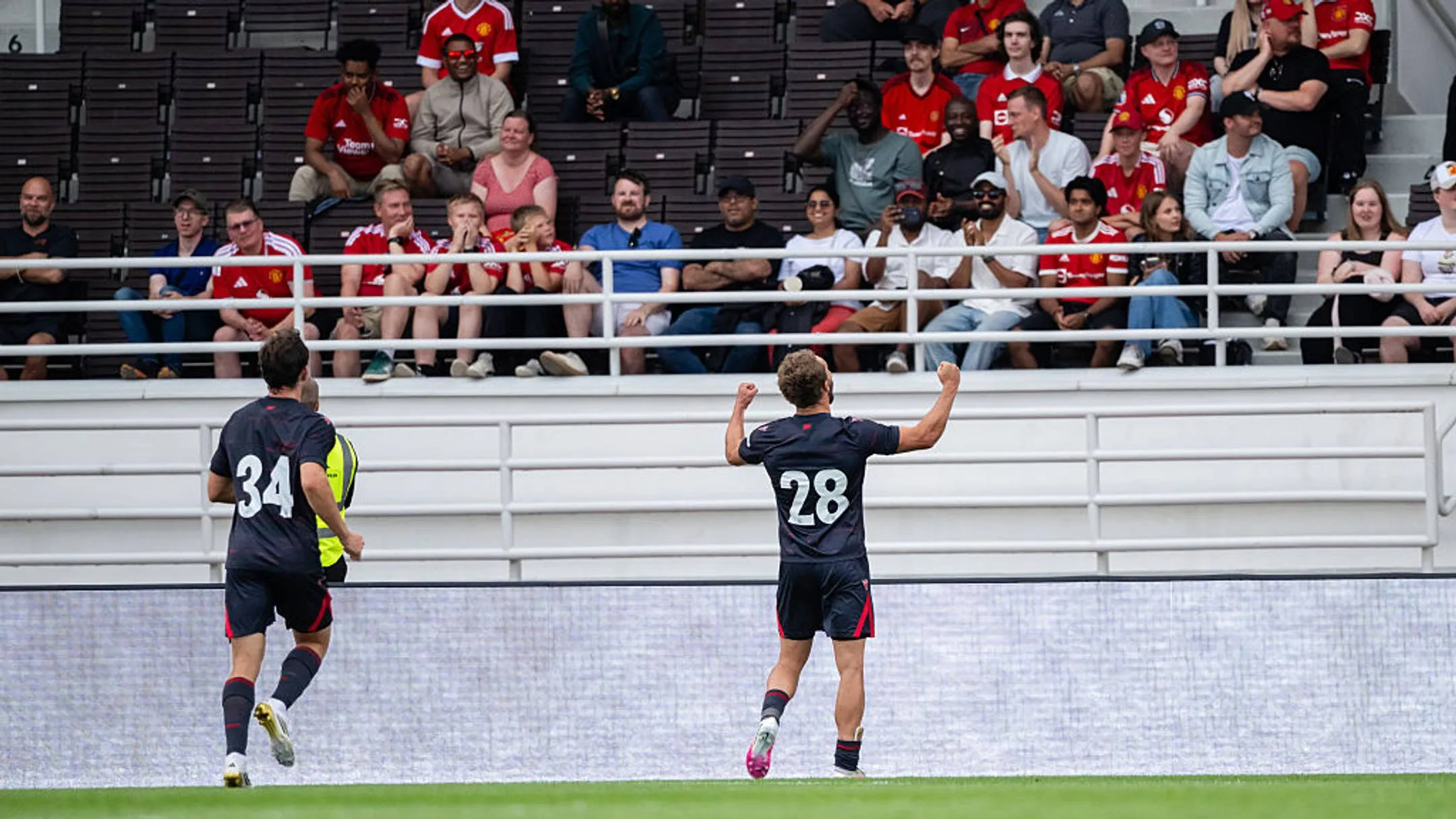
Wrexham’s second friendly of the summer ended in a 1-0 win over Manchester United, with Sam Smith scoring the only goal in the first half. It was another useful step in Phil Parkinson’s preseason work, with the squad split across two separate lineups and 22 players used as the manager continued to manage fitness levels.
The result followed last week’s goalless draw with Wisła Kraków and offered further evidence that Wrexham are already operating at a strong level before next week’s three-match U.S. tour. Parkinson has been open about using these games to build condition, but the performances have also underlined how competitive his side can be.
Against Manchester United’s senior players, Wrexham were the stronger team in the opening period. After the break, the emphasis shifted toward defensive structure as the opposition introduced a youthful side filled with academy players. That context matters, particularly with United playing their first preseason fixture and leaving out a number of World Cup stars.
Even so, Wrexham’s display was encouraging and reinforced the sense that Parkinson is content to wait on recruitment. The club may still want midfield additions, but Lewis O’Brien again looked like a player ready to make a major impact in the Championship.
Operating deeper alongside Matty James, O’Brien controlled the tempo in the first half and supplied the assist for Smith’s winner. He completed 75% of his passes in the attacking third and finished with 93% overall passing accuracy. He also won every tackle, claimed 60% of his duels, and added three recoveries and two clearances.
Smith was the stand-out from the academy-linked trio in Wrexham colours, with Ollie Rathbone and Matty James also involved. The striker’s movement and work rate unsettled Manchester United throughout the first half before he arrived unmarked at the back post to finish a move built down the left.
Wrexham remain the only Championship club yet to make a signing this summer, and Parkinson has made clear that any new arrival must represent a meaningful upgrade on the squad that finished seventh last season. Saturday’s game may have offered a few names worth considering, including Harry Amass, Toby Collyer and Shea Lacey. Amass, in particular, looks well suited to the wingback role currently viewed as the side’s biggest need.
Back-to-back clean sheets have also given Wrexham a solid base. Arthur Okonkwo’s penalty save against Wisła Kraków helped preserve the draw, while this was another disciplined team effort that kept Manchester United quiet.
Championship
Wrexham’s 10 Premier League Loan Targets to Strengthen a Championship Push
Wrexham explore Premier League loan options to strengthen squad for another Championship challenge..

Wrexham could look to the Premier League loan market this summer as part of a recruitment plan to improve their promotion prospects from the Championship. Club sources expect a more competitive division next season, and Phil Parkinson would only pursue loan signings that “add genuine quality to his first-team squad.”
Clubs must register a maximum senior squad of 25 players aged over 21, with eight homegrown players and two designated goalkeepers. Players under 21 do not need to be registered, but every loan signing must be registered regardless of age.
Awoniyi: The 28-year-old centre forward had a reduced role at Nottingham Forest, scoring four goals and one assist in 481 Premier League minutes last season, including a brace in the victory over Chelsea. He offers an efficient goals-per-minute record, but with one year left on his contract Forest may favour permanent offers.
Akpom: Now 30, Akpom joined Ipswich Town permanently last month but saw limited game time on loan from Ajax this season, scoring two goals in 31 appearances. With Ipswich promoted, significant Premier League opportunities appear unlikely and a Championship leading role could suit him.
Lacey: The 19-year-old made four first-team appearances for Manchester United across all competitions. He remains a raw talent who would seek regular minutes on loan and would likely compete with Josh Windass and Nathan Broadhead for attacking midfield positions.
Moore: Eighteen and the youngest player to appear for Tottenham Hotspur in the Premier League, Moore gained experience on loan at Rangers. A natural left winger, he would provide attacking depth and impact from the bench.
Armstrong: The 19-year-old central midfielder impressed on loan at Preston North End before returning to Everton, where he made 13 Premier League appearances. There is known interest in Armstrong this summer and another loan is a logical option.
Konak: The 20-year-old defensive midfielder is highly regarded at Brentford, has 14 senior appearances including 10 in the Premier League, and represented Türkiye at U21 level. He stood out during 16 Championship appearances for Oxford United.
Amass: A promising 19-year-old wingback, Amass impressed on loan at Sheffield Wednesday before Manchester United redirected his loan to Norwich City. He made one appearance for the Canaries before injury curtailed his season. He won Manchester United’s Young Player of the Year award in 2024–25 and has seven senior appearances for the club.
McFarlane: A 19-year-old product of New York City FC and one of the youngest MLS signees, McFarlane has been involved with England U19 and is highly regarded at Manchester City, though he lacks senior experience in English football.
Valdimarsson: The 24-year-old Iceland international has 12 senior appearances for Brentford, including three in the Premier League. He was named in the matchday squad for every senior Brentford fixture last season but sits behind Caoimhín Kelleher in the pecking order.
Vítek: A young goalkeeper who impressed on loan with Bristol City in the Championship, Vítek earned praise for his shot-stopping and is considered to have a very bright future.
Championship
West Ham Relegated After Final Day Heartbreak as Spurs Hold On
Spurs held on as West Ham’s 3-0 win over Leeds proved insufficient on the final day kept their place.
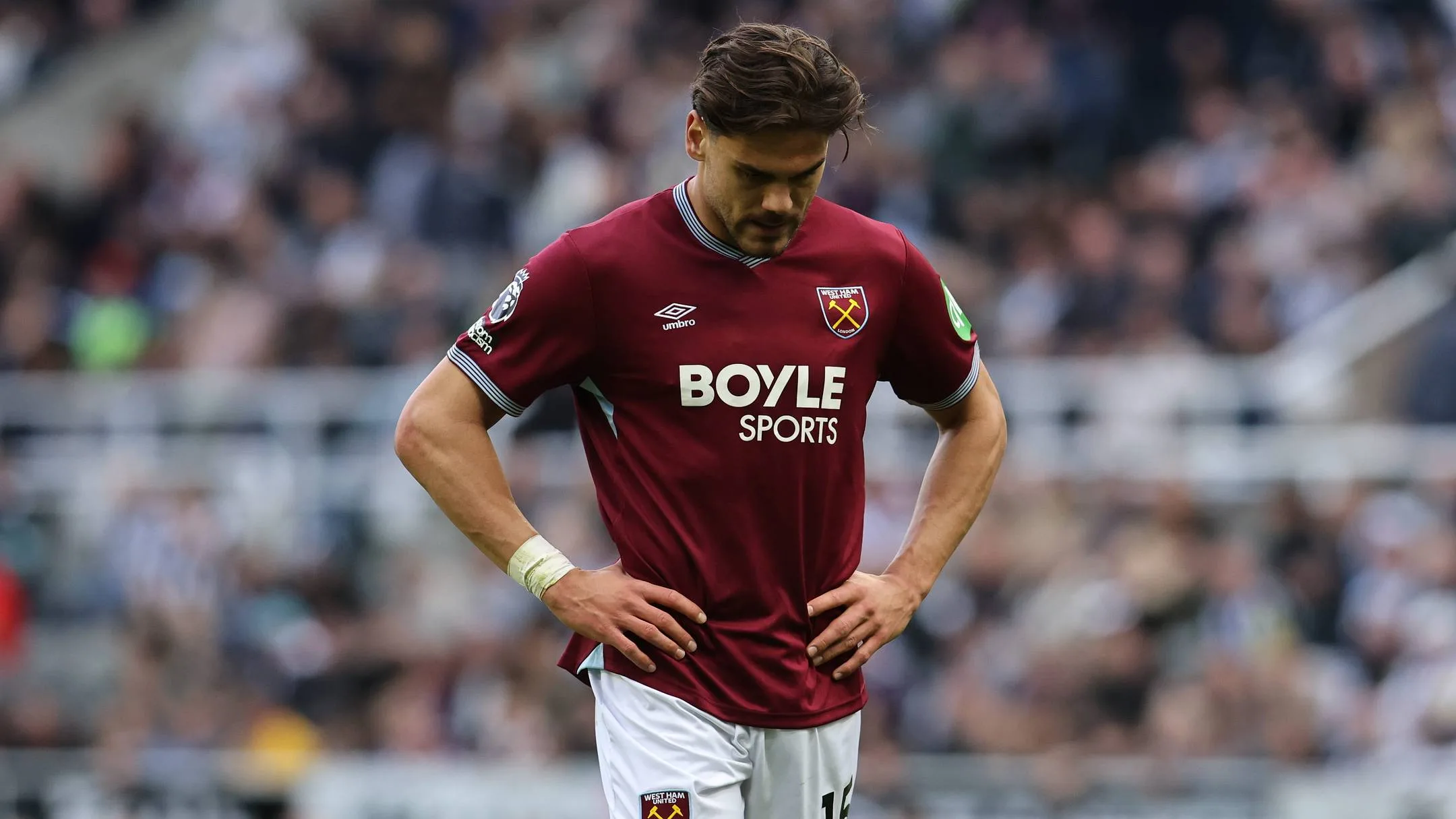
West Ham United were relegated from the Premier League on the final day, despite a 3-0 victory over Leeds United. The result was not enough to overhaul Tottenham Hotspur, who held a two-point advantage and a superior goal difference entering the last matchday.
Spurs produced a lively start and were rewarded shortly before halftime when João Palhinha finished a scrappy effort from a Mathys Tel corner to give Roberto De Zerbi’s side the lead. That advantage proved decisive: Tottenham secured the three points needed to guarantee their place in the division next season.
West Ham staged a stirring late response in their game as Taty Castellanos headed the Hammers ahead with just over 20 minutes remaining. Jarrod Bowen added a second and Callum Wilson clipped a stoppage-time third, completing the 3-0 scoreline against Leeds, but Spurs refused to surrender their winning position.
The outcome consigns West Ham to the Championship alongside Burnley and Wolverhampton Wanderers. Replacements in the top flight will be Coventry City, Ipswich Town and playoff winners Hull City.
Relegation ends West Ham’s 14-year stay in the Premier League and marks only their third drop to the second tier since 1993. The club’s recent history in the Championship includes coming up short in the playoff final in 2003-04 before winning promotion the following season, and responding to their previous relegation by winning the playoffs in 2011-12.
There is reason for cautious optimism at London Stadium because West Ham have a strong record in the second tier, and they will be among the favourites to return at the first attempt. Much will depend on how many members of the current squad remain at the club.

Rodri Attracts Interest From Barcelona and Paris Saint-Germain as Future Remains Open

Six Liverpool youngsters who could force their way into 2026-27 plans