Manchester United
Carrick entrusted to deliver Project 150 after permanent appointment
Carrick’s permanent role ties him to Project 150 as United recover from a 51-year low in 2025/26 UK.

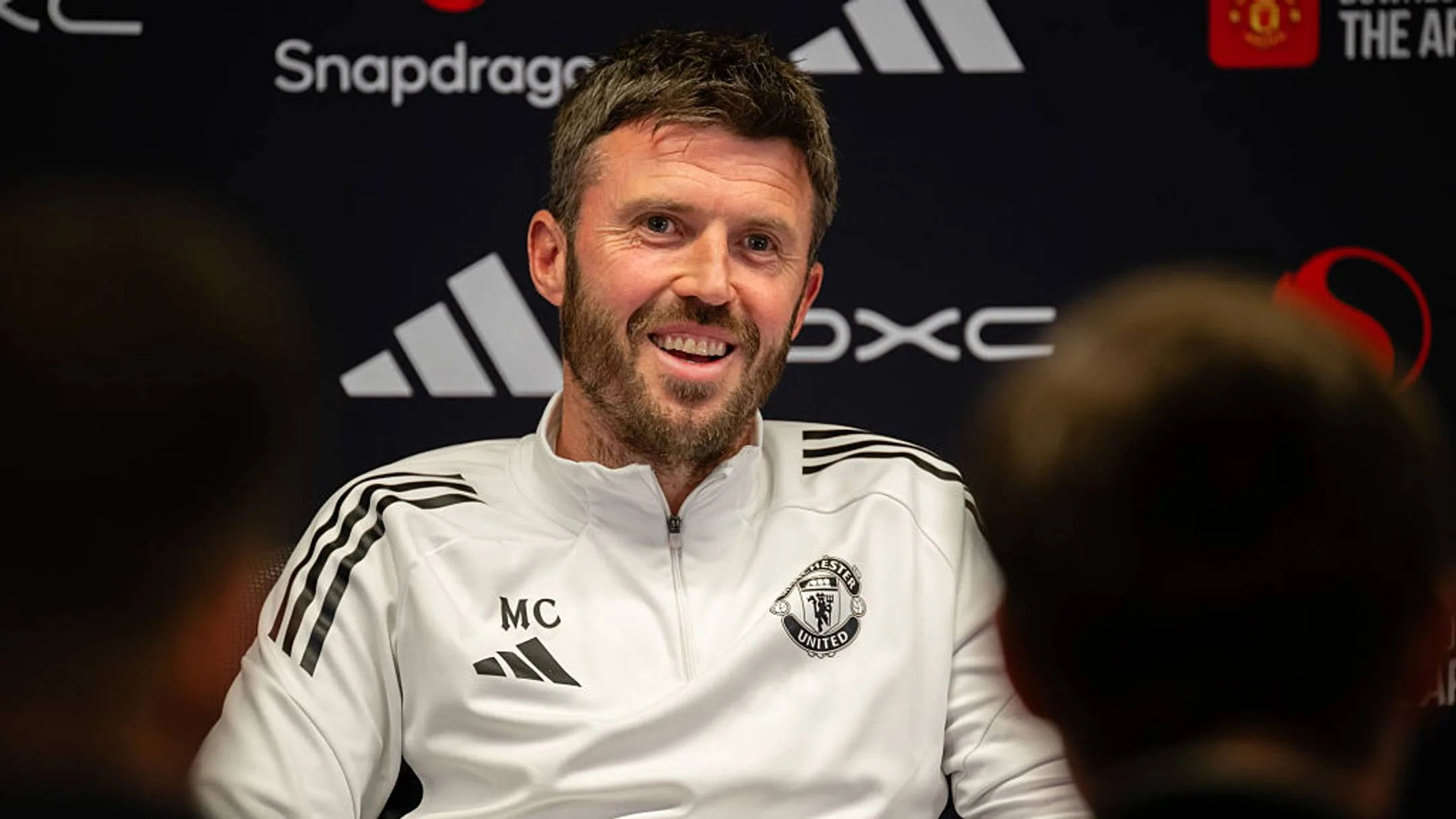
Michael Carrick’s contract through the end of the 2027–28 season formalises what the club quietly signalled: he is the manager tasked with delivering ‘Project 150’. That responsibility arrives after a turbulent period in which United fell to 15th in the Premier League last season, yet the board retained the original ambition. When questioned about the plan in the summer of 2025, Berrada told the fanzine United We Stand: “Why not aim for it?” and added, “Why not do everything in our power? I firmly believe we can do it.” He later reminded supporters that there would be “two or three summer transfer windows” available to execute the plan.
Carrick’s first run as permanent manager offers evidence that the project is not merely aspirational. With the same squad that struggled for consistency under Ruben Amorim, United have taken more points from their first 16 matches in charge than any other Premier League team across the equivalent period. That run has produced an average of 2.25 points per game, a rate that projects to 85.5 over a full season. For context, champion Arsenal’s maximum tally will be 85.
There are clear reasons for optimism: the squad has improved markedly from a 51-year low recorded 12 months earlier, and recent signings brought in for Amorim — Matheus Cunha, Bryan Mbeumo, Benjamin Šeško and Senne Lammens — have all “made a substantially positive difference working to Carrick’s instruction.”
Carrick’s profile is rooted in long association with the club. Born and raised in suburban Newcastle and first established in east London, he arrived at Old Trafford in 2006 and said he “felt the magic of Manchester United” from his first visit. He featured in teams that won back-to-back-to-back Premier League titles, won the Champions League and reached two other finals. He won the club Players’ Player of the Year in the ‘Van Persie’ season, became captain, completed 464 appearances, joined the staff and, by December 2021, after a three-match spell as caretaker boss, left to begin his managerial career having spent more than 15 years at the club.
On his appointment he said, “I know what it takes and hopefully I can give that experience a little bit to the players and they can feed off it, and we can keep pushing for more.” The comparison with other managerial trajectories in the game underlines the view that internal knowledge can matter when executing a long-term project.




Manchester United
Rooney Explains Why Gabriel Exit Talk at Manchester United Did Not Surprise Him
Rooney says United did all they could to keep JJ Gabriel, whose future remains unresolved.
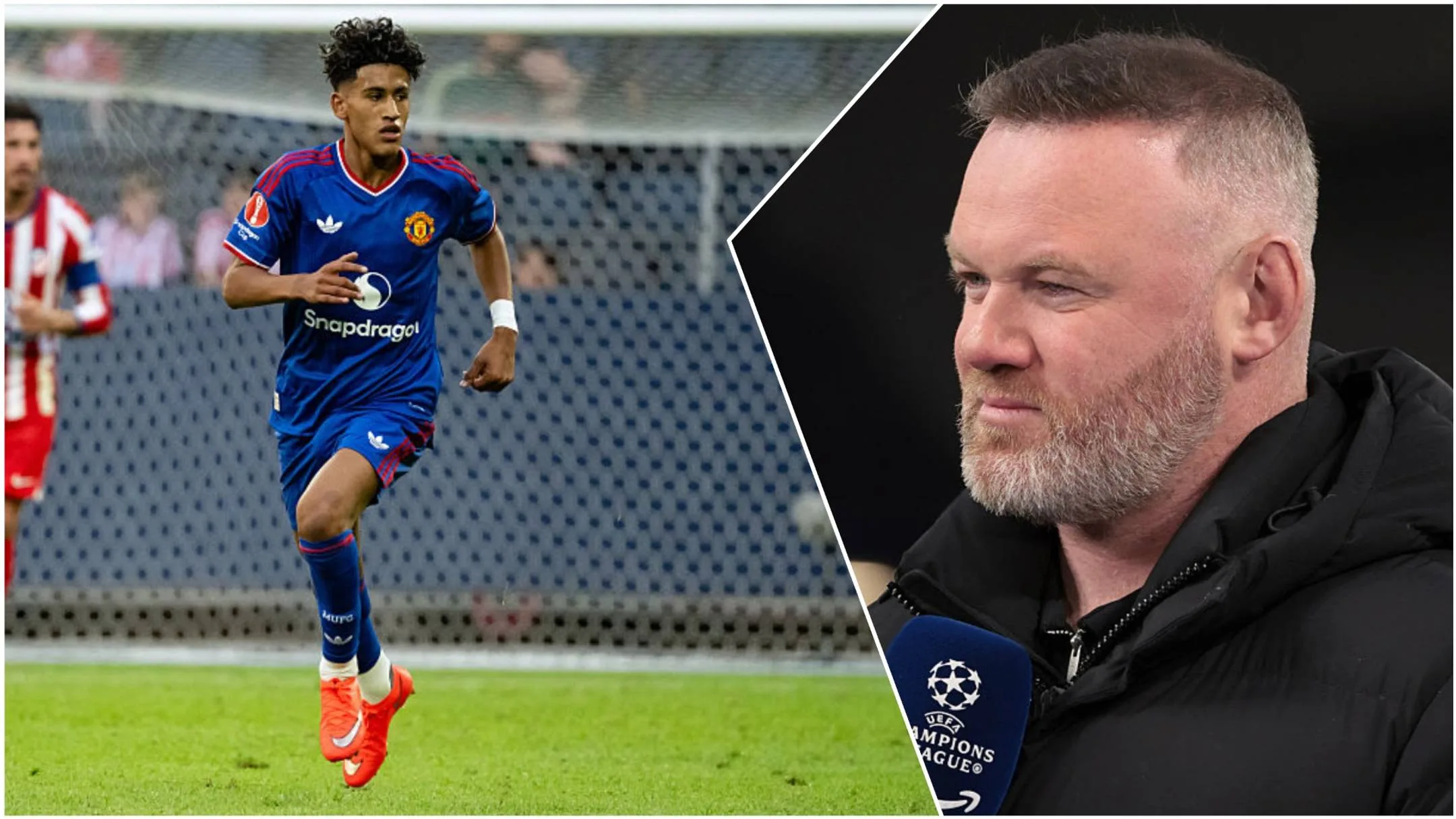
Wayne Rooney has said the growing uncertainty around JJ Gabriel at Manchester United was not unexpected, insisting that those close to the academy scene could see the situation developing.
The 15-year-old has been at the centre of major attention after spending only eight minutes on the pitch during pre-season and missing out on the Champions League roster because he needed ‘List A’ status due to his age. On the same day United began their league phase with a 4-0 win over Sabah at Old Trafford, Gabriel struck a hat-trick against Sabah’s U-19s in the UEFA Youth League.
Since then, he has not trained, and reports of his wish to leave emerged the day before United faced Brighton & Hove Albion in the Carabao Cup third round last week. It was also suggested that there had been plans to include him in that squad with an eye on a debut.
Rooney addressed the issue on the latest episode of Stick to United, saying he has seen “JJ grow up” because his own teenage son, Kai, has been involved in the same academy teams. He added that the reaction from outside observers should not have come as a shock.
“But, Rooney said, Aanyone close to it knew that was coming.”
United can challenge the request for Gabriel’s registration to be cancelled, although by the end of the season he would be free to leave anyway. A move abroad could come sooner, with his 16th birthday next month potentially opening the door to Spain or another European Union state. Real Madrid and Barcelona are strongly linked, while Bayern Munich are also said to be interested.
Manchester City, Arsenal and Chelsea would have to wait until the summer unless United decide otherwise, which appears unlikely.
Rooney also defended the club’s handling of the youngster, saying, “In fairness to Manchester United they have done everything, absolutely everything, to keep him at the club,” before adding that special treatment is part of managing exceptional talent.
“The club have treated him probably differently to the other players because he is such a special player. I know, I recognize that, because I was that player at Everton. I was getting that treatment at Everton,” he reflected. “As a club, you need to do [it] to try to keep the better players. It’s disappointing because [Gabriel] is such a top player and a lovely kid.”
Gabriel is viewed as a generational talent, even if he cannot legally drive in the U.K. for another year.
Arsenal
Premier League table recalculated without VAR after early season controversy
The table shifts without VAR, but United, Forest and Haaland remain central to the early debate.
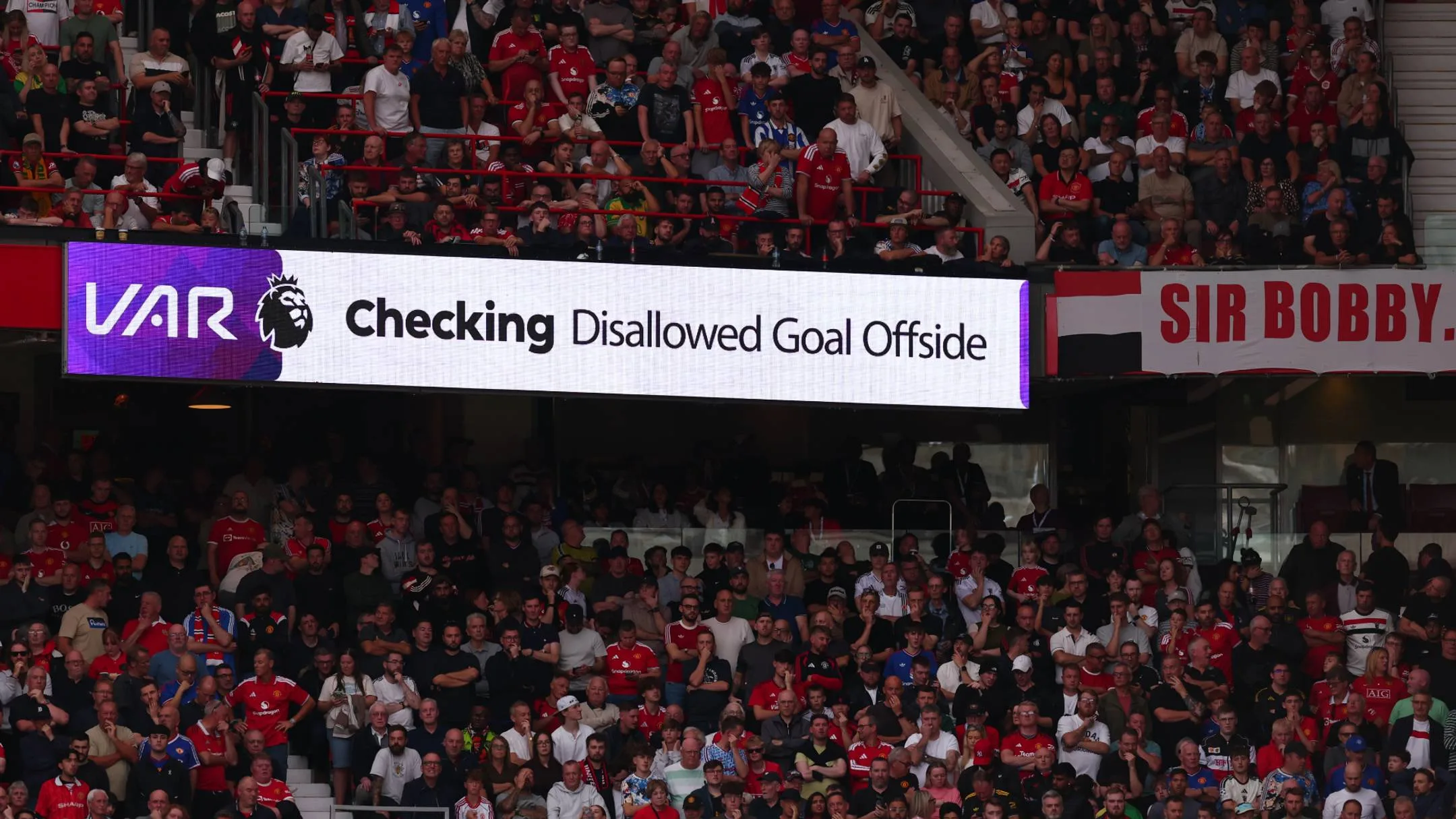
With five games played in the 2026/27 season, the Premier League has already been dragged into a series of officiating disputes despite hopes of a lighter touch. Howard Webb has issued an apology that was quickly rejected, and further explanations are still being awaited across the division.
Removing VAR from the picture changes the table in several places, but Manchester United remain the major talking point. Erling Haaland’s winner in the Manchester derby should not have stood, according to Webb’s own acknowledgement, after officials became caught in what he described as “tunnel vision.” The issue centred on Enzo Fernández’s movement in front of Lisandro Martínez, while VAR Matt Donohue focused on whether Haaland was onside when he turned the ball in past Senne Lammens.
Even so, United would still sit 12th with the additional point, showing that the decision was costly without transforming their wider position.
At the top, Arsenal would move clear of the rest on 12 points, with Brentford and Manchester City next on 11. Liverpool would also be better off overall, although their draw in this version of the table follows the denied goal against Nottingham Forest when Florian Wirtz’s effort was ruled out for offside.
Forest are one of the biggest beneficiaries of the no-VAR table. Oliver Glasner’s side would climb to 10th, helped by the sense that they have been denied three points in separate incidents. Neco Williams had a goal disallowed against Tottenham Hotspur after an alleged handball in a goal-line scramble with Sandro Tonali, and that decision came without any definitive camera angle proving the offence. Williams later posted: “Clear and obvious they say,” while Glasner added after the Coventry City match: “Of course I have thoughts but I don’t want to speak about it again,” after Igor Jesus was judged to have tripped Caleb Yirenkyi before scoring.
Haaland’s own frustration also featured in the aftermath of the derby. He said: “I thought there was maybe someone who had flicked it, I don’t normally go offside,” and added: “I talked to [referee] Michael Oliver and I told him I took it personal that he thought I went offside.”
The record suggests otherwise. As the draft notes, Haaland has only been correctly flagged offside once this season.
Manchester United
Lewis Hall Explains Why Newcastle Extension Felt Like the Right Call
Lewis Hall has explained why he rejected Manchester United interest and signed long term at Newcastle.

Lewis Hall has explained why he chose to commit his future to Newcastle United despite Manchester United showing strong interest over the summer.
The left back, who had been high on Manchester United’s transfer shortlist, ultimately signed a new deal that keeps him at Newcastle until 2031. Hall described the decision as a “no-brainer” after receiving confidence from the club and from new manager Matthias Jaissle.
Hall, who first arrived on loan from Chelsea in 2023, has developed into one of Newcastle’s most important young players. The club made clear they did not want to lose him, instead improving his terms and adding two extra years to his agreement during the 2026/27 Premier League season.
Speaking to Chronicle Live, Hall said: “After not many conversations [with Jaissle],”
“Not many training sessions, I knew that the manager was going to be really good for this club and I knew that as a team, bringing in new players and improving the squad was really important and as soon as we did that, it was a no-brainer really to sign.
“He’s a top guy. He’s been so good to me,” the left back added. “He gives me the license to express myself as long as I do the defensive work and do the running that’s required for this position, which is quite a lot of work. But I’m happy to do it as long as it benefits the team. He’s been a positive for everyone who’s come in so far.”
Hall also said the transfer speculation did not unsettle him. For him, interest from major clubs was simply a reflection of how well he was playing.
“I guess whenever you’re linked to another team, you know that you’re doing something right,” Hall said. “I guess it’s just a credit to your own performances and how you are as a player, how you are as a person.
“I took that as a positive, but at the same time, I knew how much I love playing here and I knew that since the manager came in, I knew the ambitions and what we wanted to achieve.”
Although he has signed long term, Hall acknowledged that future moves in football can change quickly. For now, he says his focus is on the present and on helping Newcastle meet their aims.
“I think when you’re at a team you don’t think too far into the future,” Hall admitted. “Obviously, I’m really grateful for the contract that I’ve received and the trust that I’ve been given from the board and from the manager and everything like that.
“But I’m just taking it game by game, just trying to do the best I can for this club. We’ve got ambitions and as long as we achieve these ambitions and achieve what we want to achieve, I’m sure I’ll be here for a long time.”