Arsenal
How Mikel Arteta’s Expected Pay Rise Would Reorder the Premier League’s Payroll
Arteta set to become the Premier League’s highest paid manager after a reported new contract. ahead.

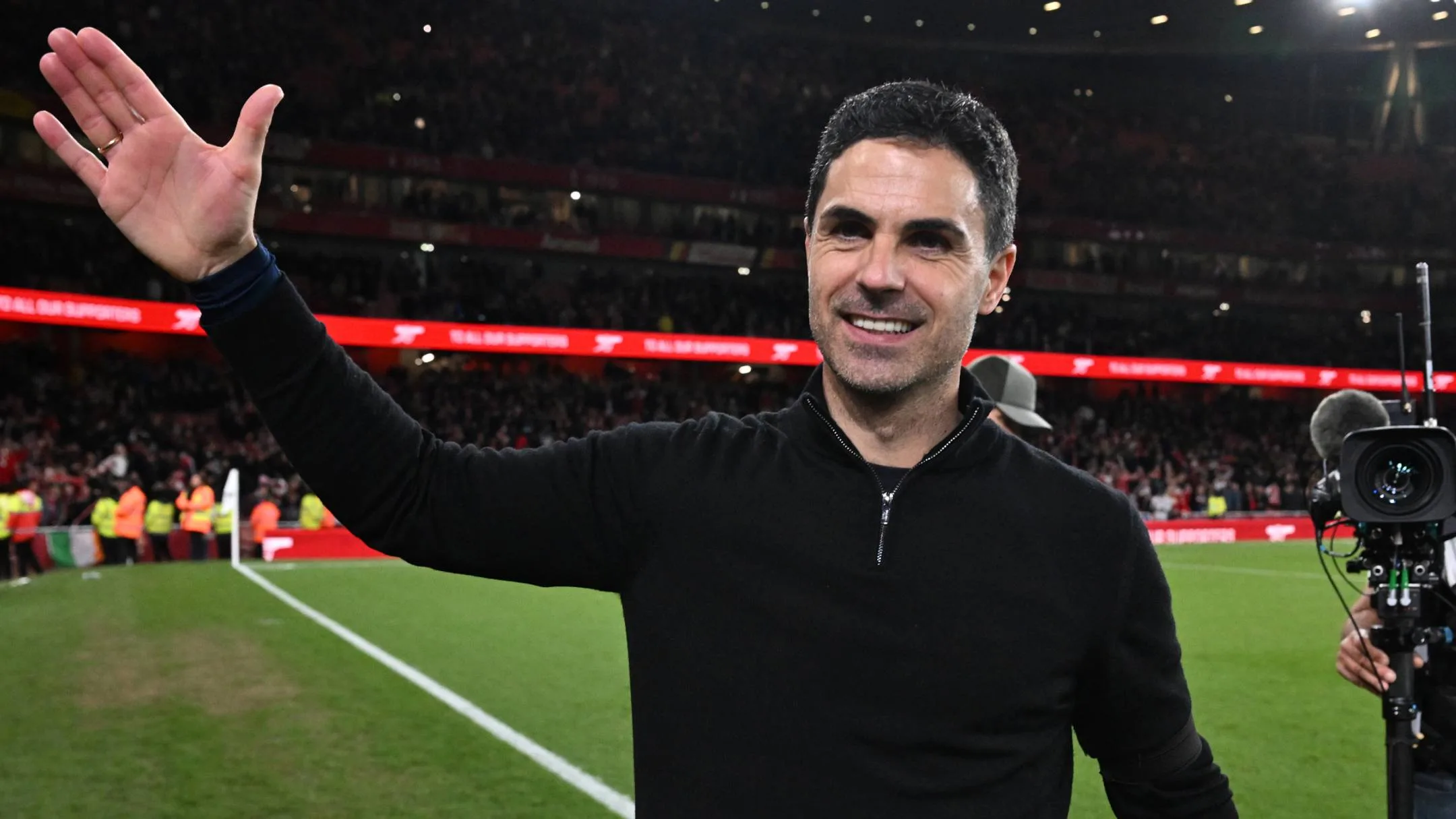
Arsenal are widely reported to be preparing a new contract for Mikel Arteta that would lift him to the top of the Premier League pay ranks and place him among the game’s highest earners. The reward follows the end of a 22-year wait for Premier League glory and arrives as Arsenal ready themselves for a Champions League final against Paris Saint-Germain.
Arteta’s commitment to the club has been clear. “I’m fully committed here,” he said. “I’m really happy and I feel good. My family’s good. I still have so much ambition and things to do at this club. For now, we are in a good place.” Clubs and agents are said to be working on terms described by one report as a “lucrative” new contract, according to The Guardian.
Current figures cited in reports put Arteta’s earnings at about $13.4 million (£10 million), with an additional $6.7 million payable for Champions League qualification. The new agreement is expected to “come close” to the world-leading managerial salary of $34.8 million reportedly collected by Atlético Madrid boss Diego Simeone.
Simeone has sat atop the list of managerial high earners for years. Atlético’s place in the global financial hierarchy helps explain that figure: the club is listed as the 13th richest on the planet with annual revenue of $531.7 million. Real Madrid and Barcelona occupy the top two spots with earnings more than double Atlético’s.
Elsewhere, L’Équipe has placed Simone Inzaghi at Al Hilal as Simeone’s closest financial challenger on roughly $29.2 million a year. Manchester City’s Pep Guardiola is widely credited with a salary around $26.8 million, which currently makes him the Premier League’s top earner. Arteta’s proposed terms may exceed that lofty figure, and he is all but guaranteed to stand out as England’s highest paid manager as Guardiola sails off into the sunset.

Arsenal
David Raya injury leaves Arsenal awaiting scans and return timeline
Arsenal await scans on David Raya after the goalkeeper limped off against Newcastle United.
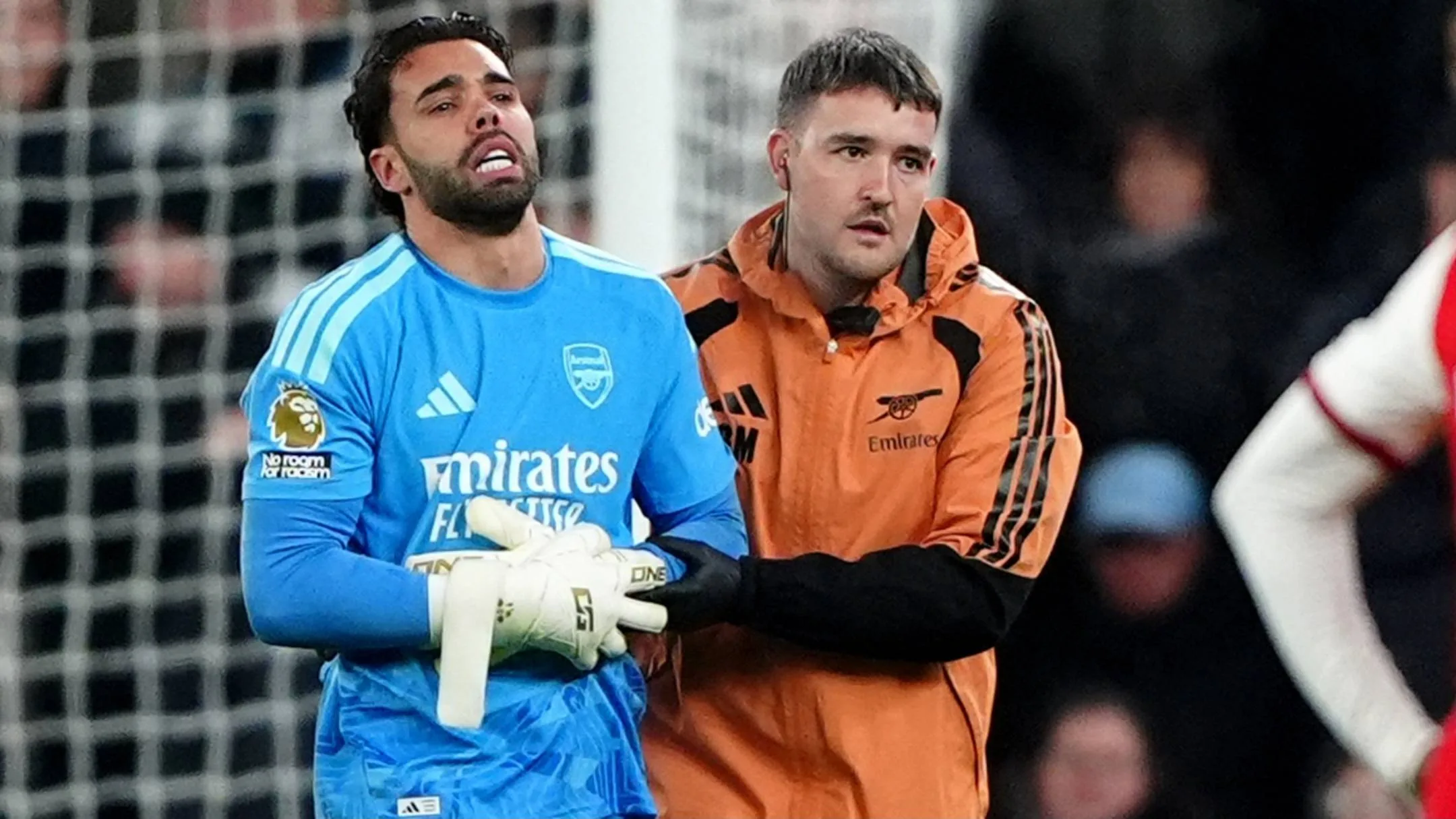
Arsenal are waiting on a clearer picture of David Raya’s injury after the goalkeeper was forced off in the 2-2 draw with Newcastle United, in a moment that initially appeared so minor that some suspected he was trying to create a pause in play.
The concern for Arsenal is obvious. Raya has become central to Mikel Arteta’s side, and any spell without him would be significant. Arteta admitted after the match that the club still do not know the full extent of the problem. “Obviously it’s not good David had to come off but at the moment I don’t know [the prognosis],” Arteta said after the game, revealing the goalkeeper will be sent for further scans to determine the nature of his injury.
Although Raya left the pitch holding his forearm, the sense is that the issue may be linked to his shoulder. The limited contact involved points toward either a dislocation or a strain, but the real answer will only come once the scans are completed.
That uncertainty leaves Arsenal in a difficult position. The shortest possible absence would still be a concern, while a more serious internal injury could keep him sidelined for weeks or even months. In the best-case scenario, Raya may be available again before the end of the month.
For now, Kepa Arrizabalaga is expected to step in for Arsenal, with Illan Meslier likely to move up into the matchday squad as third choice during Raya’s absence.
What is already clear is that several major fixtures are likely to arrive too soon. Tuesday’s Champions League clash with Borussia Dortmund will come too quickly, and the same may also be true of the Premier League meeting with Manchester City on Nov. 29.
December then brings a demanding run of games for Arsenal, including Real Madrid’s visit to the Emirates on Dec. 9, three days after the north London derby against Tottenham Hotspur. Manchester United follow on Dec. 20, before the year closes with Crystal Palace and Fulham.
Arsenal
Guimarães Fades as Arsenal’s Mental Test Breaks Down at Newcastle
Guimarães returned to Newcastle under pressure, and Arsenal lost control as emotions overtook the game.
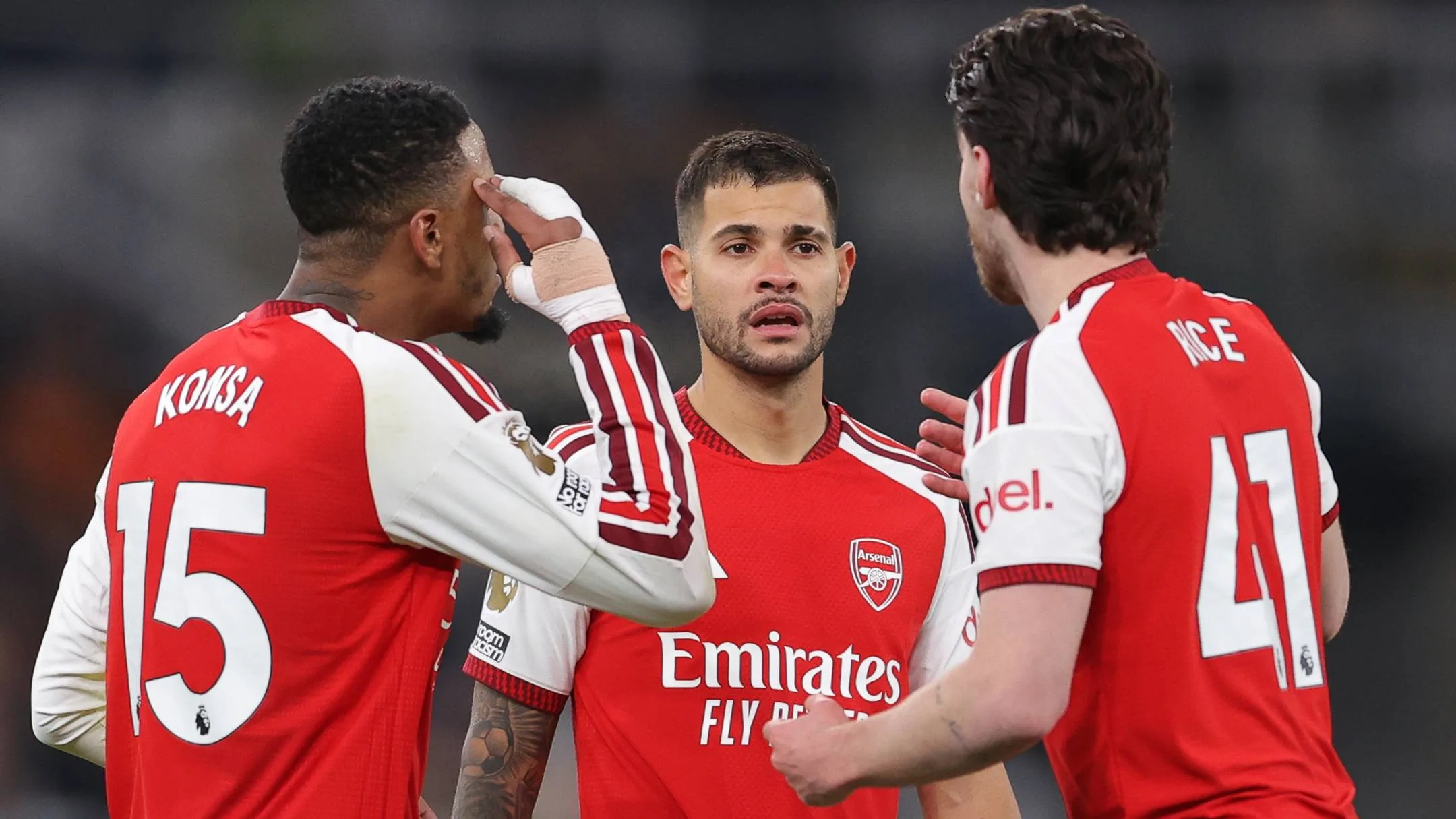
Bruno Guimarães returned to Newcastle with a heavy burden on his shoulders and found no shortage of resistance. After moving to Arsenal in a summer transfer that divided opinion, the Brazilian was greeted by a hostile crowd and spent much of his 70 minutes trying to survive the moment rather than shape it.
The Arsenal midfielder had been told to prepare himself emotionally, with Mikel Arteta again underlining the importance of “emotional dominance.” But the challenge did not go as planned. Guimarães, who once described Newcastle as a place where he “never felt so loved like the way I was at Newcastle,” was booed and chased through a match that became increasingly uncomfortable for the visitors.
His early work was cautious. Across the first 25 minutes, he barely risked a pass forward, apparently hoping to keep the noise to a minimum by limiting his involvement. That restraint gradually eased, and he started to move with more freedom before the interval, including one burst forward and an attempt to challenge a cross from Declan Rice that drifted just wide. Even then, Arteta was not satisfied and was seen berating him for drifting out of position.
The second half told a harsher story. David Raya’s injury early after the restart drained Arsenal’s momentum, and the visitors never recovered. Martin Ødegaard’s loose touch and an error from Eberechi Eze opened the door for Newcastle, who moved in front through Malick Thiaw after a corner.
Guimarães’ influence disappeared almost completely after the break. In his 25 second-half minutes he managed only five touches, while Ødegaard had three as Arsenal were overrun. Newcastle scored twice, forced off Arsenal’s goalkeeper and came close to a third before the visitors registered a shot after the interval. Matthias Jaissle said Arsenal were “shaking” in those closing stages.
Yet Newcastle were not fully in control either. The home crowd grew restless during a flat first half, and the energy of the comeback left them exposed while protecting a 2–1 lead. In a match defined by nerves, neither side handled the emotional demands cleanly.
Arsenal
Arsenal Held After Newcastle Fightback in Tyneside See-Saw
Arsenal led at the break, but Newcastle hit back after halftime and shared the points on Tyneside.
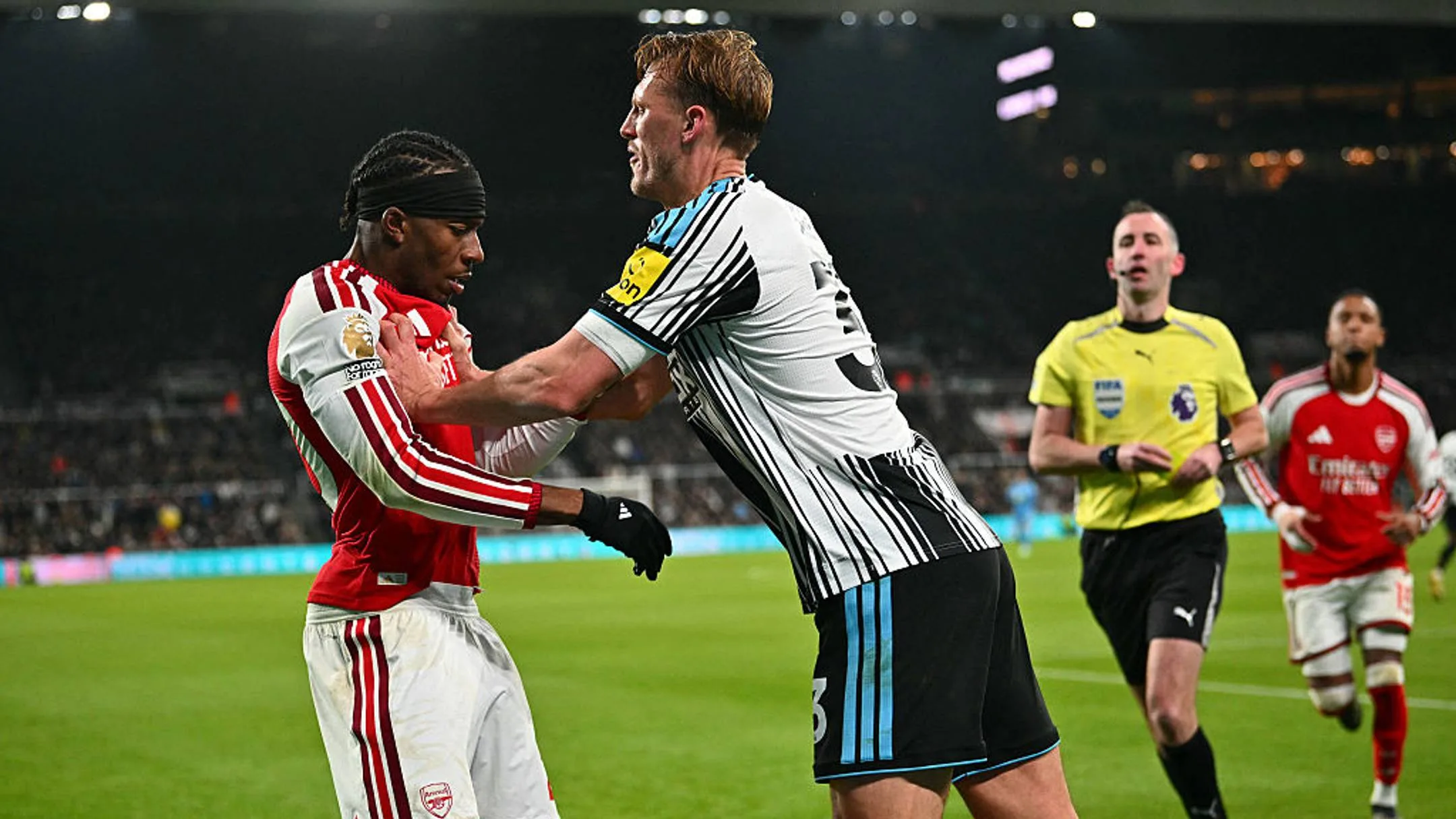
Arsenal left Tyneside with only a point after a match that swung sharply from control to chaos. For much of the first half, the visitors looked in command and were rewarded when Eberechi Eze finished off excellent work from Kai Havertz to put them ahead.
That lead should have been more comfortable. Arsenal were the better side, created the cleaner openings and went in at the break with the sense that a bigger margin was there for the taking. Newcastle, meanwhile, headed down the tunnel to a hostile response and needed a lift after the interval.
They got it. Jaissle’s triple substitution changed the feel of the contest almost immediately, adding speed and energy to the home side. Within 17 minutes of the restart, Newcastle had turned the game around. Harvey Barnes levelled after a Martin Ødegaard error, then Malick Thiaw bundled home from a messy set-piece sequence to make it 2-1.
Arsenal were rattled, and the momentum shift was severe, but they did not disappear from the match. They steadied, rebuilt their rhythm and produced a fine move that ended with Noni Madueke scoring a deserved equaliser. The closing stages remained lively, though neither side found a fifth goal.
The point means Arsenal avoid defeat in a game that briefly threatened to unravel completely, although concern now turns to David Raya, who was forced off injured. Arsenal had gone into the fixture with a chance to move eight points clear at the top after Manchester City dropped points at lunchtime, with Brighton & Hove Albion due to play Hull City on Sunday.
There was also a reminder of how quickly a match can change. Arsenal had been in control, then suddenly found themselves under pressure, before finally recovering enough to leave with something to show for their efforts.