
Championship
How Wrexham’s £48m Cash Injection Reshapes January Plans and the Cherif Question
£48m injection shifts Wrexham’s January window focus amid striker interest and transfer caution soon

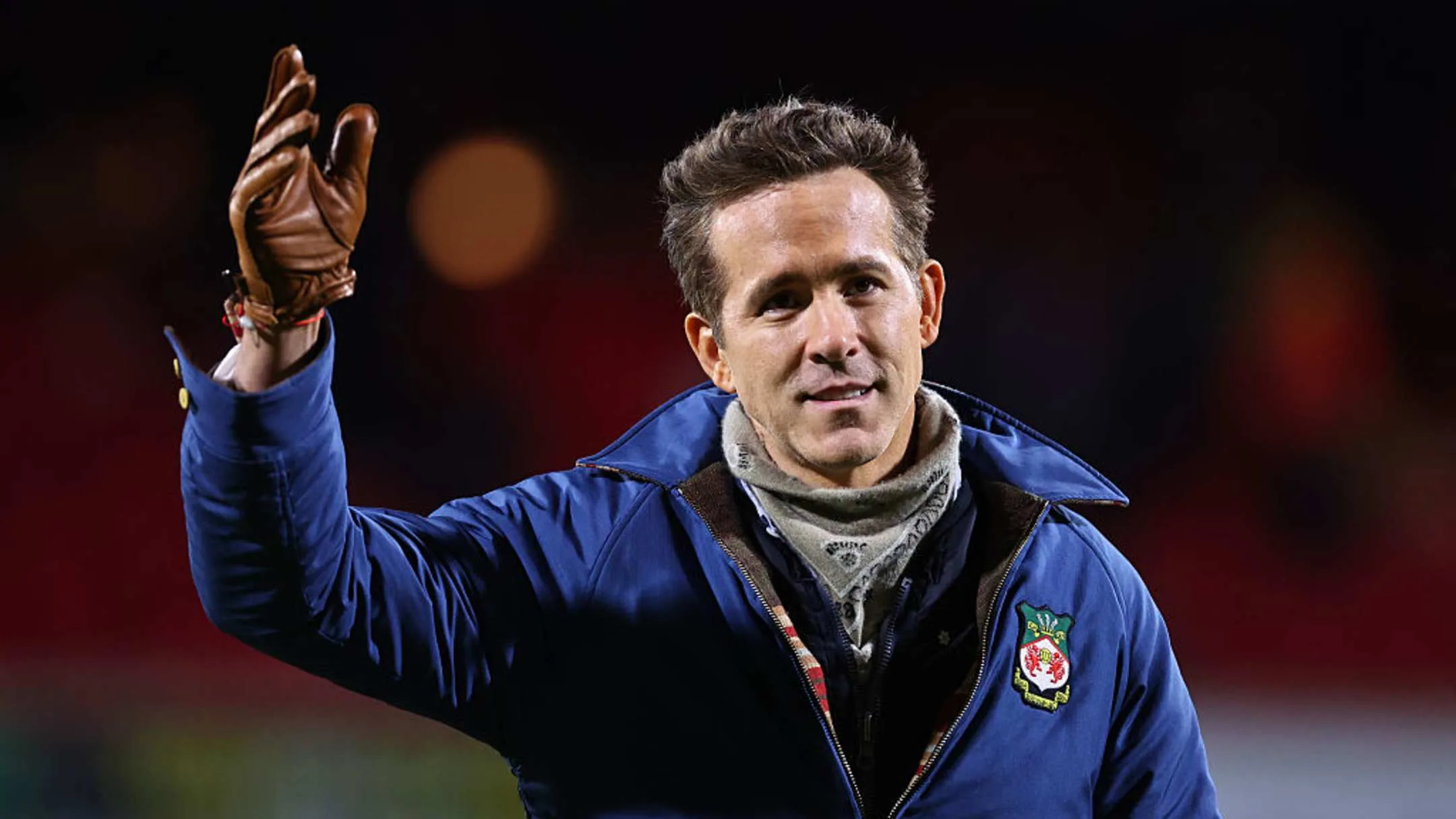
With under a week remaining in the January transfer window, Wrexham have received a £48 million cash injection that could alter their promotion push. Football finance expert Kieran Maguire suggests the £48 million comes from current owners Ryan Reynolds and Rob McElhenney, who purchased the club in 2020 for just £2 million. The money is thought to be for infrastructure costs and player recruitment.
Wrexham have been notably quiet in this winter window, facilitating exits such as former captain James McClean and promotion hero Elliot Lee. It is unclear whether the new funds will be used to sign a player before the deadline, but the investment offers another route for the Red Dragons to compete with the capital flowing through the biggest clubs in the Championship.
After spending around £28 million during the summer to bring in 13 new players, a quieter January was always likely. Manager Phil Parkinson reflected on that overhaul: “This summer was the biggest turnover I’ve ever been involved in as a manager,” and added, “That caused a real air of excitement. This one is slightly different in that we made those changes in the summer.” Parkinson also indicated the immediate priority is returning injured players rather than wholesale additions to the squad.
Wrexham remain in the market for a striker and have been linked with Angers forward Sidiki Cherif. According to The Athletic, Parkinson flew out to watch the 19-year-old play against Paris FC on Sunday. Angers are reportedly seeking around £19 million for Cherif, who has scored four goals in 19 Ligue 1 appearances this season. The No. 9 has been the “subject of talks” with Wrexham as the club weighs whether to pay what would be a Championship record fee for a teenager.
A new striker would address persistent scoring inconsistencies. The Red Dragons have scored more than two goals in just four of their 28 league matches this season. Kieffer Moore began well after his summer arrival, scoring four times in his first three Championship appearances, but has managed six goals in 21 league outings overall, three of which came against Coventry City alone. Without further reinforcement in January, Parkinson’s side face a tougher route to making their Premier League ambitions a reality.

Championship
West Ham Relegated After Final Day Heartbreak as Spurs Hold On
Spurs held on as West Ham’s 3-0 win over Leeds proved insufficient on the final day kept their place.
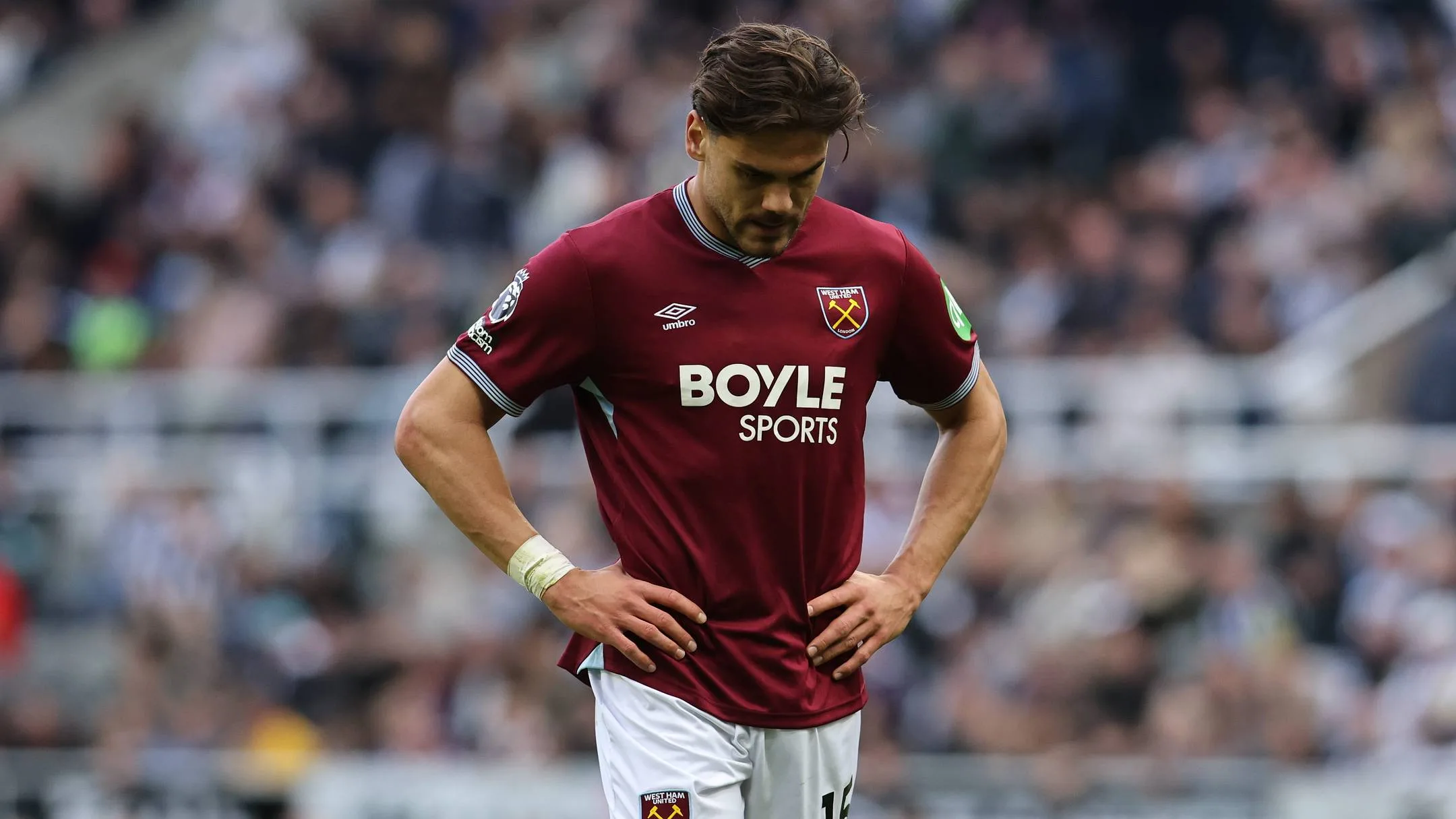
West Ham United were relegated from the Premier League on the final day, despite a 3-0 victory over Leeds United. The result was not enough to overhaul Tottenham Hotspur, who held a two-point advantage and a superior goal difference entering the last matchday.
Spurs produced a lively start and were rewarded shortly before halftime when João Palhinha finished a scrappy effort from a Mathys Tel corner to give Roberto De Zerbi’s side the lead. That advantage proved decisive: Tottenham secured the three points needed to guarantee their place in the division next season.
West Ham staged a stirring late response in their game as Taty Castellanos headed the Hammers ahead with just over 20 minutes remaining. Jarrod Bowen added a second and Callum Wilson clipped a stoppage-time third, completing the 3-0 scoreline against Leeds, but Spurs refused to surrender their winning position.
The outcome consigns West Ham to the Championship alongside Burnley and Wolverhampton Wanderers. Replacements in the top flight will be Coventry City, Ipswich Town and playoff winners Hull City.
Relegation ends West Ham’s 14-year stay in the Premier League and marks only their third drop to the second tier since 1993. The club’s recent history in the Championship includes coming up short in the playoff final in 2003-04 before winning promotion the following season, and responding to their previous relegation by winning the playoffs in 2011-12.
There is reason for cautious optimism at London Stadium because West Ham have a strong record in the second tier, and they will be among the favourites to return at the first attempt. Much will depend on how many members of the current squad remain at the club.
Championship
Late McBurnie strike settles a stormy Championship play-off and sends Hull back to the top flight
Hull returned to the top flight as McBurnie’s stoppage-time strike closed a tumultuous playoff saga.
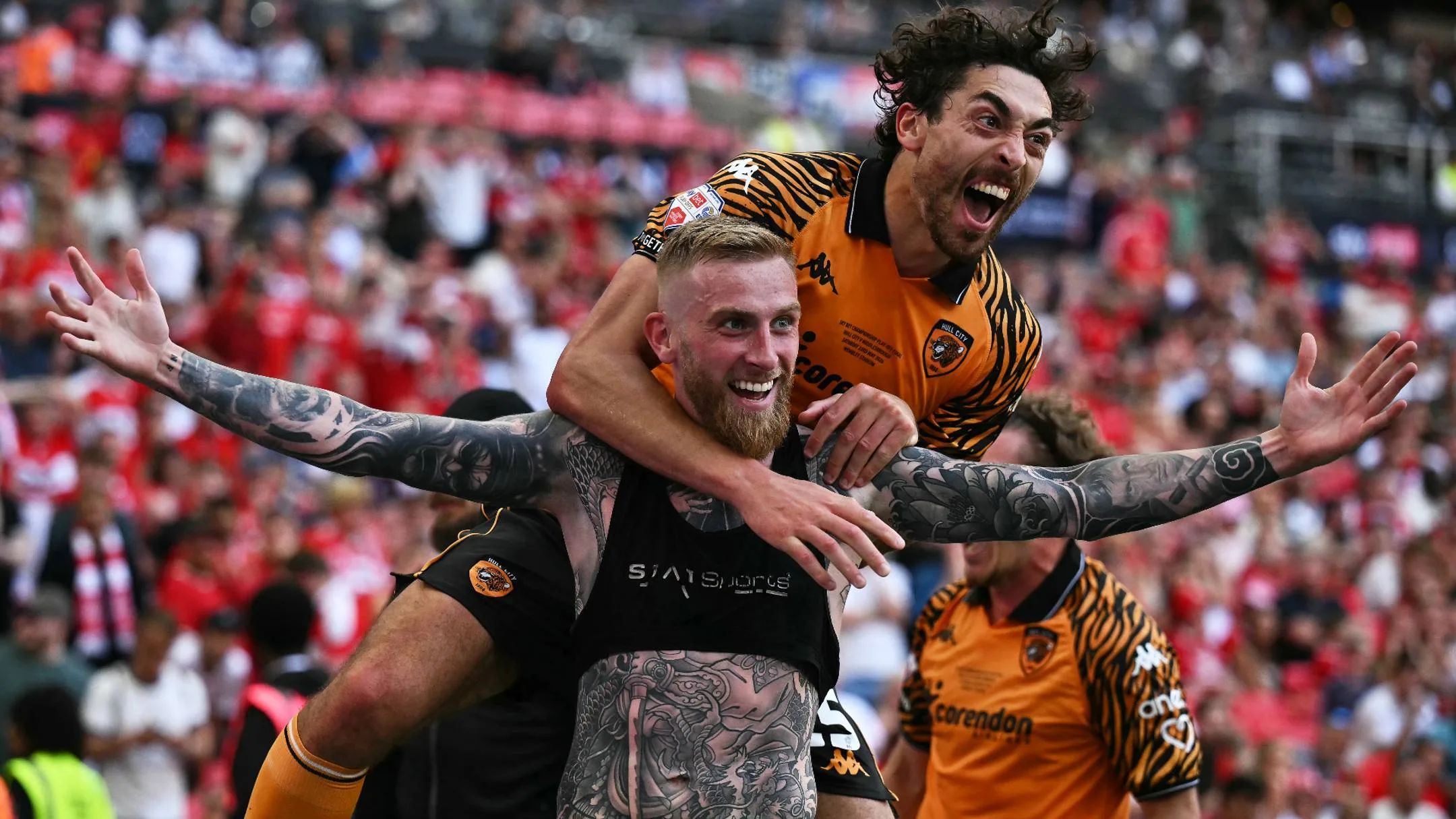
Hull City secured promotion to the Premier League with a 1–0 victory over Middlesbrough in the Championship play-off final, Oli McBurnie’s stoppage-time winner providing a decisive end to a highly divisive post-season.
The route to Wembley was overshadowed by an espionage row. Southampton analyst intern William Salt was found filming Middlesbrough’s training from behind a pine tree and was detained by indignant Boro staff. Southampton revealed this was not the first instance of spying sanctioned by manager Tonda Eckert. Saints had prevailed across the two legs of the play-off semifinal against Middlesbrough, only for an unprecedented English Football League ruling to expel Southampton from the final and reinstate Boro.
“We can say everything is unfair in this last two weeks,” Hull manager Sergej Jakirović sighed on the eve of the final.
The final itself was a tight, attritional contest. Only one Championship play-off final in the past decade has been decided by more than a single goal, Brentford’s 2–0 win over Swansea City in 2021, which was aided by Jay Fulton’s red card in the 65th minute. Middlesbrough supporters had gathered in Trafalgar Square the day before, but the match struggled for fluency. The first shot on target did not arrive until the 61st minute and stifling heat contributed to a subdued tempo.
When the breakthrough came it arrived in dramatic fashion. In the 95th minute McBurnie reacted quickest to a poor save from Solomon Brynn, gobbling up the rebound from a cross to find the goal that would send Hull back to the top flight for the first time since 2017. The late strike closed a tumultuous play-off campaign and spared Hull any need for legal action.
After 10 months, 370 Championship matches and 1,021 goals, attention now turns to the Premier League. The final table remains undecided, with Tottenham Hotspur and West Ham United the last two sides still fighting to secure top-flight survival with 90 minutes of the season remaining.
Championship
Valuing Promotion: What Reaching the Premier League Delivers Financially
Promotion to the Premier League is roughly estimated at £200 million, almost half from broadcast…
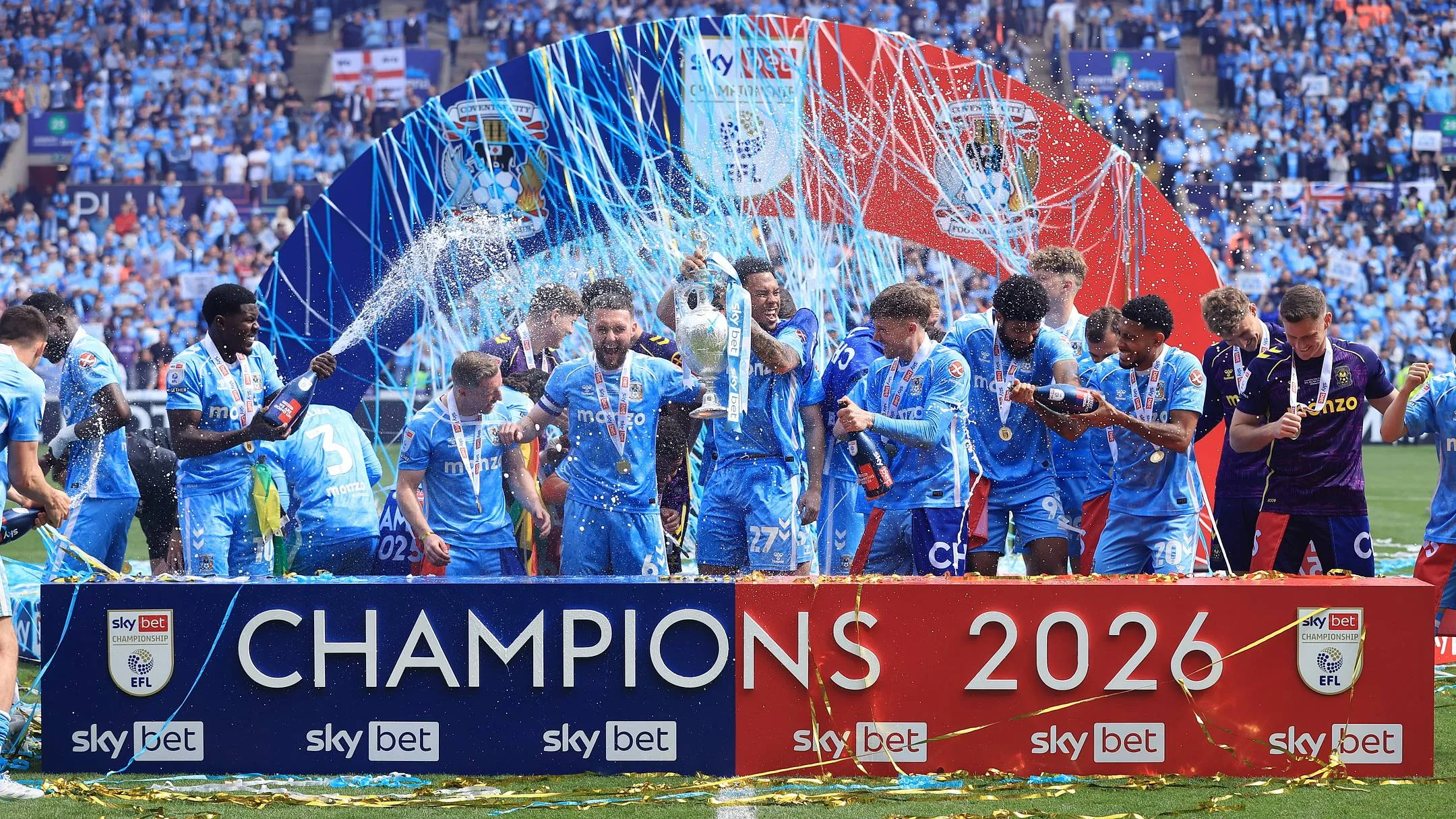
Promotion from the Championship to the Premier League remains the most consequential financial event for a second-tier English club. The rewards are not a single, fixed sum; they depend on how long a club remains in the top flight and how it performs once promoted. Clubs such as Brentford, Bournemouth and Brighton & Hove Albion illustrate how sustained Premier League status can transform commercial prospects.
A common industry estimate places the total value of promotion at roughly £200 million ($269 million). Almost half of that total comes from broadcast revenue, which is equally shared among all 20 sides and generally earns teams around £84 million ($113 million) per season. As per BBC Sport, clubs also receive “centralized commercial fees, facility fees and merit payments” that make up much of the rest of their earnings, while increased status and international exposure help boost merchandise sales, stadium attendances and commercial growth.
That mixture of shared broadcast income and additional centralized payments explains why a single season in the Premier League is so lucrative. The immediate uplift in revenue funds investment in playing staff, facilities and commercial operations, and it raises a club’s profile among sponsors and overseas supporters.
At the same time, the system recognises the financial shock of relegation. Parachute payments have also been in effect since 2006–07 to ensure that relegated sides keep receiving revenue for up to three seasons after demotion. Parachute payments guarantee relegated sides a percentage of the broadcast revenue they would have earned for competing in the Premier League, and are put in place so that the rising costs of running a top-flight club don’t create financial issues upon a return to the Championship.
In short, promotion delivers immediate and ongoing financial benefits through shared broadcast income, centralized commercial receipts and post-relegation support. The scale of those revenues explains the fierce competition for the three places that lead into England’s top tier.


-
 Chelsea2 months ago
If Xabi Alonso Took Charge at Chelsea: Formation, Principles and a Projected XI
-
 Arsenal2 months ago
Five leading contenders for 2025/26 Premier League Player of the Season
-
 Championship2 months ago
The Fall of Leicester: How Financial Choices, Recruitment and Instability Led to League One