Chip Strategy
FPL GW1 Draft: Make Each £0.5m Earn Its Place
Compare Szoboszlai with Wirtz, Shaw with Maguire and premium defenders through one GW1 rule: pay more when the upgrade adds a credible points route.


Each £0.5m upgrade competes for the same £100m budget. Spend that money across four positions and you have removed £2.0m from the premium, captaincy or bench slot that may matter more.
Set your premium spine and holding period before you compare players who sit one price step apart. A Haaland and Bruno Fernandes draft commits £27.5m to two players. That structure can work, but each upgrade elsewhere needs to add a points route that the cheaper option lacks.
Use three questions before you pay more:
- Does the upgrade improve expected minutes or role security?
- Does it add a credible route to points, such as penalties, set pieces, defensive contributions or attacking threat?
- Will you hold the player long enough to benefit from that edge?
If the answer stays unclear, keep the saving.
Szoboszlai and Wirtz test your midfield priorities
Dominik Szoboszlai costs £7.0m and has 42.8% ownership. Florian Wirtz costs £7.5m and has 14.7% ownership. Both play for Liverpool, so the opening fixtures do not separate them: Newcastle away in GW1, Nottingham Forest at home in GW2, Ipswich Town away in GW3 and Fulham at home in GW4.
The decision rests on role, minutes and the value of the saving. Szoboszlai suits a draft that needs £0.5m to protect another position. Wirtz suits a manager who expects his attacking role to produce enough chances to repay the higher price.
Ownership should prepare you for the rank effect, not make the choice. Szoboszlai’s popularity means his points will affect more managers. Wirtz offers a larger rank swing if he wins the comparison. Neither outcome tells you which role will score more points.
Liverpool’s penalty order, set-piece split and expected starts need a final deadline check. Keep the £0.5m when Wirtz’s edge depends on an unconfirmed role. Pay it when team information gives you a clear reason to expect more attacking involvement.
Shaw gives Maguire a £0.5m target to beat
Luke Shaw costs £4.5m with 24.2% ownership. Harry Maguire costs £5.0m with 9.9% ownership. Both cover the same Man Utd run: Hull City away, Ipswich Town at home and Everton away across the first three Gameweeks.
Maguire must earn the extra spend through routes Shaw cannot match. Set-piece threat, defensive contributions and stronger minutes confidence could support the upgrade. If those edges remain uncertain, Shaw gives you the fixtures for less money.
Your holding period changes the answer. A short three-Gameweek plan can value clean-sheet access and an easy exit. A longer hold needs durable minutes and repeatable scoring routes. The extra £0.5m becomes harder to defend when you expect to sell the player after the opening run.
Compare the full combinations before you choose. Shaw plus a stronger midfielder may outscore Maguire plus a compromised midfield slot even if Maguire beats Shaw. FPL rewards the squad total, so the upgrade must improve the team rather than one isolated comparison.
Premium defenders need a visible sacrifice
Gabriel costs £8.0m with 27.1% ownership. Virgil van Dijk costs £6.5m with 16.9% ownership. James Tarkowski sits at £6.0m and 9.7% ownership. Each price point asks you to make a different commitment to defence.
Gabriel has the strongest opening fixture of the group, with Arsenal hosting Coventry City in GW1. Arsenal then travel to Aston Villa, host Chelsea and visit Sunderland. Liverpool start at Newcastle before home matches against Nottingham Forest and Fulham sit either side of a trip to Ipswich Town.
Paying £1.5m more for Gabriel than Van Dijk needs to improve more than your confidence in one clean sheet. You want several scoring routes and enough holding time for them to matter. The same test applies when Van Dijk costs £0.5m more than Tarkowski.
Write down the sacrifice. If Gabriel forces you from Wirtz to Szoboszlai, compare those pairs as complete routes. If Van Dijk protects a stronger attacker, count that benefit in his case. A premium defender earns his place when the extra spend improves the combination that you can field.
Arsenal defensive availability needs a deadline check. Liverpool’s reshaped back line also adds uncertainty. Do not pay a premium price for a role that you have not confirmed.
An early Bench Boost should survive the same test
Gameweek 1 gives managers a chance to build 15 starters at fresh prices. That can make an early Bench Boost attractive, since the chip removes a future planning problem and turns the opening bench into part of the scoring team.
The chip can tempt you into upgrades with a short life. A £0.5m bench defender or goalkeeper should strengthen a slot you would accept in a normal squad. Four bench purchases made for one deadline can leave money stranded after the chip.
Judge the bench as four player decisions. Check expected starts, fixtures and whether you would keep each player through your planned holding period. Use the chip when those players pass the test without weakening captaincy or the starting XI.
Waiting gives you more team information and a chance to build value. It may also require transfers to prepare the bench. Your squad can support either route, but your chip plan should decide the spending before marginal upgrades consume the budget.
Finish the draft with a combination check
Review each £0.5m upgrade beside the player it forces you to lose. That turns a tempting name into a squad decision.
- Choose Szoboszlai when his saving fixes a weak slot and Wirtz’s role lacks enough certainty.
- Choose Wirtz when you expect the attacking role to repay the extra price across your holding period.
- Choose Shaw when you want Man Utd’s opening fixtures at the lowest cost.
- Choose Maguire when confirmed minutes and extra scoring routes justify £5.0m.
- Choose Gabriel when you can fund his ceiling without damaging captaincy or the attack.
- Choose Van Dijk or Tarkowski when the saving creates a stronger combination elsewhere.
Recheck Saka’s expected GW1 minutes, Arsenal’s defensive availability, Liverpool’s set pieces, Calvert-Lewin’s starting and penalty roles, and Maguire’s expected start before the deadline. Those updates can change a close comparison.
Your final squad needs a reason for each upgrade. Keep the £0.5m when the higher price buys hope. Spend it when you can name the points route, the holding period and the player who funds the move.







Chip Strategy
FPL GW1 Alternative Drafts: Choose One Structural Bet
Choose between a balanced GW1 squad, big at the back, a team stack or dropping both premiums. Each alternative needs a clear edge, cost and exit plan.

The FPL template gives you a safe starting point. Breaking it can improve your GW1 squad, but the new structure must solve a problem you can name.
You might want a stronger Bench Boost, more money in defence, or a team stack built around one fixture call. Each route has a cost. The draft gets fragile when you combine several aggressive ideas and lose sight of captaincy, secure minutes, and the next transfer.
A balanced squad remains the best default. Choose one structural bet if you have a clear edge and an exit plan.
Protect captaincy before dropping both premiums
Erling Haaland and Bruno Fernandes cost £27.5m together. Haaland costs £15.5m and has 73.5% ownership. Fernandes costs £12.0m and has 48.1% ownership. Official FPL lists both as available as of 14 August.
Selling both creates enough money for a deep 15-player squad. That can support an early Bench Boost or remove weak spots across the starting XI. The saving looks attractive on the transfers screen because every position gains another £0.5m or £1.0m.
Captaincy sets the limit. Haaland hosts Bournemouth in GW1, while Fernandes travels to Hull City before hosting Ipswich Town in GW2. A no-Haaland, no-Fernandes draft needs a captain you trust and a route back to one premium if the opening plan fails.
This structure suits a manager who accepts early rank swings and has a planned Wildcard window. It creates too much stress for a manager who wants to delay the Wildcard and protect premium captaincy. Squad depth does not repay the saving if you spend the next two deadlines trying to rebuild the premium slot.
Use big at the back as a points strategy
Premium defenders can score through clean sheets, defensive contributions, and attacking returns. Arsenal host Coventry City in GW1, which gives their defence a strong opening case.
Gabriel costs £8.0m with 27.0% ownership. David Raya costs £6.0m with 31.1% ownership. Riccardo Calafiori and Ben White both cost £5.5m, but their expected starts need a final deadline check.
An Arsenal double-up can work when both players have secure roles. A triple-up places three slots behind the same clean sheet, so one goal damages the whole bet. You also lose room for an Arsenal attacker if one earns a place in your draft.
Virgil van Dijk at £6.5m and James Tarkowski at £6.0m give you premium alternatives without adding another Arsenal defender. That spread protects the squad from one defensive result and keeps more club slots open.
Treat the extra spend as an investment in points. If the defenders appear safer than the attackers you removed but offer no extra scoring route, the draft has no edge. Pay for roles, set-piece threat, and a holding period that fits your chip plan.
Stack teams with one clear reason
Team stacks can turn a strong club call into a rank gain. Arsenal host Coventry City and Manchester City host Bournemouth in GW1. Manchester United travel to Hull City, then host Ipswich Town in GW2. Those fixtures can support a defensive double-up, an attacking double-up, or one player from each end of the pitch.
The downside arrives in the same match. One conceded goal can remove two clean sheets. A poor attacking display can leave several expensive picks with appearance points. You accept that correlation because you rate the team and the roles, not because the badge feels safe.
Set the exit trigger before the deadline. A role change, an injury, or a fixture turn should tell you when to break the stack. Without that trigger, a short-term attack can consume transfers that your squad needs elsewhere.
Keep the cheap defence playable
An attack-heavy draft can fit several premium and mid-priced attackers, but cheap defenders release budget when they start. A £4.0m or £4.5m player with an unsettled role can force a transfer before the attacking spend has time to pay off.
Use one secure mid-priced defender to anchor the back line. Add budget picks with a planned start or a rotation partner. Five uncertain defenders create a weekly minutes problem and leave the bench unable to cover it.
The same rule applies to a deep Bench Boost squad. Fifteen playable names help the chip; they should also leave you with a team you want after the chip ends. Avoid spreading money across the bench if it removes the captain or attacker you expect to hold.
Test the structure before saving
Write down the purpose of the draft in one sentence. A good answer names the edge, the cost, and the exit.
- No Haaland and no Fernandes: Build stronger depth for an early chip. Accept captaincy risk and plan the route back.
- Big at the back: Add defender scoring routes. Spend less in attack and accept clean-sheet concentration.
- Team stack: Back one club call for more upside. Set a sell trigger in case the players fail together.
- All-out attack: Fund high-ceiling positions. Demand secure minutes from the cheap defence.
Reject the structure if you cannot explain all three parts. The template can beat a clever draft that needs several events to break in its favour.
Make one bet, then balance the rest
Start with captaincy and the players you expect to hold. Add one structural deviation that supports your chip plan or strongest fixture view. Use the remaining slots to restore secure minutes and transfer flexibility.
Check Haaland’s expected GW1 minutes after the Community Shield. Confirm the Arsenal defensive starters and Fernandes’ set-piece role before the deadline. Those updates can change the value of each structure without changing the decision process.
The best alternative draft has a reason to exist. One clear bet gives you upside while the rest of the squad protects you from a bad opening call.
Chip Strategy
FPL GW1 Template Team 2026/27: Keep the Spine, Find Value in Defence
Build around the strongest parts of the early GW1 template, then use defence, goalkeeper structure and the final midfield slot to find value.
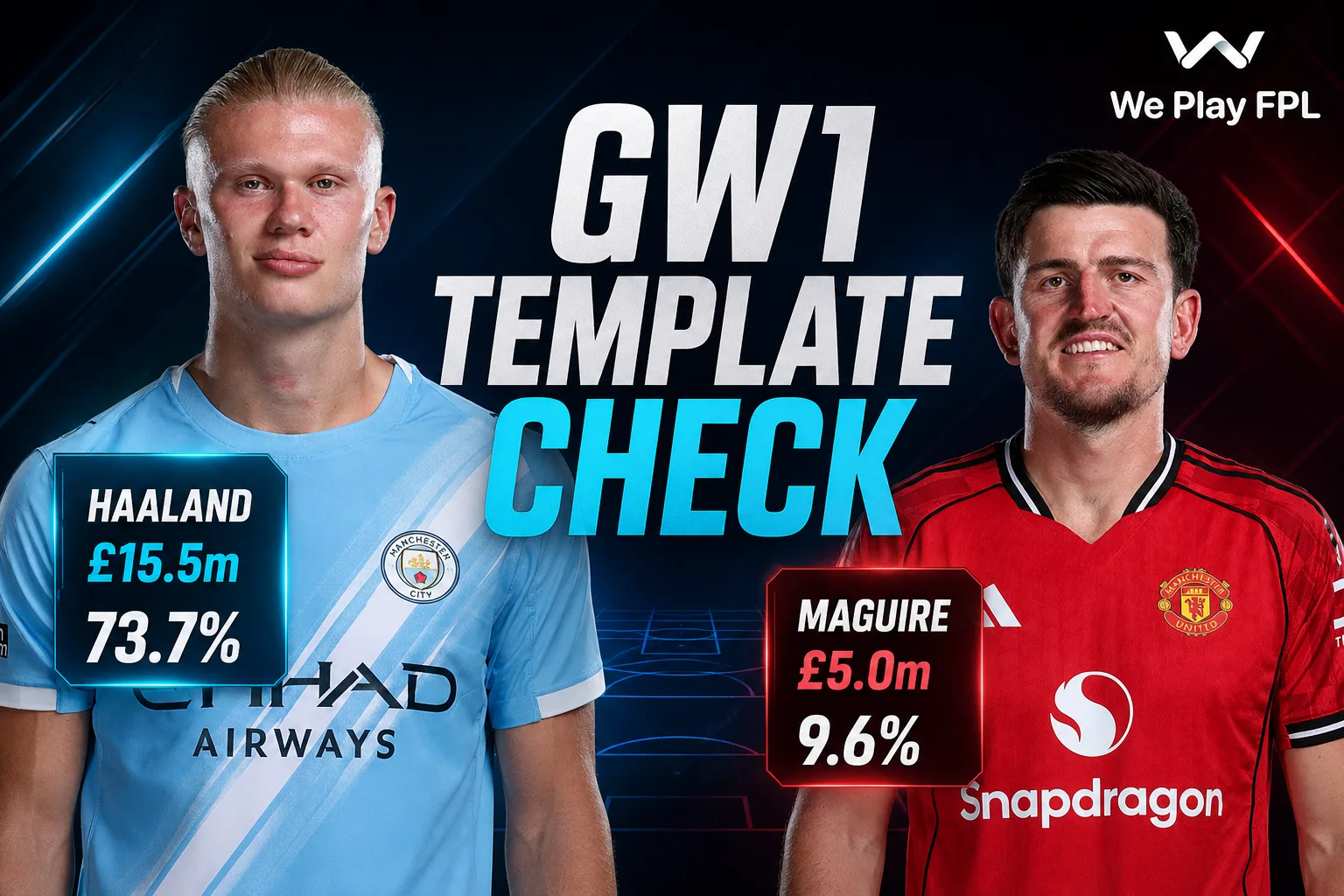
The early Gameweek 1 template has a clear shape: three playable forwards, two £4.5m goalkeepers and enough depth to support a Bench Boost. That structure suits managers who want to use the chip in GW1 or GW2, but it should not dictate all 15 picks.
A pre-season survey of more than 2,000 engaged managers found 44.1% planning a GW1 Bench Boost and another 27.5% targeting GW2. The same sample put 62.3% of managers in a 3-4-3. Those figures describe one active FPL community, so use them as a guide to current thinking rather than a forecast for the whole game.
The popular spine solves several hard squad problems. Erling Haaland provides a premium captain, João Pedro fills the mid-price forward slot and Dominic Calvert-Lewin keeps the third striker position playable at £6.0m. The better route to a distinctive squad lies in the positions where managers have reached less agreement: defence and the final midfield slot.
Let your chip plan set the squad shape
A GW1 Bench Boost needs 15 players with credible minutes. That requirement pushes money into the second goalkeeper, fifth defender and third forward. It also explains why so many early drafts share the same 3-4-3 structure.
Managers targeting GW2 can use a similar squad, but one extra week creates more injury and selection risk. The later chip gives you another set of line-ups and role clues before committing it. It also asks you to carry bench money through GW1 without receiving an immediate return.
Managers saving the chip can spend more on the starting XI. A £4.0m goalkeeper or £4.5m forward becomes easier to accept when the bench serves as cover. Choose the chip window before comparing individual players, because the same pick can make sense in one structure and waste money in another.
Keep the attacking spine under review
Haaland costs £15.5m, carries 73.7% official ownership and remains available in FPL. The survey sample placed his estimated ownership at 90% and his estimated GW1 effective ownership at 157% after captaincy. That effective-ownership figure comes from the survey sample rather than official FPL data, but it shows the rank risk attached to the armband decision.
João Pedro costs £7.5m with 55.7% official ownership. He gives managers a route into Chelsea’s attack without entering the premium bracket. Calvert-Lewin costs £6.0m with 25.0% ownership and preserves three playable forward slots. Their prices help a Bench Boost draft keep quality across the squad.
Each player still needs a deadline check. Confirm Haaland’s expected minutes, João Pedro’s role and Calvert-Lewin’s fitness before treating the trio as fixed. Popularity can show where managers have found a useful price point, but expected starts and role decide whether the player belongs in your team.
Spend £9.0m on goalkeepers only when both can help
Antonín Kinský and Bart Verbruggen both cost £4.5m. Kinský sits in 19.5% of official teams, while Verbruggen has 17.9% ownership. The survey estimates were much higher at 72% and 45%, which reflects the early Bench Boost focus within that sample.
Spurs visit Brentford in GW1, host Newcastle in GW2 and travel to Nott’m Forest in GW3. Brighton host Aston Villa, visit Chelsea and host Leeds over the same period. Verbruggen gets two home matches in the first three, while Kinský offers a different club route at the same price.
The pair costs £9.0m and lacks an obvious easy fixture in each week. Confirm both starting roles, then compare the combination with a cheaper reserve goalkeeper. Managers who plan to Bench Boost can justify two active slots. Managers saving the chip need a clear rotation benefit before investing the extra money.
Use defence to shape your own team
The survey sample placed no defender above 50%, leaving more room for fixture and minutes analysis than the forward line. Riccardo Calafiori, Harry Maguire and Joško Gvardiol show three different ways to use the £5.0m to £5.5m bracket.
Calafiori costs £5.5m with 17.5% official ownership. Arsenal host Coventry City in GW1, visit Aston Villa in GW2 and host Chelsea in GW3. The opener gives him an immediate case, but his starting role must survive the final pre-season checks.
Maguire costs £5.0m with 9.6% ownership. Manchester United visit Hull City, host Ipswich Town and travel to Everton across the first three Gameweeks. That price and fixture run make him a useful route away from the most common defensive picks if his place looks secure.
Gvardiol costs £5.5m with 13.5% ownership. His attacking ceiling can attract managers, but expected starts remain the main question. A defender who loses minutes can damage a Bench Boost twice: you lose the appearance points and may need an early transfer.
One controlled risk can improve a squad. Several uncertain defenders turn a deep team into a fragile one. Use the final pre-season line-ups to decide which player offers the best mix of price, fixture and security.
Test the Manchester United midfield double-up
Bruno Fernandes costs £12.0m with 48.3% official ownership. Bryan Mbeumo costs £8.0m with 24.0%. The survey sample estimated 71% for Fernandes and 61% for Mbeumo, showing strong interest in Manchester United’s opening run.
Hull away, Ipswich at home and Everton away support at least one United attacker. Fernandes offers the premium role and a captaincy alternative. Mbeumo needs to earn the second slot through his position, expected minutes and the midfielder you must remove to fund him.
The pair costs £20.0m. That concentration can pay off across the first three Gameweeks, but it narrows your midfield choices and links two expensive slots to the same attack. Compare Mbeumo with the best alternative at £8.0m or below, then judge the full squad rather than the double-up in isolation.
Treat ownership as a risk signal
Survey ownership shows where engaged managers agree. Official ownership shows the current position across the live FPL game. Neither percentage measures expected points.
Use the gap to identify decisions worth checking. Haaland’s captaincy can create rank exposure even for managers who own him. Maguire’s lower ownership can offer a useful route when his fixtures and minutes support the pick. Calvert-Lewin’s high survey estimate should send you back to fitness and role rather than push you into an automatic selection.
A differential needs a football reason. Lower ownership can increase the rank gain when a pick succeeds, but it cannot create the points. Price, minutes, role and fixtures still carry the decision.
Build the final draft in the right order
Set your Bench Boost week, choose the premium captain and decide whether you need three playable forwards. Add the goalkeeper structure next. Those choices establish how much money remains for defence and midfield.
Keep the strong parts of the template when they solve a real squad problem. Find your edge in the positions where you can support a different choice with better fixtures, stronger minutes or a cleaner price. Defence offers the widest opening now, while the final midfield slot can change the balance of the whole team.
Recheck Kinský and Verbruggen’s starting roles, the Arsenal and Manchester City defensive line-ups, Maguire’s place and Mbeumo’s position before the deadline. The best template team will change as those answers arrive. Your structure should absorb that news without forcing a full rebuild.
Chip Strategy
FPL GW1 Bench Boost 2026/27: Can Haaland and Bruno Fit in a Strong 15?
Test a Haaland-and-Bruno Bench Boost draft against minutes, bench value and the first four fixtures before committing the chip.
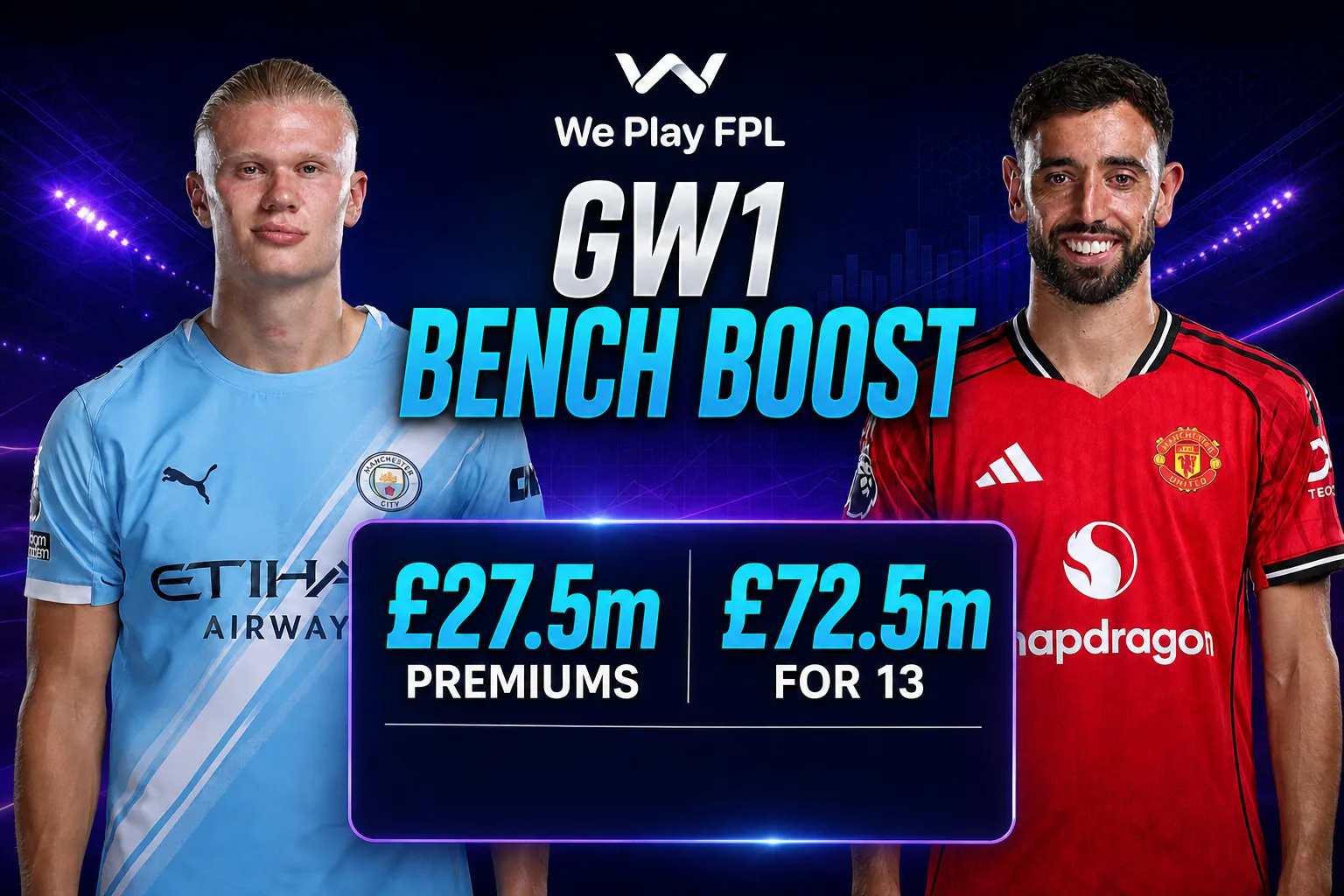
Erling Haaland and Bruno Fernandes cost £27.5m together. A GW1 Bench Boost draft with both leaves £72.5m for the other 13 players.
That budget can produce 15 starters, but the chip loses its appeal if cheap slots bring minutes doubts or force a weak attack. The right test starts with the team you want after GW1. Your bench should strengthen that squad for one week without creating three transfers for the next three.
Haaland costs £15.5m and faces Bournemouth at home in GW1. Fernandes costs £12.0m and starts at Hull away before hosting Ipswich. Official FPL lists both as available on 11 August. Their captaincy routes justify the spend, so the rest of the draft must carry its share of the work.
Run the £72.5m budget test
A Bench Boost squad needs two goalkeepers and 13 outfield starters with credible minutes. The cheapest practical base uses two £4.5m goalkeepers, one £4.0m defender, one £4.5m defender and a £5.0m midfielder. That structure protects more money for the starting XI.
Start with your preferred Haaland-and-Bruno team before funding the bench. Choose the attackers you expect to keep, then add four bench players you would trust in a normal gameweek. Save the chip if the final slots rely on several uncertain starters.
One minutes risk can unlock a better forward or midfielder. Three risks leave you exposed to a poor chip score and early transfers. The saving has to improve the whole squad, not add another fashionable name to the first XI.
Buy one Arsenal saving, not two
Arsenal host Coventry in GW1. Gabriel costs £8.0m, while Cristhian Mosquera and Riccardo Calafiori cost £5.5m each. Choosing one cheaper defender releases £2.5m, enough to repair a thin bench or move a budget attacker into a stronger price bracket.
Gabriel offers the safer long-term route. Mosquera and Calafiori need a firm starting outlook before the deadline. Owning both cheaper options would concentrate too much risk in one defence, so choose one saving and use the rest of the back line for secure minutes.
The fixtures still support an Arsenal defender after GW1. Arsenal visit Aston Villa in GW2, host Chelsea in GW3 and travel to Sunderland in GW4. A defender should survive that run without demanding an immediate sale.
Use Mbeumo as a planned bridge
Bryan Mbeumo costs £8.0m with 22.8% ownership. Manchester United visit Hull, host Ipswich and travel to Everton across the first three Gameweeks. That run makes him a strong short-term pick beside Fernandes if his final pre-season role supports the double-up.
The Manchester derby arrives at Old Trafford in GW4. Managers can hold Mbeumo or move into the £7.5m bracket, but the transfer needs a place in the plan before GW1. A Bench Boost draft should not spend its first transfer fixing a predictable fixture turn.
Fernandes carries the premium slot. Mbeumo needs to justify a second Manchester United place through his position and expected minutes. Team news should settle the decision.
Keep the cheap midfield slot useful after GW1
Brighton offer two routes in the final midfield position. Diego Gomez costs £5.0m with 2.0% ownership. Pascal Groß costs £5.5m with 10.0% ownership. Both carry available status in official FPL.
Brighton host Aston Villa in GW1, visit Chelsea, host Leeds and travel to Coventry. The run gives either player a use beyond the chip. Gomez saves £0.5m, while Groß costs more and needs enough set-piece involvement or role security to earn the difference.
European rotation keeps the deadline check open. Buy neither player on price alone. A cheap midfielder helps the draft when he starts and remains selectable in GW3 or GW4.
Protect the forward line
João Pedro costs £7.5m for Chelsea and Dominic Calvert-Lewin costs £6.0m for Leeds. Those prices give the draft two ways to balance the Haaland spend.
Chelsea visit Fulham in GW1 and host Brighton in GW2 before travelling to Arsenal. João Pedro can stay in the squad through that harder match if your bench covers it. Calvert-Lewin releases another £1.5m, but his fitness and role need confirmation before he becomes part of a chip plan.
Do not reduce every forward slot to fund four bench scores. Your attackers will carry the squad after GW1, while the Bench Boost disappears at the final whistle.
Check the GW2 to GW4 squad
The best GW1 Bench Boost draft still looks playable when you switch the chip off. Test every cheap pick across the next three fixtures and count the transfers you expect to make.
One planned move can work. A Mbeumo exit before GW4, for example, has a clear trigger. Several expected sales mean the squad was built for one deadline.
Your bench also needs a job after the chip. Cheap players can rotate around difficult fixtures or cover a short-term injury. They should not trap money in slots you refuse to start.
Make the final call at the deadline
Play Bench Boost in GW1 when all 15 players have credible minutes and the Haaland-and-Bruno core leaves enough quality across the squad. Hold it if the budget forces several doubtful starters or weakens the team you want for GW2 to GW4.
Check Haaland’s expected minutes, the Arsenal defence and Brighton’s midfield roles after the final team news. Confirm Mbeumo’s position in Manchester United’s last pre-season match. Those four checks decide whether the draft is ready.
The £72.5m test gives you a clean answer. If the other 13 players still form a squad you want after GW1, the chip has a case. If they do not, keep the Bench Boost and build the stronger team.