Brighton & Hove Albion
Chelsea End Years of Age-Restricted Spending With Welbeck Deal
Chelsea have signed Danny Welbeck, ending a long transfer trend built around younger players and big fees.


Chelsea’s latest transfer has broken a pattern that had defined their recruitment for more than three years. The club have signed the 35-year-old Danny Welbeck from Brighton & Hove Albion for an undisclosed fee, ending a run in which they had not paid for a player older than 25 since the summer of 2022.
That approach produced 48 deals and more than $1.94 billion in combined transfer fees, with the age profile heavily weighted towards youth. Players aged 18 to 26 accounted for every paid signing in that period, while there were no arrivals between 27 and 34. Welbeck stands alone at 35, representing a clear departure from the model Chelsea had followed so closely.
There were signs the club were open to adjusting that method before the move for Welbeck, and the earlier pursuit of Jordan Henderson pointed in the same direction. Behdad Eghbali had already spoken about the need for balance in the squad and the importance of more experienced additions.
“We’ve got to be better on a few things, to add more ready-made players at this part of the project, to take [it] to the next level, to be consistent over time. We recognize we need balance. You tweak a model, you improve, you learn from mistakes.”
Welbeck fits that description. He comes off the most productive Premier League season of his career, scoring 13 goals in 2025-26 and playing in all but one Brighton match. Only João Pedro scored more league goals for Chelsea last season, and he managed 15.
His underlying numbers were equally strong. He led Brighton for appearances, goals, non-penalty goals, expected non-penalty goals, shots and shots on target, while also finishing with the club’s best conversion rate among the top scorers. Fabian Hürzeler highlighted more than just the goals, saying, “He is not only scoring goals,” and adding, “I think he can help every team in the world,”.
Chelsea will also be encouraged by his existing understanding with Pedro. The pair spent two seasons together at Brighton and briefly overlapped at Watford, giving the new signing at least one familiar link as he arrives in west London.

Bournemouth
Premier League table comparison after five games: where 2026/27 stands against 2025/26
City lead the early table, while Spurs, Bournemouth, Fulham and Palace have all started below last season.

The opening stretch of the 2026/27 Premier League season has lasted longer than usual because of a change in the international calendar, but five games is still only enough to reveal early patterns rather than a settled table. The 20 clubs remain closely packed, and a single result can still reshape the picture quickly.
There is history behind treating this stage with caution. Last season, Wolverhampton Wanderers and West Ham United were the bottom two after five matches, while Bournemouth and Sunderland turned strong starts into European qualification. This year, the early evidence is already pointing in a few different directions.
Manchester City are the only side to have preserved a 100% record. Their 5-3 win over Sunderland, combined with Arsenal’s defeat at Brighton & Hove Albion, sends them into the break top of the table on 15 points, matching Liverpool’s total from the same stage last season. City are also in a much stronger position than they were in 2025/26, when they sat ninth and were eight points worse off.
Brentford and Brighton have made the sharpest gains. Both are five points better off than they were at this point last season, with Brentford rising 13 places and Brighton 11. Keith Andrews’ side were among those tipped for trouble before the campaign, yet they are now being mentioned as a possible European contender. They are one of five unbeaten teams.
Leeds United have also carried their momentum forward, while Newcastle United, Everton and Aston Villa have improved on their starts from last year. Nottingham Forest have the same points total as they did after five games last season, but they are two places higher.
At the other end, Tottenham sit bottom with two points and did not score their first league goals of the season until Aston Villa were already 3-0 up. Bournemouth are still without a first league win under Marco Rose, a clear fall from the fourth place they held after five matches last season.
Fulham and Crystal Palace have also gone backwards, with both lower in the table after managerial changes.
Arsenal
Why the Premier League has another three-week wait for its return
The Premier League is paused for three weeks as international football takes over until October 10.
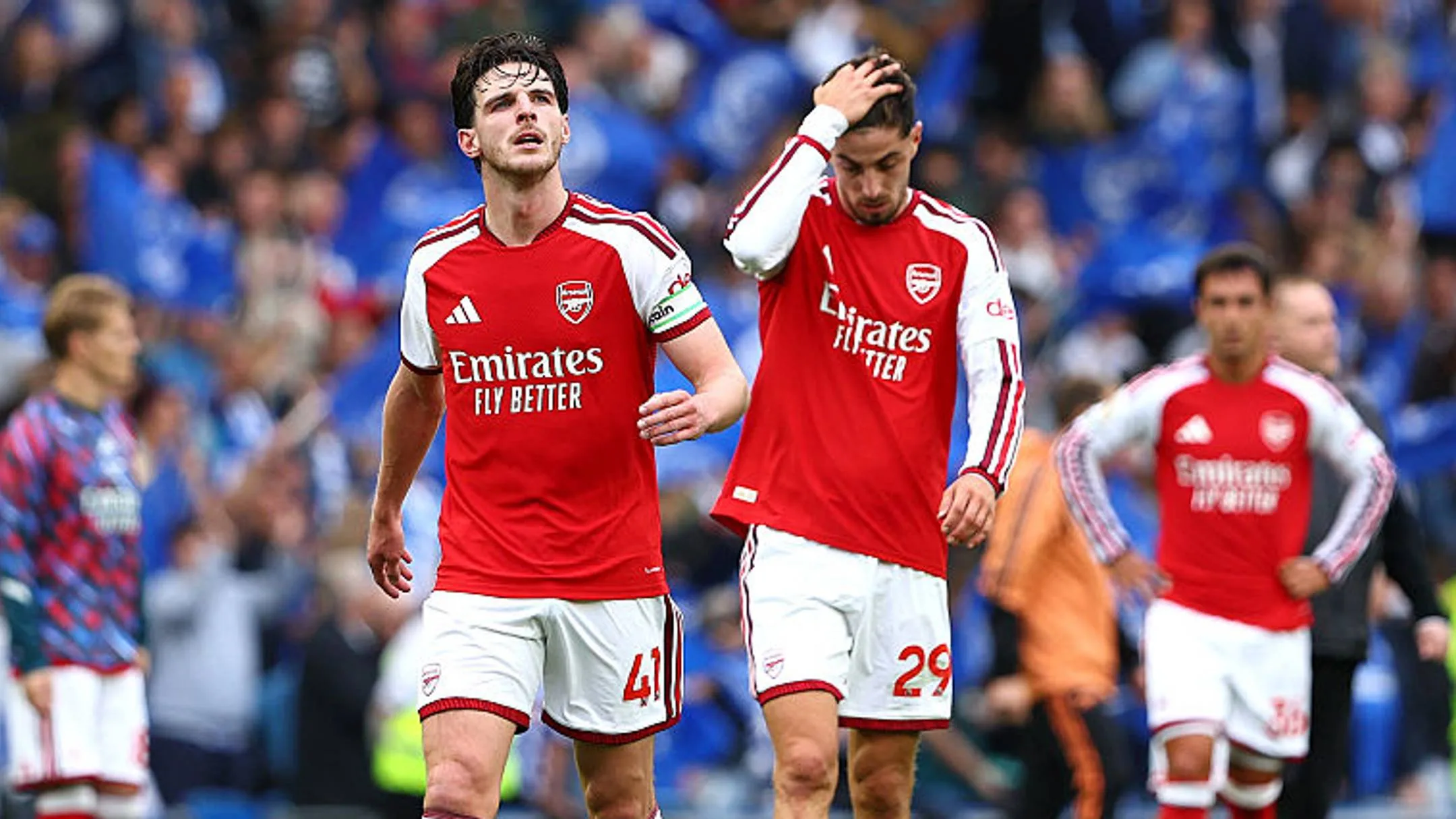
The first chapter of the 2026/27 Premier League season has already been completed, but there will be no league football for the next two weekends. An international break has taken over, and the domestic calendar will remain on hold until October 10.
That pause comes after a strong start from Arsenal, whose perfect record drew talk of a potentially one-sided title race. Yet Brighton & Hove Albion halted that run before the break, a result that offered a reminder that the leaders are not beyond reach.
For now, though, attention shifts away from club football and back to national teams. This is the first time sides have come together since the 2026 World Cup, and the next couple of weeks will be filled with fixtures that should keep supporters occupied.
The Premier League’s return is set for Matchday 6, when Arsenal open the weekend at Emirates Stadium against Leeds United. It will mark the restart of a schedule that has been interrupted by an extended pause created by the international calendar.
That calendar was changed by the FIFA Council in 2023, leaving only three international breaks this season. September and October have effectively been combined into one longer window, with further breaks still due in November and March.
The stoppage is not limited to England’s top flight. Club football across Europe has also been paused until the second weekend of October, while the 2026/27 UEFA Nations League begins to take centre stage.
Teams will play four times during this window, and several matches stand out. League A includes a rematch of the Euro 2024 final between England and Spain on Sept. 26, Germany against the Netherlands on Sept. 24, France at home to Italy on Oct. 2, and Portugal facing Norway on Oct. 4.
Arsenal
Arsenal dressing room left frustrated after Brighton defeat
Arsenal’s first defeat of the season left Bruno Guimarães describing a dressing room full of complaints.
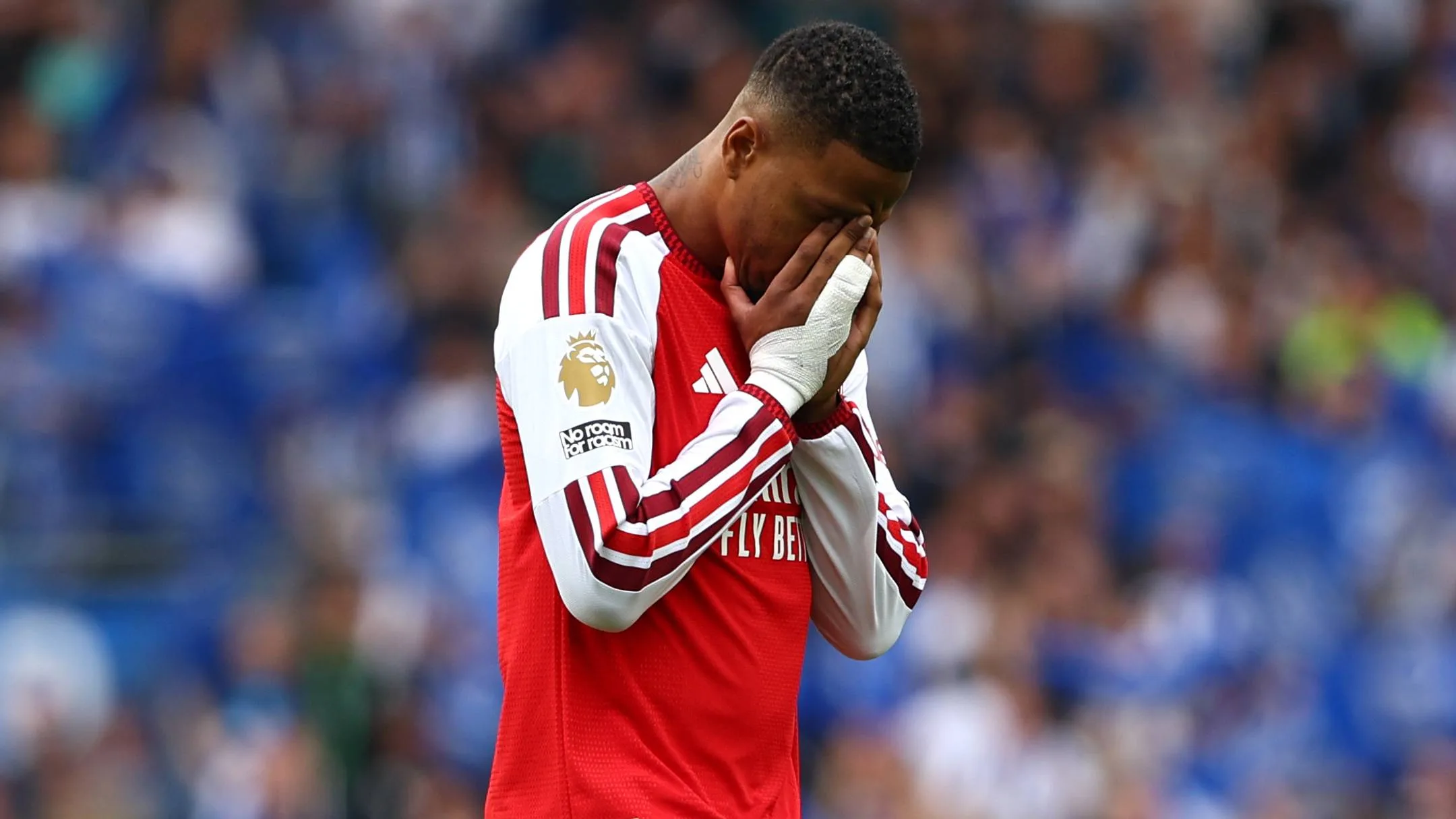
Arsenal’s first defeat of the season brought a bleak assessment from inside the dressing room after Saturday’s 3-0 loss to Brighton & Hove Albion. Bruno Guimarães said the reaction among the players was immediate, with the standard of the performance falling well below what was expected.
“In the first throw, you could sense it, it was so clear,” Arteta lamented, whispering through his postmatch press conference with a thinly veiled sense of fury. The mood was not much brighter in the locker room around the corner.
Guimarães described the match as one to move past, but not before stressing how badly Arsenal had fallen short. “I think today is a day to forget,” he said after his first Premier League start for the club. “Everything we tried didn’t work. Credit to them [Brighton] as well but we can’t accept this here.
“I think in the changing room, everyone was complaining about ourselves, about the level we played today. Like I said, it’s not acceptable. A very bad day in the office.”
Arteta viewed the defeat as a failure to meet the demands of the game. Brighton’s pressing and direct play repeatedly forced Arsenal into errors, and the Arsenal manager said his side had not matched the basics required in the Premier League.
“Brighton were another gear up from us,” Arteta fumed. “We were extremely poor technically and not respecting the game. And from our side there were certain basics that you need to accomplish in football, especially in the Premier League, that we were very far from.”
He added: “In the first duel, the second ball, that put the game, especially how direct they were, in a really difficult place for us,” Arteta added. “On top of that, when we did regain the ball, especially in our own half, the amount of technical errors that we did and we didn’t respect any principle of play that you have to get out of those man-to-man situations.”
Guimarães was among the most disappointing performers in red, especially given the expectations behind his summer move. Recognising his part in the collapse, he then issued a message of apology to the Arsenal fanbase and promised better days ahead.

Alejandro Garnacho’s career path has turned into a struggle for minutes

Premier League table comparison after five games: where 2026/27 stands against 2025/26