Manchester United
FA charge places Maguire’s availability for Chelsea game in doubt
Maguire faces an FA charge that could extend his suspension and rule him out of United v Chelsea…

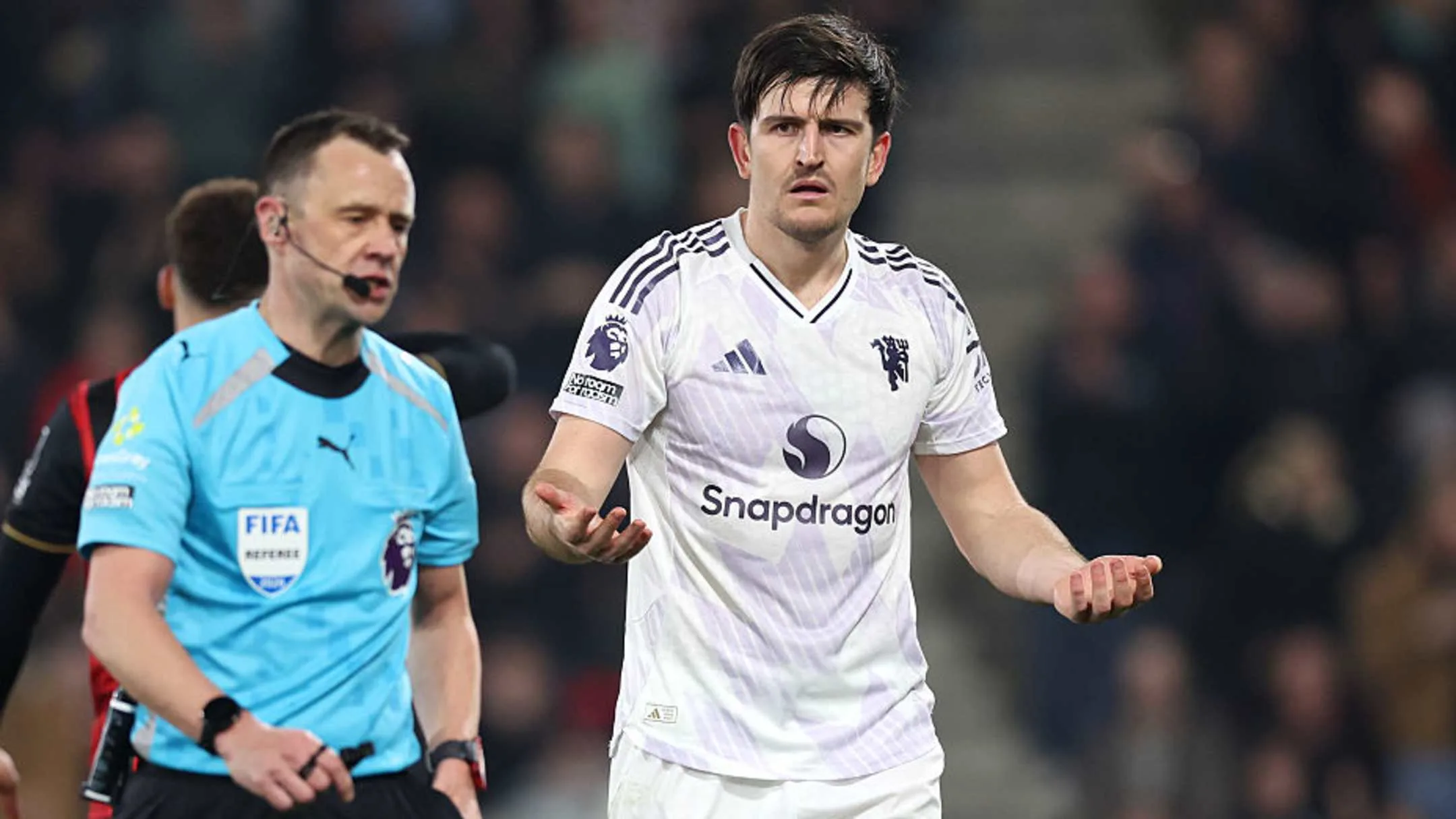
Harry Maguire has been charged by the FA over alleged improper conduct following his dismissal against Bournemouth, a development that could cost Manchester United the England centre back for the pivotal home meeting with Chelsea later this month.
United were frustrated that contact with Evanilson led to a penalty at the other end when Amad Diallo did not receive one in similar circumstances. Maguire protested to Atwell and then appeared to direct his anger towards fourth official Matt Donohue. Almost two weeks later the FA conveyed the charge over the allegation of Maguire acting in an “improper manner and/or used abusive and/or insulting words and/or behaviour towards the fourth official following his dismissal.”
Maguire has until Thursday, April 2 to respond and provide any mitigation. He is already suspended for the upcoming visit of Leeds United to Old Trafford on April 13 after receiving an automatic one-game ban for the red card at Bournemouth.
What follows depends on the response and any evidence offered. The FA’s disciplinary rule covering improper conduct is broad and carries no standard sanction; punishment is determined case by case. Acceptance of the charge combined with remorse could prompt leniency and a lighter outcome. Mitigating evidence could lead to the charge being dismissed. If Maguire contests the allegation and it is upheld, any additional punishment could be more severe.
The range of possible outcomes runs from a fine and/or a warning about future conduct to additional matches added to his existing suspension. Manchester United will be without Maguire for the Leeds match regardless. An extended ban would rule him out against Chelsea five days later. The Red Devils also face Brentford before the end of April, but adding two more games to the suspension is described in this context as unduly harsh.
The Chelsea fixture carries major significance for United’s European prospects. A win would widen the gap between Michael Carrick’s team and the Blues, who sit sixth, and could move United closer to securing a return to the Champions League next season.

Manchester United
Carrick Kept in Place as United Delay a Decision on the Dugout
United have kept Michael Carrick for Chelsea, but the pressure, uncertainty and successor talk remain in place.
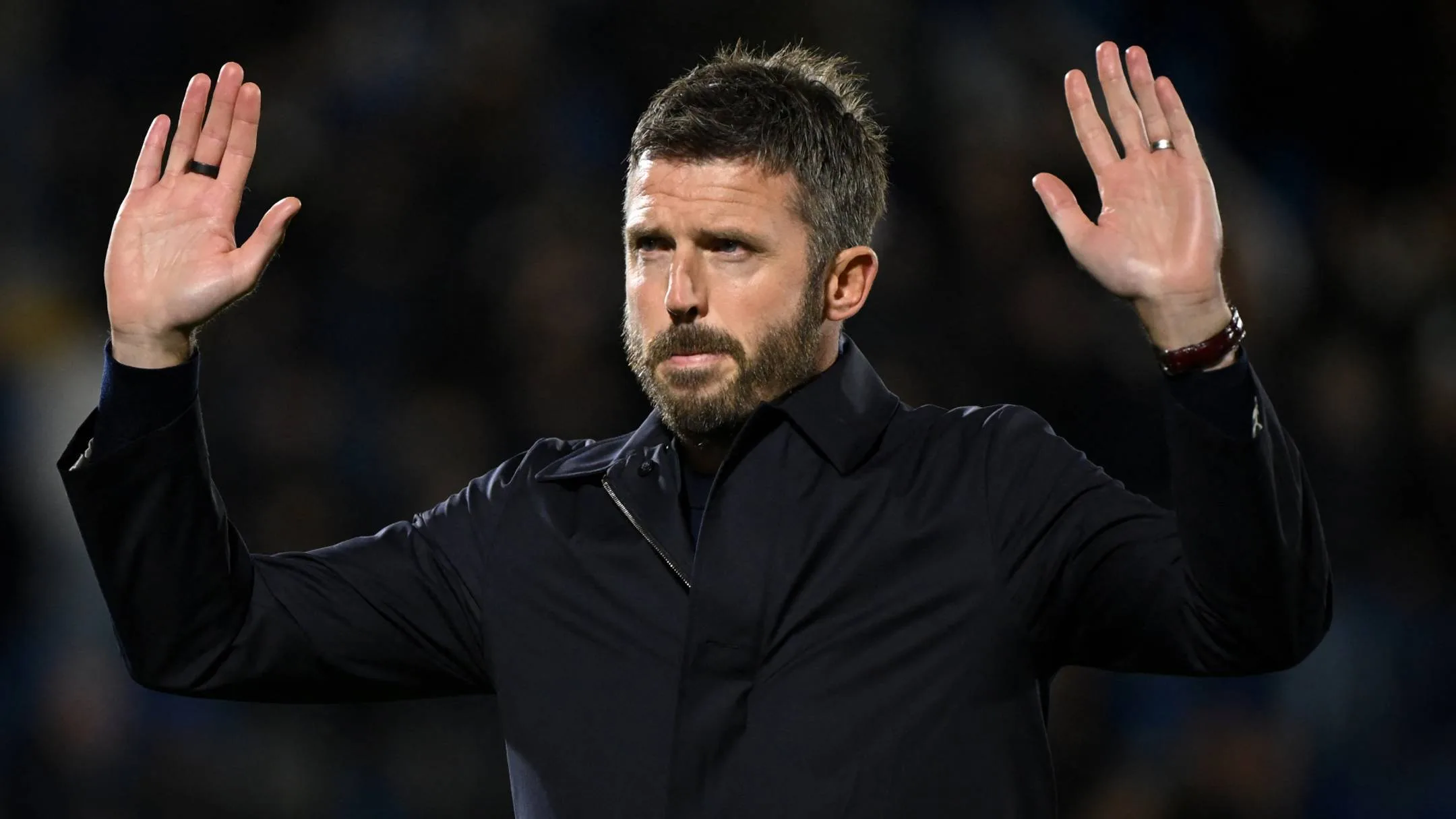
Manchester United have opted to keep Michael Carrick in charge for Saturday’s Premier League meeting with Chelsea, according to multiple reports. The move amounts to a stay of execution, but the reason for it, and how long it will last, remains uncertain.
Reports first outlined by Mike Keegan of The Overlap say the club’s senior figures have handed Carrick “the opportunity to turn things around”. What form that chance will take is not yet clear, and any fresh defeat against Chelsea would likely drag the pressure straight back onto the manager, unless there is a public endorsement from above. Even then, that kind of backing can often be the final warning rather than a safeguard.
Carrick’s presence continues to divide the mood around the club. At Old Trafford on Sunday, he received a warm response from the stands, with supporters singing his name as he waved what looked like an early goodbye. The players and executives were treated far less kindly. There were pointed chants against co-owner Sir Jim Ratcliffe, the Glazer family and technical director Jason Wilcox, while the refrain “Sell United and f— off home” rang out loudly.
That fan support for Carrick has not been ignored by those inside the club, with ESPN reporting it “did not go unnoticed”. In a toxic atmosphere, a manager who remains popular with supporters can serve as a useful buffer, although whether Carrick is comfortable being cast in that role is another matter.
The playing squad, meanwhile, is split. Bruno Fernandes has made his position clear, but there is also visible backing for Carrick. Senne Lammens offered support before the Bournemouth defeat, a stance later echoed by Harry Maguire, who said: “We’re fully behind Michael,”. “As individuals, we’re not playing well enough.”
The Guardian reports that Wilcox is driving the decision to retain Carrick, at least for now, while also leading the argument for Eddie Howe as a possible successor. Howe is expected to cost £3 million ($4 million) after agreeing future compensation with Newcastle United during his summer exit.
The calendar may yet work in United’s favour. The lack of Carabao Cup involvement gives the hierarchy five clear days after Chelsea to act, before Roma in the Champions League and then Aston Villa in the Premier League. The November international break could also open a more convenient window.
Asked why United keep finding themselves in the same mess, Carrick replied: “If I really had the answers, I wouldn’t have let it happen,” and added, “If I could do something about it and there was something that I could really control, then I would’ve tried to do everything I can to not be in this position.”
His point is hard to dispute. The wider problems at United run far beyond one manager, with the Glazers’ 2005 leveraged buyout beginning a financial slide that has left the club more than $1.5 billion in debt and owing almost $500 million in transfer fees. Ratcliffe has said the club was close to running out of cash flow before cuts were imposed. Even after a stronger summer 2025 window, the damage of years of mismanagement remains.
Manchester United
Carrick’s Manchester United future hangs in the balance as talks continue
Carrick’s future is unclear as United weigh managerial options, finances and the Chelsea fixture.
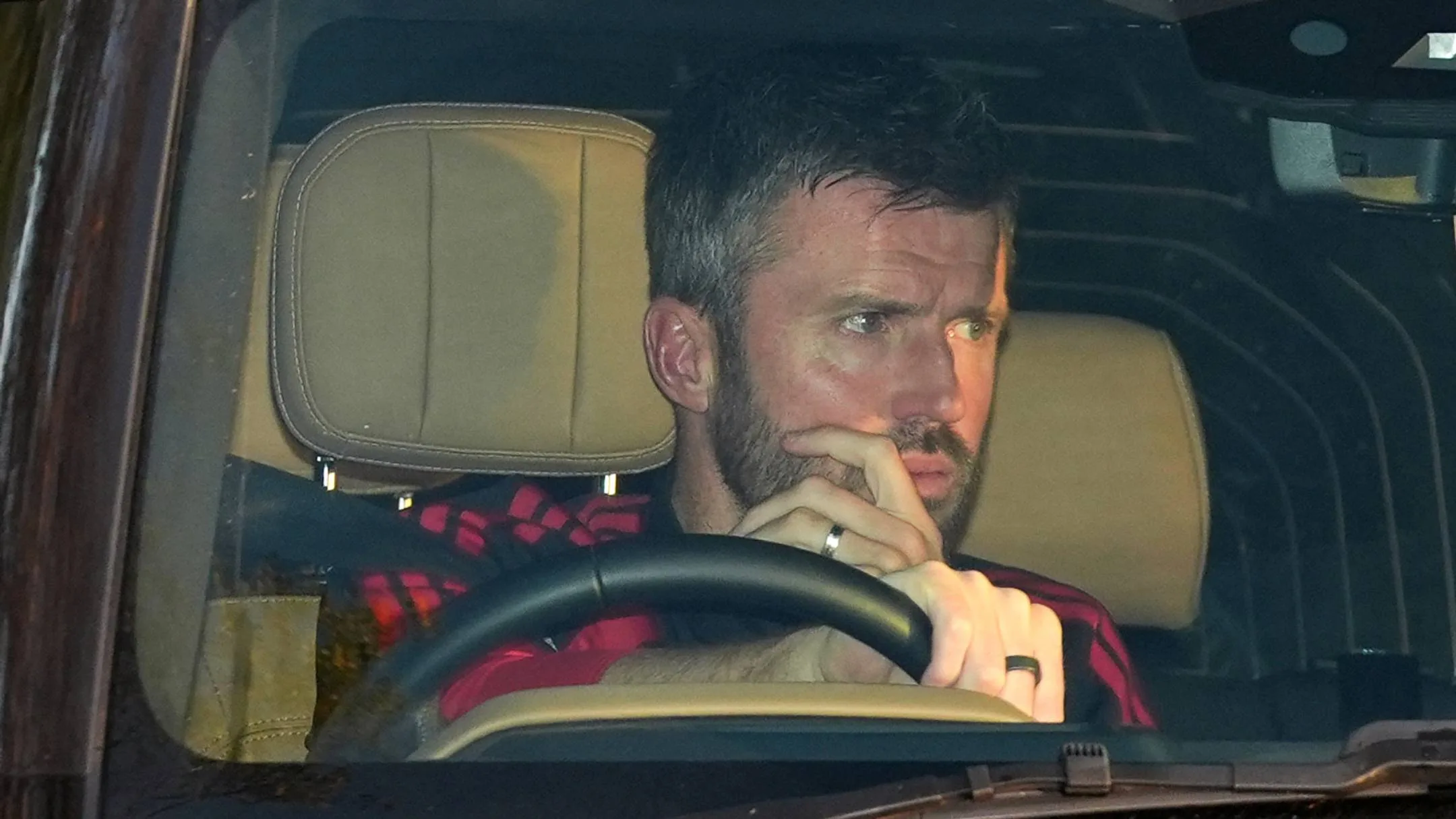
Michael Carrick’s position at Manchester United remains unsettled, with uncertainty surrounding both his immediate future and the club’s next step. Gary Neville described his former teammate as “a dead man walking” after the 3-0 defeat to Bournemouth, and reports suggested United were already identifying possible replacements. Yet by Monday morning, Carrick was still carrying out his duties as usual.
According to the Daily Mail, he was at the training ground to watch a behind-closed-doors U-21 friendly with Hull City. It is still not clear whether he will lead the first-team session on Tuesday, or whether he will still be in charge for Saturday’s Premier League meeting with Chelsea. That uncertainty reflects the broader confusion around the situation.
While Carrick watched young players such as Shea Lacey, Tyler Fletcher and Harry Amass, The Athletic reported that “crunch talks” were taking place among the key decision-makers. Those involved were thought to include minority co-owner Sir Jim Ratcliffe, majority shareholders Joel and Avram Glazer, chief executive Omar Berrada and sporting director Jason Wilcox.
United supporters made their feelings clear on Sunday. The manager was warmly received, while the players and club executives were met with fierce criticism from the stands. Carrick, however, cannot be blamed for the 13 years of poor results since Sir Alex Ferguson departed. As Ratcliffe said in 2024: “There have been a whole series of coaches, some of which were very good. And none of them were successful, or survived for very long. The only conclusion you can draw is that the environment in which they were working didn’t work.”
That environment still appears deeply flawed, but changing one manager is easier than overhauling the wider structure. Even so, deciding who should come next has not been straightforward. Wilcox is believed to prefer former Newcastle United manager Eddie Howe, while Christopher Vivell is reported to favour Julian Nagelsmann. Antonio Conte has also been linked, with BBC Sport saying the Italian would be “keen” on the role.
Financial considerations may also be slowing the process. The Athletic reported “lingering suspicions” that cost is part of the delay. Carrick is four months into a two-year deal, and any severance would be “considerable.” Hiring a replacement would also bring extra expense, with The Guardian stating that Howe’s appointment would cost around £3 million ($4 million), plus the cost of bringing his staff with him.
For now, there are “no guarantees” Carrick will be in place for Chelsea. The fixture matters both immediately and longer term, with United needing Champions League qualification to give any future manager meaningful backing.
Manchester United
Fernandes settles for 27th in Ballon d’Or vote after record assist season
Fernandes finished 27th in the Ballon d’Or, despite a record-setting season of creativity.
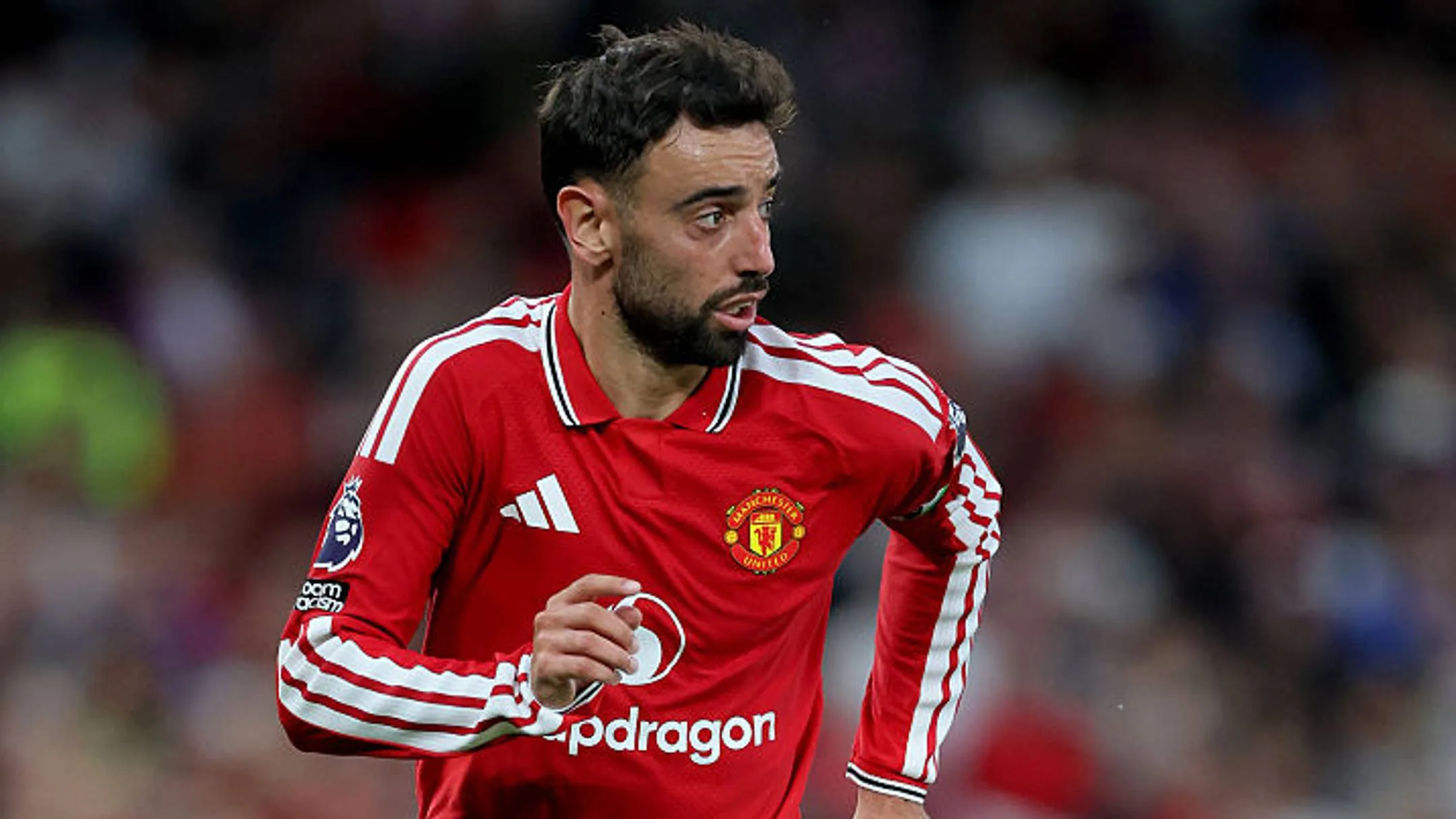
Bruno Fernandes was placed 27th in the 2026 Ballon d’Or rankings on Monday night, a reminder that individual recognition can arrive at an awkward time. The Manchester United captain learned of his position the day after being left on the bench for the defeat to Bournemouth, a result that deepened an already difficult week.
The Portuguese midfielder’s season, though, was built on rare production. Across the 38-game campaign, he created 21 goals, setting a new benchmark and moving beyond the previous high of 20 assists, a mark held by Thierry Henry from 2002-03 and matched by Kevin De Bruyne in 2019-20. Fernandes was then rewarded with a clean sweep of the FWA Footballer of the Year, PFA Players’ Player of the Year and Premier League Player of the Season awards, along with a club-record fifth Sir Matt Busby Player of the Year honour.
Before the ceremony at the London Palladium, the players outside the top 10 were unveiled in reverse order. Votes came from 100 journalists, one from each of FIFA’s top 100-ranked national teams, and Fernandes ultimately finished behind the leading names in the count. He was only above William Saliba and Sadio Mané, who shared 29th, and Julián Quiñones in 28th place. Declan Rice, who had lost out to Fernandes in the domestic awards, ended up 13 places higher.
This was Fernandes’s second Ballon d’Or nomination, following his inclusion in 2021. That year he finished equal 21st, just ahead of Harry Kane and Luka Modrić among others.
His profile has changed since then. In 2020-21, Fernandes was scoring with far greater regularity, finishing with 28 goals in all competitions as Manchester United came second in the Premier League. Even so, nomination alone remains significant, with fewer than 0.1% of professional players ever reaching that stage.
Manchester United’s history in the award is well established. Denis Law was the club’s first winner in 1964 after scoring 46 times in 1963-64, while Bobby Charlton claimed the prize in 1966 after playing a major role in England’s World Cup triumph.