FPL
Fantasy Premier League Guide: Top Mid-Table Assets and Differential Picks for FPL 2025/26
Discover the top FPL picks and best differentials from mid-table clubs for the 2025/26 season.


The new Fantasy Premier League season is almost here, and once again, most managers will find themselves hunting for value and differential picks outside the usual big hitters. Whether you’re a template follower or a risk-taker, there’s a lot to unpack among the mid-table clubs this year. Let’s break down the top assets from Wolves, West Ham, Bournemouth, Manchester United, Everton, and then take a quick look at the ultimate Differentials for those managers brave enough to chase those elusive green arrows.
Wolves: Trust in Strand Larsen – But Who Else?
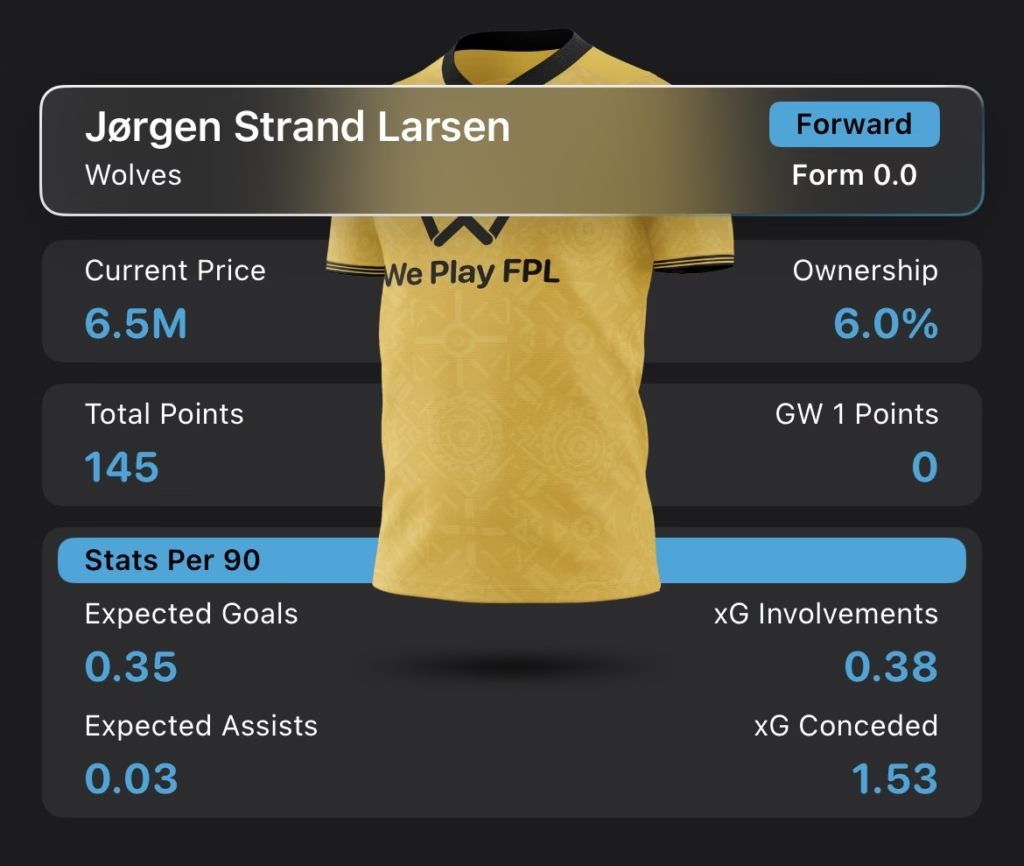
Wolves rarely dominate FPL conversations, but there’s one player who stands out for 2025/26: Jorgen Strand Larsen (£6.5m). With 14 goals and four assists in just 30 starts last season (despite not being on penalties), Strand Larsen is poised for even bigger things this year now that Cunha has departed. The Norwegian is tipped to take spot kicks, making him the clear focal point of Wolves’ attack. He’s already opened his preseason account, and with winnable fixtures early on, he could offer more consistency than most in his price bracket.
Looking for a budget midfielder? Keep an eye on Jhon Arias (£5.5m). He’s a new arrival with flair, set-piece potential, and a history of creating chances. Arias may not be nailed for 90 minutes just yet, but if he starts strong, the left-sided role could be his to lose. Lastly, for those who love a budget defender, Ki-Jana Hoever (£4.0m) is worth considering as Wolves rebuild their defence. He’s shown attacking promise, but is probably best used in rotation – especially with home games against Everton and Leeds in the early weeks.
West Ham: Bowen’s New Role, Wan-Bissaka’s Bonus Appeal
If you’re after guaranteed returns, Jarrod Bowen (£8.0m) is your man. Reclassified as a forward, Bowen scored 13 and assisted 11 last year, topping 193 FPL points and outshining every other Hammer by a distance. He’s the main attacking threat, and West Ham’s opening fixture against Sunderland looks a good place to start.
Defensively, the introduction of bonus points for defensive actions puts Aaron Wan-Bissaka (£4.5m) and Max Kilman (£4.5m) firmly on the FPL radar. Wan-Bissaka’s move from Manchester United saw him rack up two goals and six assists, and his interceptions and tackles mean he could pick up extra points under the new rules. Keep an eye on how the signing of Kyle Walker-Peters impacts his minutes. Kilman, meanwhile, is a clearance machine, perfect for picking up those new defender bonuses – and potentially a safe pick if you want a solid, busy centre-back.
Bournemouth: Kluivert’s Penalties and Truffert’s Attacking Promise
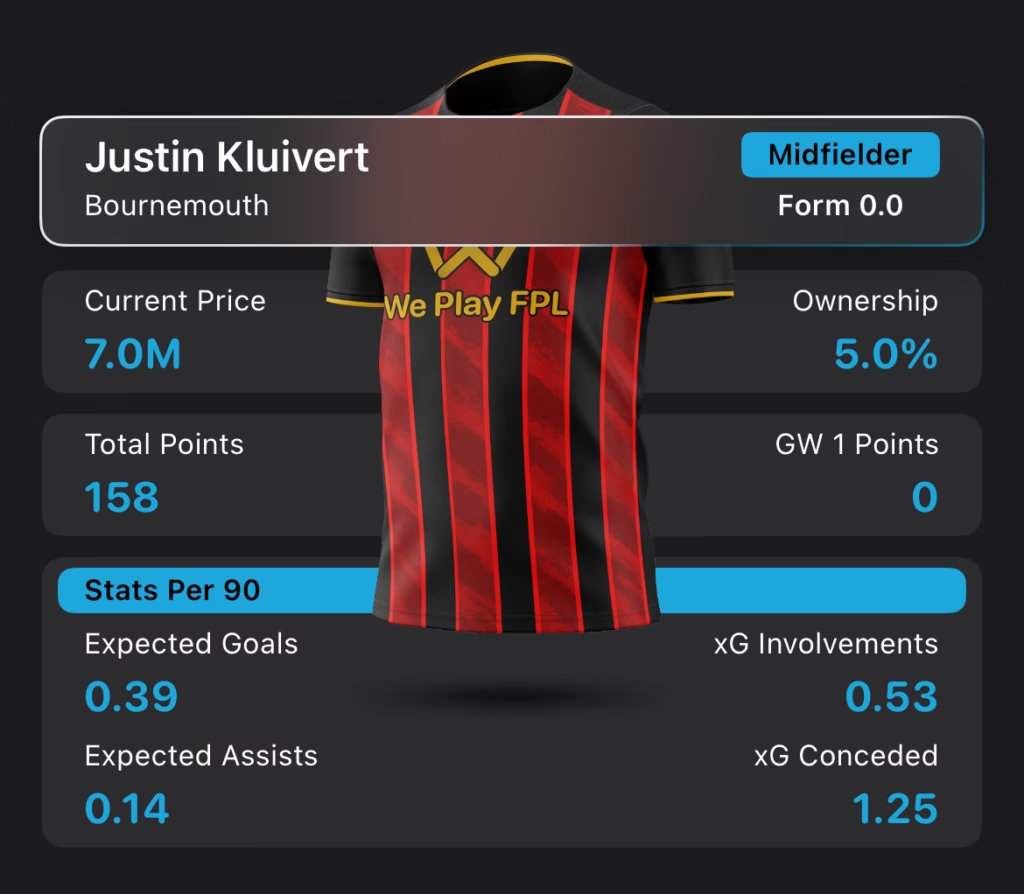
Justin Kluivert (£7.0m) offers goals, creativity, and – crucially – penalties. With 12 league goals last season (including a hat-trick of spot kicks at Wolves), Kluivert leads Bournemouth’s attacking options. Manager Andoni Iraola’s attacking setup means Bournemouth are expected to keep scoring, even with a tough run of fixtures to start.
Antoine Semenyo (£7.0m) is another reliable attacking pick, leading the team for shots last year and trailing only Salah and Palmer for attempts league-wide. He’s a safe, ever-present threat in the box, already scoring in pre-season. At the back, Adrien Truffert (£4.5m) stands out. The new French left-back brings attacking upside (already bagging a brace in preseason) and could prove a budget gem, even if he starts on the bench for tough fixtures like Liverpool away.
Manchester United: Fernandes Still the Main Man
Despite United’s rocky season, Bruno Fernandes (£9.0m) remains their best FPL asset. Eight goals and 12 assists last year tell the story, but his all-round play – set pieces, penalties, and a high number of ball recoveries – give him multiple routes to points. The new defensive contributions rule should only boost his appeal.
Patrick Dorgu (£4.5m) is the best defensive option after a lively preseason, with a goal and assist already. He looks nailed for starts and has enough attacking intent to make him worth watching. Amad (£6.5m) is a wildcard pick – he broke out last year with eight goals and eight assists but may play a deeper role due to United’s new signings. Still, his price makes him tempting if you want a mid-priced punt. As for new arrivals Cunha and Mbeumo, consider waiting to see how they settle before investing.
Everton: Value Up Front and at the Back
If you’re looking for a budget forward, Beto (£5.5m) offers strong early-season value. Eight goals in 15 starts last season and on penalties in preseason, he’s the focal point of Everton’s attack. Iliman Ndiaye (£6.5m) edged Beto for goals last season and is the usual penalty taker, but his price is a little higher and rotation risk remains.
Defensively, James Tarkowski (£5.5m) could be a game-changer under the new rules. He would’ve been among the top scorers for defensive actions last season, and with Everton boasting strong underlying defensive numbers, there’s reason for optimism. With Pickford’s price up and fullback rotation likely, Tarkowski is the safest Toffee in defence.
The Ultimate Differentials
Want to really break away from the pack? The Ultimate Differentials is all about low ownership and high upside. A few highlights:
- Bart Verbruggen (Brighton, £4.5m) pairs well for rotation and offers clean sheet potential as Brighton improve defensively.
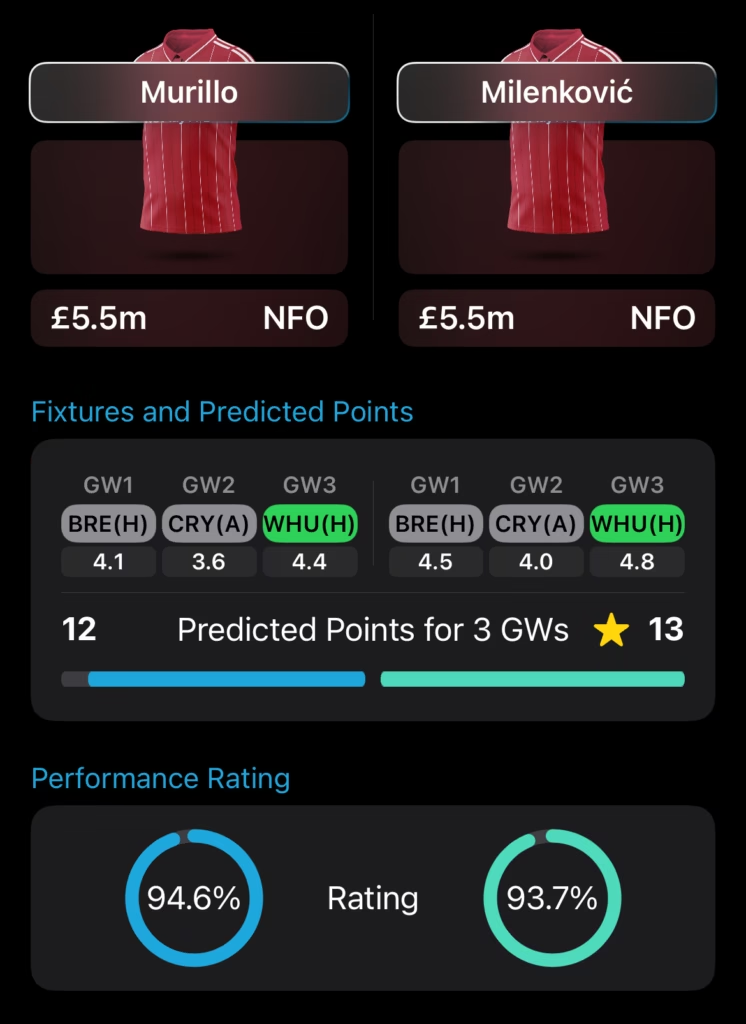
- Murillo and Milenkovic (Nottingham Forest, £5.5m) both are bonus and goal magnets; early fixtures are strong for defensive returns.
- Muñoz (Crystal Palace, £5.5m) ultra-attacking fullback with serious goal threat.
- Eze (Palace, £7.5m), Gibbs-White (Forest, £7.5m), Kluivert (Bournemouth, £7.0m) each could deliver big points and are owned by under 10% of managers.
- Evanilson (Bournemouth, £7.0m) and Wissa (Brentford, £7.5m) flying under the radar up front despite strong returns last year.
Differentials like these are best used to complement a solid core. Don’t go all in, but having two or three low-owned gems can supercharge your rank if they hit early.
Download the “We Play FPL” App Today
Ready to optimize your FPL squad with live predictions, transfer planning, and player comparisons? Download the We Play FPL app now. Make every transfer count and get the edge on your rivals all season long.
May your arrows be green. happy managing!

Fixtures
GW8 Rice: does the £7.3m buying case add up?
Rice offers set pieces and playing time, but his goal threat and defensive contribution rate warrant caution at £7.3m. Separate a new buy from an existing hold.

Declan Rice costs £7.3m before GW8, and we would approach a new purchase with caution. He offers set pieces and substantial playing time, but his goal threat and defensive contribution rate leave buyers relying on assists and bonus to justify that midfield spend.
Everton at home gives him a useful immediate fixture. You still need a reason to prefer him across your intended holding period. Existing owners face a different calculation: a cautious buying verdict alone gives you little reason to spend a transfer selling him before that match.
Start with the attacking return you need
Rice has averaged 84.4 minutes per match. Managers can value that involvement while recognising how he uses those minutes. His season-to-date expected attacking rates are 0.04 xG/90, 0.18 xA/90 and 0.22 xGI/90.
The assist component accounts for most of that expected involvement. His set-piece role gives him a route to returns, but a buyer expecting regular goals would need evidence of a stronger attacking role. At £7.3m, you should assess whether you want that spending power in a midfielder who creates chances or in one with more goal involvement.
These historical expected rates describe his performances so far. They do not forecast his next score. Rice can exceed them in a particular match; that possibility carries less weight than a repeatable role when you commit several weeks of midfield budget.
Treat defensive contributions as an extra route
Rice has recorded 9.29 DefCon/90 alongside his average of 84.4 minutes per match. That gives you another part of his scoring profile to assess, but it does not establish a dependable defensive contribution return in each fixture.
A per-90 average cannot tell you how often he will meet a match threshold. Individual fixtures vary, and average playing time also matters. Buying him on the assumption that defensive contribution points will compensate for low goal threat asks too much of that one rate.
We would want the purchase to make sense through his overall role and price. Treat any defensive contribution return as part of the upside you assess, rather than a fixed addition to your weekly points expectation.
Check the weeks you plan to start him
Arsenal host Everton in GW8, visit Liverpool in GW9 and host Hull City in GW10. You get two home fixtures around a more demanding away match. Assess that whole window before treating the Everton match as sufficient reason to buy.
A short-term purchase needs to justify both the arrival and any planned exit. A longer hold means accepting the fixtures beyond Hull: Newcastle away in GW11, Manchester City at home in GW12 and Brentford away in GW13. Choose your intended starts before committing the money.
You can compare midfield options in We Play FPL using performance data and upcoming fixtures, then map the transfer across your planned Gameweeks. Include the alternative use of the £7.3m in that comparison: a cheaper midfielder may let you improve another starting position, while a more attacking option may suit the same budget.
A cautious buy, with room for owners to hold
Our GW8 verdict is to demand a specific squad benefit before buying Rice. Secure involvement and set pieces help his case; 0.04 xG/90 and 9.29 DefCon/90 give us little reason to assume he will deliver goals or defensive contribution points on demand.
If you own him, Everton at home gives you a reason to hold while you address a clearer weakness elsewhere. Reassess if his role changes or your alternative improves the starting XI enough to justify the move. A new buyer can take more time to compare the full scoring profile before paying £7.3m.
Fixtures
GW8 captaincy: Haaland or a Chelsea alternative?
Haaland remains our GW8 captaincy choice. Compare his attacking rates with João Pedro and Palmer, including average minutes, fixtures and penalty roles.

Haaland remains our GW8 captaincy choice. Aston Villa away gives managers a reason to consider Chelsea’s home game against Spurs, but we still favour his attacking threat over the alternatives. João Pedro is our first Chelsea challenger; Palmer offers a different route through penalties and midfielder scoring.
You can make this decision with the players you own. A captaincy preference for one deadline needs a stronger justification before you turn it into a transfer.
Haaland leads on attacking involvement
Haaland has produced 0.83 xG/90 and 0.11 xA/90, combining for 0.94 xGI/90. He has averaged 88.4 minutes per match. Among these three candidates, he has the highest rate of expected attacking involvement and enough playing time to support our armband lean.
Villa away carries more uncertainty than a home fixture. We cannot translate Haaland’s season-to-date rates into a promised GW8 score, and City can struggle even with their leading forward available. His underlying attacking case still gives us a reason to keep the captaincy on him.
His popularity should change how you think about rank exposure, rather than how you assess his chance of returning. Captaining a less popular player increases the consequence of the choice in either direction. It does not improve that player’s fixture, role or expected involvement.
João Pedro is the Chelsea challenger
João Pedro faces Spurs at home and has averaged 86.8 minutes per match. His 0.53 xG/90 and 0.05 xA/90 produce 0.58 xGI/90, below Haaland’s rate but above Palmer’s.
We prefer João Pedro of the two Chelsea options if you want to back their attack. He offers the stronger goal-threat rate in this comparison, and the home fixture gives managers a reason to consider him. You still need to accept that you are choosing him over a player with a higher historical attacking rate.
For managers without Haaland, João Pedro is a credible captain from an existing squad. Buying a player for the armband alone requires you to judge the transfer’s cost and your plans beyond GW8 as well.
Palmer brings penalties and midfielder scoring
Palmer has averaged 88.4 minutes per match and holds first place in Chelsea’s penalty order. As an FPL midfielder, he has a different scoring route from the two forwards. Those factors keep him in the conversation against Spurs.
His attacking rates give us less reason to put him first: 0.21 xG/90 and 0.13 xA/90, or 0.34 xGI/90. Penalty priority matters if Chelsea win one; it gives us no certainty that they will.
We lean João Pedro over Palmer within the Chelsea pair. Palmer remains defensible if you place more weight on his penalty role and midfielder scoring, but that choice asks you to look beyond the lower attacking involvement he has recorded so far.
Set the armband, then check the news
Our order is Haaland, João Pedro, then Palmer. All three are available at the time of writing. Recheck late fitness and selection news before the GW8 deadline, Friday 23 October at 17:30 UTC, and choose a vice-captain who can cover an absence.
You can compare players and test captain choices in We Play FPL using the player comparison and squad planner. Treat projected points as one input alongside fixtures and role; they do not guarantee a return.
The expected metrics above describe season-to-date performance. Use them to compare attacking involvement while allowing for the uncertainty of one match.
Chip Strategy
GW8 defender rotation: Muharemović now or Van Hecke later?
Muharemović offers a GW8 entry point, Van Hecke has later home fixtures and Silva provides another route from GW9. Match the purchase to your planned starts.

Tarik Muharemović is our preference among these budget defenders if you need a GW8 starter. Jan Paul van Hecke makes more sense if you can cover this week and want a defender for the home games in GW9 and GW11. Before spending around £5.0m, mark the weeks in which your new signing must play.
That distinction matters on a Wildcard, too. You can afford a tougher opening fixture for a fourth defender if your other three have suitable matches. A defender who has to start this weekend needs a different assessment.
Muharemović for the immediate vacancy
Muharemović costs £5.0m and faces Sunderland away in GW8. We prefer that entry fixture to Van Hecke’s trip to Chelsea or Silva’s visit to Manchester United. The case depends on needing him this week: Leeds then visit Bournemouth, host Spurs and travel to Chelsea.
He has averaged 90.0 min/match. His defensive contributions offer another scoring route alongside a possible clean sheet, with a season-to-date DefCon/90 of 10.43. Treat that as a rate across matches, not a promise that he will reach the scoring threshold in the next one.
His expected goals conceded rate is 1.39 xGC/90, while his attacking involvement stands at 0.11 xGI/90. Those figures support a measured purchase for a specific starting gap. They give little reason to expect regular attacking returns or to buy him without checking the rest of the Leeds run.
Van Hecke for GW9 and GW11 cover
Van Hecke costs £4.9m. Spurs face Chelsea away in GW8, Crystal Palace at home in GW9, Leeds away in GW10 and Ipswich Town at home in GW11.
The two home fixtures make him worth considering if your defence needs help in those weeks. Buy him before GW8 only if you can accept the Chelsea fixture or leave him on the bench without weakening your starting defence. You can wait until GW9 if you have no need to make the move before then.
He has averaged 90.0 min/match, with 1.34 xGC/90 and 0.17 xGI/90. His DefCon/90 is 9.29, below Muharemović’s 10.43. The small gap between their expected goals conceded rates does not establish a clear winner for the next match; their opponents and your planned starts deserve more weight in this choice.
Silva offers a different route from GW9
Silva costs £5.0m and starts with Manchester United away. Bournemouth then host Leeds, visit Ipswich Town and host Nottingham Forest in GW9–11. Consider him if you want a defender you can use across that stretch, rather than someone you need for GW8 alone.
He has averaged 90.0 min/match. His rates are 1.16 xGC/90, 0.24 xGI/90 and 10.43 DefCon/90. He has the lowest expected goals conceded rate and the highest attacking involvement rate of this trio, but those season-to-date measures do not forecast his next three scores. Check the fixtures against your other defenders before paying the extra £0.1m over Van Hecke.
Map the starts before buying
Write down your three intended starting defenders for GW8 through GW11, then identify the vacant slots. You can map future lineups and compare rotation options in We Play FPL before committing the transfer. The planner supports future squad drafts and lineups, while the rotation scout helps assess player combinations across upcoming fixtures.
For a GW8 vacancy, we lean towards Muharemović. For gaps in GW9 and GW11, Van Hecke’s home fixtures warrant a closer look. Silva suits a manager who can cover GW8 and wants another option for the following run.
Keep the cost of the whole defence in view. Spending around £5.0m on a fourth defender needs a purpose if the extra money could improve a regular starter elsewhere. Check availability and the expected starting lineups before the GW8 deadline on 23 October at 17:30 UTC, then choose the player for the weeks you intend to use him.