
Paris Saint-Germain
The Premier Dribblers: A Compact Review of 15 Ballers Who Dazzle
A measured assessment of the game’s finest dribblers: speed, close control and decisive moments. …

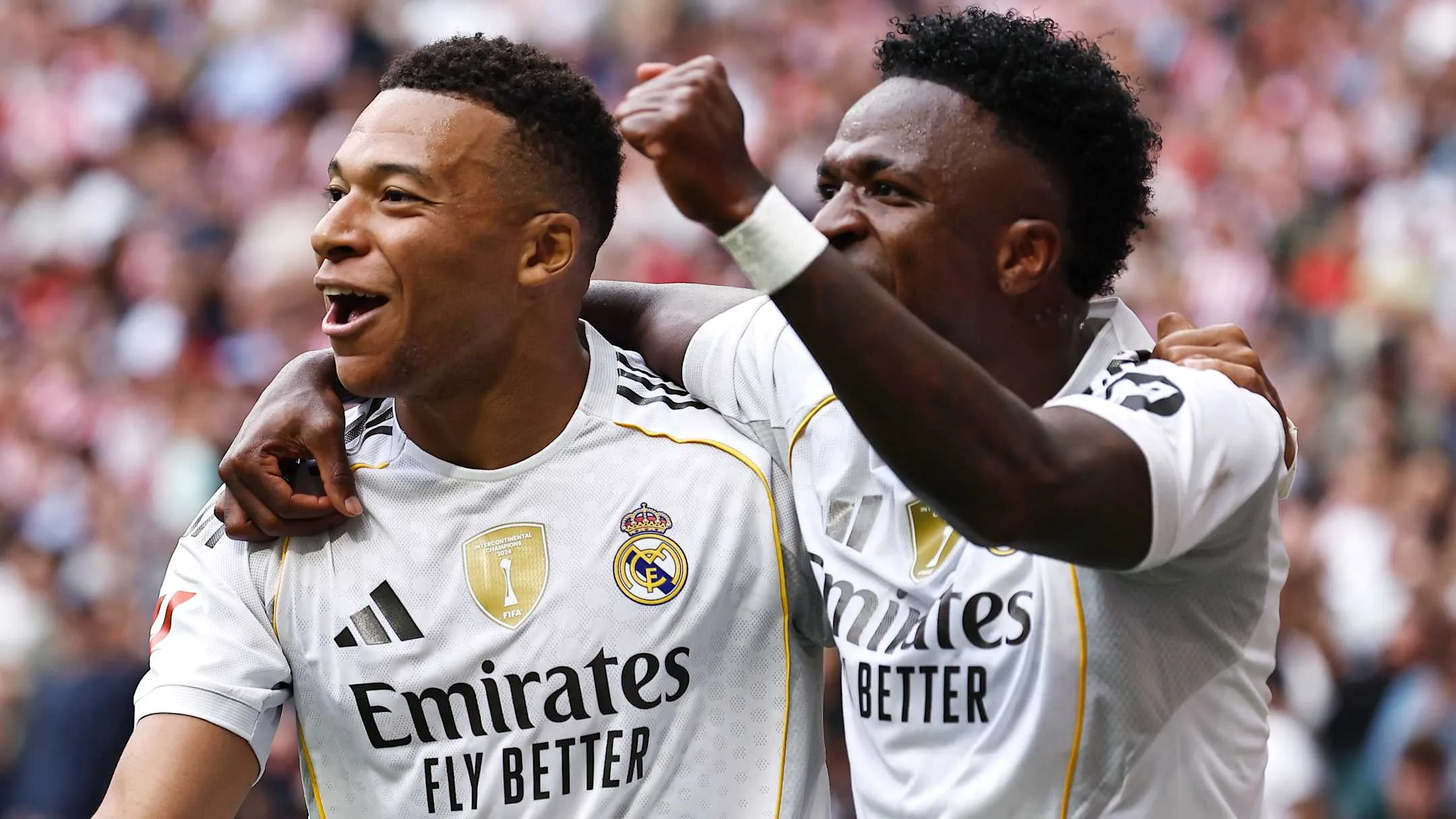
Fleet-footed dribblers remain one of football’s most irresistible spectacles. This piece profiles the cohort of wide attackers and creative midfielders whose close control, speed and trickery routinely unsettle defences.
Jérémy Doku blends rapid feet with blistering pace at Manchester City. He still plays with infectious energy and is difficult to stop when running at full tilt, even if his goal contributions do not yet match his dribbling output. Rafael Leão retains explosive acceleration and a rich trick repertoire for AC Milan, a player whose decisive consistency can be intermittent but whose moments on the ball are joyous to watch.
Florian Wirtz is adjusting to life with Liverpool after a £116 million move. The 22-year-old’s sublime dribbling and low centre of gravity underpinned Bayer Leverkusen’s Bundesliga and DFB-Pokal double in 2023–24. Rayan Cherki emerged from Lyon’s youth system as a self-assured teenager and carries the technical confidence that convinced Manchester City to sign him; he is comfortable beating defenders both centrally and from the touchline.
Désiré Doué announced himself in the 2024–25 Champions League final, scoring twice and assisting in the 5–0 thrashing of Inter to cap a standout debut season with Paris Saint-Germain. Mohammed Kudus operates with notable bravery and physicality, proving formidable in possession whether at Ajax, West Ham United or Tottenham Hotspur.
Lionel Messi remains peerless in his ability to manipulate a ball and is an eight-time Ballon d’Or winner. He now competes with Inter Miami and has lost some of the speed and agility that made him unplayable, yet his technique endures. Bukayo Saka’s nimbleness and surprising strength have been central to Arsenal’s resurgence; his balance and acceleration allow him to evade full backs regularly.
Nico Williams rose to wider prominence at Euro 2024, using raw speed and slaloming runs to trouble opponents for Athletic Club. Khvicha Kvaratskhelia earned the nickname ‘Kvaradona’ during his time in Italy and pairs tenacity with close control at Paris Saint-Germain. Ousame Dembélé has rediscovered consistency at PSG and now adds a Ballon d’Or to his CV. Kylian Mbappé, having performed on the wing at Paris Saint-Germain and through the middle for Real Madrid, combines finishing with dribbling craft. Vinícius Júnior’s explosive 2023–24 campaign helped Real Madrid to the Champions League and La Liga double. Jamal Musiala offers exceptional touch and press resistance for Bayern Munich, excelling in tight spaces and creative transitions.




Arsenal
Forwards to Watch at the 2026 World Cup
Ten forwards to watch at the 2026 World Cup, judged on recent form, fitness and club contributions..
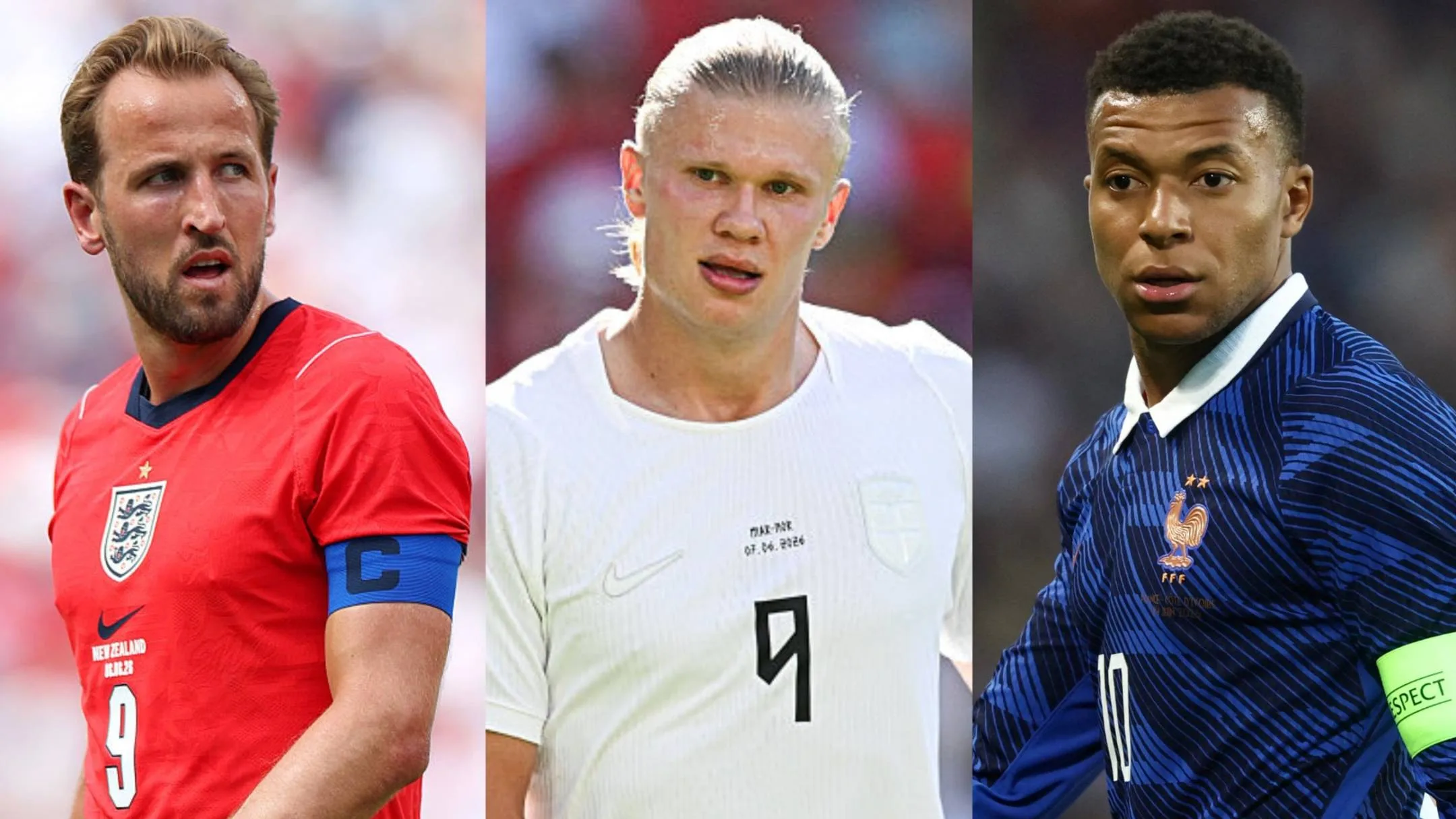
The 2026 World Cup will be defined in large part by attacking players who arrive with clear form lines and specific questions to answer. Several forwards in North America carry momentum from strong club seasons, while others bring a mix of fitness concerns and huge potential.
Bukayo Saka notched a remarkable campaign as Arsenal claimed Premier League glory, but he enters the tournament in mediocre form. The Englishman produced 18 goal involvements in 2025–26 as injuries robbed him of momentum at key junctures. The 24-year-old has blistering speed, gazelle-like agility and a wondrous left boot. If England is going to win its first World Cup for 60 years, Saka must deliver on the right wing. Three goals and an assist in Qatar four years ago is an encouraging sign.
Luis Díaz has been integral to Colombia’s hopes. The Bayern Munich winger enjoyed a remarkable debut campaign in Bavaria that ended with a domestic treble, contributing 26 goals and 19 assists across all competitions. The tenacious 29-year-old missed the last World Cup through injury, so this will be his first tournament and he will be determined to lead his nation.
Raphinha’s 2024–25 breakthrough into Ballon d’Or contention gave way to a quieter 2025–26 at Barcelona because of fitness issues. Still, 28 goal involvements in 33 matches is an impressive return. The 29-year-old returned from injury in May and, after six weeks of action, could be a useful and versatile option for Brazil as Carlo Ancelotti’s side pursue a sixth title.
Ousmane Dembélé remains one of the most flexible forwards available. He beat Raphinha to the 2025 Ballon d’Or and, despite a slight dip in output, operated effectively as a false nine during a Champions League-winning campaign with Paris Saint-Germain. Dembélé is likely to resume a right-wing role for France, where his two-footedness and clean ball striking will be valued.
Vinicius Junior emerged with credit from a difficult season for Real Madrid, producing 21 goal involvements in 2026 and two goals in pre-tournament friendlies for Brazil. Michael Olise, a Bayern Munich standout, arrived in form after a pre-tournament hat-trick against Northern Ireland and a season of 25 goals and 28 assists in Germany.
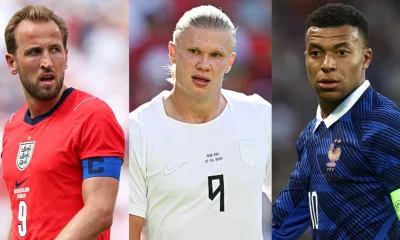
Erling Haaland carried Norway back to the World Cup with 16 goals in eight qualifying matches. The Manchester City striker’s ruthless efficiency will determine how far Norway go. Kylian Mbappé, needing four goals to match Miroslav Klose’s record, arrives having produced consecutive 43-goal campaigns for Real Madrid and will remain France’s primary attacking threat, supported by Dembélé and Olise.
AC Milan
The Classic No. 9: A Catalogue of the Game’s Most Prolific Strikers
Profiles of the game’s greatest No. 9s: records, signature goals and defining career highlights. 2026
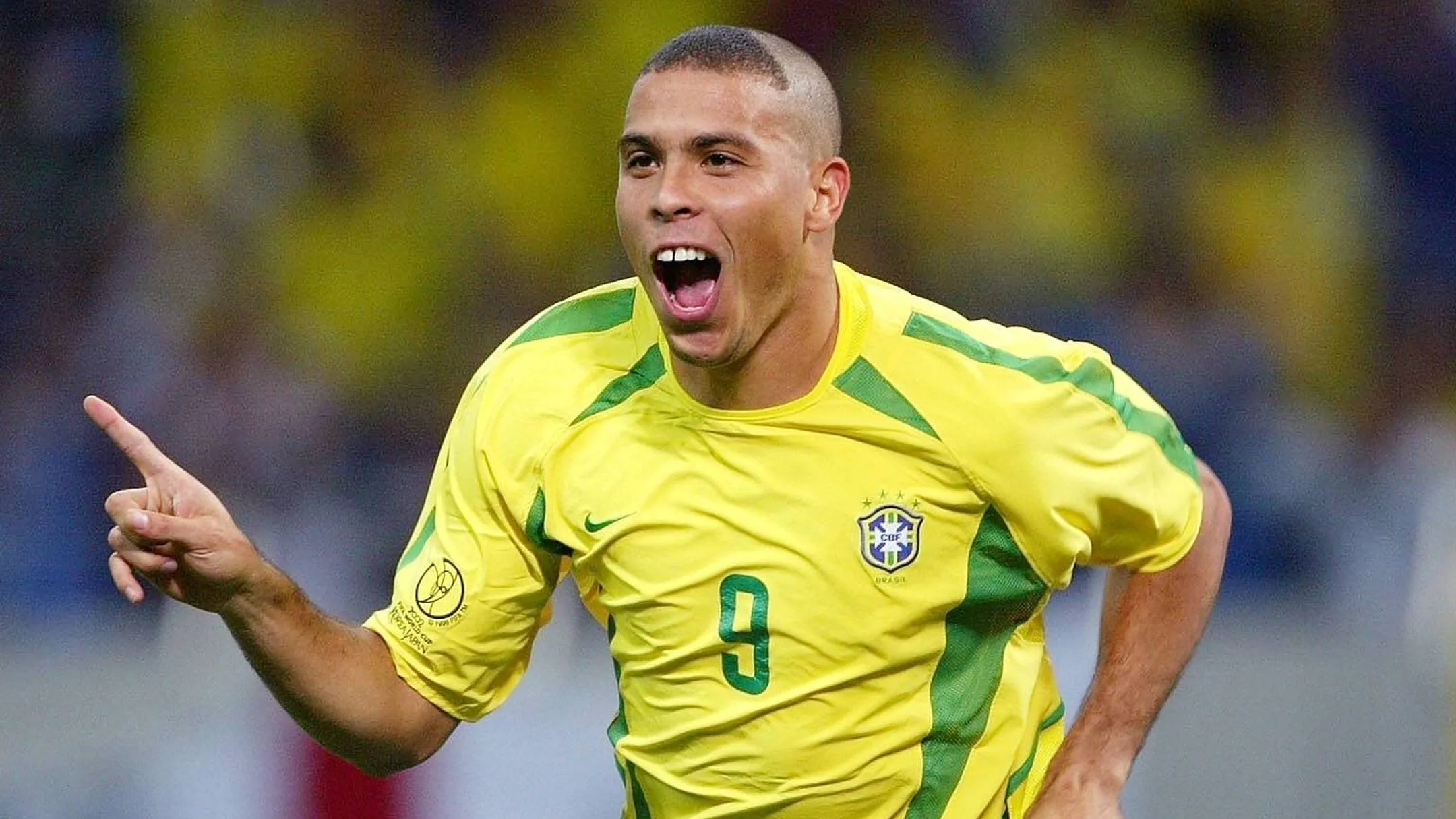
The No. 9 shirt has long signified a specific kind of forward: a penalty-area predator, a finisher whose instincts define matches. This survey collects the career highlights and records that mark the greatest exponents of that role.
Silvio Piola remains Serie A’s all-time top scorer with 274 goals, accumulated across Pro Vercelli, Lazio and Novara. He scored twice in the 1938 World Cup final as Italy beat Hungary 4–2 and is commemorated by two stadiums that bear his name.
Samuel Eto’o achieved an unusual club-level double of back-to-back European trebles, winning La Liga, the Copa del Rey and the Champions League with Barcelona in 2008–09, then Serie A, the Coppa Italia and the Champions League with Inter the following season. He is the all-time leading scorer in Africa Cup of Nations history and won that tournament twice with Cameroon, finishing his career on 421 goals.
Erling Haaland burst onto the scene with RB Salzburg and later impressed at Borussia Dortmund and Manchester City, surpassing 350 goals for club and country and setting the Premier League single-season record with 36 goals in 2022–23. He is also the fastest and youngest player to reach 40 Champions League goals.
Harry Kane became Tottenham Hotspur’s all-time leading scorer before moving to Bayern Munich in 2023 and scored over 40 goals in each of his first three seasons in Germany, including a 61-goal campaign in 2025–26.
Alan Shearer remains the Premier League’s top scorer on 260 goals.
Jean-Pierre Papin netted 184 goals for Marseille and helped them to four straight French titles. Uwe Seeler scored 496 career goals and was the first player to score in four separate World Cups.
Zlatan Ibrahimović amassed 573 club goals with a repertoire ranging from acrobatics to long-range thunderbolts. Gabriel Batistuta, nicknamed “Batigol”, logged 56 goals in 78 appearances for Argentina and scored most of his 299 club goals with Fiorentina.
Karim Benzema scored 354 goals for Real Madrid between 2009 and 2023 and won a Ballon d’Or in 2022. Robert Lewandowski has over 740 goals and recorded 375 in 344 appearances for Bayern. Hugo Sánchez scored 208 goals in 282 matches for Real Madrid. Paolo Rossi’s 1982 World Cup haul of six goals defined his career. George Weah won the Ballon d’Or in 1995 and starred for Paris Saint-Germain and AC Milan. Gunnar Nordahl finished with 500 career goals and five Capocannoniere titles. Luis Suárez has scored more than 600 career goals. Marco van Basten reached 307 goals and won three Ballon d’Or awards. Gerd Müller netted 565 goals for Bayern and 68 for West Germany, earning the nickname “Der Bomber.”
Arsenal
Five transfer sagas set to dominate the summer window
Five transfer sagas to follow this summer: Diomande, Fernández, Álvarez, Anderson, Wharton. Details.

Summer will bring the familiar long negotiations and headline-grabbing speculation as clubs pursue a handful of marquee targets. Here are five stories most likely to shape the window.
Yan Diomande’s rise has been swift. Up until November 2024 he was in a youth academy in Florida, then moved from the United States to Leganés before an eye-catching switch to RB Leipzig last summer. The 19-year-old has recorded 13 goals and nine assists in an astonishing debut season with Leipzig and is now attracting Liverpool and Paris Saint-Germain. Reports value him around €100 million (£87m, $116m). Diomande will represent Côte d’Ivoire at the World Cup, a factor likely to complicate and prolong any transfer.
Enzo Fernández publicly cast doubt over his future during the March international break after flirting with Real Madrid. Speculation over his Chelsea exit has intensified with Manchester City joining the race and Enzo Maresca seen as the likely successor to Pep Guardiola. There is a sense that Chelsea’s final day defeat to Sunderland was Fernández’s last outing for the club, and he looks increasingly unlikely to spearhead Xabi Alonso’s revolution at Stamford Bridge. Chelsea are reportedly demanding around £120 million ($161 million), and the player’s participation at the World Cup for Argentina will delay any resolution.
Julián Álvarez remains a central talking point. Having stayed at Atlético Madrid for the 2025/26 campaign, the 26-year-old appears destined to leave Spain’s capital before next season. Barcelona are favourites and are preparing to launch a first official bid of roughly €100 million (£87m, $116m), though Atlético may seek more. Arsenal are also interested despite already possessing Viktor Gyökeres, Kai Havertz and Gabriel Jesus.
Elliot Anderson’s stock has risen sharply after a breakthrough season with Nottingham Forest and an England call-up for the World Cup. Interest from Manchester City and Manchester United looks significant, with City seemingly in the driving seat despite Guardiola’s exit. It could take about £100 million ($134 million) to complete that move. Anderson’s midfield compatriot Adam Wharton finished the campaign by leading Crystal Palace to Conference League glory, adding to the FA Cup won last term, and Palace face Europe-wide interest. Real Madrid, Arsenal, Liverpool, Man City and Man Utd have all been mentioned, with Palace valuing Wharton at approximately £100 million ($134 million).


-
 Chelsea2 months ago
If Xabi Alonso Took Charge at Chelsea: Formation, Principles and a Projected XI
-
 Arsenal2 months ago
Five leading contenders for 2025/26 Premier League Player of the Season
-
 Championship2 months ago
The Fall of Leicester: How Financial Choices, Recruitment and Instability Led to League One