Arsenal
Havertz Returns but Arsenal’s Finishing Problems Remain Clear
Arteta hailed Havertz’s return as transformative, but Arsenal’s finishing and chance creation remain.


Mikel Arteta declared Kai Havertz’s return would take his team to “another level,” yet the recent evidence underlines long-standing limitations in Arsenal’s forward options. Havertz played a part in all three goals against the side that finished bottom of the Champions League league phase. Paired with Viktor Gyökeres, who opened the scoring and missed a hatful of chances, Arsenal’s languid left-footer also scored on his first start in 357 days in a 3–2 win that completed a perfect league phase record.
That victory helped dissipate the anxiety caused by Arsenal’s three-game winless run in the Premier League. Still, the notion that one returning player who was central to the club’s last two failed title bids can miraculously resolve the campaign was promoted too readily, and Arteta was foremost among those offering that narrative.
This is striking given his stance a year earlier when Havertz suffered online abuse after an FA Cup exit to Manchester United. “There is no other industry like this,” the Arsenal manager lamented. “Where is the perspective?”
Finishing has not been Havertz’s prime attribute. Since signing for Chelsea as the club’s record buy in 2020, he has scored 41 Premier League goals while UnderStat suggests the quality and quantity of his chances would have expected around 55. That degree of under-performance is mirrored elsewhere in Arsenal’s forward ranks. Gabriel Jesus has 77 Premier League goals but could have as many as 104 given his chances. Both Havertz and Jesus have been prodigiously un-prolific relative to their expected returns.
Viktor Gyökeres’s wastefulness was also on display: Opta recorded him as squandering four “big chances” in 77 minutes in that match. Arsenal’s broader problem is creating clear sights of goal from open play rather than only the act of finishing. Last season Havertz averaged fewer key passes than eight teammates, including makeshift centre forward Mikel Merino.
There is still a debate over Havertz’s ideal position. “I was getting annoyed with people asking me this,” he smiled through gritted teeth during his final season at Chelsea . “I can say I’m not a typical No. 9.” Arteta has used him in midfield alongside Eberechi Eze with Christian Nørgaard anchoring against Kairat. With Declan Rice and Martín Zubimendi staples in major matches, the attacking slot beside Martin Ødegaard is the space Havertz is most likely to occupy. His best displays have come as a dual-false nine that has previously unsettled Jürgen Klopp’s Liverpool by luring Virgil van Dijk and Ibrahima Konaté out of position before running in behind.





Arsenal
Arteta’s anger explained after Dowman’s dismissal against Fleetwood
Arteta’s response to Dowman reflected his wider demand for emotional control under pressure.
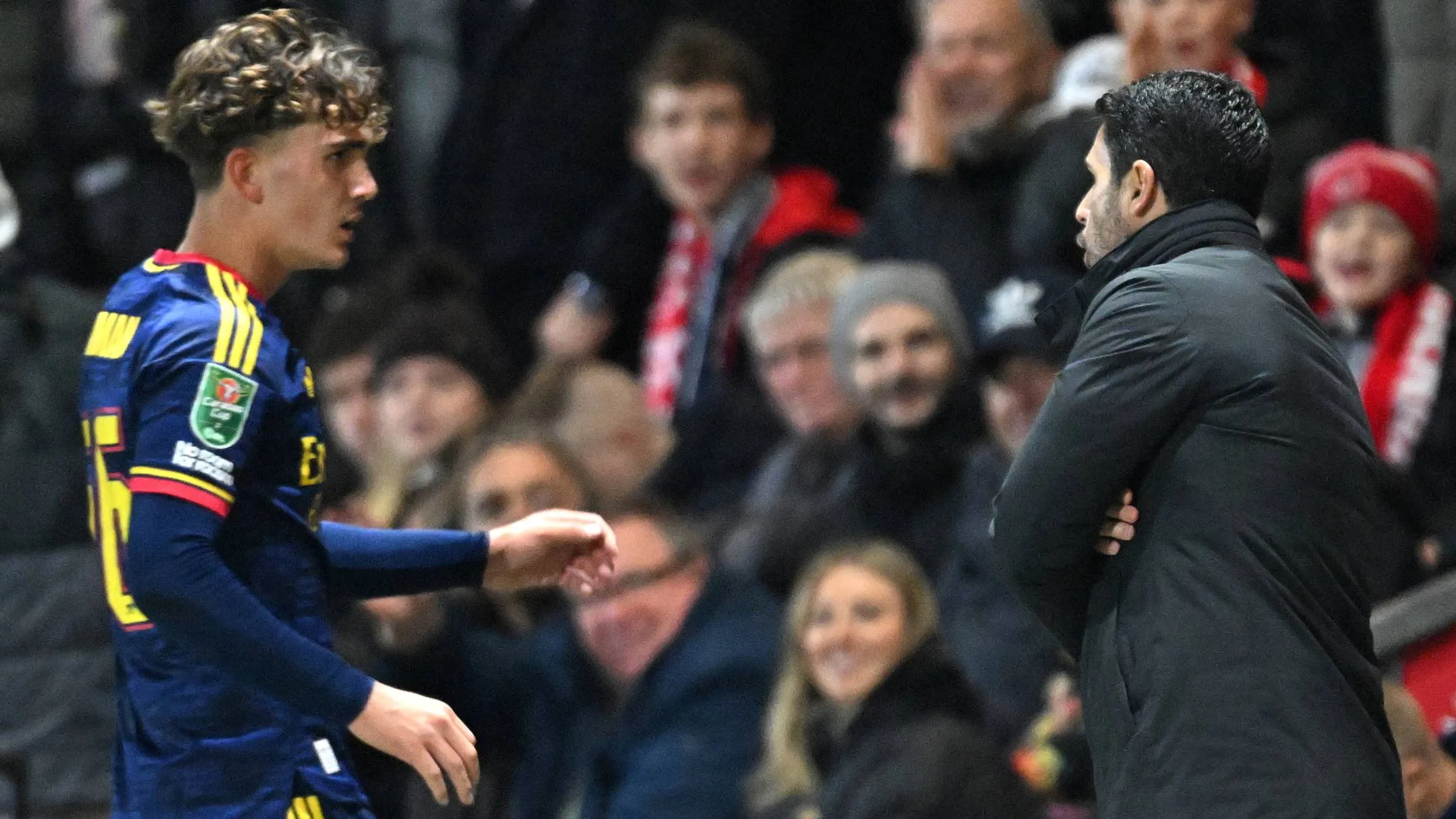
Mikel Arteta made no attempt to cushion Max Dowman after the youngster’s first red card in senior football during Arsenal’s disappointing Carabao Cup exit to Fleetwood Town on Tuesday.
It was a difficult night throughout for Arsenal. After falling behind 1-0 in the first half to a goal cheaply surrendered by fellow teenager Marli Salmon, the visitors spent the remainder of the match forcing the issue. They produced 26 shots in all, with seven ending up on target, but the pressure never translated into the result they needed.
Dowman was central to some of the missed opportunities. He first scuffed a clear opening across goal before setting up Kai Havertz for a fine chance that the German failed to convert. Beyond the missed chances, the winger also spent much of the evening coping with a physical challenge from Fleetwood.
Referee Michael Salisbury only awarded one foul against Dowman, and that came in the 85th minute with the score at 1-1. Harrison Neal then launched into a full-blooded challenge near the touchline, scissoring the teenager’s standing leg. Dowman responded by kicking out at the midfielder in the middle of a large confrontation, and Salisbury soon produced a red card.
As Dowman headed down the tunnel, Arteta was heard shouting, with the manager later saying: “We know when we prepare the context of the match, we’re very clear on what to expect,” he added. “Emotionally, we have to dominate, but we’re very clear.”
That reaction fitted a theme that has run through Arteta’s work this season. Emotional control has become one of his repeated messages, alongside the idea that Arsenal must handle the moment rather than be carried away by it.
“Emotional dominance” has been a regular phrase in recent weeks, and Arteta has been clear about what he wants from his side. “We have to be emotionally dominant regardless of what the context is. It’s easy to say, very difficult actually to do,” he said earlier this month.
This was Dowman’s first red card for Arsenal, but his second dismissal of the month. The England U-19 international had already been sent off in a behind-closed-doors friendly against the U.S.
Arsenal
Arteta Questions Touchline Standards After Latest Booking
Arteta said he is tracking rival managers after receiving his second yellow card of the season.
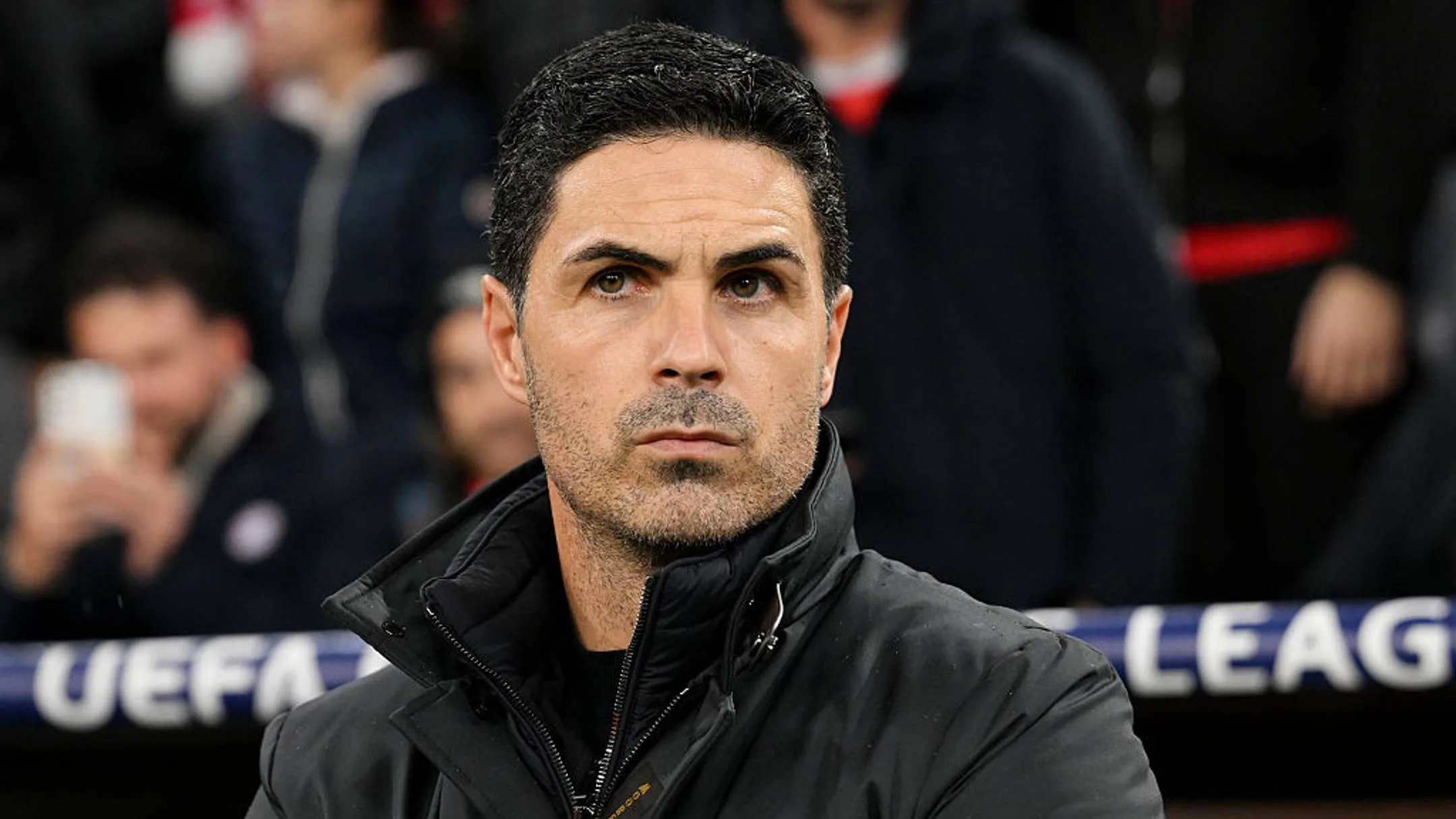
Mikel Arteta has taken aim at what he sees as inconsistent discipline for Premier League managers after collecting his second yellow card of the season on Saturday.
The Arsenal boss said he is keeping records of rival coaches who step beyond their technical area without being punished, insisting he will not ignore what he believes is uneven treatment from officials. Known for his constant energy on the sideline, Arteta argued that others are getting away with behaviour that brings him immediate sanction.
“I do have to be careful,” Arteta said when asked about his caution in his postgame press conference. “And we need to have good sensors there. There are managers that have the record in the league, 36 times in 10 minutes leave the touchline, no yellows.
“So I’m clipping all of that. I have a massive storage of images. So if somebody is going to say, ‘I’m not in the record yet, somebody else has the record.’
“Then it’s 36 yellow cards in 10 minutes for the manager. I don’t know where we’re going to be. Let’s see.”
The issue is more than a matter of irritation. Once a manager reaches three yellow cards, an automatic one-match suspension follows. Six cautions bring a two-game ban, while nine lead to a three-match punishment. With only late October reached, Arteta is already halfway to that first threshold.
That means his next booking would remove him from the touchline for Arsenal’s following match, regardless of any argument he might make with his own “massive storage of images.” Even a spirited defence would not alter the sanction.
His post-match comments did not stop there. Despite Arsenal’s gritty win over Everton, Arteta also criticised the schedule, saying the workload had been far from ideal.
“We’re very happy with the victory, the performance and the week, because we were given a terrible schedule,” Arteta said. “Playing Sunday afternoon, then Wednesday night in Munich, coming here really late on Thursday and then having to play again in the Premier League against a really tough opponent on Saturday at 3 p.m.
“We have overcome some injuries, and I’m really proud of the mentality of the team in the conditions today.”
Arsenal
Arteta Jokes Raya’s Spain Return Will Have to Wait
Arteta says Raya’s Spain move can wait, with Arsenal likely to keep their goalkeeper longer.
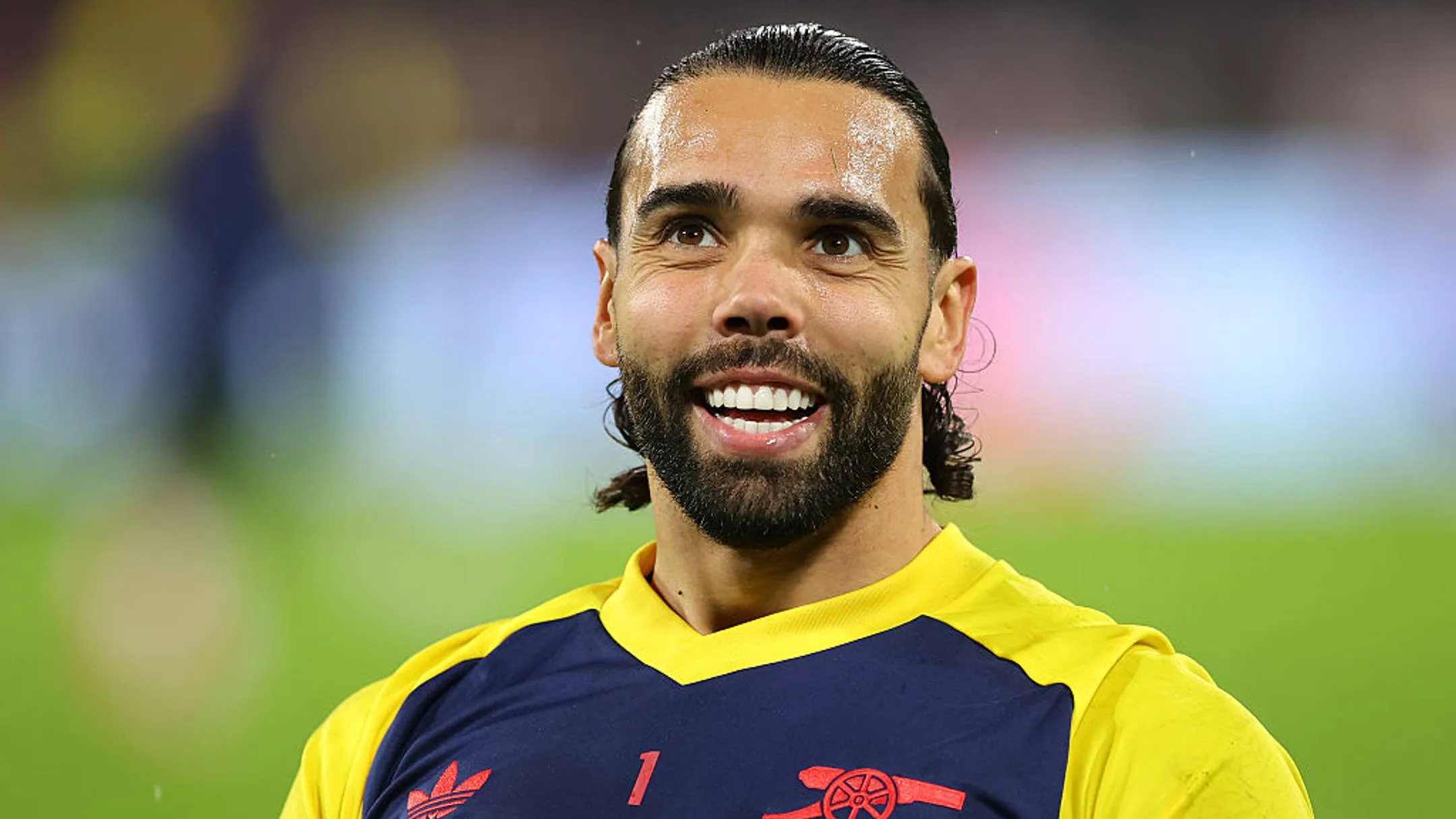
Mikel Arteta has played down the idea of David Raya heading back to Spain any time soon, joking that the Arsenal goalkeeper’s next appearance there may only come on holiday.
Raya has made no secret of his long-term wish to play in La Liga. As he put it: “Perhaps, in the future, I could play for a Spanish club. I’m Spanish and I’d love to play there.”
That ambition stands out because Raya has never played professional club football in his home country. Born and raised in Barcelona, he began in the youth ranks at UE Cornellà, which has been owned since April 2026 by Lionel Messi. He left Spain at 16 in 2012, moving to England in search of a career and eventually landing at Blackburn Rovers. After progressing to the first team two years later, he became their starting goalkeeper for the 2017–18 and 2018–19 campaigns.
Brentford later spotted his talent, and Arteta judged in 2023 that Raya was the upgrade Arsenal needed over Aaron Ramsdale. Since then, the goalkeeper has collected three Premier League Golden Gloves across the last three seasons and, by Monday night, could be in position to claim the Yashin Trophy at the 2026 Ballon d’Or ceremony.
Raya has also been a regular presence in Spain squads over the last four years, even if he is not a first-choice international starter. That has brought him both a European Championship and World Cup winner’s medal, yet one major piece remains missing from his résumé: a spell in La Liga.
Arteta was not in the mood to encourage an early return. “I think David has to play in Spain at some point … on the beach with his friends in the summer,” the Gunners boss said. “For the next few years, he needs to play here for Arsenal .”
That timing matters, because Raya is now into the final two years of his Arsenal contract, which ends in June 2028. He will be just short of 33 when it expires. Arteta’s comments suggest Arsenal may soon try to extend that deal well beyond 2028.
If Raya does chase La Liga while still at his peak, the decision point may come no later than 2028. Barcelona would appear the natural fit, though the club’s 2025 move for Joan García complicates that route. Real Madrid and Atlético Madrid could also be possible in time, depending on how the situations around Thibaut Courtois and Jan Oblak develop.