Arsenal
Arteta Demands More After Arsenal’s 10th Consecutive Win
Arteta urged Arsenal to keep improving after a 3–0 Champions League win and club record clean sheet.


Mikel Arteta set a clear challenge after Arsenal’s 3–0 Champions League victory over Slavia Prague extended the club’s winning run to 10 matches across all competitions. The clean sheet also broke a 122-year club record, but the manager was intent on ensuring the result serves as a spur for further progress rather than celebration.
“We want more,” he said after the game. “We can still improve and do things better. That’s the right mindset to have, and we’re happy with what we’re doing. But I’m not satisfied at all, we can play better, defend better, and today we should have done some things better in the opposition half.
“It’s very tricky against them. But I’m very pleased for a lot of reasons—obviously a winning run in the Champions League without conceding a goal, at a really tough place to come.
“And we talked about being emotionally in control, and to not get frustrated when we had to play that game because we’d have the chances, the way they set up, and we certainly can look back on another very impressive performance.”
Arteta stressed that the record is a product of work and attitude. “There’s a lot of work there to achieve that. The most pleasing thing is probably not the record, it’s the mindset of the players. They are talking about how we can still do better. There was one or two situations that we could have resolved better.
“If we do that, we can keep improving and that record will have a bigger meaning.”
The manager also highlighted the debut of 15-year-old Max Dowman, who at 15 years and 308 days became the youngest player to feature in a Champions League match, beating the previous mark set by Youssoufa Moukoko at 16 years and 18 days in 2020 for Borussia Dortmund against Zenit St. Petersburg. Dowman delivered a composed 20-minute spell, winning four ground duels and drawing a couple of free-kicks.
“Yeah I didn’t know that, I just found out,” Arteta said of the age record. “But it’s no surprise. What I really liked is the way he played. He came on, started to take the ball, spread the opponent and won free-kicks. And that’s it—it doesn’t matter about the age, it’s the personality you have and the courage you have to play at this level, and I’m delighted to have him.
“Obviously, we’re super happy to see him make his debut, Andre as well, and the players that we changed to play and keep the performance.
It doesn’t matter what his passport says. You throw him in this context and he is able to adapt and have a good performance.”





Arsenal
Arsenal’s Friendly Defeat in Dublin Exposes Familiar Concerns
Arsenal were beaten 3-1 by Real Betis in Dublin after a poor first half and Kepa errors.
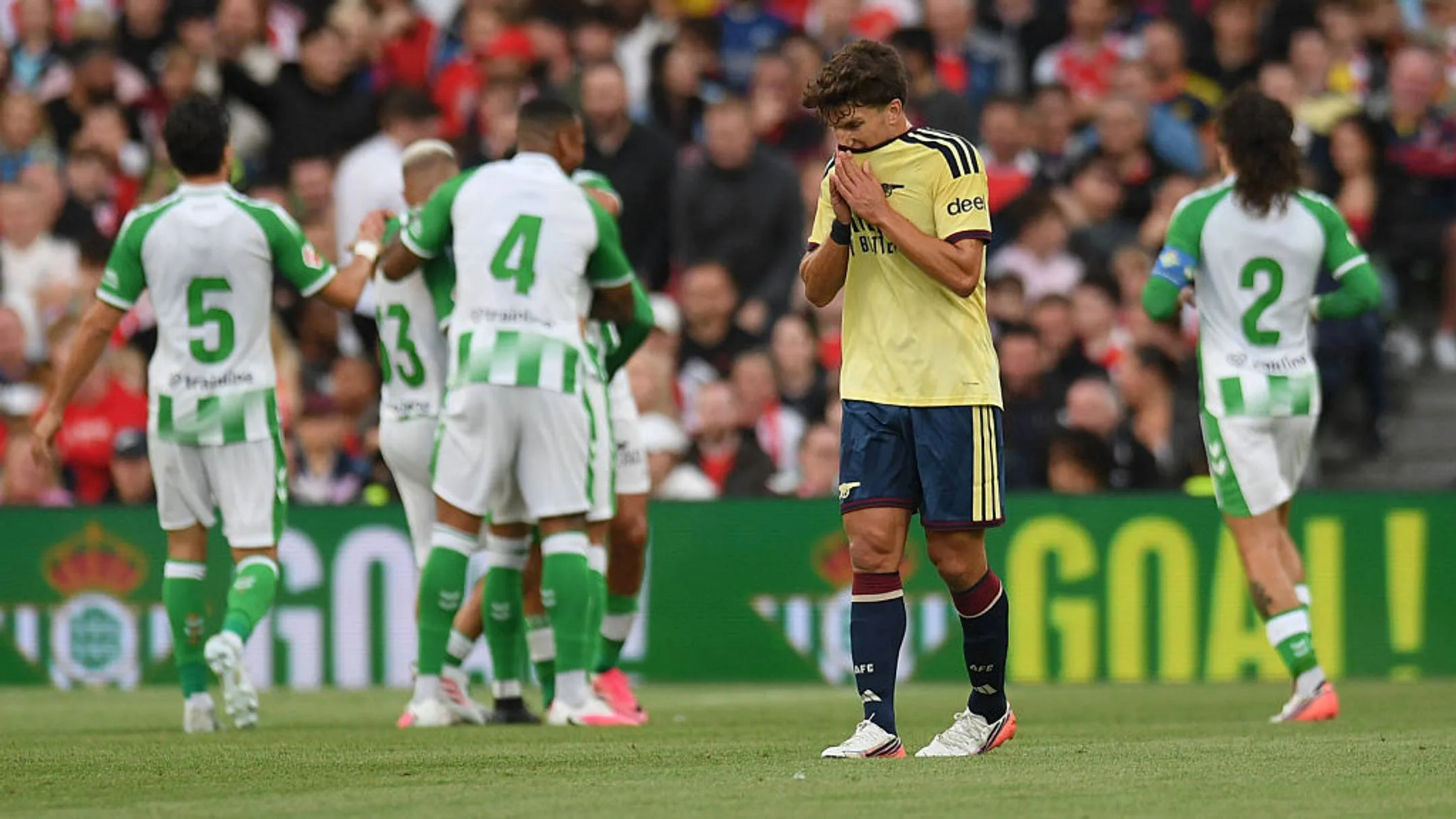
Arsenal’s first setback of the summer arrived in Dublin, where a flat display ended in a 3-1 defeat to Real Betis in preseason.
The match began poorly for Arsenal and never really recovered. Kepa Arrizabalaga, under renewed scrutiny amid talk that he may not remain at the club for the full summer, endured a difficult evening as Betis took control. His role in the opening goal was costly, with the goalkeeper coming for a corner, misjudging the delivery and leaving Riquelme with a simple finish at the far post. Kepa then struggled again when Arsenal’s opponents scored their second, with a poor clearance handing back possession before Deossa struck powerfully from the edge of the area.
Piero Hincapié did briefly give Arsenal some hope when he converted from a corner supplied by new arrival Christos Tzolis, but Pablo Fornals restored Betis’ two-goal advantage just before half-time. By that stage, Arsenal had already been exposed far too often.
Mikel Arteta made widespread changes after the interval and gave several younger players an opportunity to impress, yet Arsenal never looked like mounting a meaningful comeback. With Declan Rice, Martín Zubimendi and Martin Ødegaard absent after their World Cup involvement, the midfield was reshuffled and looked vulnerable throughout. Myles Lewis-Skelly and Ethan Nwaneri were used deeper, while Kai Havertz played further forward, but the structure lacked control and intensity.
The first half was especially poor. Betis countered with ease, Arsenal conceded three times before the break, and the defensive protection in front of the back four was nowhere near strong enough. Lewis-Skelly and Nwaneri, both hoping to strengthen their claims for bigger roles, did not do enough to shift that picture.
There was also frustration for Louie Copley, who lasted only 11 minutes before injury ended his afternoon. The 19-year-old, who spent the second half of last season on loan at Crawley Town, went off in visible discomfort after catching his studs in the turf and appeared to twist his knee.
Arsenal will not be overreacting, but the performance offered reminders that plenty of first-team players are still missing, including Raya, Bukayo Saka and Noni Madueke.
Arsenal
Why Bruno Guimaraes Is Set on Arsenal’s No. 39
Bruno Guimaraes’ attachment to No. 39 could make the Arsenal shirt choice straightforward.

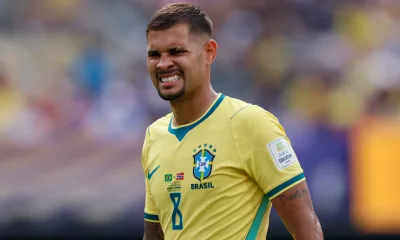
Bruno Guimaraes’ move from Newcastle United to Arsenal raises the usual question that follows a new signing: which shirt number will he take? For most players, it is a practical choice. For some, it carries real weight. For Guimaraes, there appears to be only one option.
Back in 2023, the Brazilian midfielder explained to The Players’ Tribune why No. 39 means so much to him. “The number tells a story more beautiful than words can say,” he said. “I know people think it’s a weird number for a footballer. But for me 39 is special—no, it’s more than that. It’s magical. The No. 39 gave me everything in life. … It fed me, clothed me and paid for three-hour bus rides to pursue my dream.”
The reason is deeply personal. As Guimarães revealed, #039 was the dispatch number for his father’s taxi cab in Rio de Janeiro. His father’s work shaped the midfielder’s childhood, with long days spent driving through the city and rare moments of release reserved for watching his son play on Saturday.
Guimarães’ path to the top was not simple. At one stage, he was so unsure of his future that he obtained a driver’s license in case he followed the family trade. His turning point came with a loan move to Athletico Paranaense in 2017, when his father called and urged him toward the same number. “What about 39? That is more than a number. 039 gave us everything we have, Bruno. Our house, our food, our furniture, your football boots. It was all because of our taxi.”
He was already due to wear 39 when he arrived, and the number was handed to him by chance. He and his father both broke down in tears.
Since then, he has carried those digits at Lyon and Newcastle, and even tattooed them on his right calf. Arsenal do not currently have anyone wearing the shirt, which clears the way for Guimarães to continue with the number that has followed him throughout his career.
There is history there too. Francis Coquelin wore No. 39 on his Premier League debut, while Héctor Bellerín also spent time with it during his Arsenal career. More recently, academy midfielder Harrison Dudziak briefly held the number before being released over the summer.
Arsenal
Bruno Guimaraes Set To Become Arsenal’s Second-Highest Transfer Fee
Arsenal are close to sealing a huge move for Bruno Guimarães, which would reshape their transfer rankings.
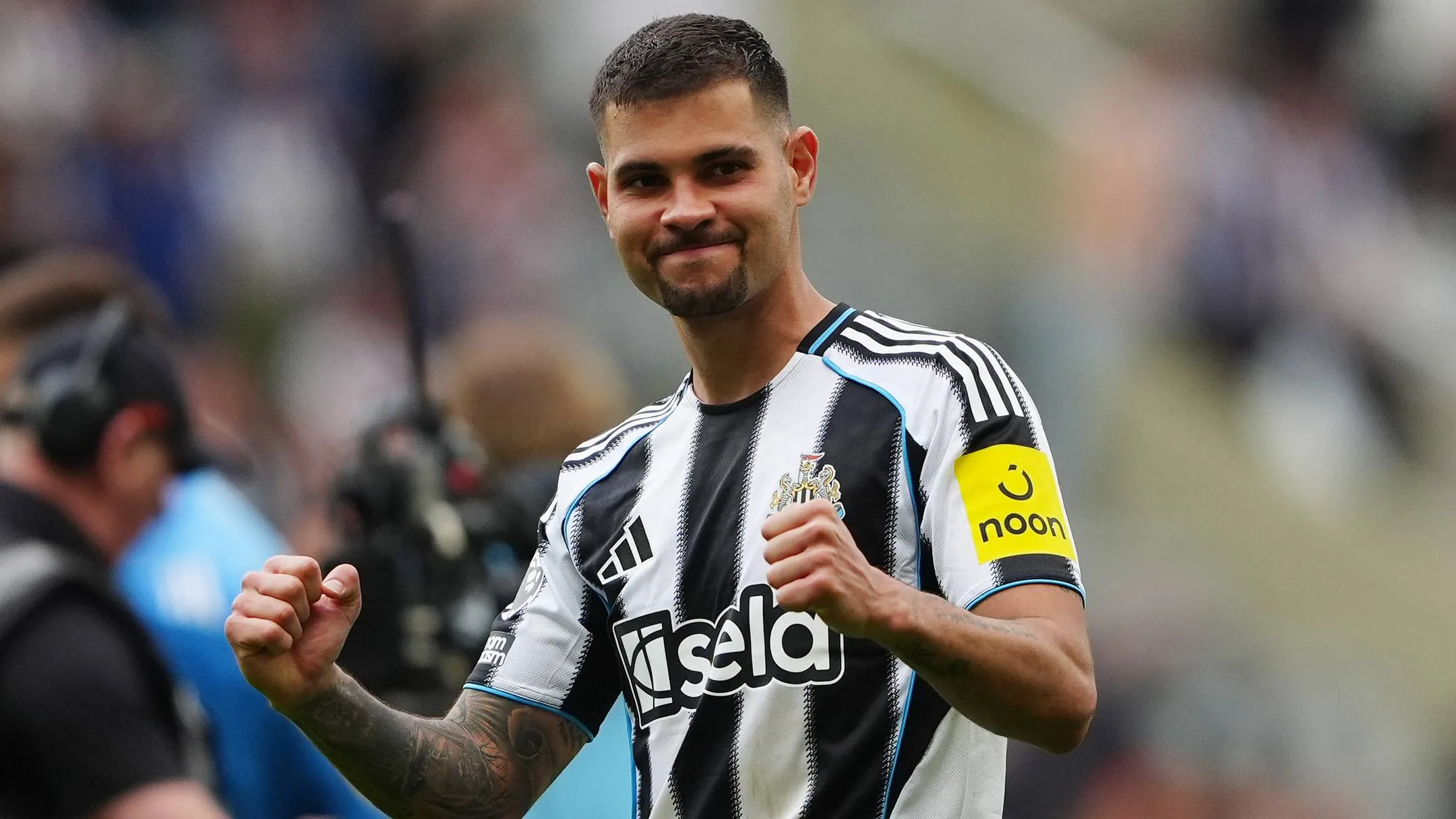
Arsenal are close to finalising a move for Newcastle United captain Bruno Guimarães, with the Brazil midfielder expected to become the second most expensive signing in the club’s history if the reported deal is completed.
Multiple reports say Newcastle are prepared to approve his departure for a fee of $101 million (£75 million), after the two clubs reportedly found a “compromise.” At 28, Guimarães would leave St James’ Park after a summer in which Sandro Tonali and Anthony Gordon also departed at significant expense, a run of exits that reportedly led Eddie Howe to tender his resignation as manager.
For Arsenal, the scale of the move would underline how sharply their spending has risen under Mikel Arteta. A club that once sought a manager “who will not spend big money on transfers.” has long since embraced a different approach.
If the transfer goes through at the quoted figure, Guimarães would sit behind only Declan Rice in Arsenal’s list of record buys. Most of the club’s biggest fees have been committed during Arteta’s time in charge, and four of the 10 most expensive arrivals in Arsenal history came in last summer alone, when Martín Zubimendi, Eberechi Eze, Viktor Gyökeres and Noni Madueke arrived for a combined total of more than $300 million.
The proposed move would also place Guimarães above Nicolas Pépé, whose $92 million transfer from Lille in 2019 remains one of the most costly and one that ultimately ended Unai Emery’s spell.
The fee, though substantial, is still below the temporary $135 million release clause inserted into Guimarães’s new five-year contract in October 2023. Newcastle had bought him from Lyon for around $58 million in 2022, but Arsenal appear to have struck a lower figure than that clause.
When viewed against this summer’s market, the move would not even top the scale of other major deals. It would be the fifth most expensive transfer in that wider group, behind the reported sums involved in moves for Mateus Fernandes, Elliot Anderson and Morgan Rogers.
Arteta summed up the reality of elite spending last summer when he said: “The budget is like when you have your wedding,” and added: “you plan your wedding with your wife and you give her a budget and it’s never less, it’s always more.”