Arsenal
Maresca Demands Consistent Standards After Caicedo Red Card and Hincapié Decision
Maresca criticised refereeing consistency after Caicedo’s red card and a separate Hincapié incident.

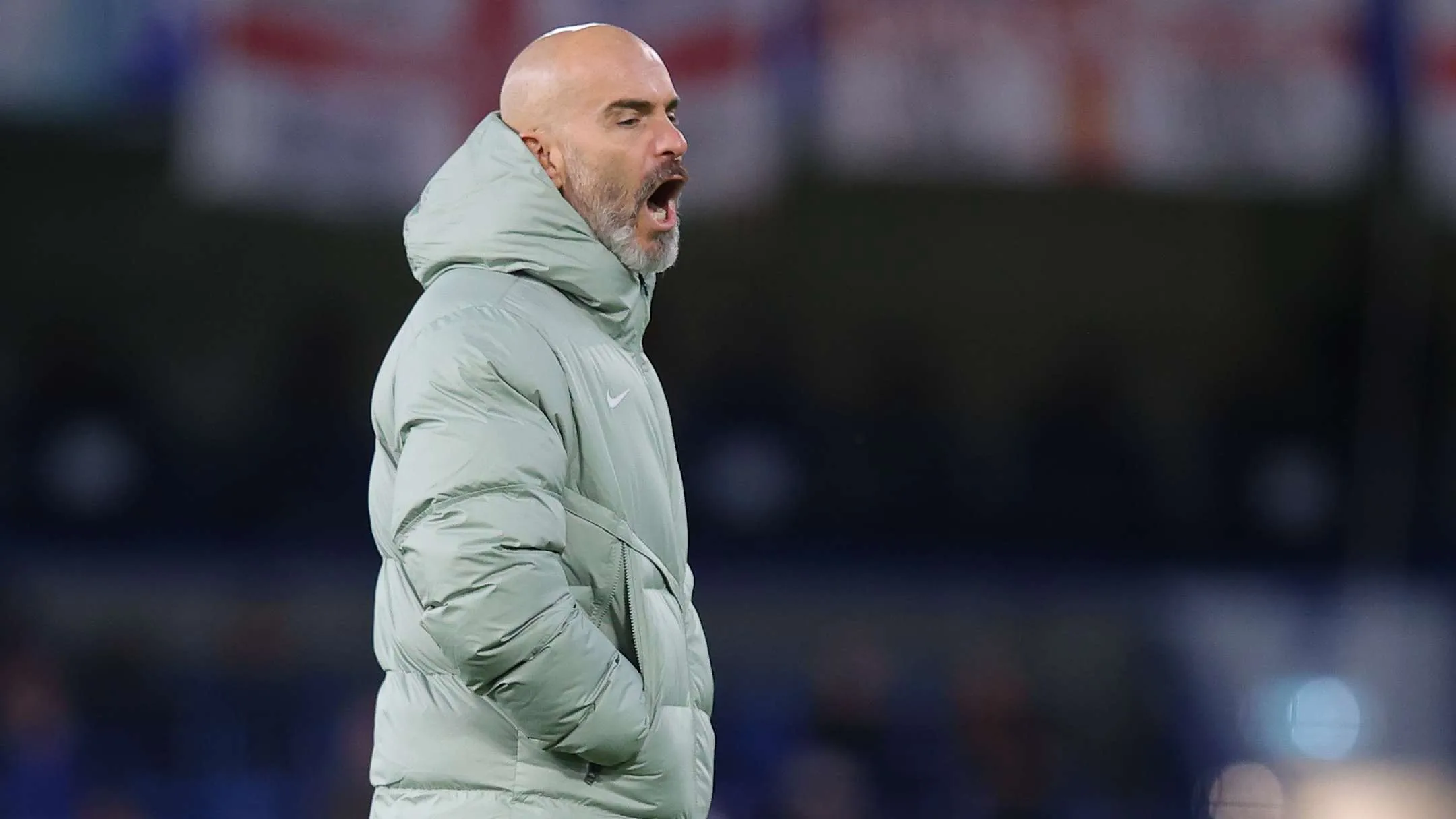
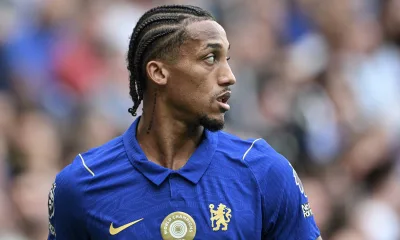
Chelsea manager Enzo Maresca pressed referees on consistency after Moisés Caicedo was sent off in the draw with Arsenal. Maresca accepted the red card but questioned why a similar challenge from Tottenham’s Rodrigo Bentancur on Reece James one month earlier was not given the same sanction, despite VAR involvement in that incident during a 1–0 victory.
“I just said there, he asked me about Moisés’s red card. It’s a red card, but why was Bentancur’s against Reece not a red card when we were at Spurs away?” Maresca argued. “So us, as a manager, we struggle to understand why they judge in a different way.
“Moisés’s is a red card, yes. Bentancur’s is a red card, yes. Why don’t they give him a red card? It’s just that we struggle to understand. The reality is that it’s a red card. But why do they judge it differently?”
Chelsea were also unhappy with referee Anthony Taylor’s decision early in the second half when Arsenal defender Piero Hincapié, already on a yellow card, struck Trevoh Chalobah in the face. The contact left Chalobah with a black eye and visible swelling, but Hincapié was not dismissed.
“I asked the referee, he said to me that it was not an elbow,” Maresca revealed. “So, this is what they said.
“[Chalobah had a] black eye, with ice at half-time. But they judge in different way.”
Despite playing with 10 men for around 60 minutes, Chelsea remained competitive. Chalobah opened the scoring before a Merino header levelled the match. Maresca’s side registered more shots on goal and were described as just as likely to find a winner as their opponents.
“I’m proud,” James told club media . “The team is so young, but we went toe-to-toe with the team at the top of the Premier League at the moment.
“We didn’t show fear and we tried to come out to win the game. Unfortunately we weren’t able to do that, but there were a lot of positives to take from the game. We knew the game was going to be tough, but to be honest it was a game we felt we probably could have won. It was difficult to only walk away with a point considering how well we did.
“We played 60 minutes with 10 men, having to cope with all of their players—they are a very good team, they’re the league leaders at the moment. We went toe-to-toe with them, so we have lots of good things to take away.
“We started sharp, we had a few early half-chances, but the game got more difficult when we went down to 10. We made a few changes and they were coming forward a lot, but we still felt we had the players and the quality to hurt them when we got the ball. We tried our best, now we have to take a point and move forward.”

Arsenal
Arteta Questions Touchline Standards After Latest Booking
Arteta said he is tracking rival managers after receiving his second yellow card of the season.
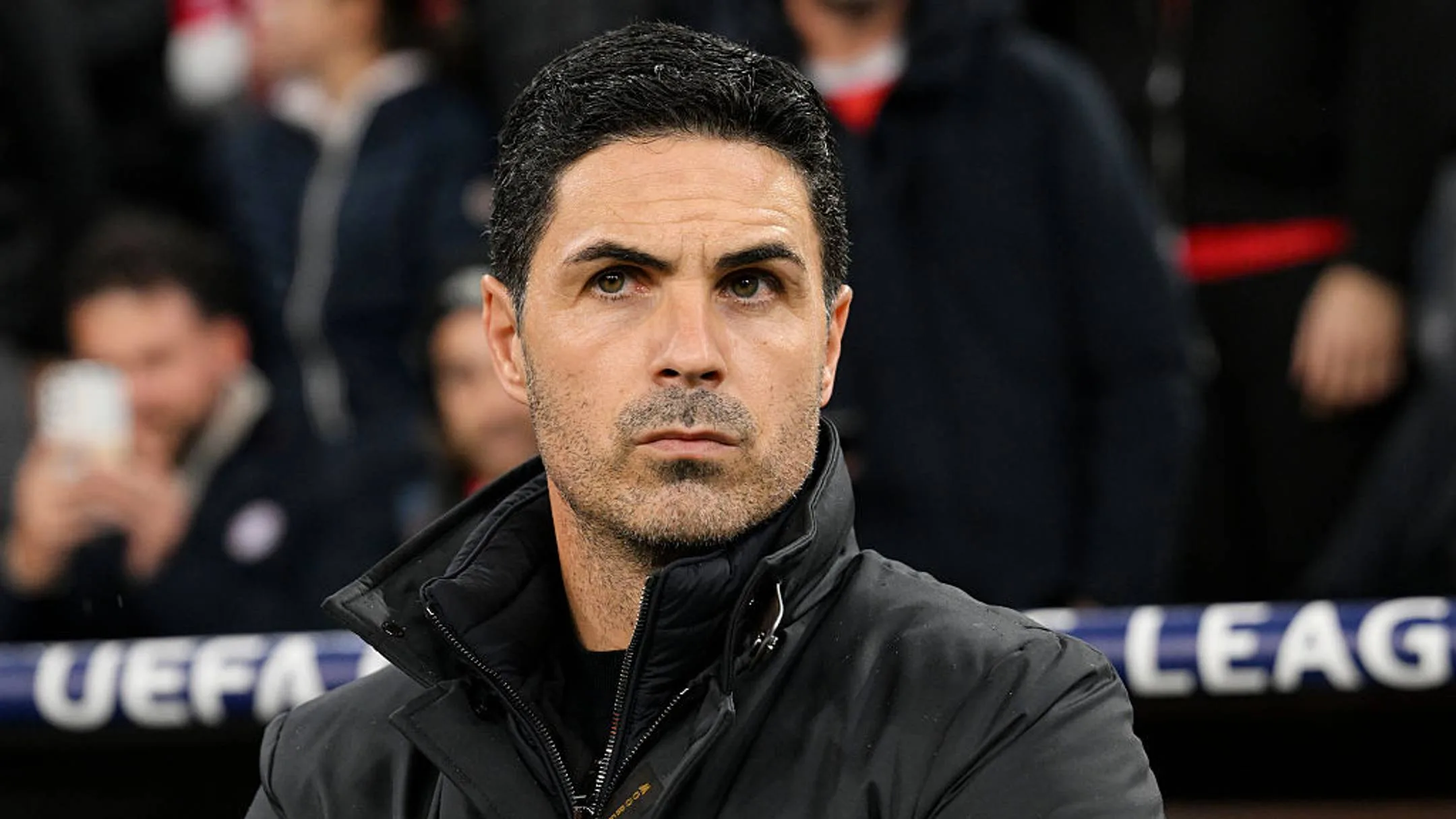
Mikel Arteta has taken aim at what he sees as inconsistent discipline for Premier League managers after collecting his second yellow card of the season on Saturday.
The Arsenal boss said he is keeping records of rival coaches who step beyond their technical area without being punished, insisting he will not ignore what he believes is uneven treatment from officials. Known for his constant energy on the sideline, Arteta argued that others are getting away with behaviour that brings him immediate sanction.
“I do have to be careful,” Arteta said when asked about his caution in his postgame press conference. “And we need to have good sensors there. There are managers that have the record in the league, 36 times in 10 minutes leave the touchline, no yellows.
“So I’m clipping all of that. I have a massive storage of images. So if somebody is going to say, ‘I’m not in the record yet, somebody else has the record.’
“Then it’s 36 yellow cards in 10 minutes for the manager. I don’t know where we’re going to be. Let’s see.”
The issue is more than a matter of irritation. Once a manager reaches three yellow cards, an automatic one-match suspension follows. Six cautions bring a two-game ban, while nine lead to a three-match punishment. With only late October reached, Arteta is already halfway to that first threshold.
That means his next booking would remove him from the touchline for Arsenal’s following match, regardless of any argument he might make with his own “massive storage of images.” Even a spirited defence would not alter the sanction.
His post-match comments did not stop there. Despite Arsenal’s gritty win over Everton, Arteta also criticised the schedule, saying the workload had been far from ideal.
“We’re very happy with the victory, the performance and the week, because we were given a terrible schedule,” Arteta said. “Playing Sunday afternoon, then Wednesday night in Munich, coming here really late on Thursday and then having to play again in the Premier League against a really tough opponent on Saturday at 3 p.m.
“We have overcome some injuries, and I’m really proud of the mentality of the team in the conditions today.”
Arsenal
Arteta Jokes Raya’s Spain Return Will Have to Wait
Arteta says Raya’s Spain move can wait, with Arsenal likely to keep their goalkeeper longer.
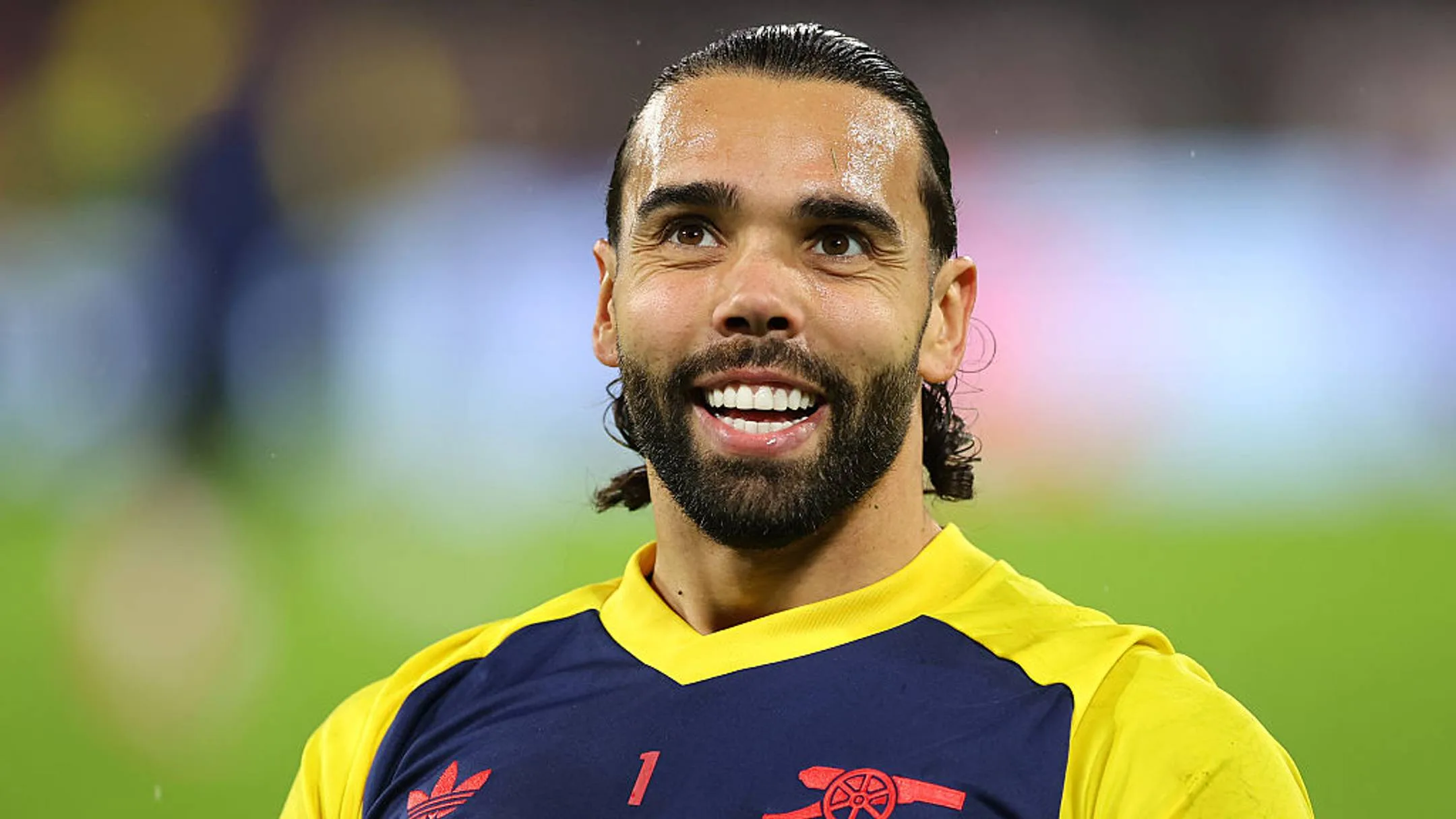
Mikel Arteta has played down the idea of David Raya heading back to Spain any time soon, joking that the Arsenal goalkeeper’s next appearance there may only come on holiday.
Raya has made no secret of his long-term wish to play in La Liga. As he put it: “Perhaps, in the future, I could play for a Spanish club. I’m Spanish and I’d love to play there.”
That ambition stands out because Raya has never played professional club football in his home country. Born and raised in Barcelona, he began in the youth ranks at UE Cornellà, which has been owned since April 2026 by Lionel Messi. He left Spain at 16 in 2012, moving to England in search of a career and eventually landing at Blackburn Rovers. After progressing to the first team two years later, he became their starting goalkeeper for the 2017–18 and 2018–19 campaigns.
Brentford later spotted his talent, and Arteta judged in 2023 that Raya was the upgrade Arsenal needed over Aaron Ramsdale. Since then, the goalkeeper has collected three Premier League Golden Gloves across the last three seasons and, by Monday night, could be in position to claim the Yashin Trophy at the 2026 Ballon d’Or ceremony.
Raya has also been a regular presence in Spain squads over the last four years, even if he is not a first-choice international starter. That has brought him both a European Championship and World Cup winner’s medal, yet one major piece remains missing from his résumé: a spell in La Liga.
Arteta was not in the mood to encourage an early return. “I think David has to play in Spain at some point … on the beach with his friends in the summer,” the Gunners boss said. “For the next few years, he needs to play here for Arsenal .”
That timing matters, because Raya is now into the final two years of his Arsenal contract, which ends in June 2028. He will be just short of 33 when it expires. Arteta’s comments suggest Arsenal may soon try to extend that deal well beyond 2028.
If Raya does chase La Liga while still at his peak, the decision point may come no later than 2028. Barcelona would appear the natural fit, though the club’s 2025 move for Joan García complicates that route. Real Madrid and Atlético Madrid could also be possible in time, depending on how the situations around Thibaut Courtois and Jan Oblak develop.
Arsenal
Villa’s Win Over City Triggers Another Opta Refresh
Villa beat City, Arsenal stay close, and Opta updates the title, Europe and relegation outlooks.
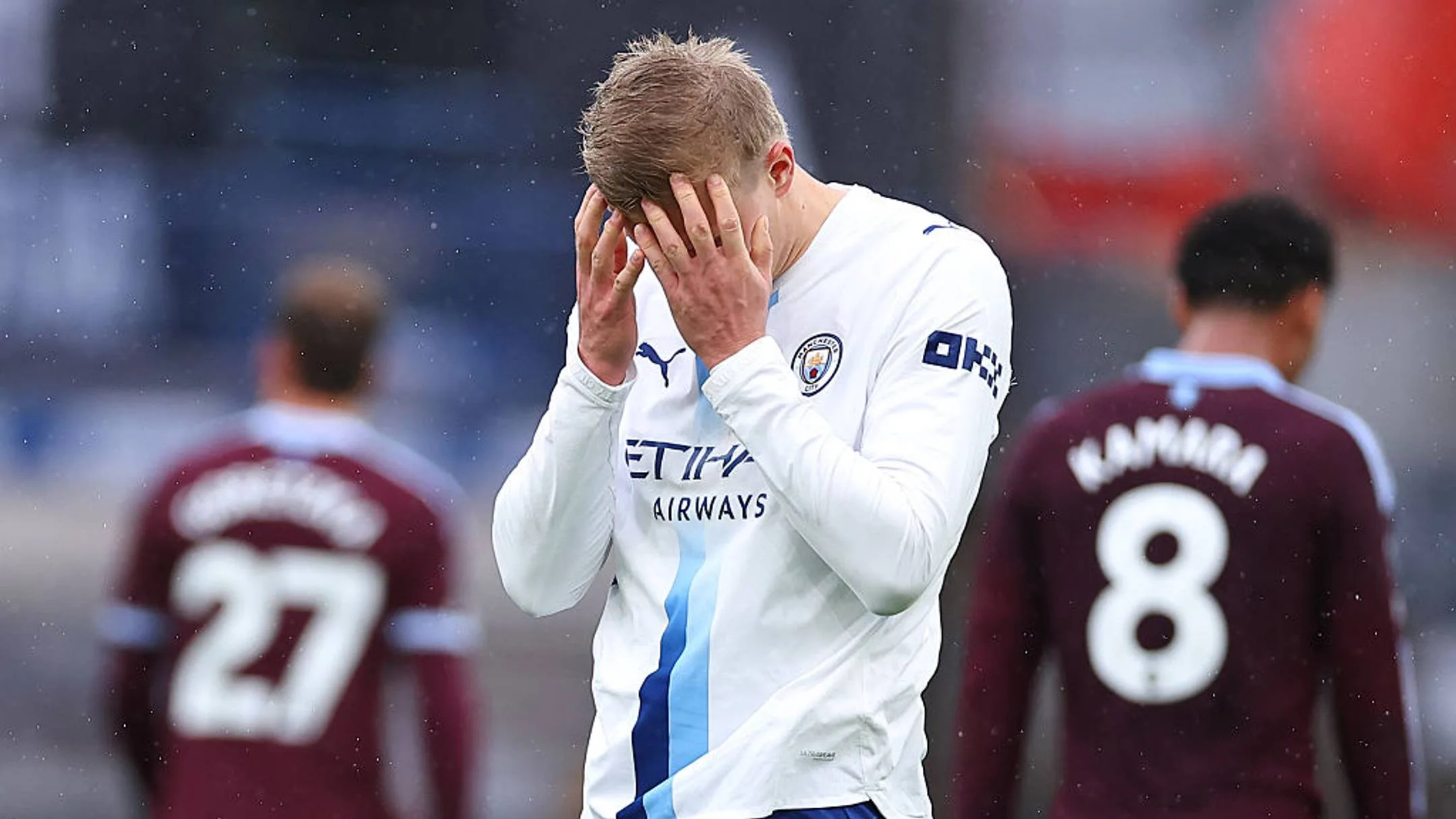
Aston Villa have delivered the Premier League’s first defeat of Manchester City this season, and they are also the first side to take points from them. Unai Emery’s team earned that landmark result at Villa Park, where City were below their best and paid for it. Gianluigi Donnarumma and Marc Guéhi were both singled out for especially poor showings, Nicolas Jackson struck on loan to make the difference, and Zion Suzuki contributed six saves across the 90 minutes.
City remain top of the current Premier League standings, but the performance offered the first domestic indication that they are not untouchable. Arsenal followed by matching them on points after beating Everton, leaving the title race level at the summit and Arsenal second only on goal difference.
That Arsenal victory came with Bukayo Saka unavailable and possibly out until Christmas. The Gunners were short of natural creativity, but they compensated by rediscovering the set-piece strength that served them so well last season.
With those results, and two others on Saturday, Opta’s supercomputer updated its predictions again.
The title model now has Arsenal first with 79.55 predicted points and a 53.82% chance of finishing champions. Manchester City are second on 76.11 points and 34.39%. Brighton remain the only other side above 5%, while Liverpool are at 3.29% and Chelsea at 1.42%.
The Champions League outlook keeps Arsenal and City well clear, with both above 90% to qualify. Brighton stand at 58.37%, Liverpool at 46.70%, Chelsea at 31.28% and Aston Villa at 21.66%. Brentford, Leeds and Everton are further back, and Manchester United’s five-match winless run has left them below 6%.
At the lower end, Tottenham have made a notable move in the right direction. Two wins in a row have cut their relegation chance to 14%, and the model now projects them to finish 13th. That is not especially strong, but it is a considerable improvement on consecutive 17th-place finishes in the last two seasons.