Arsenal
Midseason Grades for the Summer 2025 Big-Money Signings
Midseason review of the 16 biggest summer signings, assessing impact, goals, injuries, and fit. 2025

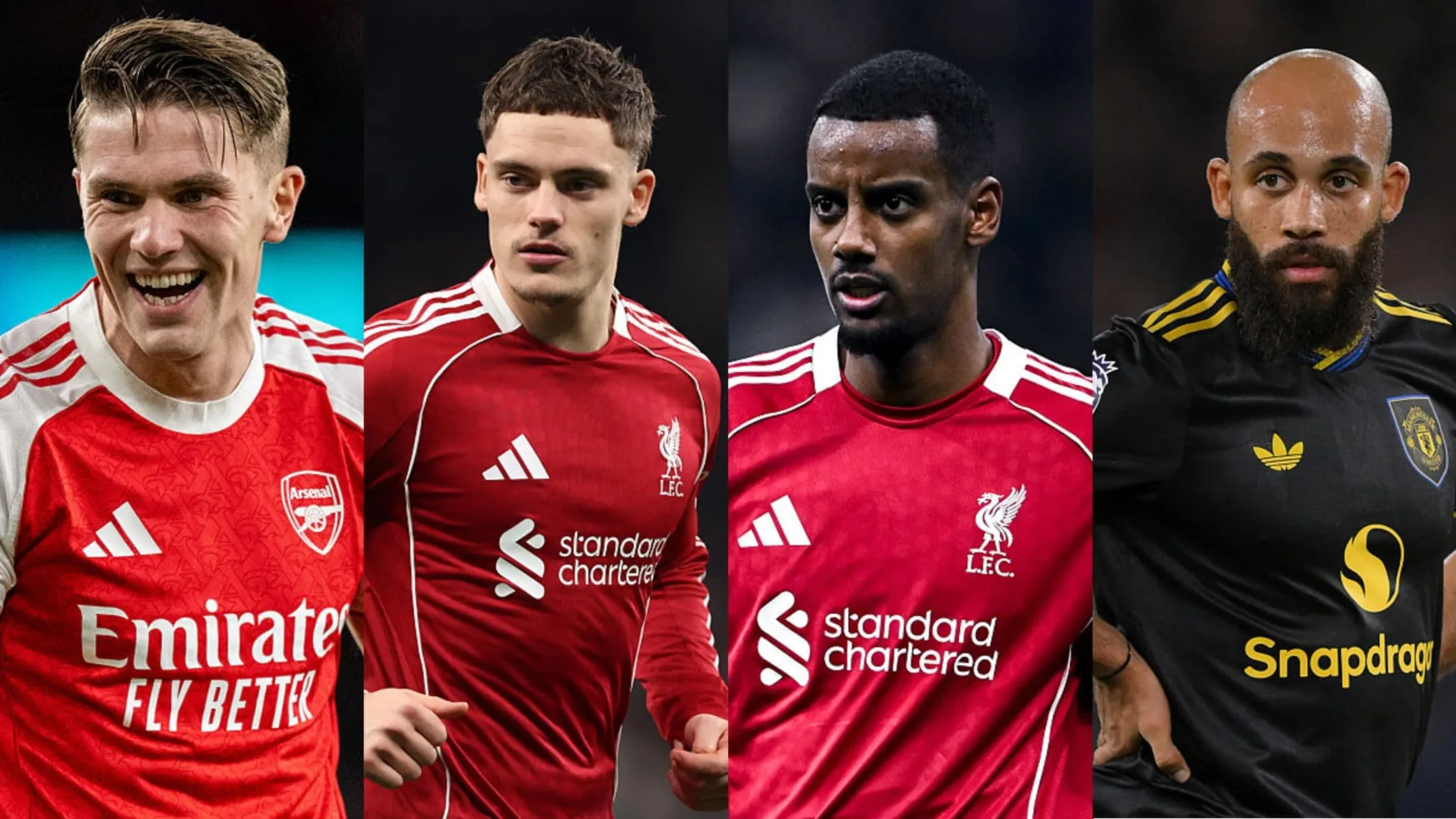
At the halfway point of the 2025/26 season it is possible to judge the impact of the summer’s most costly moves. Sixteen transfers that commanded the biggest fees are assessed here on form, fitness and contribution.
Newcastle’s £55m arrival Yoane Wissa has been hampered by a knee problem sustained on international duty, delayed his debut by more than three months and is only now being carefully introduced. By contrast Nick Woltemade (£69.3m) has adapted quickly to a more physical Premier League and has seven goals after a Bundesliga best of 12 last season.
Tottenham’s £55m signing Mohammed Kudus is an immediate regular despite a modest Champions League return of one goal in five appearances; he has provided eight contributions in the Premier League. At Arsenal, Martín Zubimendi (£55.8m) has settled in without delay, adding goals and assists and prompting Mikel Arteta to say, “It’s a position that is very, very difficult to make an impact [in],” Mikel Arteta recently gushed, “and in the manner that he’s done it so early so credit to him.” Viktor Gyökeres (£63.5m) has managed three non-penalty Premier League goals and five in 17 league appearances overall.
Manchester United’s Matheus Cunha (signed for £62.5m) arrived with 21 goals and assists at Wolves in 2024–25 and is still finding his place while covering injuries and minor problems; his form rose in December. Bryan Mbeumo (£71m) had a slow start but went from one goal in his first six appearances to five in his last nine before his absence at the 2025 Africa Cup of Nations.
Benjamin Šeško (£73.6m) has two goals in 15 Premier League appearances and two from nine starts while nursing injuries; time and fitness remain important for the 22-year-old.
Chelsea’s João Pedro (£60m) has been a regular starter in varied roles and has 10 goals and assists across all competitions, including influence in the Club World Cup knockout phase. Liverpool’s Hugo Ekitiké (£79m) began the season strongly, was patient when benched for Alexander Isak and finished 2025 with a goals flurry, though he has not scored more than once in the Champions League.
Florian Wirtz’s early Liverpool career has shown flashes and a first goal, but expectations remain high after his transfer fee. Al Qadsiah’s Mateo Retegui, Serie A top scorer in 2024–25, has six goals in 10 league appearances since leaving Atalanta. Victor Osimhen leads Galatasaray’s Champions League charge with six goals in four group appearances, accounting for three-quarters of the club’s output in the competition.
Across the list there are clear successes, fits that require patience and signings still searching for consistency.




Arsenal
Arsenal face a fresh attacking problem after Saka setback
Saka’s injury has left Arsenal short on the wing and exposed a summer decision that may backfire.
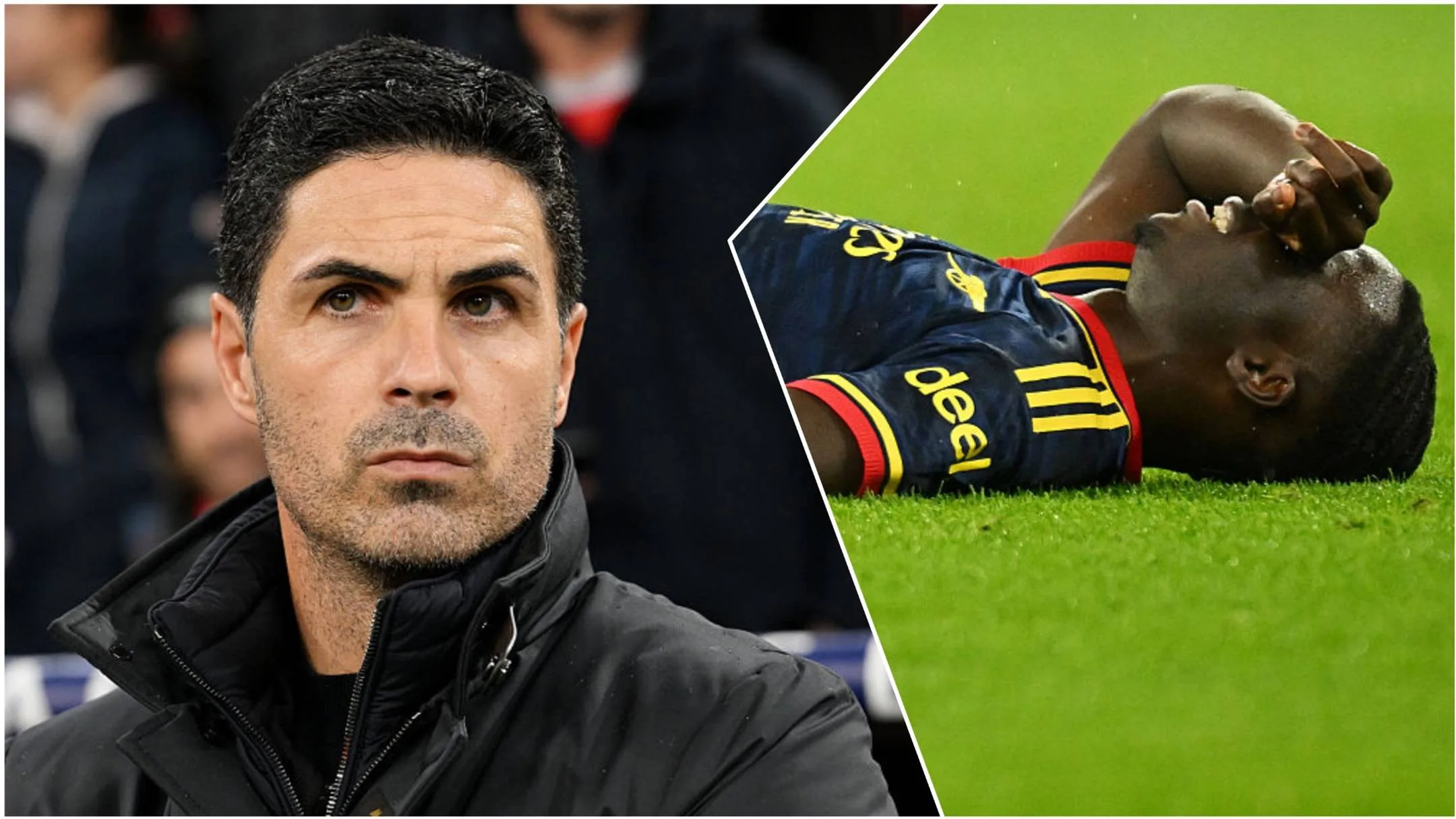
Arsenal have moved beyond the defensive injury issues that threatened their early-season rhythm, but Mikel Arteta is now dealing with a different concern at the sharp end of the pitch.
The latest blow centres on Bukayo Saka, who has been ruled out after making an injury-free start to 2026/27 following two straight seasons disrupted by lay-offs. His night against Bayern Munich ended after only 10 minutes at the Allianz Arena on Wednesday.
“It doesn’t look good at all, but we have to wait and see,” Arteta told reporters afterwards. “It’s his quad. It was early in the game, and the level of intensity his game requires is something incredible. The quality, strength and attention you need has to be at the highest level, and those things happen unfortunately.” In an earlier response to TNT Sports, the Gunners manager said it is “never a good sign” when a player is withdrawn because of a “a really sharp pain.”
Saka has long had problems in the thigh and hamstring area, from minor issues to longer spells out. At one point in 2024/25, he missed 99 consecutive days while also being on track to break the Premier League’s single-season assist record.
Arsenal still need more information before they can judge how long he will be absent, but the early signs point away from a quick recovery.
That situation may expose the club’s summer decisions. Arsenal did not add another wide forward, and their willingness to keep moving Gabriel Martinelli on without a replacement could now become a major issue.
The club knew upgrades were needed after winning the Premier League and missing out in the Champions League final. Leandro Trossard, dependable but limited, was replaced by Christos Tzolis, yet that was only part of the wider plan. Interest in Morgan Rogers ended when he joined Chelsea, Bradley Barcola chose Liverpool, and Vinícius Júnior signed a new contract with Real Madrid.
Arteta was clearly not satisfied with Martinelli, who initially resisted leaving. Arsenal wanted to cash in, but without a proven upgrade, the decision may have left them short in a position where options are already limited.
Saka’s replacement in Munich was Eberechi Eze. The 28-year-old, signed for big money ahead of last season, is naturally a No. 10 rather than a winger, but has had to cover on the left after Martinelli’s exit. He scored against Bayern, making it two Champions League games in a row with a goal, yet his overall output remains underwhelming.
Noni Madueke started against Bayern because Tzolis, who is loosely expected back in November, is still unavailable. The England international has also failed to make a strong case, having been used since the international break because there are few better alternatives.
Arsenal
Bayern Munich and Arsenal Combined XI: a close call with the Gunners just ahead
Arsenal and Bayern meet in the Champions League, and a combined XI just about leans toward the Gunners.
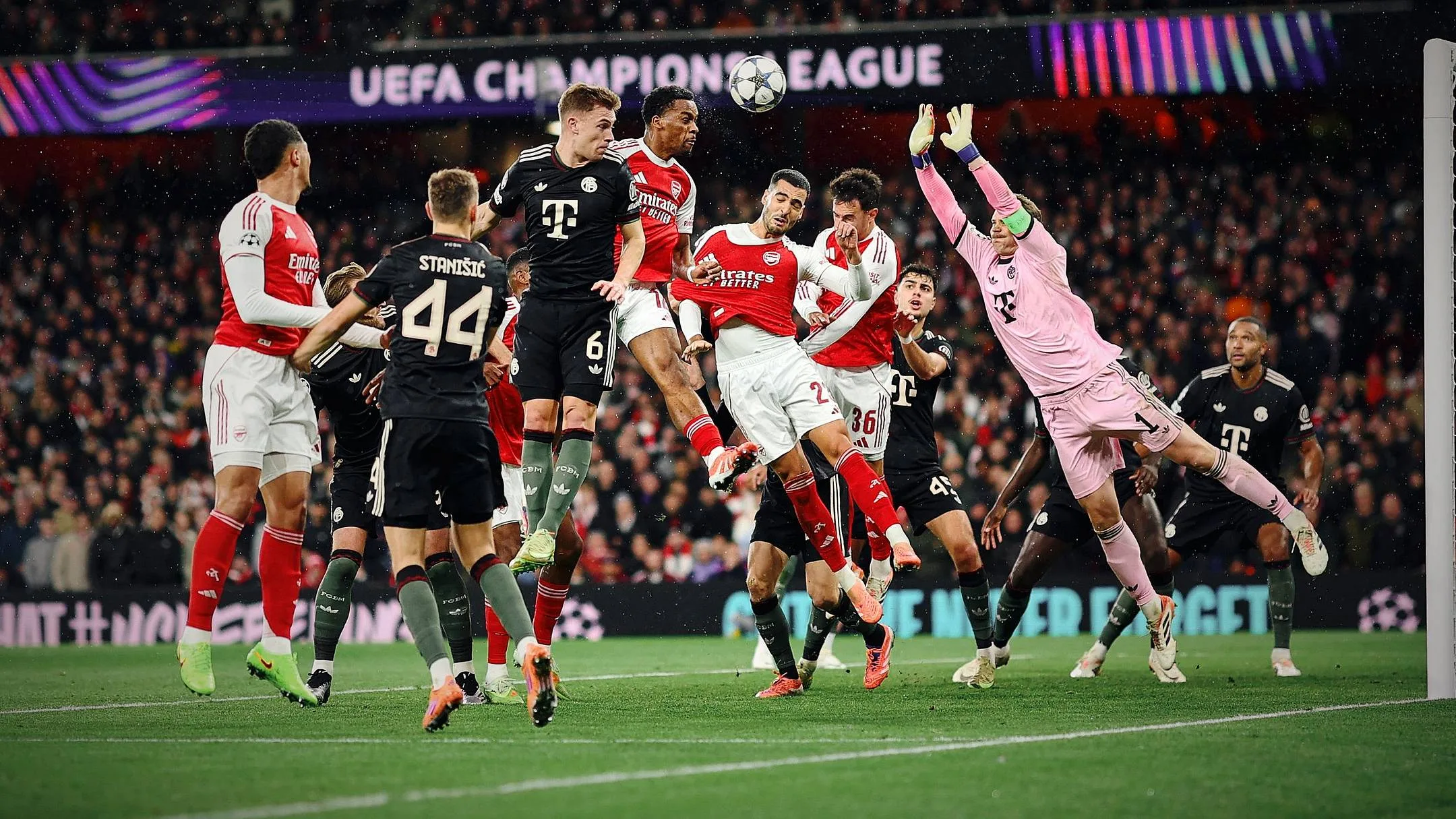
Bayern Munich against Arsenal stands as the marquee match of Wednesday’s Champions League programme, and it is easy to see why. Between them, the two clubs offer a remarkable spread of talent, even if injuries and suspensions trim the field of available stars.
With that in mind, here is a fresh look at a combined XI drawn only from the players available for selection, and Arsenal just about come out on top.
In goal, David Raya earns the nod. Manuel Neuer has been carrying a foot injury and remains doubtful, but even if he were fully fit, Raya’s recent level has been enough to place him in most mixed teams. Neuer remains the classic stopper, exceptional at the one job he is there to do, but Raya’s consistency gives Arsenal the edge.
At right-back, Jurrien Timber gets the call ahead of Konrad Laimer. Timber has established himself as one of the game’s top full-backs, and he arrives with the confidence of an assist against Lille in this competition last time out.
Gabriel is an automatic inclusion at centre-back. Arsenal’s defensive structure has been built around him, and he continues to deliver the blend of power, athleticism and technique that makes him such a difficult opponent. Alongside him, Dayot Upamecano is elevated by Vincent Kompany’s influence, with his form now strong enough to place him in the conversation at the very highest level.
On the left, Riccardo Calafiori edges Alphonso Davies. Calafiori’s game has opened up this season, and he is now contributing at both ends rather than only defending.
Joshua Kimmich anchors the midfield with his usual control, while Declan Rice is included after his standout display when these sides met last season, helping Arsenal to a 3-1 win. Aleksandar Pavlović completes the engine room after quietly becoming a major figure in Bayern’s possession game.
Bukayo Saka takes the wing spot, while Michael Olise would have been a strong contender but is suspended. In attack, Harry Kane is the obvious choice. He remains the best striker in the world and has nine goals in 10 games this season, a total that would satisfy most forwards, even if it sits a little below his own standards.
Arsenal
How Arsenal’s 2019 Manager Search Reached Far Beyond Arteta
A new book says Arsenal examined a wide managerial field before choosing Arteta in 2019.
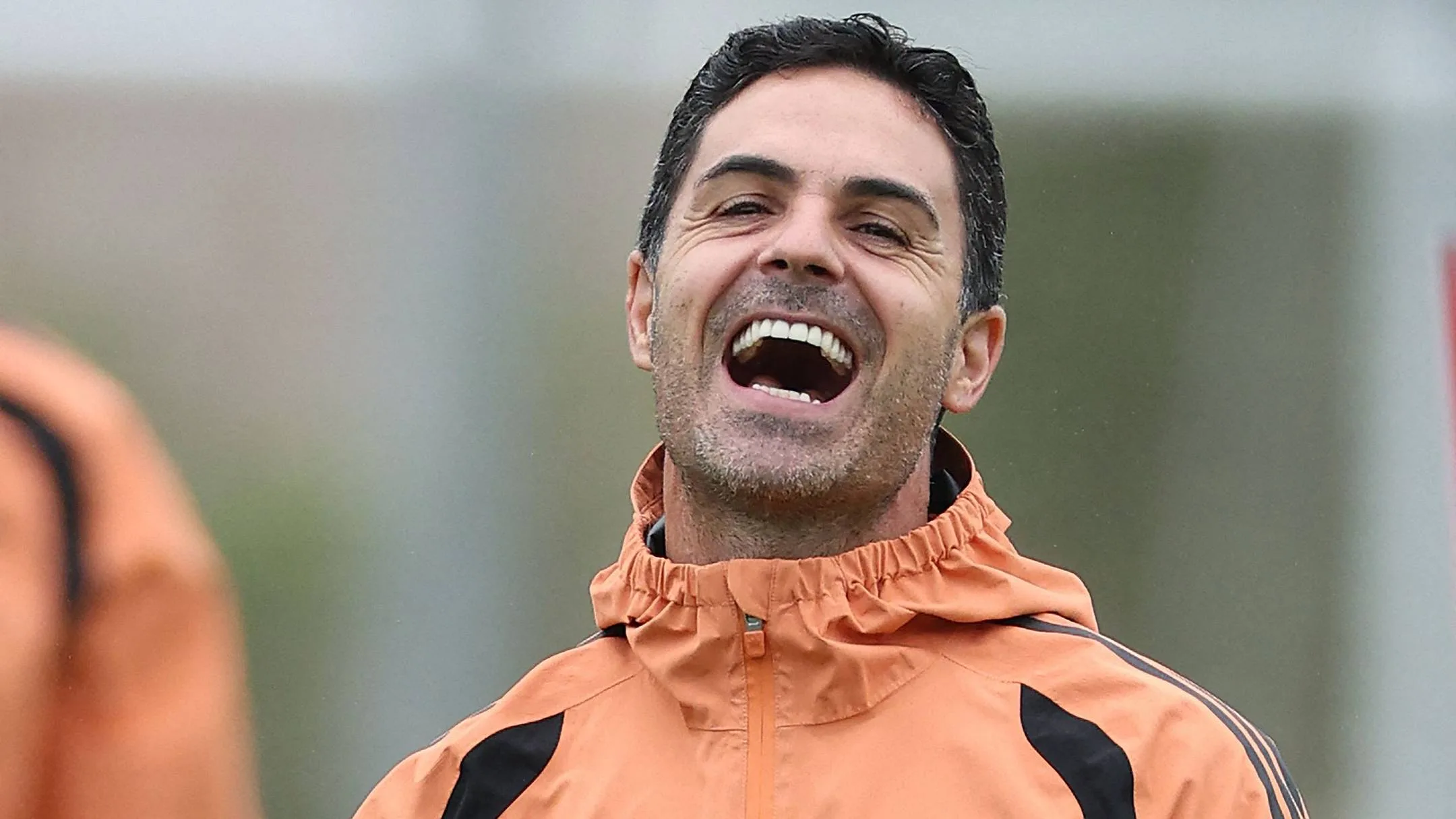
A new book has claimed that Mikel Arteta was only one of at least eight serious options Arsenal examined when they went looking for a successor to Unai Emery in 2019.
The club were in an unusual position after spending 22 years with one manager, then needing a second permanent appointment in less than 18 months. According to The Telegraph’s Sam Dean in Arsenal: The Inside Story of Arsenal’s Rebirth Under Mikel Arteta, then sporting director Edu Gaspar cast a notably wide net.
Arteta, who had never managed before, was viewed at first as sitting “closer to the lower end” of the list. His case rested on a playing career that had taken him to north London and on the experience he had built as Pep Guardiola’s assistant at Manchester City.
Still, Arteta had already been thinking about coaching since the age of 26, when a torn ACL at Everton forced him to look at the game differently. Edu said the former midfielder made a striking impression when he came to his home.
“I spoke to him about the squad, the culture, the strategy and everything that I had thought in my six months inside the club,” Edu told Dean. “And Mikel was extremely prepared for the conversation. He was prepared to such a level that it felt like he was inside the club already. He presented and spoke about everything. Everything.
“It was extremely impressive, the way he presented his strategy, the way he was seeing the club and also the excitement he had to start the project. I was like: ‘Wow, this guy is prepared—to the next level.’”
The report also says Mauricio Pochettino entered “serious conversations” shortly after leaving Tottenham Hotspur, while Carlo Ancelotti was available before later taking the Everton job and then returning to Real Madrid, where he won more major honours. Patrick Vieira, who already had managerial experience, was another name considered before eventually landing Premier League work elsewhere.
Roberto Martínez, then with Belgium, and Vítor Pereira, who was coaching in China, were also among the broader search. Julian Nagelsmann was highly regarded at the time, while Massimiliano Allegri featured in the final part of the process, revealing his distance from modern data tools in an interview the day before Arteta was officially appointed.