Bayern Munich
The Modern No.6: A Tour of Today’s Premier Defensive Midfielders
A concise look at elite defensive midfielders shaping modern teams across Europe’s top leagues. Read

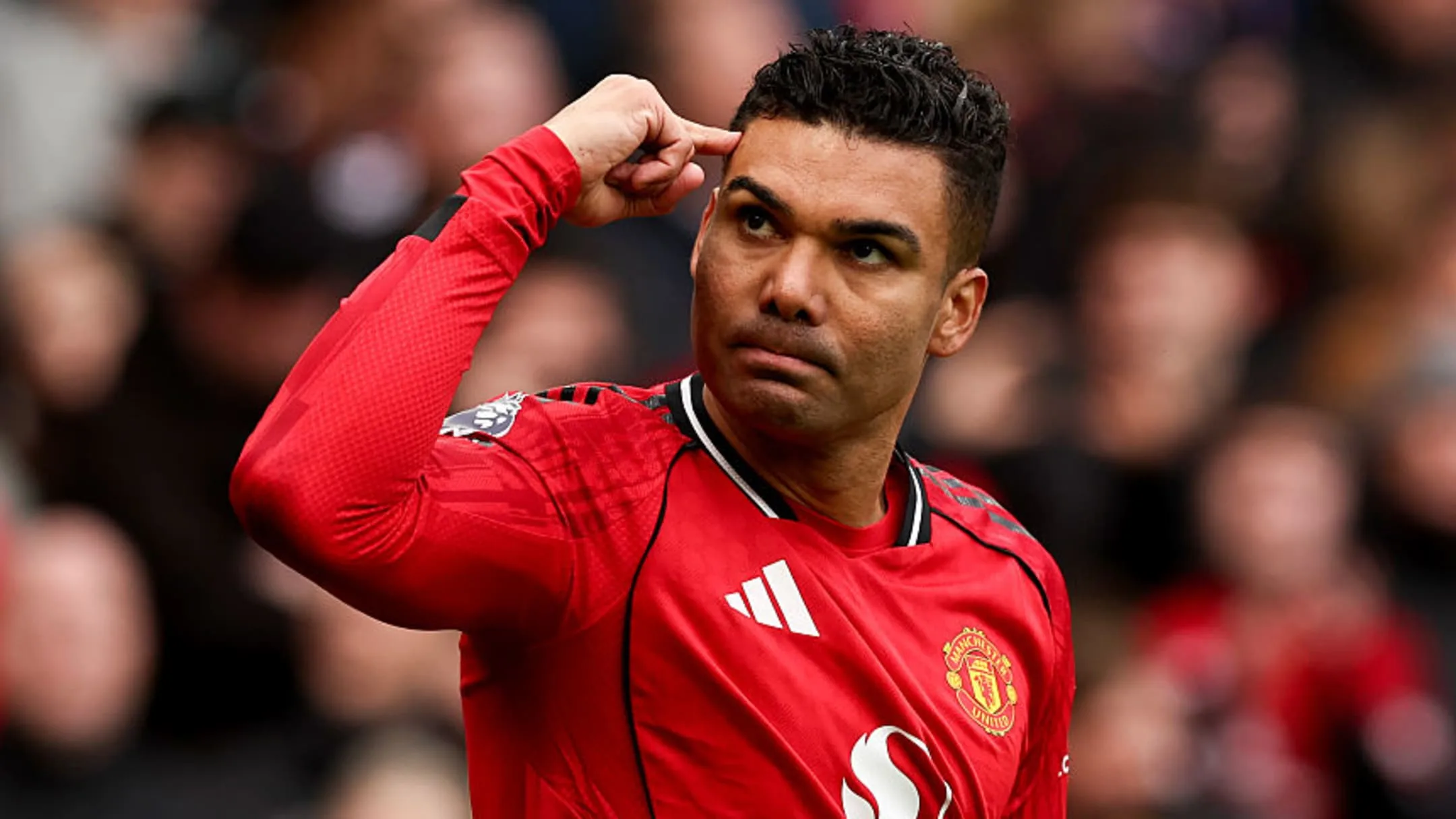
Defensive midfield remains a position of quiet influence. The players profiled here are prized not for flash but for control, timing and the capacity to turn defence into attack.
Morten Hjulmand earned his chance after spells with Admira Wacker and Lecce and moved to Sporting CP in the summer of 2023. He has become central to Sporting’s back-to-back Liga Portugal titles, a defensively intelligent midfielder who anticipates danger, breaks up attacks and instigates counters that often end in a ball in behind. While Viktor Gyökeres grabbed headlines, Hjulmand provided the silent link.
Midfielders who inherited huge boots include Nico González, drafted in as Rodri’s replacement midway through the 2024–25 season. He initially struggled but has improved this campaign, offering bite and commitment in Manchester City’s engine room as he works toward the next level.
Johnny Cardoso arrived at Real Betis in late 2023 and has established himself as a composed presence in La Liga. The New Jersey-born midfielder moved to Brazil as an infant and now reads the game, picks up second balls and progresses play with purpose.
Youssouf Fofana brings box-to-box energy for club and country, comfortable surging forward as well as shielding the backline. N’Golo Kanté, now playing in Türkiye, answered a France recall ahead of Euro 2024 and “bossed it.” “It is a madness. I’ve never seen anything like this before,” said Ibrahima Konaté. Youssouf Fofana added: “Listen to me when I talk. It’s not a myth. I’ve seen it with my own eyes. I have. It’s crazy.”
Brighton’s Carlos Baleba mixes athleticism with carry-first instincts and an appetite for long-range efforts. His supporters sing, “Then I saw his face… it’s CARLOS BALEBA!”
Rúben Neves left Porto for Wolves in 2017 and helped them to promotion and a top-seven finish before moving on; he now plays for Al Hilal and remains influential for Portugal. Amadou Onana rose from funding his own train tickets at Zulte Waregem to becoming a force at Everton and then Aston Villa.
Adam Wharton’s composed displays helped Crystal Palace upset Manchester City in the 2025 FA Cup final, stifling Kevin De Bruyne and Bernardo Silva. Elsewhere, players such as Eduardo Camavinga, Hakan Çalhanoğlu, Aleksandar Pavlović, Granit Xhaka, Angelo Stiller, Aurélien Tchouaméni and others illustrate the varied profiles that make the modern No.6 indispensable.




Barcelona
Fifteen Players Set to Define the 2026 World Cup — A Form-Based Guide
A concise look at the 15 standout players expected to shape the 2026 World Cup in North America. 2026
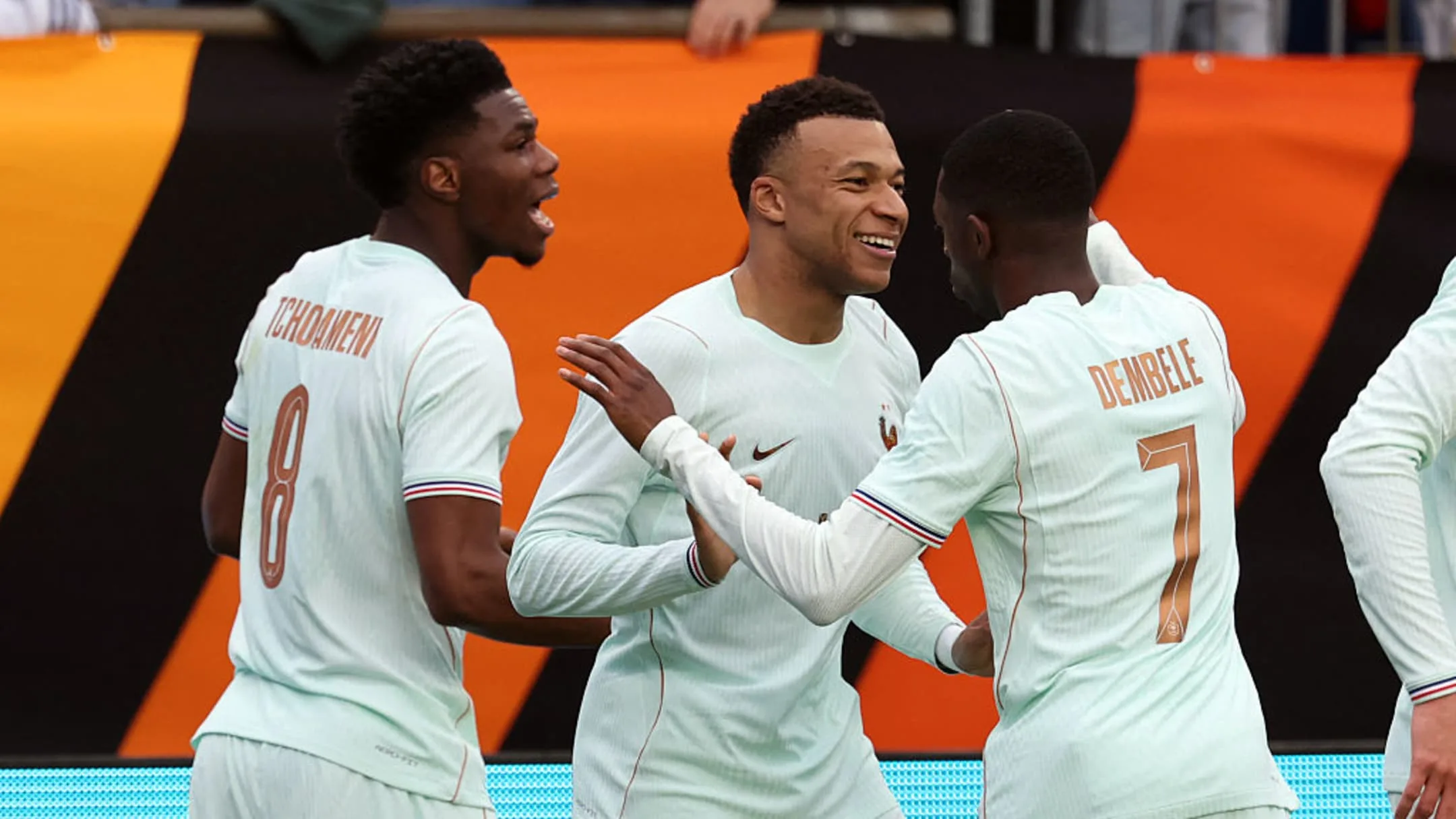
The 2026 World Cup will still be the benchmark for how careers are remembered. This piece identifies 15 players who, on the evidence of recent form detailed below, are likely to dominate the tournament in North America.
Portugal’s midfield will be a central concern for opponents. Bruno Fernandes, who wears the captain’s armband in Cristiano Ronaldo’s absence, has produced a Premier League campaign that merits PFA Player of the Year consideration. Vitinha has been the metronome for Paris Saint-Germain and will sit at the base of Portugal’s midfield, often combining with clubmate João Neves. When he is not disrupting pressing schemes, Vitinha has a habit of producing decisive goals from the edge of the box.
Lionel Messi remains an outstanding presence. His legacy, sealed in Qatar, has not prevented him from proving he can still compete — most recently at last summer’s Club World Cup — and he has continued to dominate Major League Soccer. “A final decision hasn’t been made, but Messi has come this far in the latest cycle.”
Thibaut Courtois is back in the international picture under Rudi Garcia and will look to replicate the goalkeeping excellence he has shown for Real Madrid on football’s biggest stage.
Federico Valverde has rediscovered his best form under Álvaro Arbeloa at Real Madrid. The Uruguayan’s blend of defensive diligence and forward surges makes him one of the most complete midfielders in world football and a natural leader for Uruguay.
Raphinha has been a model of efficiency, contributing 60 goal involvements in 57 matches during Barcelona’s treble season, and remains a key attacking option for Brazil when fit.
Erling Haaland led Norway’s qualifying with 16 goals and will be central to their ambitions; an upturn in form would make Norway genuine dark horses.
Vinicius Junior is framed as Brazil’s obvious superstar to watch, praised by his coach as “extraordinary talent.” Michael Olise, Harry Kane, Pedri and Ousmane Dembélé also feature for their recent influence at club and international level.
This selection is driven by recent performances and available form, and it highlights the players most likely to shape narratives at the 2026 World Cup.
Arsenal
Money Talks: CIES Ranks the World’s Most Valuable Squads
CIES values nine squads over $1bn; Real Madrid leads at $1.78bn while Tottenham exceed $1bn. Values.
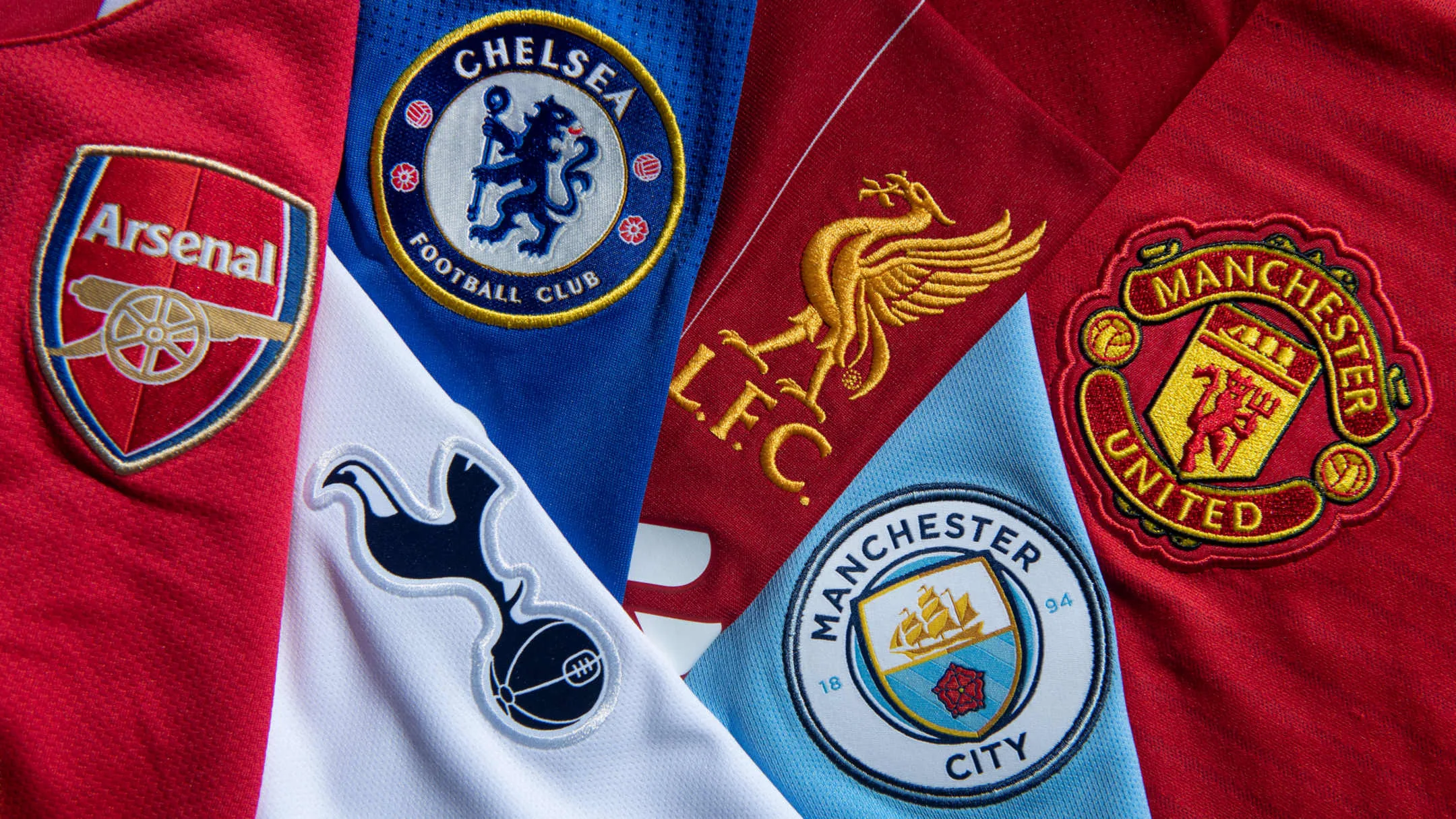
The surge in transfer prices and squad valuations has reshaped how clubs are measured. The CIES Football Observatory produces those estimates by weighing a player’s quality, age, position and length of contract, and those individual valuations are then summed to give each squad a market value.
The scale is striking. There are nine clubs with squads valued above $1 billion. At the top is Real Madrid with a squad valuation of $1.78 billion and Kylian Mbappé listed as the most valuable player at $221 million. Barcelona follow with $1.60 billion, Lamine Yamal accounting for $403.9 million of that total. Arsenal and Paris Saint-Germain each sit at $1.55 billion, with Bukayo Saka ($131.5 million) and Désiré Doué ($150.3 million) named as their most valuable players respectively.
Liverpool’s roster is valued at $1.20 billion, most valuable player Florian Wirtz ($149.8 million). Bayern Munich come in at $1.15 billion with Michael Olise ($162.6 million) as their top-rated asset. Tottenham’s squad is valued at $1.03 billion; Xavi Simons is listed as their most valuable player ($98.1 million), despite the club’s current relegation fight and Igor Tudor’s assessment that players “are lacking when we attack, we lack the quality to score the goal. We are lacking in the middle to run and we are lacking behind to stay there to suffer and not concede the goal.”
The list also includes Manchester United ($953 million, Benjamin Šeško $100.3 million) and Inter ($942 million, Lautaro Martínez $117 million). Earlier-positioned squads under $1 billion include Atlético Madrid ($903 million, Julián Álvarez $136.5 million), Juventus ($896 million, Kenan Yıldız $152.5 million) and Brighton ($894 million, Diego Gómez $86.4 million).
Several voices in the game have reflected on the market changes. Karl-Heinz Rumminegge said, “There are some players who do not come with a price tag.” Robert Lewandowski complained, “You are young, you score 10 goals in six months and some club will pay 60 or 70 million,” adding, “Before, you had to achieve something.” Vincent Kompany warned players about hype: “I always tell my players, ‘When there’s hype please don’t believe it, you’re not that good.’”
Whether the valuations mirror on-field quality or the inflation of a transfer market remains the central question CIES data brings into focus.
Bayern Munich
Bayern Join a Packed Race for Nottingham Forest Midfielder Elliot Anderson
Bayern step up for Elliot Anderson as Man City, Man Utd and others pursue midfield options in 2026 .
Bayern Munich are reportedly intensifying interest in Nottingham Forest midfielder Elliot Anderson, entering a transfer picture already crowded with top clubs. The German side are said to be “stepping up” their plans to sign Anderson, who could be tempted by the prospect of joining up with international teammate Harry Kane.
Last summer was the year of the striker. Alexander Isak, Hugo Ekitiké, Viktor Gyökeres, Benjamin Šeško, João Pedro, Liam Delap … all the big teams wanted a new goalscorer and bid against themselves to try find them. Now, in 2026, the narrative has turned to midfielders and Anderson sits near the top of multiple wish lists.
Manchester United and Manchester City are both named among the interested parties, alongside Liverpool, Chelsea, Real Madrid and Tottenham Hotspur. The article adds that Arsenal, Newcastle United, Barcelona and Paris Saint-Germain could also be drawn into the market depending on how the window develops.
That overlap matters because many clubs are watching the same targets. There is, however, only one Anderson. Clubs that see the 23-year-old as their dream pick-up will need alternatives if he moves elsewhere this summer.
Potential replacements already being considered include Adam Wharton of Crystal Palace, while the agent of Newcastle’s Sandro Tonali has done an excellent job of injecting his client into the market . Magpies teammate Bruno Guimarães has also been tipped for a costly exit. Brighton & Hove Albion’s Carlos Baleba still has plenty of admirers despite a failed approach from United last summer, and Bournemouth’s Tyler Adams and Wolverhampton Wanderers’ João Gomes are both named as players likely to move on this year.
As the window unfolds, clubs facing the prospect of missing out on Anderson will be forced to broaden their lists. For now, the race to sign him looks set to be a defining early storyline of the 2026 transfer window.