Analytics & Stats
De Zerbi’s tactical choices to steady Tottenham for the run-in
Roberto De Zerbi must prepare Tottenham by April 12 for a run of fixtures beginning at Sunderland. .


Tottenham have moved decisively to appoint Roberto De Zerbi, offering the former Brighton & Hove Albion coach a reported five-year deal as the club seeks to preserve its Premier League status. The immediate task is stark: De Zerbi must prepare a squad that sees itself capable of European nights to avoid a slide that could leave trips to Portsmouth and Preston North End next season on the agenda.
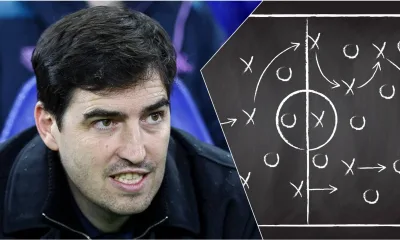
He has until April 12 to ready the group for the slog ahead, with Spurs next visiting Sunderland in the Premier League. Tactical flexibility is likely, but a return to the 4-2-3-1 that has been his default across much of his career is a realistic baseline. That shape would place Xavi Simons in a No. 10 role to maximise the Dutchman’s creative influence between the lines.
De Zerbi’s football emphasises artificial transitions and progression through depth. Players must be comfortable on the ball and able to execute efficient passing sequences to escape pressure and create space for forwards. That places a premium on Tottenham’s most technically secure performers. Captain Cristian Romero and Pedro Porro, alongside Destiny Udogie when he advances, will be central to building from the back, with Micky van de Ven capable of covering when full backs push high.
Midfield options include Archie Gray as a current form pick, with Rodrigo Bentancur likely to be relied upon when fit. Bentancur performed well under Antonio Conte in a structure built on automatisms. Yves Bissouma offers bravery in the build-up and Lucas Bergvall provides carrying ability.
De Zerbi has varied his approach recently at Marseille and used a back three more often there than previously. A 3-4-2-1 is an option if three fit centre backs are available, with Kevin Danso as a useful third choice.
In attack De Zerbi must lean on Mohammed Kudus for the coming fixtures, pairing him with Xavi Simons between the lines and using Dominic Solanke as a reliable focal point. Randal Kolo Muani offers rotation but Solanke’s ability to retain possession and press is highlighted in this context.
De Zerbi’s admiration for Pep Guardiola is well known, and influences from narrow central combinations championed by others may also inform his set-up at Tottenham.





Analytics & Stats
Spain’s World Cup triumph should make clubs think twice before copying the wrong lessons
Spain’s World Cup win offers clubs a warning: copy the pressing, not just the passing.

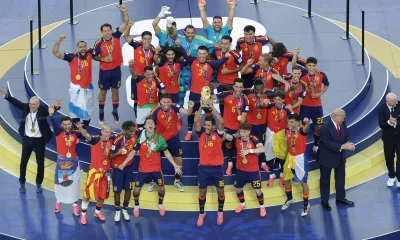
History tends to belong to the winners, and in football that means the most successful sides often shape what comes next. Spain’s 2026 World Cup victory is a clear example of that influence, but it is also a warning for clubs tempted to copy the wrong details.
Luis de la Fuente’s team offered a style that was quickly praised by neutrals, with Toni Kroos among those to salute the result by saying, “Football won.” Yet the bigger point is that club sides should be careful about what they borrow. Copying the surface of Spain’s approach without understanding the structure underneath would be a serious mistake.
This has happened before. Herbert Chapman’s work at Huddersfield Town and Arsenal introduced ideas that were later imitated, often badly, and his WM system at Arsenal was copied by teams that missed the tactical nuance behind it. The same pattern followed Pep Guardiola’s Barcelona, with many teams trying to reproduce a style they only partly understood. Vicente del Bosque admitted his 2010 world champions had simplified that influence, and even then clubs rushed to imitate Spain.
Blackpool’s Ian Holloway was one of them, saying, “After watching the World Cup, I’ve realized that we need to get more like Spain.” For a while, the idea appeared to work. Passing became a target in itself, but the model soon collapsed when the team relied too heavily on Charlie Adam and were relegated after three wins following Christmas. Rio Ferdinand later questioned Manchester United’s obsession with pass counts under David Moyes, asking, “Who cares? I’d rather score five goals from 10 passes.”
The key point with Spain is that possession is not the full story. Guardiola himself has rejected the idea of passing for passing’s sake, and this Spain side were more defined by their press than by their pass totals. They had the highest defensive line in the tournament, produced a tournament-leading number of high turnovers, and made life difficult for opponents by squeezing the pitch.
Rodri summed it up neatly: “Stop them [the opposition] playing and bring the game to our terrain.” That, more than any imitation of passing patterns, is the lesson clubs should study.
Analytics & Stats
Inflation-Adjusted Rankings: The 25 Costliest Premier League Transfers
Alan Shearer tops an inflation-adjusted list of the Premier League’s most expensive transfers. Today.
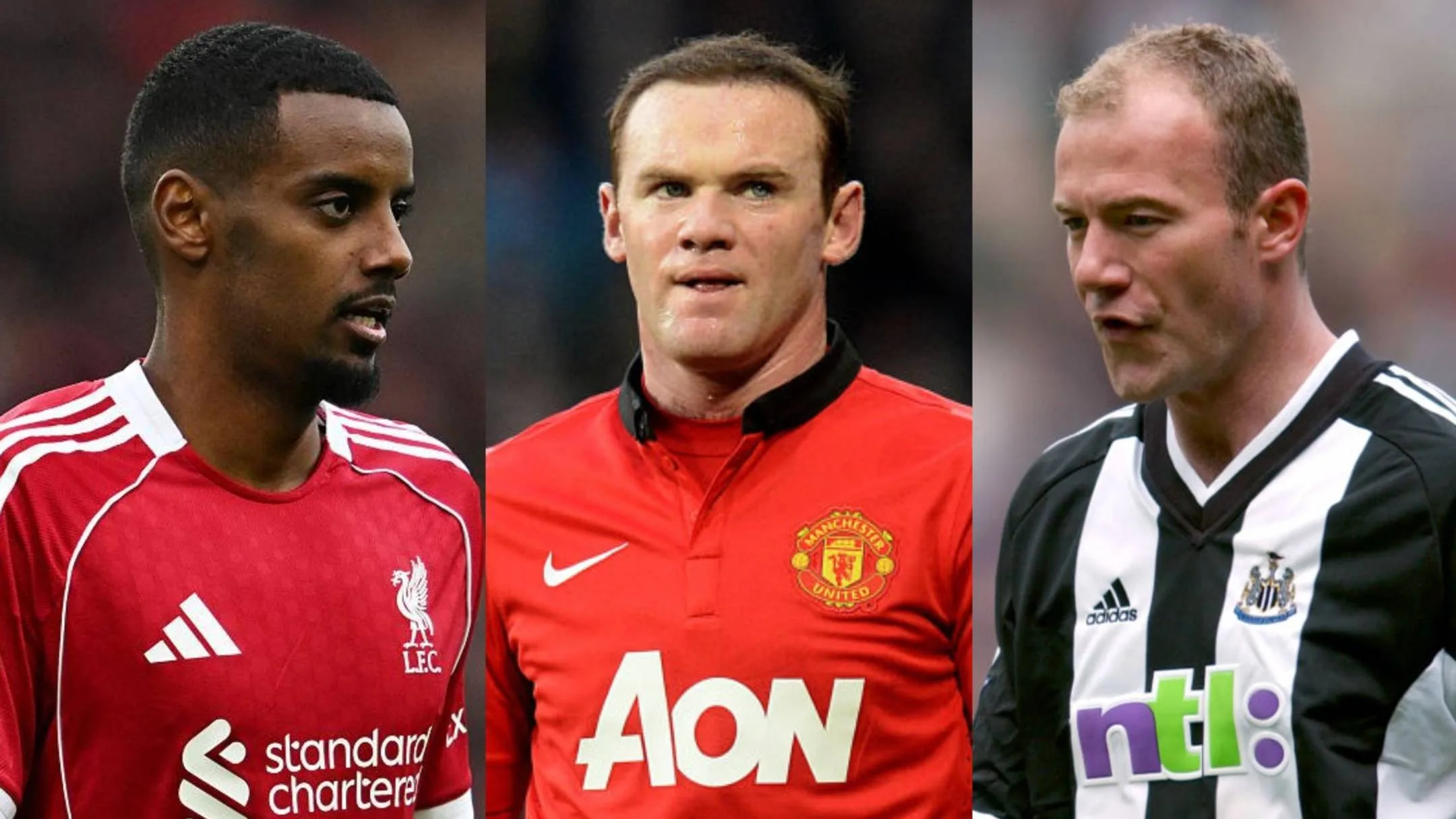
Recent calculations that adjust transfer fees for inflation reveal how the Premier League’s market has shifted since the competition began. Using an inflation measure based on the increase in total competition revenue per season, the study places Alan Shearer at the top of the list. His 1996–97 move to Newcastle United for £15 million registers as the equivalent of £223.3 million ($297.9 million).
The ranking lists Rio Ferdinand’s 2002–03 switch to Manchester United at second (£187.1 million, $249.6 million) and Juan Sebastián Verón third (£168.3 million, $224.6 million). Several other notable entries include Stan Collymore at fourth (£166.6 million, $222.3 million), Fernando Torres fifth (£148.7 million, $198.4 million) and Dennis Bergkamp sixth (£147 million, $196.1 million).
The top 25 also features Andriy Shevchenko, Dwight Yorke, Paul Pogba, Andy Cole and Wayne Rooney among others. The list shows nine Manchester United signings in total, with Juan Sebastián Verón a striking inclusion at number three despite a difficult spell at Old Trafford.
Only one of the 10 largest fees was paid in the past decade, and record Premier League signing Alexander Isak ranks 14th. Other Premier League giants are well represented: Chelsea entries include Fernando Torres, Andriy Shevchenko, Didier Drogba, Romelu Lukaku, Moisés Caicedo, Enzo Fernández and Michael Essien. Liverpool’s Stan Collymore appears at number four despite an original fee of £8.5 million in 1995.
Newcastle United’s Alan Shearer emerges as the single costliest transfer when viewed through this inflation framework. Rio Ferdinand appears twice on the list after his move to Manchester United in 2002 and his earlier transfer to Leeds United in 2000. The compilation highlights how historical deals can equal or exceed modern fees when adjusted for the growth in league revenues.
Below are the full 25-ranked entries with original and inflation-adjusted figures as provided in the data.
Analytics & Stats
League origins: which competitions supply the most players to the 2026 World Cup
Premier League leads with 154 players at the 2026 World Cup; Europe’s top five dominate squads. this
The 2026 World Cup in North America arrives with a record 48 teams and a wide mix of experience across national squads. At club level the concentration of resources in Europe’s top divisions is reflected in the make-up of tournament squads.
League representation, ranked by the number of players selected for the finals, is as follows:
1. Premier League (England) — 154
2. Bundesliga (Germany) — 94
3. Ligue 1 (France) — 78
4. La Liga (Spain) — 74
5. Serie A (Italy) — 66
6. Saudi Pro League (Saudi Arabia) — 47
7. Turkish Süper Lig (Türkiye) — 42
8. MLS (U.S./Canada) — 38
9. EFL Championship (England) — 37
10. Eredivisie (Netherlands) — 30
The Premier League has become a financial juggernaut and that economic pull is evident: the division will supply 154 players to the World Cup and the English pyramid as a whole provides 200 players. Tommy Smith, who played in the sixth-tier with Braintree Town last season, is among that total. Each of UEFA’s three club competition finals at the end of the 2025–26 season included an English representative, and almost half of the division will be competing on the continent next season.
Club-level figures underline the scale of England’s contribution. With 19, Manchester City have the most players flying out to North America, while Conference League winners Crystal Palace (12) have more representatives than Real Madrid. For the first time ever, a Spanish World Cup roster doesn’t feature a single Madrid player.
The Bundesliga’s 94 players were aided by Austria’s first World Cup qualification this century. Bayern Munich had 18 players heading to the tournament before Lennart Karl picked up an injury. Ligue 1 (78) and Serie A (66) complete the top five, with Serie A limited by Italy’s failure to qualify. The Saudi Pro League is the best-represented league outside Europe with 47 players; all but one member of the Saudi roster competes domestically and Al Hilal account for 11 representatives.