Manchester United
Casemiro prepares for emotional Manchester United farewell
Casemiro hopes not to cry as he prepares for his final Manchester United appearances this season….

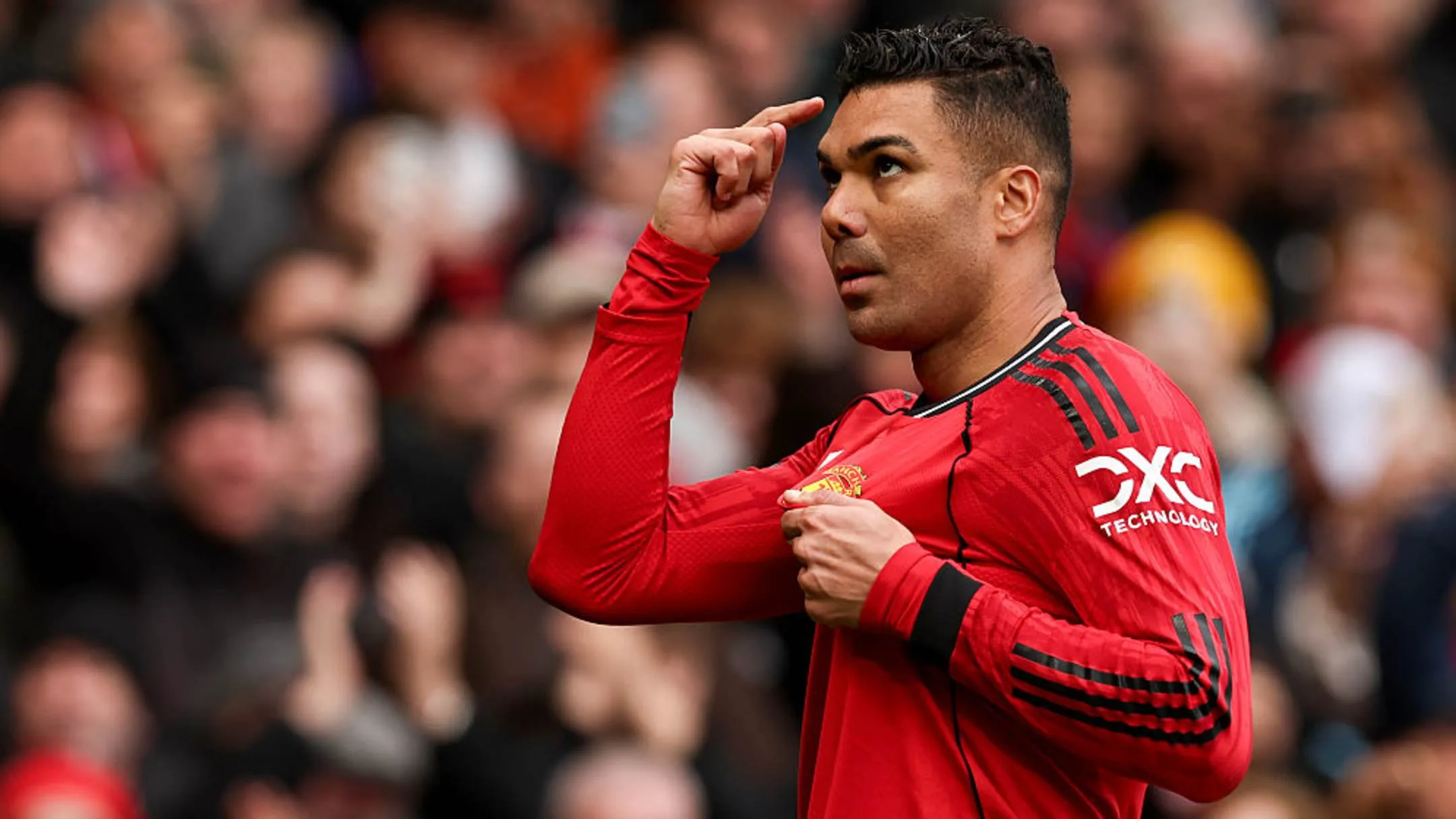
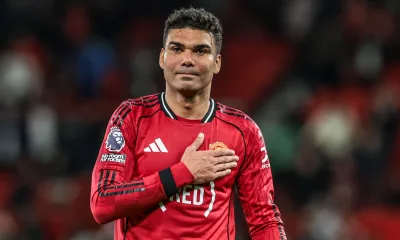
Casemiro has acknowledged that his final months at Manchester United will be emotional as he prepares to leave the club at the end of the season. The midfielder, who has enjoyed arguably his best form in a United shirt this campaign, said he was conscious of the affection shown to him by supporters since his arrival.
Speaking to the club’s media, Casemiro described the reaction from fans as “an honor for us to listen to the fans’ love and affection.” He added he would remember their support “for the rest of my life.” The player also admitted the build-up to his last matches has been moving: “Lots of people think it is just the last few months, since the announcement, but I have to be thankful, since the very first day that I arrived here, the fans have been amazing with me and my family.
“It’s just gratitude for this love, it is so exciting. I am hoping not to cry on my last day, as it is such a beautiful experience. My wife already cried, the other day, when the fans were asking for one more year. I just want to enjoy it, enjoy all the moments and I will be a United fan for the rest of my life.”
Casemiro, a Carabao Cup and FA Cup winner with the club, has seven games left to add to his Manchester United legacy. He will also be hoping to play a part in securing Champions League qualification, a result the club view as the start of a fresh chapter after difficult years.
The 34-year-old has been a regular in the side throughout the season, named in starting line-ups whether under Ruben Amorim, Darren Fletcher or Michael Carrick. He is expected to start the remaining fixtures after a clause that would have triggered a 12-month extension was reported to have been removed. That clause would have been activated with 35 Premier League starts, which Casemiro can still reach.
United have not played since March 20 because of the international break and face rivals Leeds United on April 13, with almost two weeks before that fixture.




Arsenal
Premier League clubs step up 2026/27 preseason with fixtures spread across the world
Premier League clubs are spread across Europe, Asia and the US in a busy 2026/27 preseason.
With the World Cup having only recently concluded, Premier League clubs are already deep into their 2026/27 preseason programmes. The calendar is tight, the travel is heavy and the purpose is clear: get players ready, test combinations and give new faces a chance to make an early impression.
Arsenal, the reigning champions, are among the later starters. Their first friendly comes on Aug. 1 against Girona in Catalonia, before further meetings with Real Betis, Borussia Dortmund and Como. They will then face Manchester City in the Community Shield at the Principality Stadium in Cardiff.
Aston Villa have already opened with a 5-0 win over Walsall and continue across Europe and Asia, while Bournemouth began with a 4-1 victory against St. Pauli. Brentford and Brighton & Hove Albion both have short schedules remaining, with each taking on European opposition in mid-August.
Chelsea’s first run under new manager Xabi Alonso takes them to Australia for matches against Western Sydney Wanderers and Tottenham Hotspur, before trips through Hong Kong, Jakarta and Malaysia. Their final friendly is against Real Sociedad at Stamford Bridge.
Elsewhere, Everton have mixed early results and face a demanding route through Scotland, Germany and home soil before meeting Lille. Fulham also have work to do after a behind-closed-doors defeat to Norwich City. Hull City, Ipswich Town and Coventry City all have their own preparations mapped out, while Crystal Palace have already played twice and continue with fixtures in Italy and Germany.
Liverpool’s schedule includes a United States tour against Sunderland, Wrexham and Leeds United, followed by Monaco and two games against Como on Aug. 16. Manchester City are taking a lighter approach, starting with Inter in Hong Kong before facing the K-League All-Stars, Atlético Madrid and Arsenal. Manchester United, meanwhile, have already lost to Wrexham and beaten Rosenborg 5-0, with Atlético Madrid, Paris Saint-Germain, Leeds United and Milan still to come.
Newcastle United, Nottingham Forest, Sunderland and Tottenham Hotspur also remain busy, with each club using these final weeks to sharpen up before the league begins.
Manchester United
Real Madrid move for Rodri could open a door for Manchester United
Real Madrid’s pursuit of Rodri could affect Tchouaméni, Camavinga and Manchester United’s transfer plans.
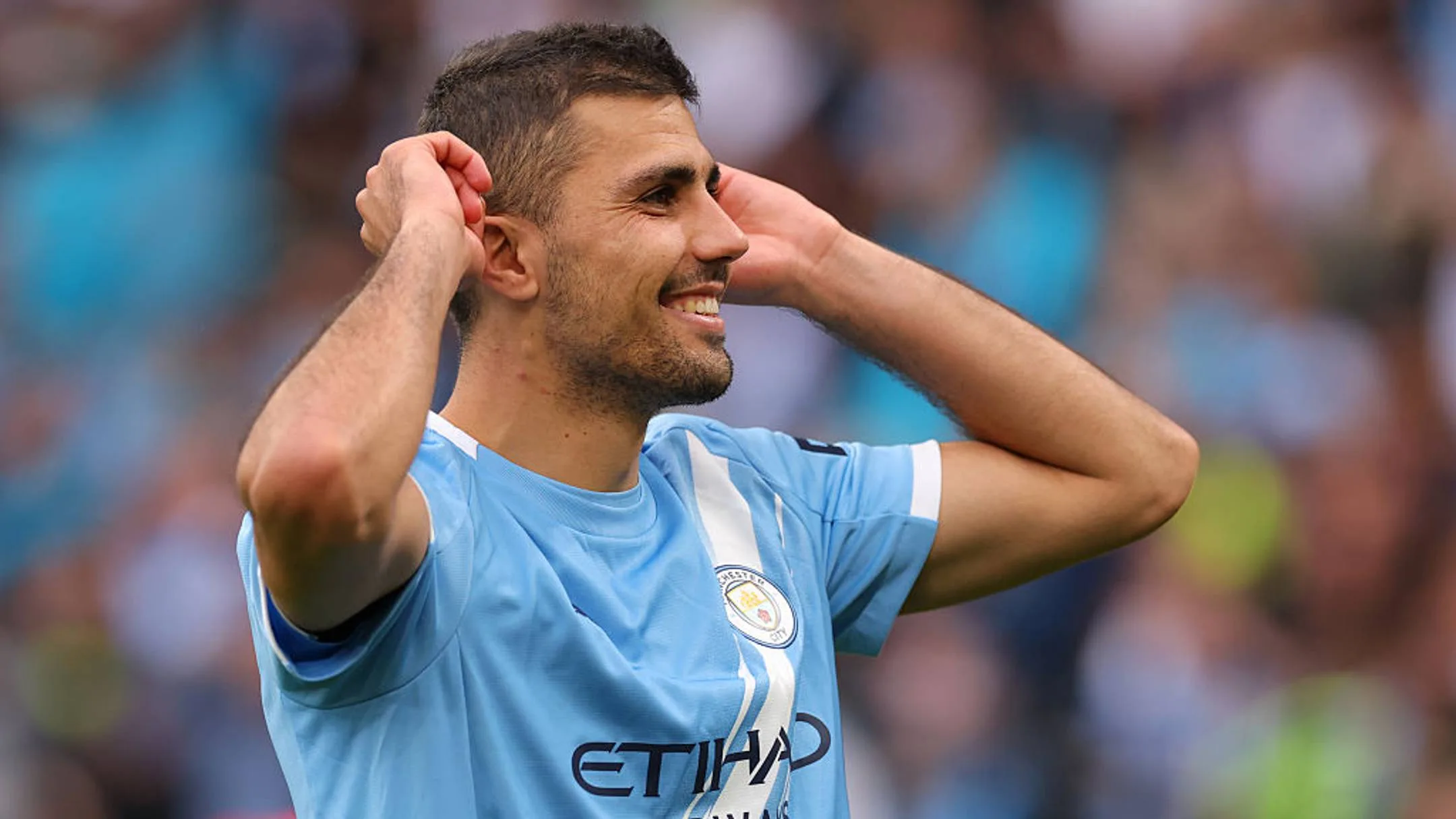
Manchester United may end up benefiting from Real Madrid’s sudden interest in Rodri, with the possible consequences for Aurélien Tchouaméni and Eduardo Camavinga potentially reshaping the market.
A move for Rodri would not automatically require Madrid to sell either midfielder, but the financial case would be strengthened if one of them were moved on. There is also the possibility that being pushed out of Madrid’s strongest XI could make Tchouaméni reconsider where his future lies.
The Daily Mail writes that Premier League clubs are “on alert” over Tchouaméni, while BBC Sport says Madrid are “willing to discuss” a deal.
United were understood to have made an enquiry about a transfer at the start of the summer, although progress has been limited by Tchouaméni’s wish to stay at the Bernabéu. He had reportedly reached an agreement to extend his contract until 2031, though that has only been reported and not confirmed, leaving his current stance unclear.
Even if Tchouaméni were to tell Real Madrid that he wants out, any deal would remain costly and could rise above $90 million. His annual salary is also estimated at just under the equivalent of $14 million, which would be another obstacle for interested clubs.
That sits against United’s recent approach in the market. The club backed away from more expensive moves for Elliot Anderson, Mateus Fernandes and Sandro Tonali, instead chasing cheaper options such as Andrey Santos and Youri Tielemans. Their wider search has also brought links to Tyler Adams, Mamadou Sangaré and Danilo, while the now cancelled Éderson move was attractive in part because of its lower price.
This is not a question of United lacking the means for Tchouaméni. It is whether the economics make sense alongside their other priorities. Carlos Baleba remains the only defensive midfield target with a similar price level, though his basic salary is estimated at under $1 million.
If Rodri’s arrival reduces Tchouaméni’s minutes, Camavinga’s position could become even more precarious. The Frenchman is already under pressure after a poor end to last season cost him his place at the World Cup.
Manchester United
United’s Young Core and Fringe Men Stand Out in Rosenborg Rout
United’s academy players and fringe men delivered a convincing 5-0 win over Rosenborg.
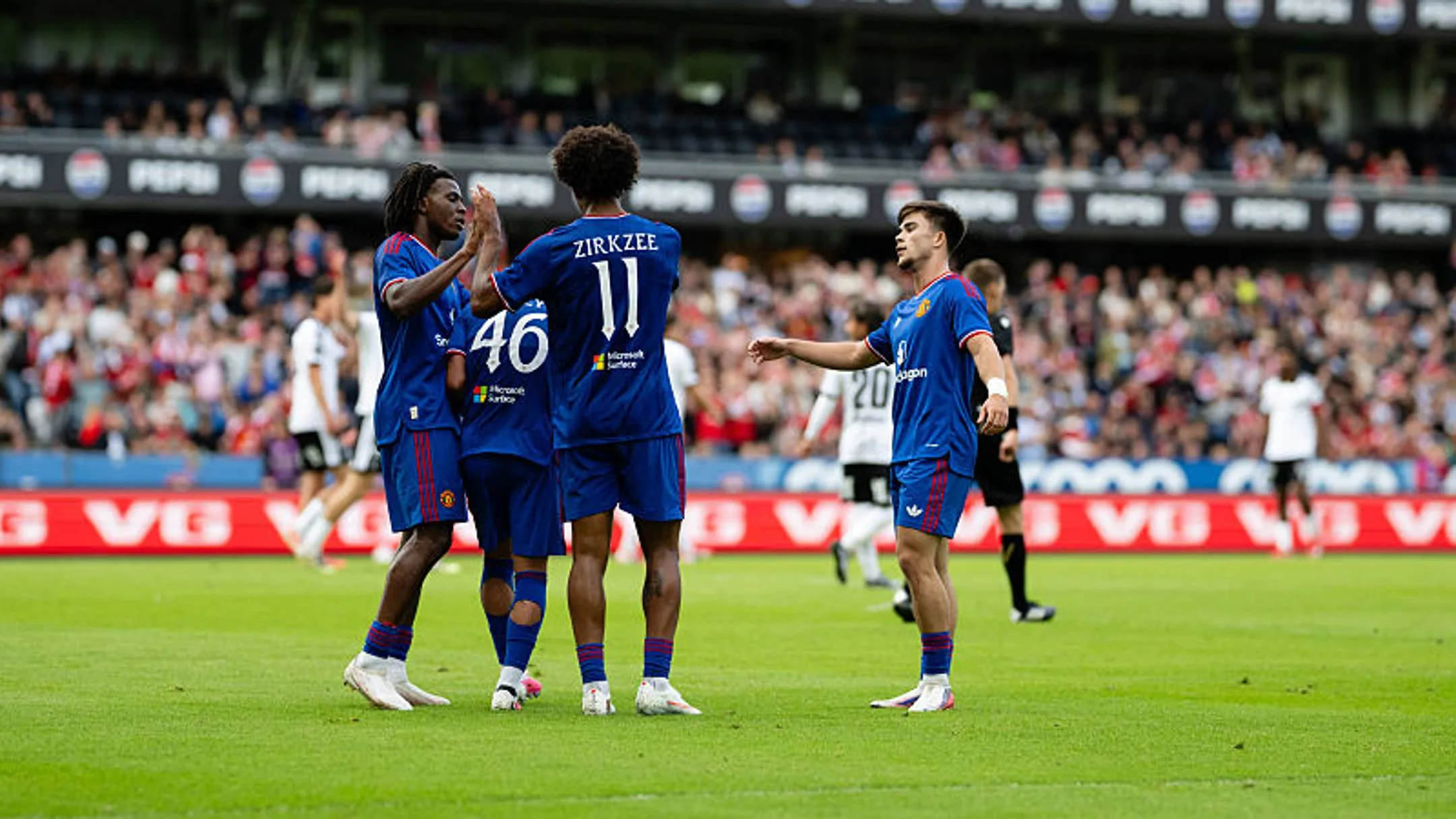
Manchester United claimed their first win of the summer in Trondheim on Friday, easing past Rosenborg 5-0 in a performance that offered encouraging signs for several players on the edge of the squad and a number of academy talents.
United controlled the match from the start. Patrick Dorgu and Leny Yoro both struck the woodwork before 19-year-old academy forward Shea Lacey opened the scoring. Joshua Zirkzee then made it 2-0 early in the second half with a fine individual effort, before a wave of substitutions handed the platform to a younger group to finish the job. Carrick delayed the full overhaul by 15 minutes compared with the Wrexham match, when the changes came at half-time.
The academy contingent added three more goals. Jacob Devaney scored soon after coming on, driving in from a corner. Harry Amass followed with a fourth after pushing forward to meet a right-wing cross first time at the far post, with Jaydan Kamason providing the assist. Kamason then created the fifth for Ethan Williams, who finished from a similar low ball to the far post.
With many World Cup players still on summer rest and Benjamin Šeško continuing his fitness work in Manchester, this stage of preseason is a chance for others to make an impression. Zirkzee and Mason Mount both used it well.
Zirkzee’s contribution was especially notable. Since arriving from Bologna in 2024, he has not had a fixed role, and this was another reminder that his game is more subtle than the stereotype attached to his 6’4″ frame. He dropped deep to create Lacey’s goal with a vertical pass through the defence, then produced a composed finish of his own after twice feinting to shoot with his right foot.
Mount did not score, but his passing and work rate stood out across his hour on the pitch. Elsewhere, Radek Vítek started in goal and played 72 minutes before Dermot Mee came on. JJ Gabriel remained unused, but was still part of the squad, while Jim Thwaites was the other outfield player to miss out among 12 substitutes.
The match also brought a first outing for United’s new all-blue away kit, a colour long linked with some notable moments in the club’s history.

Liverpool’s defensive depth tested early as Joe Gomez injury compounds Iraola concerns

Chelsea move for MacPhee underlines the value of set-piece expertise