Football Development
Darren Fletcher Rejects Criticism of United Academy After Amorim Remarks
Fletcher defends United academy, rebukes the narrative after Amorim’s earlier criticism. In details.

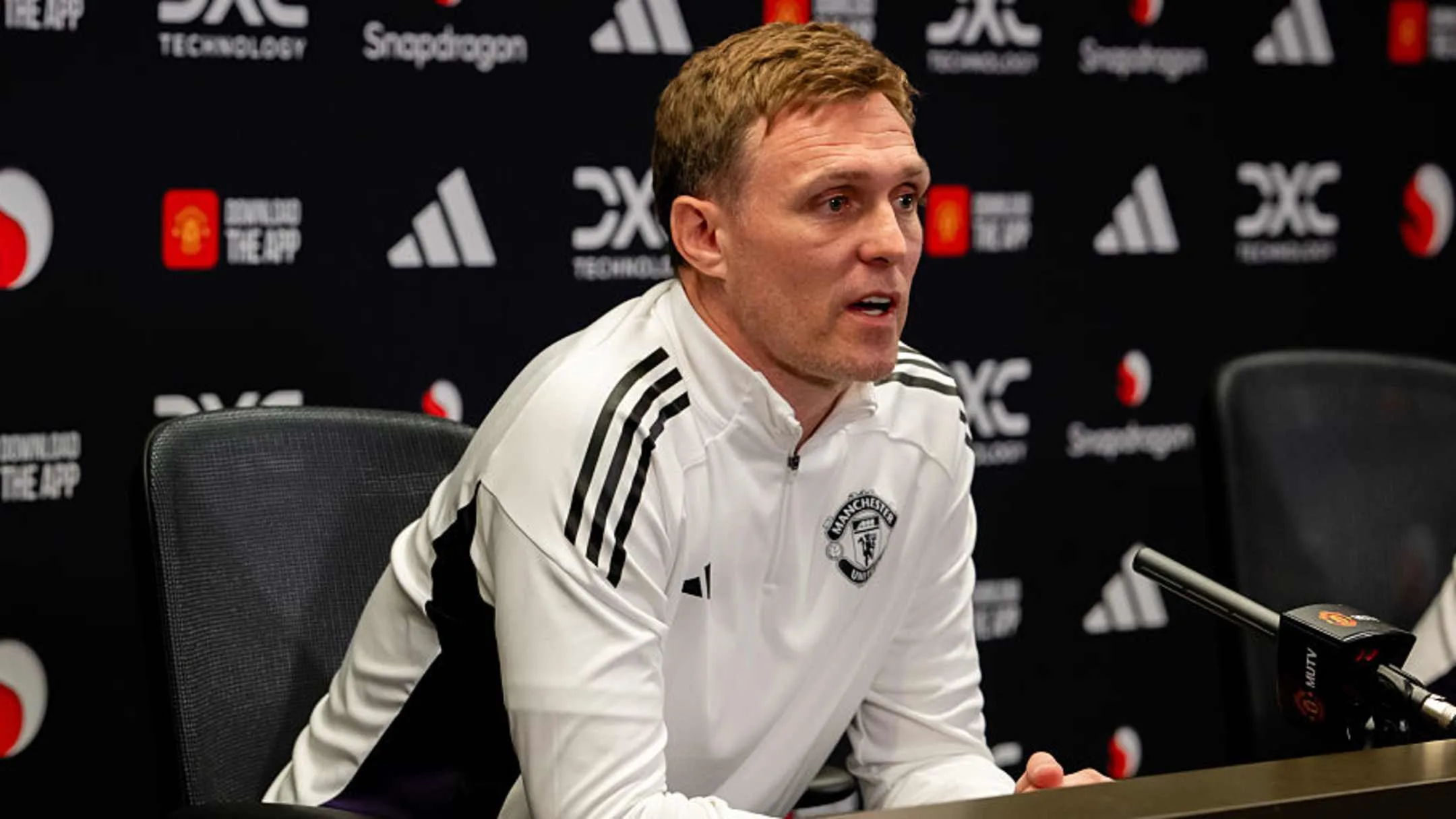
Darren Fletcher has moved to protect Manchester United’s academy after remarks from Ruben Amorim left the club’s youth pathway under scrutiny. Fletcher, serving as caretaker manager, emphasised the academy’s long record while preparing his squad for Sunday’s FA Cup third round tie with Brighton & Hove Albion.
Mainoo has played just 228 minutes of Premier League football this season—he was starting for England in the Euro 2024 final 18 months ago—and Amorim was at risk of becoming the first United manager since 1937 not to name an academy product in a matchday squad when he picked up an injury in November. The record was preserved when Amorim selected Jack Fletcher, Darren’s son, to be on the bench—though he was criticised for many considered to be a “token gesture” selection.
“We are not going to stop with academy players. It doesn’t matter about the result. We will continue with these small details which are the foundations of our club,” Amorim said after that game about United’s youngsters. His subsequent comments painted a very different picture.
Fletcher, who took charge of the 2–2 draw with Burnley on Wednesday, has assumed responsibilities that include dealing with the media, something Amorim was loathe to do. He used his first full briefing to distance himself from a narrow narrative and to underline the club’s history of producing talent.
“I just think historically, and this club’s built around the academy, we’ve got an amazing academy,” Fletcher told reporters. “Our record speaks for itself. I’m not going to sit and stand here and say anything other than that. We’ve got an amazing record. I think it’s hard to beat in terms of the history of clubs around the world. I think we’ve got some amazing players, some amazing talents.
“I think what I see is a lot of hard-working, humble young players who aren’t perfect because they’re young and they’re learning and they’ve got a lot to do.”
Fletcher also addressed availability issues around Bryan Mbeumo and Noussair Mazraoui, both at the Africa Cup of Nations, and the situation around Harry Maguire’s return. “I don’t think so. I think it’s too close a turnaround, so we’ll have the same players available for the game as we had against Burnley,” he said of the AFCON duo. On Maguire he added: “He has been out for a while, so it’d probably be looking at his load and things like that. That decision’s not been made, but I think you’ve seen the players coming back the other night.
“You’ve seen Mason, you’ve seen Kobbie, you’ve seen Bruno. There has to be some understanding of their first minutes. They might have to be careful a little bit with that process to build back in. So I think Harry will probably be in that situation for the weekend.”




Chelsea
Rosenior points to dressing-room unity after Chelsea’s centre-circle huddles
Rosenior hailed team unity after Chelsea’s pre-kickoff huddles and João Pedro’s hat trick. This week
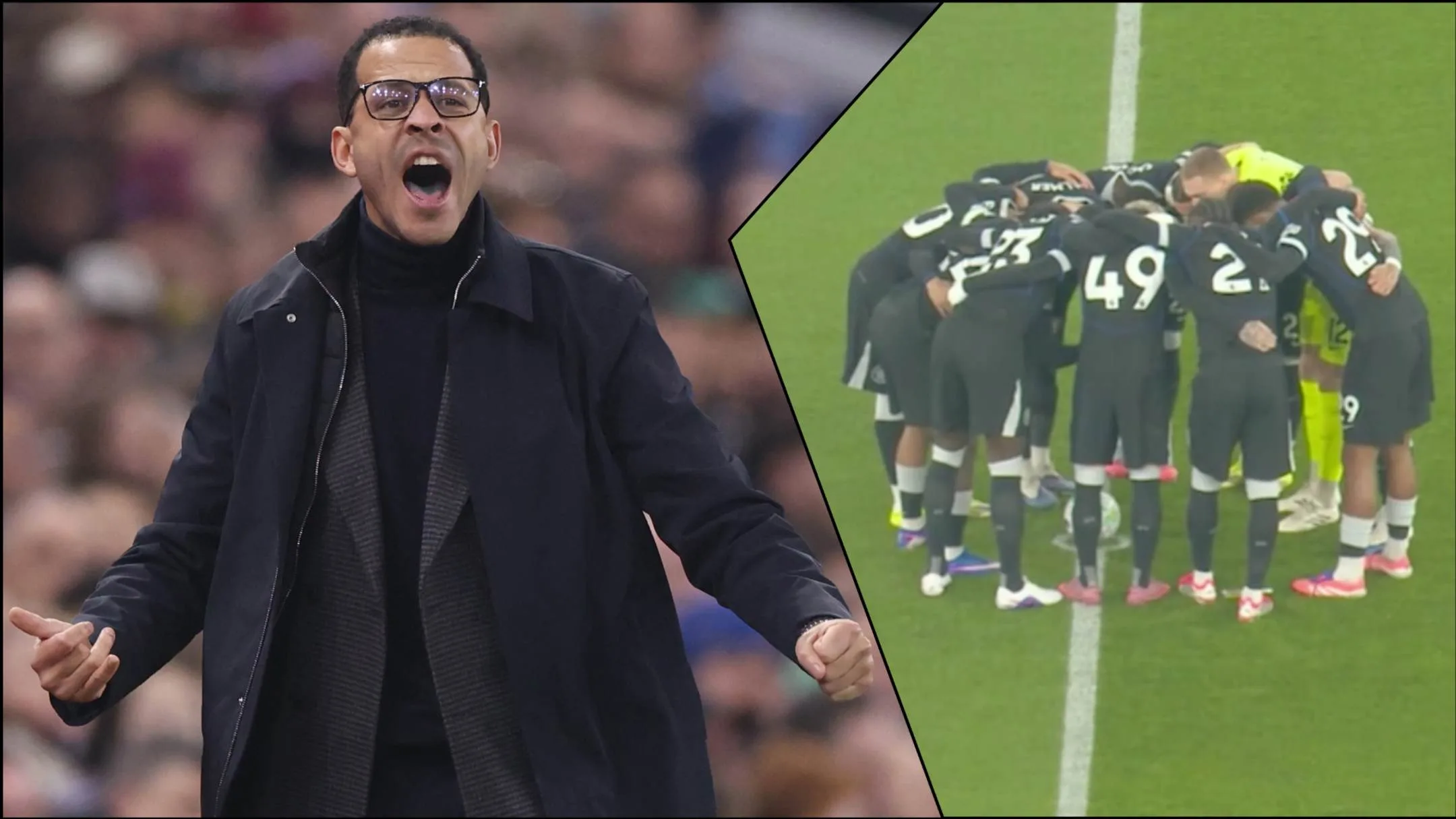
Chelsea’s 4–1 victory at Villa Park on Wednesday is bound to be remembered for João Pedro’s first Premier League hat trick, but the posturing before both kickoffs drew as much attention as the goals.
Seconds after Chelsea started the match, Douglas Luiz put Aston Villa ahead inside 125 seconds with a well-taken opener. The visitors levelled through João Pedro in the 35th minute, and he then put his side ahead in the sixth minute of stoppage time.
Before the opening whistle the Chelsea players gathered in a tight huddle around the ball at the centre circle, and they repeated the ritual before the second-half restart. Amadou Onana and Ollie Watkins appeared impatient as Chelsea’s players stayed clustered around the ball. The Villa Park crowd reacted first with confusion and then with loud boos as the second half began.
For Chelsea’s manager the scene was a welcome sign rather than a provocation. “That comes from unity,” Rosenior told BBC’s Match of the Day after Chelsea climbed up to fifth place, three points behind Aston Villa. “That comes from the players. It doesn’t come from me. As their manager, it makes me really proud to see.
“They’ve taken a lot of message on board from not just myself, but from the staff. Willie Isa is a top man and he’s from rugby, he’s from New Zealand, and he’s spoken a lot about our togetherness and the players have taken it on board.”
Willie Isa was appointed as the club’s player support and development officer in February 2025, a month after his professional retirement. Isa spent a decade and a half at club level and made more than 300 appearances before representing his nation, but those appearances came in rugby league rather than soccer.
Isa’s former head coach at Wigan Warrior, Matt Peet, was confident about the appointment. “He is a cultural architect,” Peet told The Athletic upon Isa’s appointment. “He will make the environment better and all the individuals around the environment better. Ignore the different shape of the ball that he is associated with, Willie’s skill set is all about high-performing teams, leadership and dealing with people. ]
Football Development
How the Busby Babes Shaped Manchester United After Munich
Munich air disaster devastated the Busby Babes, yet United’s youth-driven revival reshaped history.
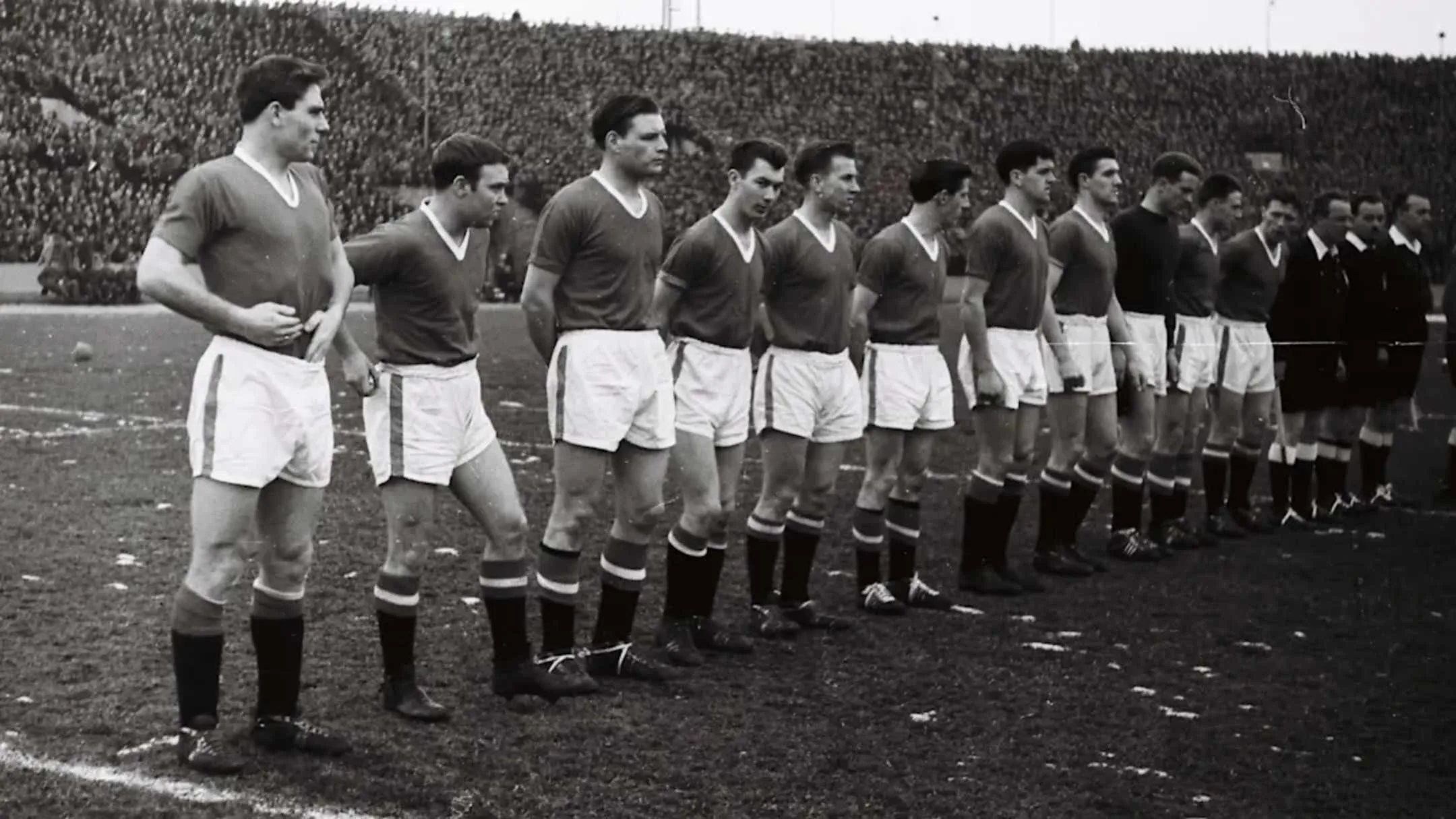
The Munich air disaster of 1958 remains a defining moment for Manchester United. A flight from Belgrade to Manchester stopped in southern Germany for refuelling and the crash killed 23 of the 44 people on board. Eight of the 17 players in the travelling squad died and two more never played football again.
Roger Byrne, Eddie Colman, Mark Jones, David Pegg, Tommy Taylor and Liam Whelan were killed instantly. So too was Geoff Bent. Duncan Edwards died from his injuries 15 days later. Edwards, Colman, Pegg and Whelan were all 22 or younger. Edwards had already played close to 200 games for United since making his debut at just 16, while he was becoming a star for England as well. Pegg had also been capped. Colman was, by all accounts, expected to be called up sooner rather than later, while Whelan was capped by Ireland.
Johnny Berry suffered a fractured skull, broken jaw, broken elbow, broken pelvis and broken leg and never played again. Multiple serious injuries also ended Jackie Blanchflower’s career. Three of United’s staff, trainers Bert Whalley and Tom Curry, and club secretary Walter Crickmer, also died. Matt Busby was badly injured, twice read the Last Rites, and returned home to Manchester in April. Troubled by guilt, he contemplated quitting until persuaded to continue his pursuit of European success.
Jimmy Murphy was not on the plane, having stayed behind to fulfil a commitment as Wales manager in a World Cup qualifying playoff against Israel in Cardiff. Wayne Barton’s biography The Man Who Kept the Red Flag Flying explores Murphy’s role in rebuilding the club.
Busby’s focus on youth had begun long before. He had won United’s first postwar league title in 1951–52 and the Manchester United Junior Athletic Club, created in 1937, supplied the talent that became known as the Busby Babes. United recaptured the league in 1955/56 and retained it in 1956/57, winning by 11 points in 1956 and by eight points in 1957. In Europe the young side reached successive semi-finals and recorded a 10-0 win over Anderlecht at Maine Road, the club’s all-time record victory.
On the Football League’s opposition to Europe, Brian Glanville of The Times described Alan Hardaker as an “unbending autocrat”, a man whose “attitude was supremely negative and self-aggrandising, probably influenced by the fear that his own competition would be overshadowed by the new one.”
Bobby Charlton later reflected: “Matt Busby had declared that [European football] was the future of the game and here, in this match, was the hardest evidence that he was right.
“United versus Bilbao had produced the best of football, some brilliant skill and a razor edge of competition. Charges that United had got above themselves were promptly withdrawn.”
Survivors such as Charlton, Bill Foulkes and Harry Gregg underpinned the rebuilt side. Charlton, troubled by survivor’s guilt, went on to become one of the best players in the world and was consistently nominated for the Ballon d’Or throughout the 1960s.
Football Development
Munich 1958: How the Busby Babes Were Lost and the Club Rebuilt
Munich 1958 shattered the Busby Babes and set Manchester United on a painful, determined recovery….
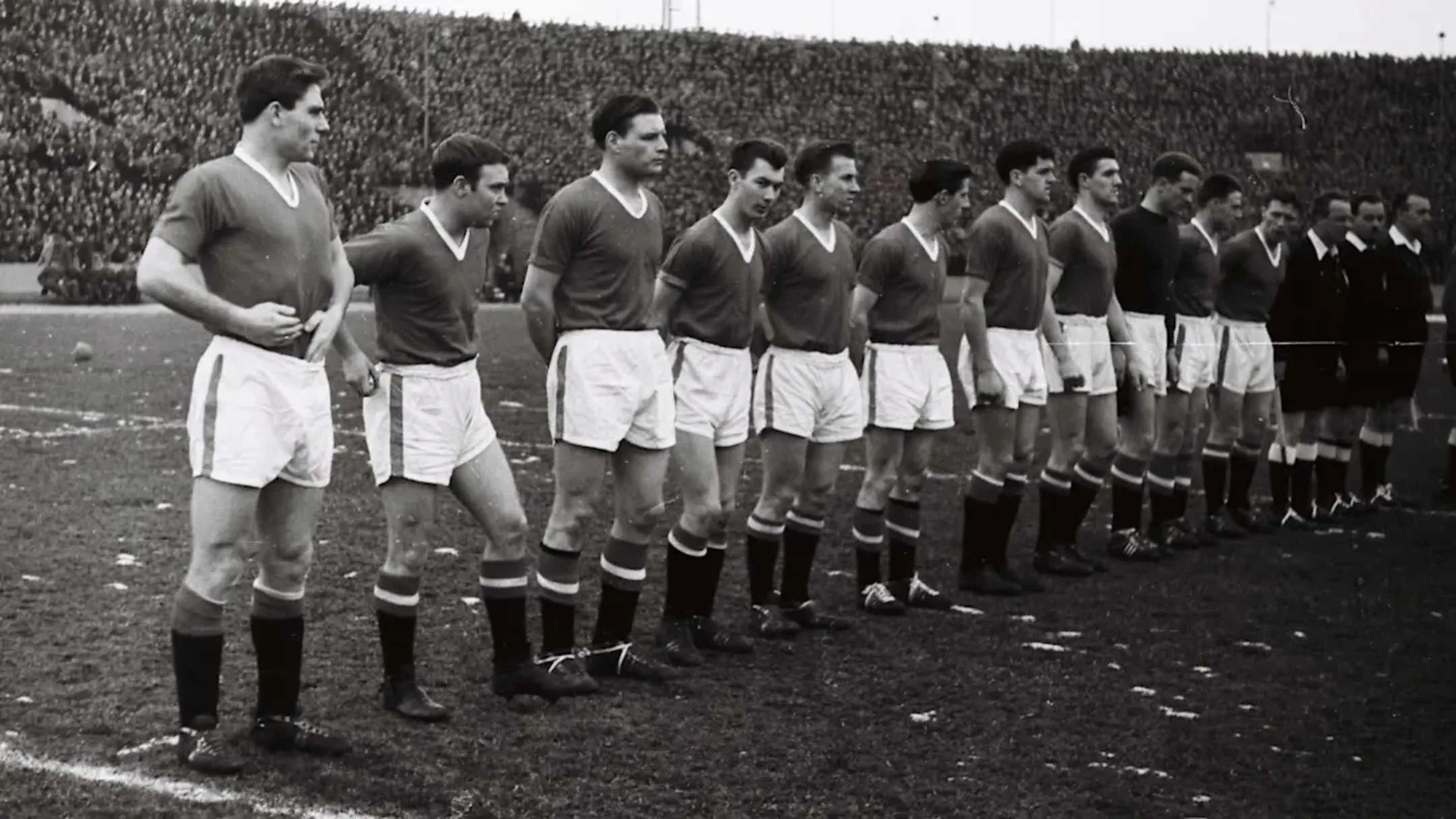
The Munich Air Disaster of 1958 remains one of football’s defining tragedies. Of the 44 people on the flight from Belgrade to Manchester that stopped in southern Germany, 23 died. Eight of the 17 players in the travelling Manchester United squad died and two more never played again because of their injuries.
Roger Byrne, Eddie Colman, Mark Jones, David Pegg, Tommy Taylor and Liam Whelan were killed instantly. Geoff Bent also died after travelling as extra cover. Duncan Edwards, the great star of the side, died from his injuries 15 days later. Edwards, Colman, Pegg and Whelan were all 22 or younger. Jones was 24, Taylor was 26, Bent was 25 and Byrne, the captain, was 28.
Johnny Berry suffered a fractured skull, broken jaw, broken elbow, broken pelvis and broken leg and never played again. Multiple serious injuries also ended Jackie Blanchflower’s career. Three of United’s staff, trainers Bert Whalley and Tom Curry, and club secretary Walter Crickmer, also died. Matt Busby was badly injured and twice read the Last Rites in Munich before recovering and returning to Manchester in April. He contemplated quitting football until he was persuaded to continue in pursuit of European success so those who had died had not done so in vain.
Jimmy Murphy, who rebuilt the club in Busby’s absence, was not on the plane; he had stayed behind to fulfil a Wales managerial commitment in a World Cup qualifying playoff against Israel in Cardiff. His role is recounted in Wayne Barton’s biography The Man Who Kept the Red Flag Flying.
United’s rise under Busby grew from a youth policy begun with the Manchester United Junior Athletic Club in 1937. The team known as the Busby Babes reclaimed the league in 1955/56 and retained it in 1956/57, dominating domestically by large margins. When United entered the European Cup they reached consecutive semi-finals, recording a 10-0 win over Anderlecht at Maine Road and notable victories against Borussia Dortmund and Athletic Club before falling to Real Madrid 5-3 on aggregate.
Charlton later reflected: “Matt Busby had declared that [European football] was the future of the game and here, in this match, was the hardest evidence that he was right.
“United versus Bilbao had produced the best of football, some brilliant skill and a razor edge of competition. Charges that United had got above themselves were promptly withdrawn.”
Survivors such as Bobby Charlton, Bill Foulkes and Harry Gregg formed the core of the rebuilt side. Troubled by survivor’s guilt, Charlton went on to become one of the best players in the world and was consistently nominated for the Ballon d’Or throughout the 1960s.