Manchester United
How the Busby Babes Shaped Manchester United After Munich
Munich air disaster devastated the Busby Babes, yet United’s youth-driven revival reshaped history.

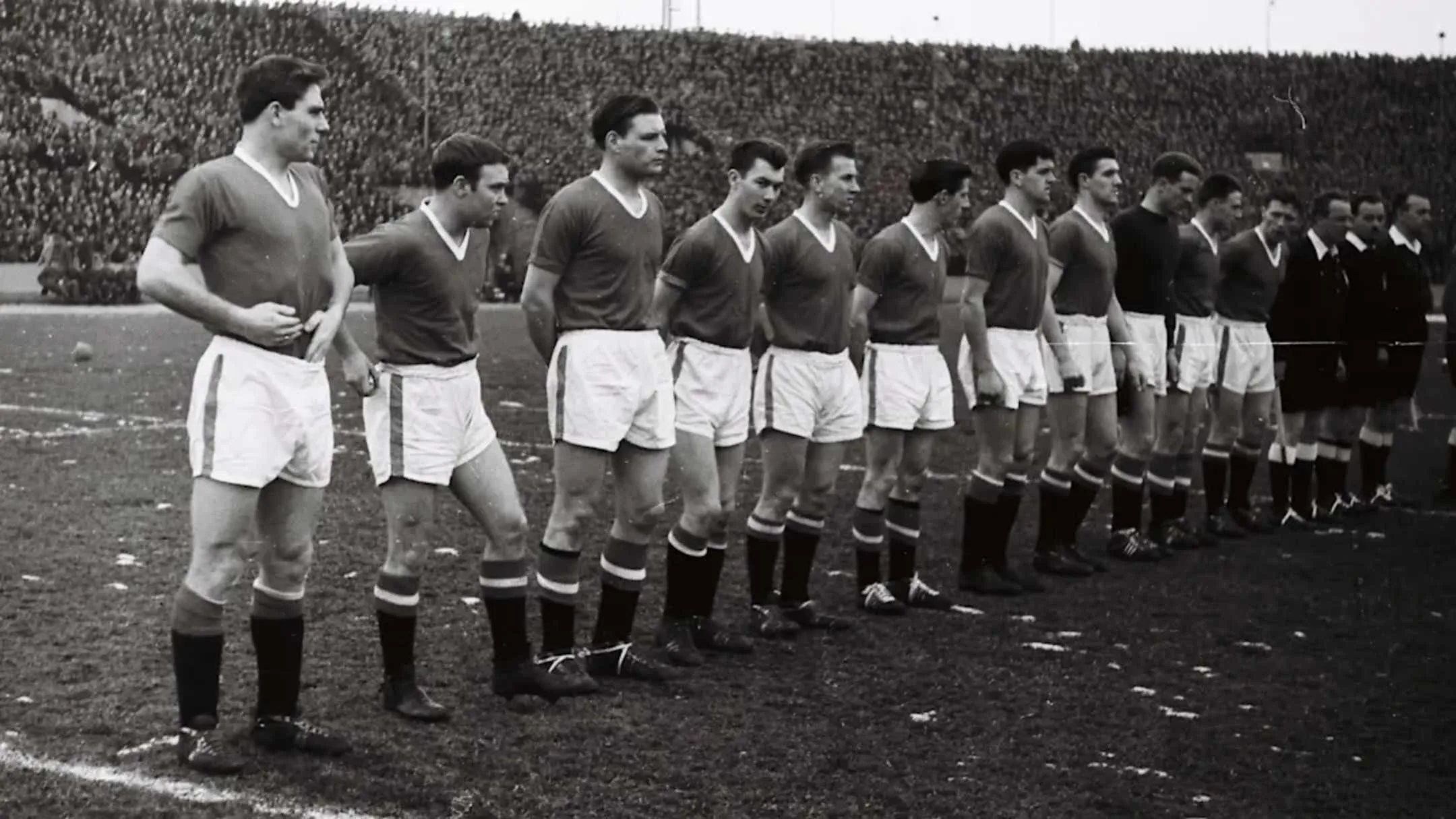
The Munich air disaster of 1958 remains a defining moment for Manchester United. A flight from Belgrade to Manchester stopped in southern Germany for refuelling and the crash killed 23 of the 44 people on board. Eight of the 17 players in the travelling squad died and two more never played football again.
Roger Byrne, Eddie Colman, Mark Jones, David Pegg, Tommy Taylor and Liam Whelan were killed instantly. So too was Geoff Bent. Duncan Edwards died from his injuries 15 days later. Edwards, Colman, Pegg and Whelan were all 22 or younger. Edwards had already played close to 200 games for United since making his debut at just 16, while he was becoming a star for England as well. Pegg had also been capped. Colman was, by all accounts, expected to be called up sooner rather than later, while Whelan was capped by Ireland.
Johnny Berry suffered a fractured skull, broken jaw, broken elbow, broken pelvis and broken leg and never played again. Multiple serious injuries also ended Jackie Blanchflower’s career. Three of United’s staff, trainers Bert Whalley and Tom Curry, and club secretary Walter Crickmer, also died. Matt Busby was badly injured, twice read the Last Rites, and returned home to Manchester in April. Troubled by guilt, he contemplated quitting until persuaded to continue his pursuit of European success.
Jimmy Murphy was not on the plane, having stayed behind to fulfil a commitment as Wales manager in a World Cup qualifying playoff against Israel in Cardiff. Wayne Barton’s biography The Man Who Kept the Red Flag Flying explores Murphy’s role in rebuilding the club.
Busby’s focus on youth had begun long before. He had won United’s first postwar league title in 1951–52 and the Manchester United Junior Athletic Club, created in 1937, supplied the talent that became known as the Busby Babes. United recaptured the league in 1955/56 and retained it in 1956/57, winning by 11 points in 1956 and by eight points in 1957. In Europe the young side reached successive semi-finals and recorded a 10-0 win over Anderlecht at Maine Road, the club’s all-time record victory.
On the Football League’s opposition to Europe, Brian Glanville of The Times described Alan Hardaker as an “unbending autocrat”, a man whose “attitude was supremely negative and self-aggrandising, probably influenced by the fear that his own competition would be overshadowed by the new one.”
Bobby Charlton later reflected: “Matt Busby had declared that [European football] was the future of the game and here, in this match, was the hardest evidence that he was right.
“United versus Bilbao had produced the best of football, some brilliant skill and a razor edge of competition. Charges that United had got above themselves were promptly withdrawn.”
Survivors such as Charlton, Bill Foulkes and Harry Gregg underpinned the rebuilt side. Charlton, troubled by survivor’s guilt, went on to become one of the best players in the world and was consistently nominated for the Ballon d’Or throughout the 1960s.

Fulham
Cunha Salvages United at Fulham, But Larger Issues Remain
United rescued a point at Fulham, but the performance and stats left fresh concerns before the break.
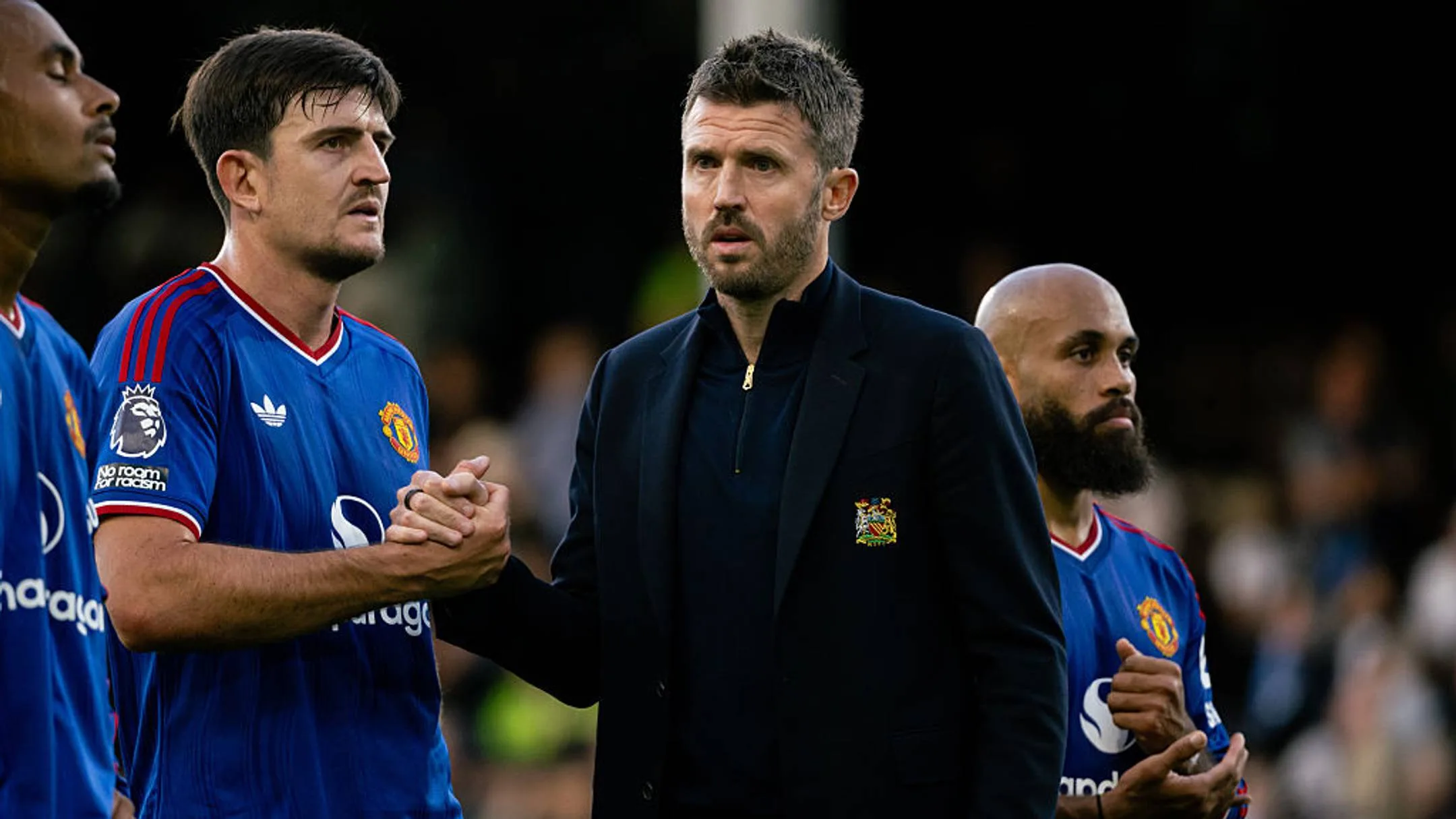
Manchester United avoided a second straight Premier League defeat with a late equaliser at Fulham, but the result did little to quiet the concern around their start to the 2026/27 season.
For much of the afternoon, it seemed as if United were heading for consecutive league losses for the first time in more than a year, dating back to the closing stages of 2024/25. The match changed in the 89th minute when Matheus Cunha struck from distance, only for the effort to be heavily deflected off David Affengruber and beyond Bernd Leno.
The point leaves United on five from five, a tally that matches their joint-lowest at this stage of a Premier League campaign, alongside 2014/15. They will remain 12th during the international break before returning on Oct. 10 against Tottenham Hotspur, who are bottom of the table.
Gary Neville, speaking on Sky Sports, offered a blunt assessment of the period after half-time, describing it as the “worst” 15 minutes he’s ever seen from any Manchester United team. United’s tempo, urgency and willingness to run were all questioned, with the side having covered almost 7 kilometers less than Fulham by the 73rd minute.
Senne Lammens kept United in touch in the first half with four saves, including quick stops to deny Joshua King and Sander Berge. He later could have done better when Fulham went ahead, as his parry from Calvin Bassey’s shot created the opening for the goal.
Marcus Rashford’s return has been viewed positively in general, yet this match underlined the gap between effort and end product. In 77 minutes, he led United for touches in the opposition box and shots, but still left without a goal contribution. Across six appearances this season, he has yet to score or assist.
There was also curiosity over United’s all-blue away kit, worn competitively for the first time on Sunday after only appearing in preseason.
Manchester United
Carrick welcomes uncertainty as United search for clearer rhythm
Carrick says United’s lack of identity can make them harder to read, not easier to stop.
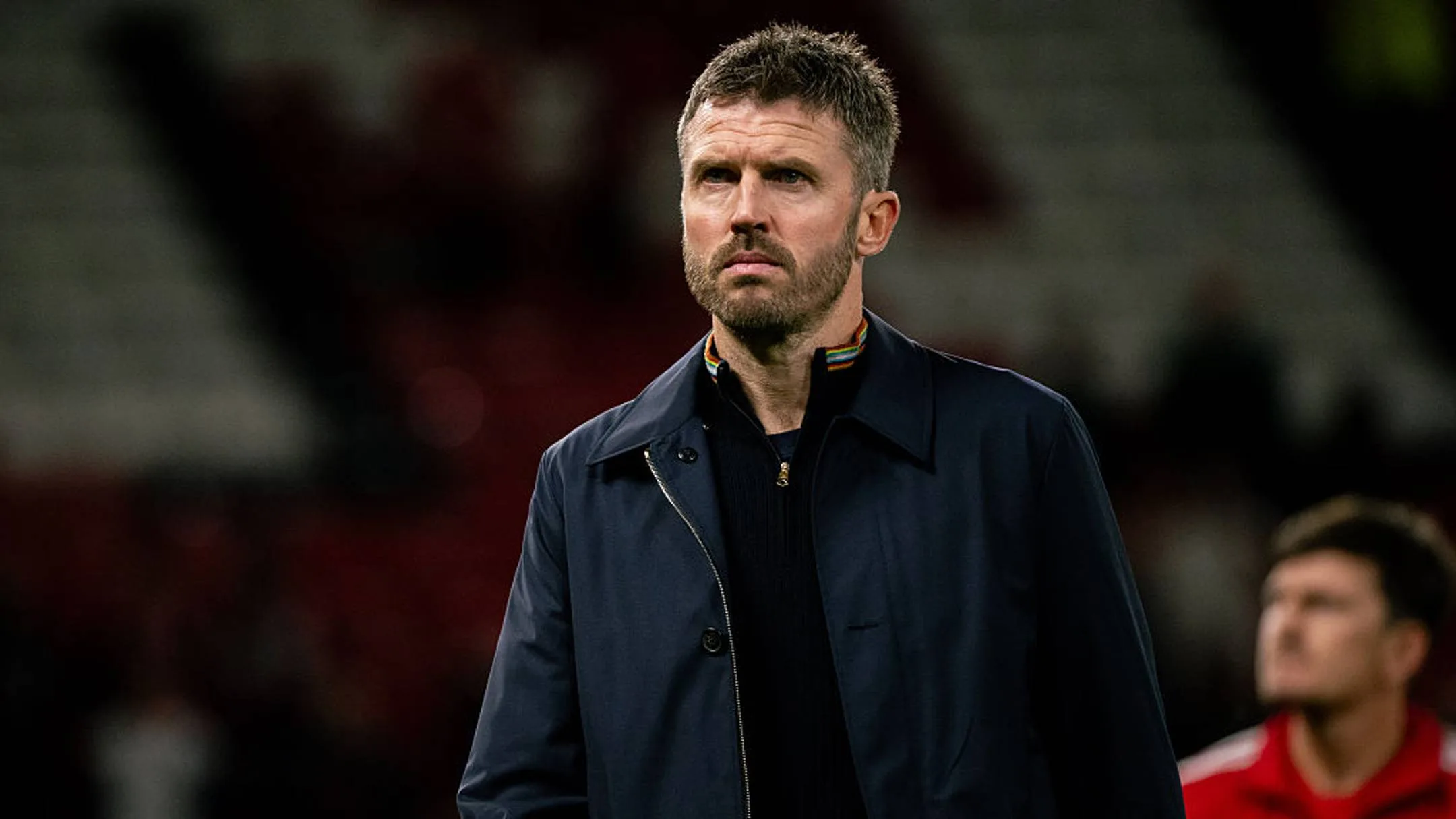
Michael Carrick has brushed off criticism over Manchester United’s supposed lack of identity, arguing that it can actually work in the team’s favour if opponents cannot work them out.
United have made a mixed start to the new season. They failed to score in two of their opening four Premier League matches, have not kept a clean sheet in the division, and have taken only two wins from six games in all competitions. Their recent Carabao Cup exit has only intensified the discussion around what Carrick is trying to build.
But the manager is not troubled by the debate. Speaking to Sky Sports ahead of Sunday’s meeting with Fulham, he made clear that unpredictability is part of the plan.
“I quite like the fact that someone can’t work out our identity, to be honest. That means you’re unpredictable. From an attacking sense, we want to be unpredictable,” the manager told Sky Sports in the buildup to Sunday’s important encounter against Fulham.
“We don’t want people to be able to read what we are going to do next or what our main strength is. If we can do a good number of things well and attack from a number of areas, I’d rather have a team that does that. We’ve attacked well since January, scored a good number of goals and being unpredictable is a good thing.”
United remain in a period of development, with the club still aiming for the Premier League title by next season as part of a wider ambition to reclaim the trophy during, or before, its 150th anniversary year in 2027-28.
That sense of growth was also reflected in Carrick’s comments on Leny Yoro and Ayden Heaven, both of whom started the Carabao Cup defeat against Brighton & Hove Albion. Yoro is 20, Heaven is 19, and Carrick said he would not make any rushed judgments after that result at Old Trafford.
“I think they’ll learn from different experiences and they’ve done particularly well and they’re in a really good spot, two young players that have got really good futures,” the manager told reporters.
“So unfortunately you go through times in football and you have some good spells and sometimes you learn a lot from the things that didn’t go so well. But I wouldn’t isolate them at all from the other night.”
He added of Yoro: “Leny is 20, and again in context, he’s got a fantastic future ahead of him and a lot of potential. He’s learning, he’s developing,” Carrick stressed. “To be at this club and play as a center back at such a young age is a challenging position. It’s one that he can do for sure, it’s one that Ayden can do for sure.
Fulham
Šeško ruled out as United wait on injury assessment
Šeško missed United’s visit to Fulham while Carrick waits on an injury assessment.
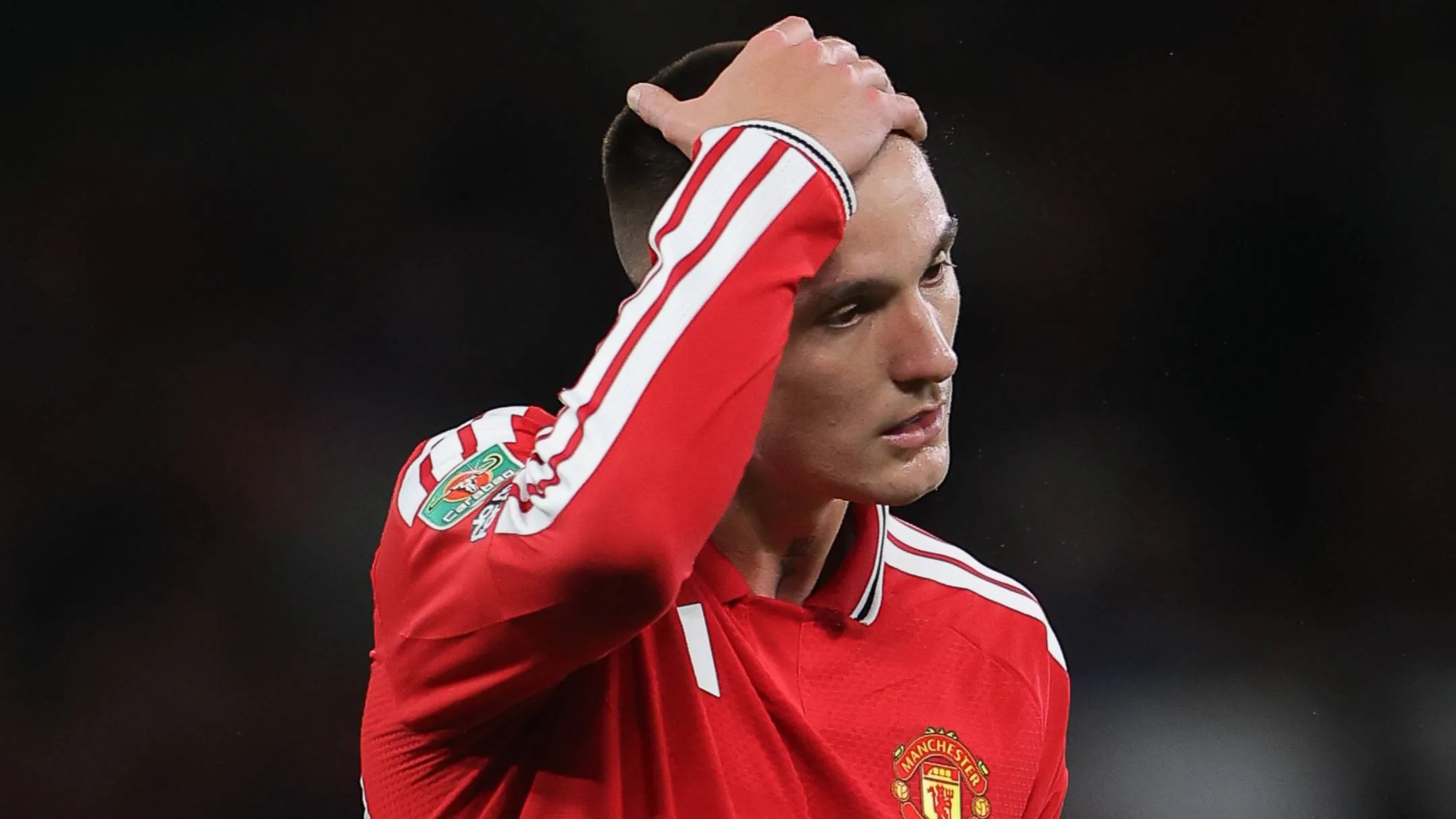
Benjamin Šeško was absent from Manchester United’s squad for the trip to Fulham after Michael Carrick confirmed the striker is being assessed over an unspecified injury.
Carrick had managed Šeško carefully at the start of the season, using him as a substitute in United’s first four Premier League matches. The 23-year-old was then fit to start the club’s opening Champions League game of the campaign, where he scored in the win over Sabah FK, and he also featured in Wednesday’s Carabao Cup meeting with Brighton & Hove Albion.
Earlier this month, Šeško had sounded upbeat about his recovery, saying: “I think waiting a little bit longer was a great decision, and now it’s healed, so it’s perfect,” Šeško insisted earlier this month.
Carrick’s latest update offered little clarity on the situation. Speaking to Sky Sports, he said: “He pulled up after the game the other day with a little bit of pain, so we’ll have to see how he is,” was all the Manchester United manager would offer.
In Šeško’s absence, Matheus Cunha kept his place through the middle. That decision left some fans frustrated, particularly with Amad Diallo unavailable on the right and Bryan Mbeumo regularly deployed there instead of being used as a central option.
Cunha brings link play and combines neatly with Bruno Fernandes, but he does not offer the same direct running that Mbeumo provides. Even so, Fulham’s tendency to leave space for opponents this season means United may still find openings without Šeško.
There is also anticipation around Carlos Baleba, who has still not made his Manchester United debut. Signed for $93.7 million (£70 million) and unveiled almost a month ago, he arrived from Brighton with an ankle injury. His first appearance could be confirmed at Craven Cottage.