Man City
Haaland Makes History as Fastest to 100 Premier League Goals
Haaland reached 100 Premier League goals in 111 games, eclipsing Alan Shearer’s previous record. 25.

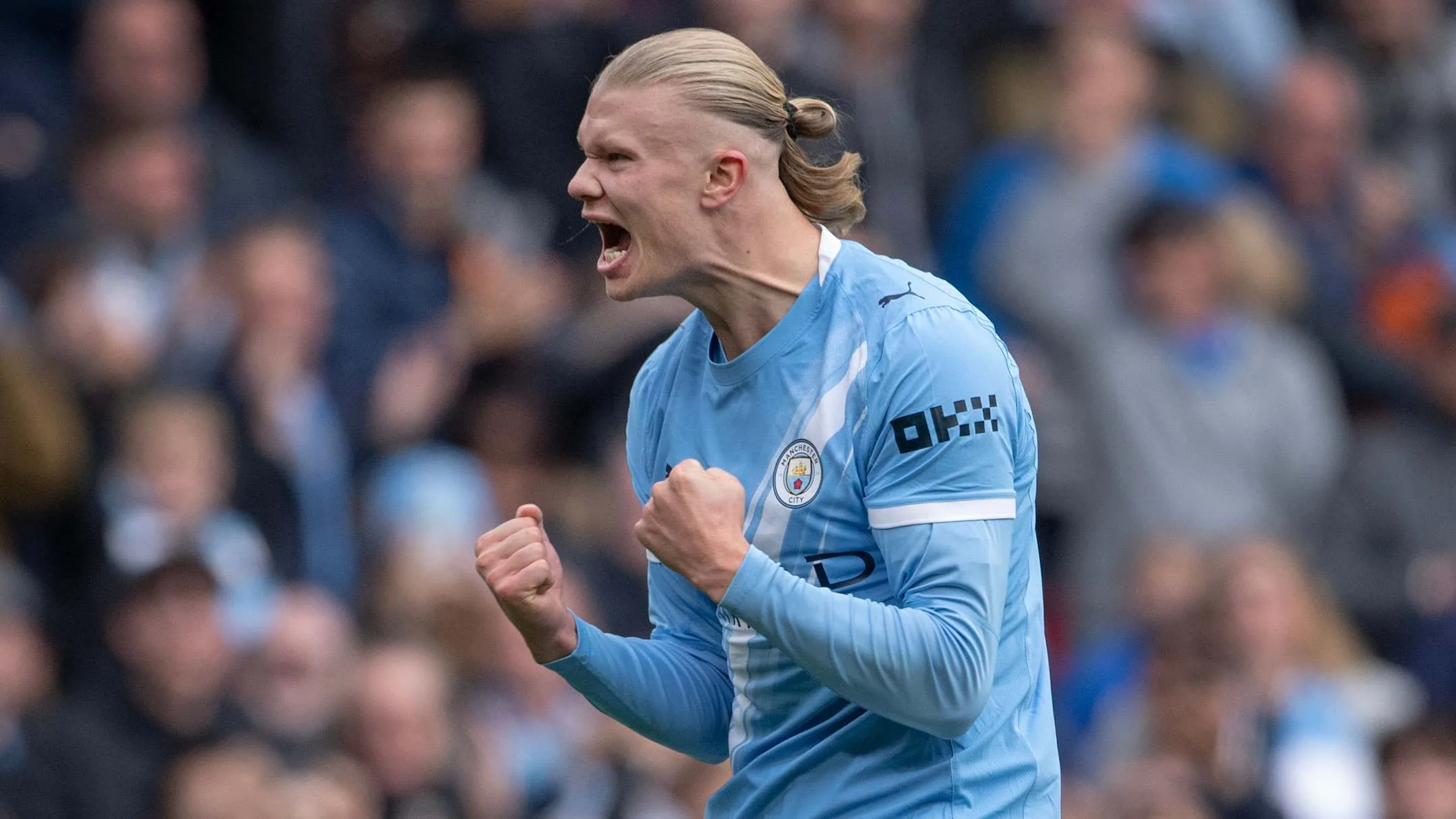
Erling Haaland reached the 100-goal mark in Premier League play during Manchester City’s match with Fulham on Tuesday, becoming the quickest player in league history to hit the century. The 25-year-old achieved the milestone in just 111 Premier League appearances, surpassing the previous benchmark set by Alan Shearer, who reached 100 in 124 games.
Haaland’s pace to 100 leaves several of the competition’s top scorers well behind. He arrived at the milestone far sooner than Harry Kane (147), Sergio Agüero (147) and Thierry Henry (160). Mohamed Salah reached 100 in 162 appearances. The club forward’s rise has been relentless this season and he will now press on with ambitions of breaking his own single-season scoring record.
Haaland, who has already been compared to Lionel Messi by his manager this term, scored 36 times during the 2022–23 campaign en route to a treble, surpassing Salah’s previous record of 32 goals in a 38-match season. His 100th Premier League strike was his 15th in the competition this season, keeping well clear of Brentford’s Igor Thiago and Brighton & Hove Albion’s Danny Welbeck in the scoring charts so far this year.
The milestone underlines how quickly Haaland has established himself among the Premier League’s most prolific forwards. A review of the fastest players to 100 Premier League goals highlights the scale of the achievement: Erling Haaland (111), Alan Shearer (124), Harry Kane (147), Sergio Agüero (147), Thierry Henry (160), Mohamed Salah (162), Ian Wright (173), Robbie Fowler (175), Les Ferdinand (178) and Michael Owen (185).
That list places Haaland at the top by a clear margin and frames a season in which he has already rewritten single-season records and set a new standard for goalscoring efficiency in the Premier League.





Aston Villa
Premier League Matchday 6 verdict: who impressed, who unravelled, and who merely survived
Matchday 6 mixed sharp wins, poor finishing and controversy across the Premier League table.

Matchday 6 left the table untouched in one sense, but the performances were impossible to ignore. In the post-verdict era, points can feel fragile, yet the evidence on the pitch still matters. City’s second-half surge past a faltering Liverpool side may be revisited later, but Erling Haaland’s strike and Rayan Cherki’s invention are already part of the record.
Sunderland, deprived of key figures, were left with too little invention and too little calm in possession. Régis Le Bris was right to question the side’s lack of “quality or composure” after they controlled much of the ball but found no answers without Brian Brobbey. Bournemouth also remain short of rewards, and their latest defeat under Marco Rose brought another reminder that encouraging spells mean little without a first win. “The last games we had some good performances,” the incoming manager admitted, “but today we struggled.”
Manchester United’s problems continue to widen. Michael Carrick’s side were exposed again, this time by Tottenham Hotspur, and the mood around Old Trafford is growing less forgiving. Carrick’s own assessment was blunt: “I understand the disappointment,” he shrugged, “the reality is what it is.”
Elsewhere, Newcastle’s 4–1 defeat at Coventry City was harsh on the chances they created, yet costly for the gaps they left behind. Liverpool’s collapse after Ryan Gravenberch’s dismissal became the major talking point in a contest Andoni Iraola felt was shaped by the referee, while Crystal Palace were celebrated after a win that owed plenty to a generous interpretation of events from Pierre Sage.
There were also hard-earned points for Everton, Hull, Aston Villa, Brentford, Tottenham, Nottingham Forest, Ipswich, Arsenal, Chelsea and Manchester City. Some wins were built on control, others on stubbornness, and a few on little more than survival. On a weekend where margins dominated, several teams learned how thin the line remains between progress and frustration.
Liverpool
Haaland’s terse view on United and his Anfield outlook
Haaland brushed off United, then backed City to cope with the pressure at Anfield on Sunday.
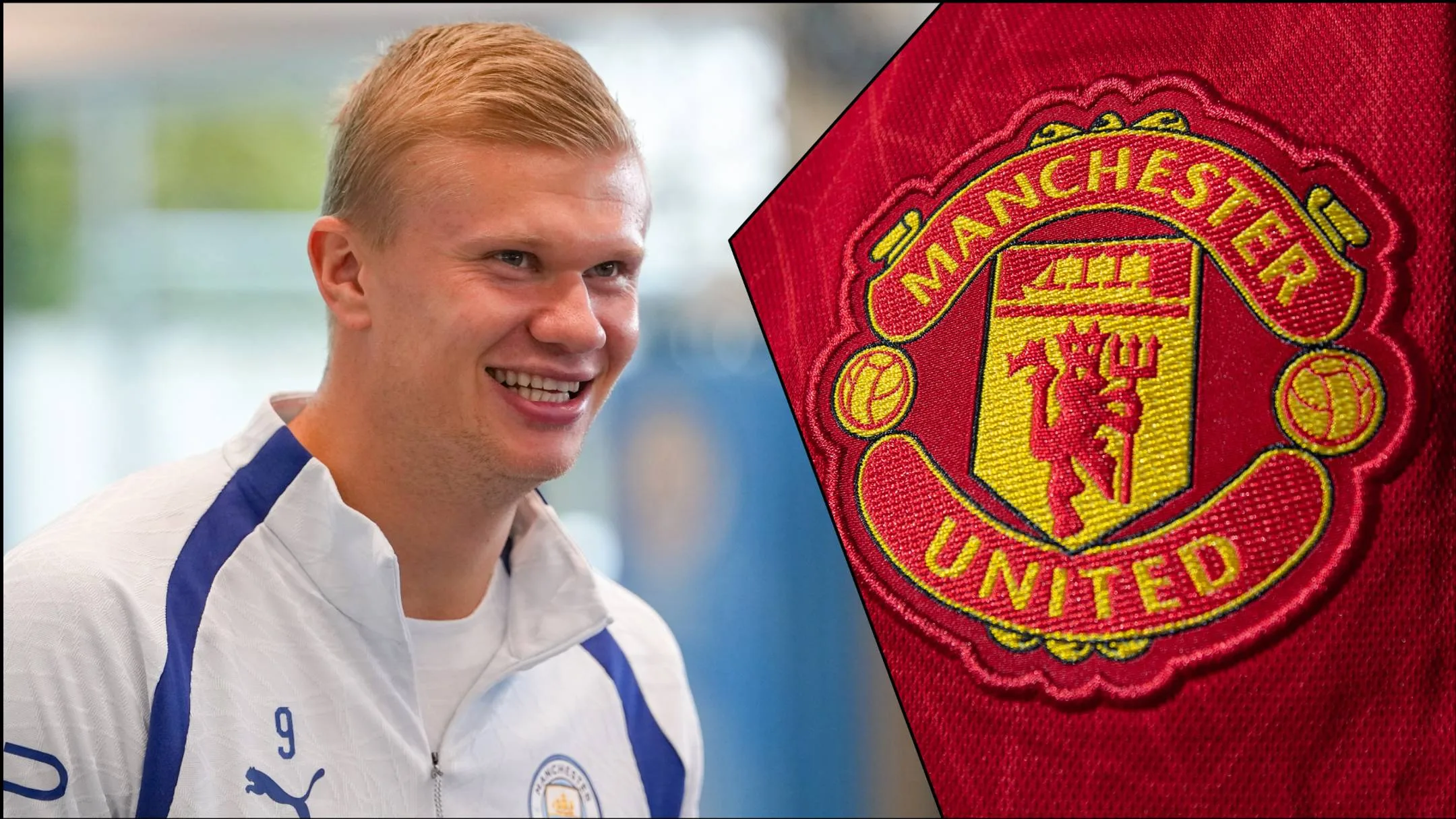
Erling Haaland offered a revealing, if brief, answer when asked about Manchester United, and it said almost everything about where the rivalry sits from his point of view.
Pressed on the subject, the Manchester City forward paused, laughed and admitted: “I had to think about the name.” It was a sharp reminder that, for him, United are not the reference point they once were in the city. During his four years at City, the main challengers have been Arsenal and Liverpool, not the club once regarded as the dominant force in Manchester.
The timing of the comment mattered. Haaland had already been looking ahead to City’s trip to Anfield on Sunday, and he made no attempt to soften the mood around the fixture. The Premier League’s most productive striker welcomed the expectation of a difficult reception and said he wanted it that way.
“I hope it’s like that [hostile],” Haaland insisted, “it should be like that when Man City go to Liverpool and Anfield.”
There has been plenty of talk about the atmosphere awaiting City, especially after the official announcement of the club’s guilt regarding more than 100 breaches of financial regulations. That backdrop has fuelled predictions that the home crowd will be relentlessly hostile.
Yet the picture is not quite so straightforward. Anfield retains a fearsome reputation on European nights, but the edge around the ground has not always been so intense in more ordinary circumstances. On a Sunday afternoon, the noise can only do so much.
The match itself may prove more decisive than the setting. City go into the game top of the league with a perfect record under Enzo Maresca, while Liverpool have already dropped points against Newcastle United, Nottingham Forest and Fulham, all three of whom began the day in the bottom half.
Against that backdrop, Haaland’s belief that City supporters are “going to have a good time” at Anfield does not look entirely misplaced.
Chelsea
Tuchel Voices Sympathy for Sterling as Career Stalls
Tuchel has backed Sterling amid legal trouble, club uncertainty and a sharp fall from his peak.
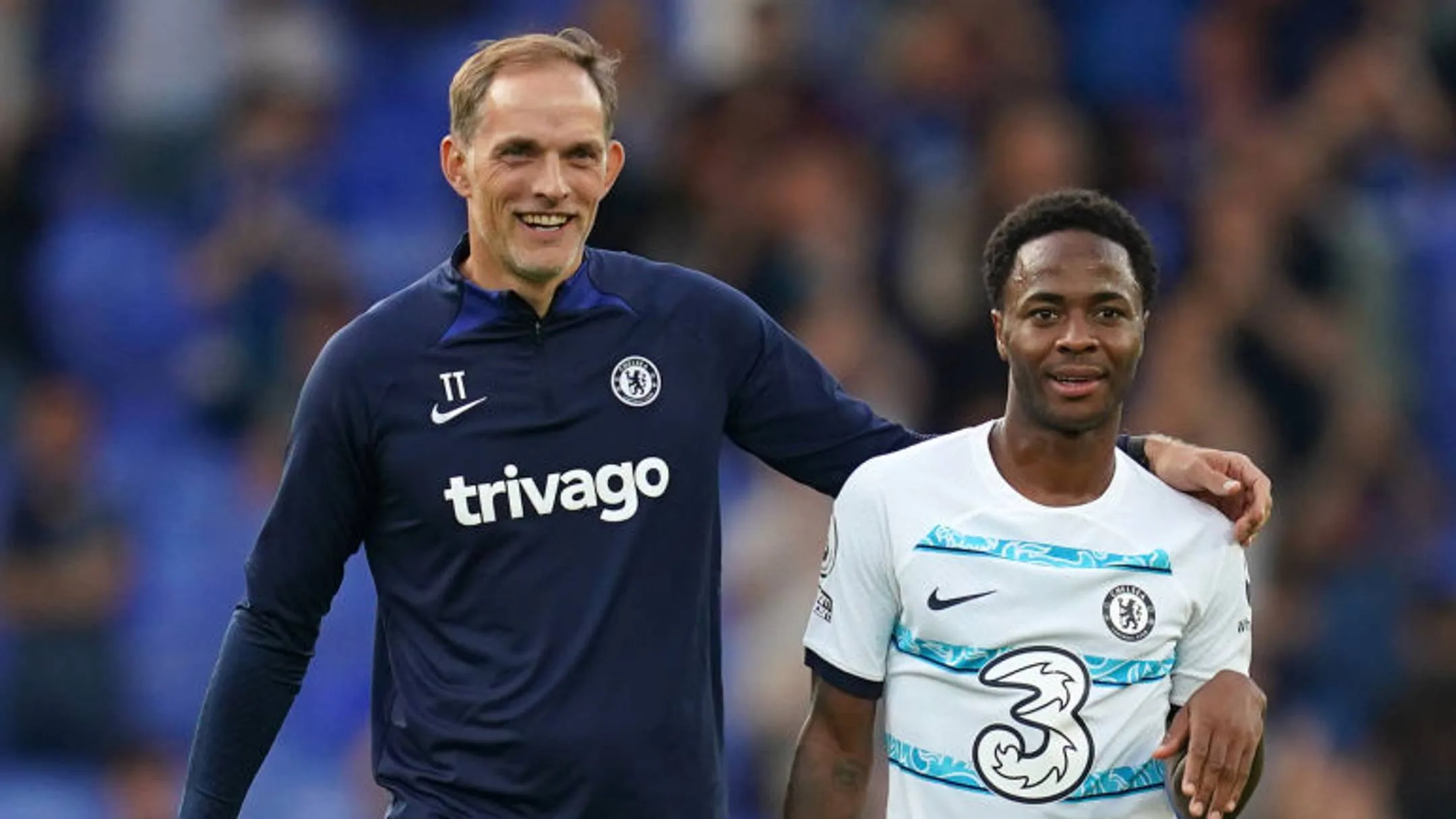
Thomas Tuchel has spoken publicly in support of Raheem Sterling, saying he feels for the forward as his career and personal life continue to unravel. Sterling pleaded guilty to dangerous driving charges last month and remains without a club after failing to secure a move since then.
The case has already drawn significant attention. In May, Sterling crashed his Lamborghini into a metal gate after an incident on the M25 and M3. At the scene, police found six nitrous oxide canisters, and bodycam footage released in September showed him trying to move them onto the back seat after he admitted the charges.
Tuchel, who previously asked Todd Boehly to prioritise Sterling’s arrival at Stamford Bridge in 2022, believes the winger’s decline began after leaving Man City. Sterling had established himself as a major Premier League figure after breaking through at Liverpool and moving to the Cityzens in a $75 million deal in 2014. Under Pep Guardiola, he produced five straight double-digit Premier League goal returns between 2017-18 and 2021-22.
“I have a lot of sympathy for him, and I feel that he has struggled ever since he left Man City and he was at the peak of his career,” Tuchel told reporters on Friday.
Sterling scored 13 goals in his final season at the Etihad before joining Chelsea in 2022. He managed 24 Premier League goal contributions across his first two seasons in west London, but his position changed sharply after that. A loan move to Arsenal did not revive him, and he later found himself outside Enzo Maresca’s plans, spending much of his time with the Italian’s “bomb squad” before leaving the club earlier this year.
His stint at Feyenoord brought more frustration, with his own supporters mocking and jeering him. Then came the Lamborghini incident.
“It’s sad to see that someone struggles because he was a devoted father to his children and he was a family guy, a nice guy to be around,” Tuchel added.
Tuchel still believes Sterling can recover from what he called a “downward spiral”, though the evidence of the last few seasons suggests a long way back for a player who once looked destined for a far brighter end to his career.