Manchester United
How Manchester United Could Set Up If Julian Nagelsmann Took Charge
A look at the Manchester United XI Julian Nagelsmann could build, from Lammens to Fernandes.


Pressure continues to build on Michael Carrick, and Manchester United are already being linked with alternatives should the situation change. Antonio Conte has previously been mentioned as a possible replacement, but new reports have placed Julian Nagelsmann among the leading contenders. Both managers are currently available, which only adds weight to the speculation.
If Nagelsmann were to take over, United’s shape would likely reflect his usual preference for control, balance and tactical flexibility. A line-up built around composure in possession, central overloads and fluid roles could look very different from what United currently produce.
Senne Lammens would fit the goalkeeper profile Nagelsmann often favours, with calmness under pressure seen as a major asset. At right back, Archie Gray stands out as the sort of inverted fullback the coach has often used to strengthen central areas. Gray’s midfield background would make that role a natural fit.
In the centre of defence, Matthijs de Ligt would remain a strong candidate. Nagelsmann has already worked with him before, taking him to Bayern Munich in the summer of 2022, and the pair reportedly had a strong relationship. Alongside him, Nico Schlotterbeck could be a realistic option on the left, especially with uncertainty surrounding Lisandro Martínez’s future. Antonio Rüdiger could also come into the conversation as he approaches the end of his Real Madrid contract.
Lewis Hall would suit the left side because of his ability to operate both as a fullback and a ball-playing midfielder. In midfield, Carlos Baleba would need to be developed further on the ball, but his potential makes him an obvious part of the picture. Kobbie Mainoo would also benefit, given Nagelsmann’s appreciation for deep-lying playmakers.
Further forward, Bryan Mbeumo would be asked to hold width on the right, while Bruno Fernandes could become the central creative figure. As the draft suggests, this could be the kind of tactical shift that restores Fernandes to his best form.




Chelsea
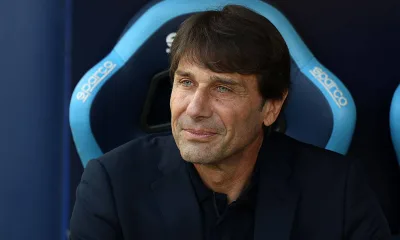
Ashley Young warns Manchester United against Antonio Conte move
Ashley Young has cautioned against a Conte appointment, calling it a “disaster” for Manchester United.

Former Manchester United captain Ashley Young has urged caution over any attempt to bring in Antonio Conte as a replacement for Michael Carrick, branding such a move a “disaster.”
Conte is available after leaving Napoli by mutual consent in May, and his trophy record is as strong as any. The Italian won five Serie A championships as a player with Juventus, then added five more as a manager with Juventus, Inter Milan and Napoli, while also guiding Chelsea to the Premier League title.
Young, who spent just shy of nine years at Old Trafford before 18 months working under Conte at Inter, believes the fit would be wrong for Manchester United at this point. His view comes as pressure continues to build around Carrick, even if the hierarchy are still thought to support him.
Wednesday night’s defeat to Como was another heavy blow. It was Manchester United’s second-worst loss in the Champions League era and extended a winless run to seven matches, a sequence that sits awkwardly alongside the strong finish Carrick produced in his interim spell last season. On that run, the team collected more points from their final 17 games than champions Arsenal.
After the final whistle in northern Italy, Carrick walked straight to the corner of the stadium where the travelling supporters were gathered and apologised for what had taken place. He then turned his attention to the players and did not spare them, saying: “If you don’t run and you don’t run forward and you don’t run back, you ain’t going to win.”
Young’s doubts about Conte are rooted in the demands of his methods. Speaking on The Overlap Daily show, he said: “He is crazy,” and then described the intensity that often comes with the Italian’s approach.
“[Conte] is a bit like Diego Simeone on the sidelines. You hear him non-stop,” Young said. “Training is intense, there’s a lot of running. There was a lot that he did. The training sessions were a lot of 11 vs. 11, at times a little bit boring.
“Meetings were long. If we lost a game, we could go into a meeting and stop literally everything [else]. You could be in there three or four hours. I think that’s one of the reasons why he doesn’t last long at places because, not just the players, the board he tries to test mentally. I think people get annoyed at him and they’re like, no it’s time for you to go.”
Manchester United
How Manchester United’s Summer Could Have Been Reworked
Manchester United fixed midfield, but left key gaps elsewhere, and the cost is becoming clear in 2026/27.

The optimism that briefly surrounded Manchester United in the second half of the 2025-26 season has evaporated, and the summer window now looks even more questionable in hindsight.
It was not a case of United standing still. They did act, but the order of operations appears to have been wrong, with midfield treated as the central fix while wider structural needs were left for later. In a squad rebuild that has been split across several windows, the club first prioritised attack in 2025, then midfield in 2026, and planned to deal with defence in 2027. That approach left gaps elsewhere and reduced flexibility.
The midfield business was understandable in isolation. Manuel Ugarte’s World Cup injury and Casemiro’s January departure left Kobbie Mainoo as the only natural central midfielder in the senior squad. Even so, there is a sense that United focused too narrowly on quantity rather than the balance of the team.
Carlos Baleba had long been on the list, while the move for Andrey Santos carried more risk given his quiet 18 months in English soccer. Youri Tielemans, by contrast, was viewed at the time as a sensible and economical signing. United also considered Éderson, but walked away from a $52 million deal because of fitness concerns. Since then, he has started nine of Atalanta’s 10 games this season.
There were also other options United did not fully pursue. Mamadou Sangaré, Morten Hjulmand, Neil El Aynaoui, Chema Andrés and Youssouf Fofana were all in the broader conversation, according to the draft’s account.
The bigger issue is what was postponed. A left back was required, another centre back would have helped, and even a modest striker could have eased the burden on Benjamin Šeško, whose injury record remains a concern. Lewis Hall, Alejandro Balde, Pep Chavarría, Alejandro Grimaldo, Miguel Gutiérrez, Ezri Konsa, Luka Vušković and Tarik Muharemović all featured as possible routes United might have explored. Danny Welbeck was also mentioned as a reliable veteran option who could have reduced pressure on Šeško and Joshua Zirkzee.
United solved one problem, but left too many others waiting.
Manchester United
United’s problems run deeper than one result
United’s defeat brought sharp criticism, but Tielemans says the answer is still the same.
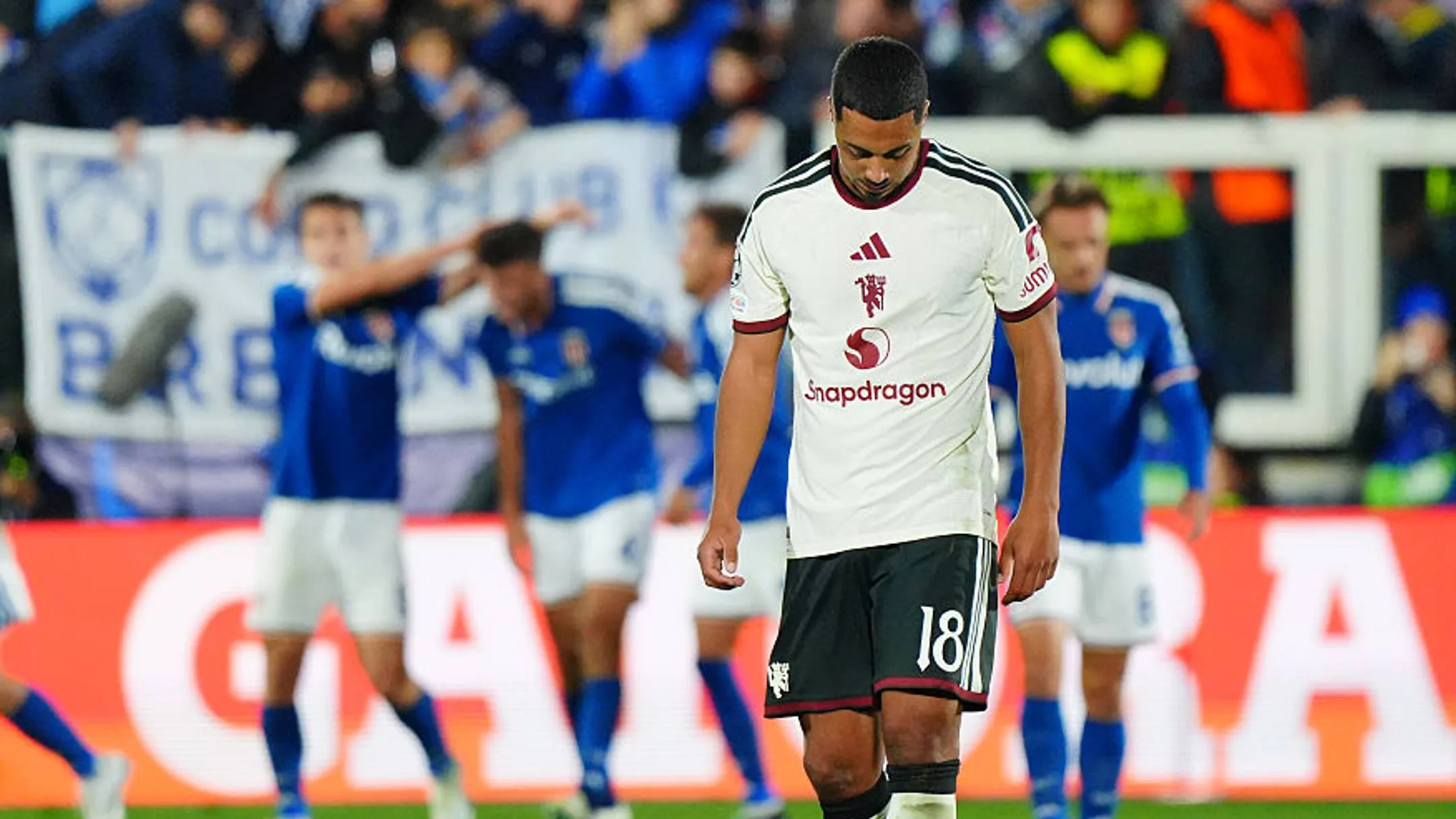
Manchester United’s defeat to Como in the Champions League prompted blunt assessments from inside the camp, but the aftermath did little to offer a simple fix. Youri Tielemans summed up the mood with a line that cut across the squad’s performance: “We need to try and do better at everything.”
The size of the setback was underlined by Nico Paz, who played a central role in United’s collapse. “It was a historic night because we played against one of the best clubs of all time,” he said, a comment that framed the result as more than just another bad evening.
Bruno Fernandes, meanwhile, pointed directly at Michael Carrick and the staff when discussing the tactical approach. “That’s on the manager and the staff to say [if it cost the match],” he said, before adding his own view on what the team should have done differently. “Sometimes we have to be more brave under pressure and trying to take a risk of getting that press very high and making them uncomfortable.”
Tielemans was less interested in assigning blame, but his analysis was still severe. Speaking separately to MUTV, he said: “We were disjointed as a team, we didn’t play well together, our press was off and when we were on the ball, we could not make the right decisions”
He went further in describing the scale of the issue. “It’s a combination of everything, whether it’s tactical, technical, effort… We need to try and do better at everything,” he said.
“You can be good tactically, but if the effort is not good, or the other way around, it doesn’t matter. You need to be good at everything and we were poor at everything. It’s down to that,” Tielemans added.
Asked how the team recover, he offered no new solution. “It’s the same message as we’ve had the last few weeks,” he said. “We can be here and talk about it but we need to show it on the pitch. We can only apologise to the fans. They’re disappointed, we’re disappointed, and the only thing we can do is try and show something on the pitch, which we didn’t do enough of the last few weeks.”
His remarks echoed the club’s own old standards, when a public message in December 2013 said: “David Moyes says #mufc must improve in a number of areas, including passing, creating chances and defending.” Back then, the response came quickly. This time, it is much harder to see the same outcome.