Analytics & Stats
Opta Model Keeps Arsenal on Top as City Narrow Title Gap to Two Points
Opta predicts Arsenal to finish on 83.50 points (85.68%). Man City projected 80.43 (14.32%). End May

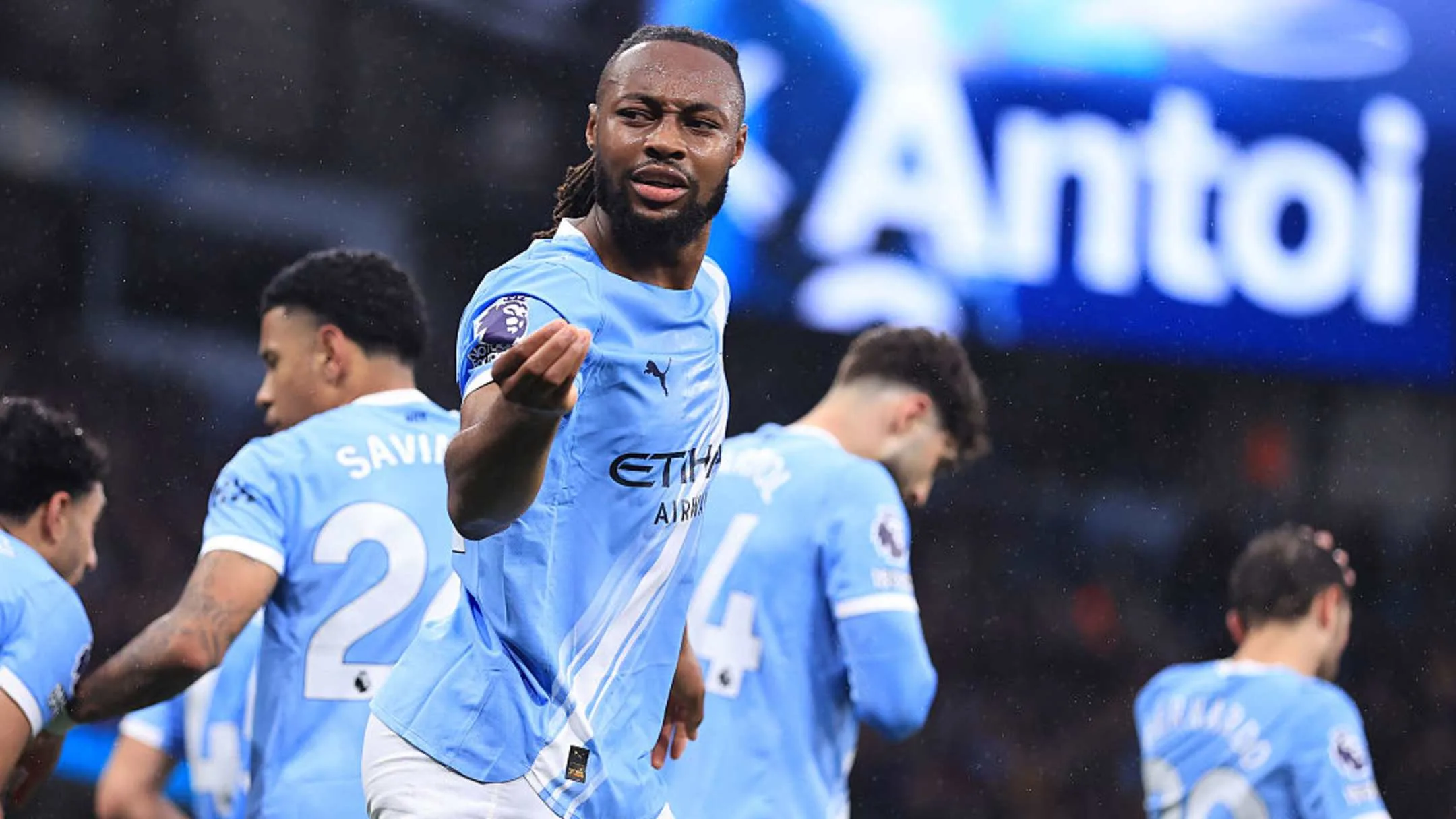
Opta’s supercomputer predicts a tight finish to the Premier League season with Arsenal remaining the favourite and Manchester City closing the gap.
City’s 3–0 win over Crystal Palace on Wednesday reduced the deficit to two points, with both title contenders having two league games remaining. Opta projects Arsenal to finish on about 83.50 points and awards them an 85.68% chance of securing the title. The forecast notes Arsenal face Burnley and Crystal Palace to close their campaign.
Manchester City are predicted to end on roughly 80.43 points and carry a 14.32% probability of overtaking Arsenal. Opta highlights City’s recent wins against Brentford and Crystal Palace but also points to the costly draw at Everton as influential in the projection. City’s final fixtures against Bournemouth and Aston Villa are listed as challenging.
Below the top two, Opta forecasts Manchester United to finish third on 68.13 points and to have already secured Champions League qualification. The model credits United’s resurgence under Michael Carrick and projects their best placing since 2022–23. Liverpool are tipped for fourth with about 62.33 points and a 97.03% chance of Champions League football next season.
Aston Villa are forecast fifth on 61.07 points with an 87.18% chance of that finish, although a Europa League triumph would also guarantee Champions League entry. Bournemouth and Brighton are predicted to occupy sixth and seventh with roughly 57.46 and 56.11 points respectively; Bournemouth’s 17-game unbeaten run is noted despite the model favoring them for sixth.
Opta places Chelsea and Everton around the mid-50s point totals, with Chelsea projected to finish ninth on about 52 points. The model underlines Chelsea’s lack of a league victory since March 4 and contrasts that with last summer’s Club World Cup and the club’s fourth-place position on Christmas Day.
At the bottom, Opta frames a relegation fight centred on Tottenham and West Ham. Spurs drew 1–1 with Leeds while West Ham lost 1–0 to Arsenal. Roberto De Zerbi’s men retain a two-point buffer, and the model gives Spurs a narrow edge to avoid relegation by that margin.





Analytics & Stats
Matchday 7: control, chaos and a few hard truths across the Premier League
Matchday 7 brought heavy defeats, narrow wins and blunt verdicts across a demanding Premier League weekend.

Matchday 7 delivered a broad sweep of extremes, from disciplined control to outright collapse, and plenty in between. While the off-field uncertainty surrounding Manchester City continues, the weekend’s football offered the clearest evidence available: some teams are settling into strong rhythms, while others are still fighting themselves as much as the opponent.
Sunderland’s afternoon unravelled early, with Kevin Danso’s 17th-minute red card arriving after the damage had already begun. Nordi Mukiele did not soften the assessment, saying: “If I have to be honest with you, we are not good,” before adding, “Maybe because we became arrogant, maybe. This is what I think.” Pierre Sage’s verdict was equally blunt: “My feeling after the game is shame.”
Fulham’s win over Hull City was one of the most one-sided matches of the round despite the narrow scoreline. Sergej Jakirović was candid in defeat: “It’s easy to analyze this game,” he said. “We were out of everything.” He added, “It was men against boys.”
Newcastle United’s meeting with Aston Villa exposed the contrast between structure and disorder. Villa looked composed throughout, while Newcastle were left improvising and chasing. Matthias Jaissle’s conclusion was short and sharp: “We were not smart enough.”
Coventry City left Tottenham with nothing after failing to make the most of a promising opening spell. Frank Lampard’s side were unable to turn early control into points, despite a fast finish.
Everton’s goalless first half was summed up by David Moyes, who said Harrison Armstrong’s challenge on Josh Acheampong was “the best part” of it. That aside, the second half brought cheap concessions and only two shots from Everton.
Elsewhere, Arsenal again needed a slow-burning route to victory at the City Ground, while Nottingham Forest produced an imposing display for long periods without finding the composure to finish the job. Forest’s frustration was underlined by the fact they did not score at home for more than eight hours of football.
There were also positives for Bournemouth, who overwhelmed Sunderland in every measurable sense, and for Chelsea, who earned a result in ugly conditions. Xabi Alonso said, “Today was not just about playing nice football,” before adding, “We needed a result like this,” after Chelsea recorded their first Premier League clean sheet at the 24th attempt.
Analytics & Stats
Iraola Gives Szoboszlai Update as Frimpong Faces Layoff
Iraola eased fears over Szoboszlai, but Frimpong’s recovery will stretch beyond the break.
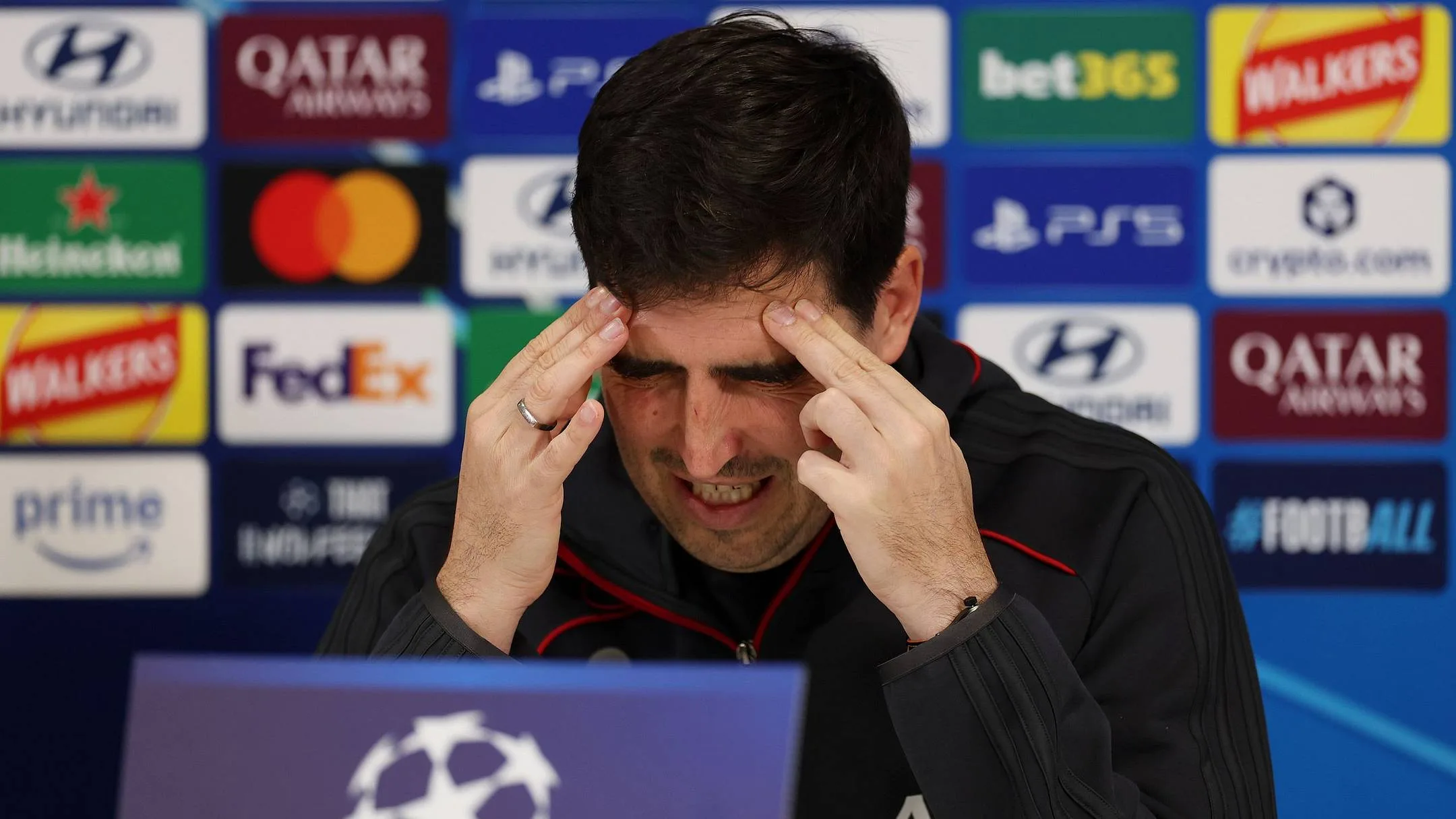
Andoni Iraola has offered a more measured assessment of Dominik Szoboszlai’s latest setback, while also confirming that Jeremie Frimpong will not be back until after the November international break.
Szoboszlai was forced off after around half an hour after the thigh problem that had already ruled him out of Liverpool’s previous two matches flared up again. Iraola had initially feared the midfielder could be missing “for some time”, but his latest comments were more encouraging. A return for Tuesday’s Champions League meeting with Villarreal is not possible, yet the manager stressed that the injury has not been made worse.
“It’s not a new injury, it’s in the same place as last week, he has not worsened the injury, but we have to be a bit more patient until he recovers fully,” Iraola warned.
“It is not like we now have to wait a lot of time to come back.”
Frimpong’s situation is less straightforward. The fullback played only six minutes against Brentford, going off shortly after his halftime introduction after previously being rested following the midweek trip to Austria.
“Jeremie has a new muscle injury and we will have to wait until he recovers,” Iraola reflected. “It’s going to be difficult I think before the international break.”
With fixtures coming thick and fast, Iraola said he will need the full squad at his disposal and may continue to rotate heavily. He pointed to the win over LASK as an example of how changes can still produce a strong result, and suggested he is weighing up further alterations for Villarreal.
“I am thinking of putting the best starting XI that I can against Villarreal,” he told assembled media. “But maybe it is not the one that you are thinking, because some players are not fresh enough.
“Probably it is better if someone is more fresh to start but I am analyzing the game, how can I put a good starting XI and think in the second half, how can we affect [the game] with the changes?”
The background to those selection calls is clear in the fatigue data supplied by Simon Brundish. Alisson, Florian Wirtz, Jérémy Jacquet, Ronald Araújo and Alexander Isak all feature among the players monitored, with the Fatigue Index described as a scale from 0-100, and anything above 65 placed in the red zone. Brundish says the model combines nine different statistics linked to previous injuries, together with each player’s own record, to provide a loose guide to those most at risk of breaking down.
Analytics & Stats
Liverpool’s winger decision looks exposed as Barcola struggles and Gordon thrives
Liverpool’s winger debate is already under scrutiny as Barcola struggles and Gordon delivers quickly.
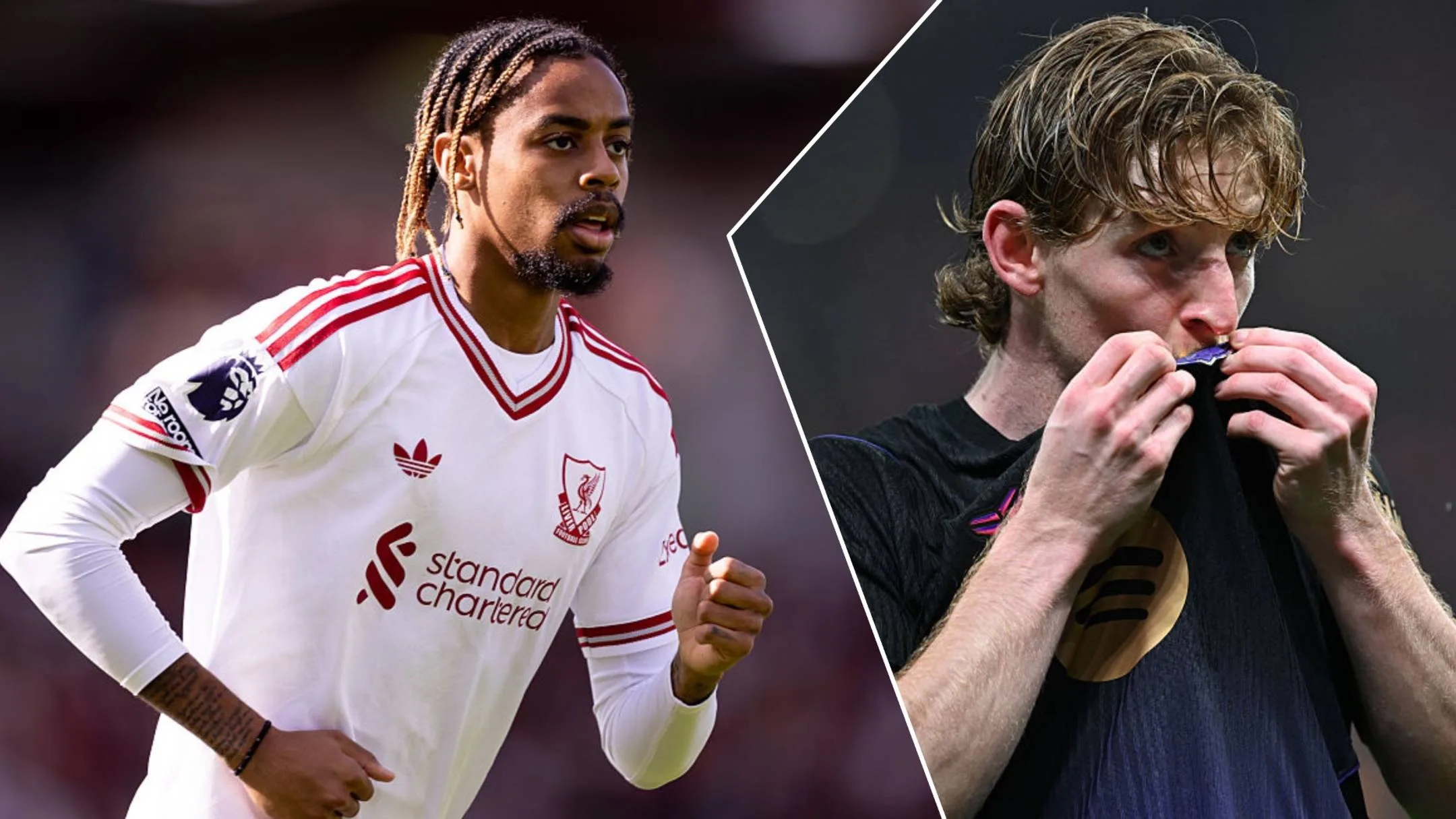
Liverpool’s summer wide-man debate is already looking awkward. The club came close to matching their transfer record for Bradley Barcola, yet the early returns suggest Anthony Gordon may have been the more convincing option.
Barcola is beginning to resemble another expensive attacking question mark. With Mohamed Salah not even drawing the main spotlight, the winger has yet to register a goal or assist this season, and his output has been well below expectations. That stands in sharp contrast to Gordon, who has settled quickly after his move to Barcelona.
The numbers are hard to ignore. Gordon has produced six goal contributions in nine appearances for a new club in a new league, a strong return given the circumstances. He also added four goal contributions in three England appearances during the international window, while Barcola finished with none for France.
Andoni Iraola, though, is refusing to lose faith. “Sometimes we have to focus not just on the numbers,” the Liverpool manager said on Tuesday. He added that he has “100% trust” in both Barcola and Wirtz. “Bradley and Florian have had good games, bad games this season, but we know their level, and we are sure they’ll give us good performances.”
The comparison is strengthened by the broader statistical split. Barcola has made 10 appearances, played 511 minutes, and still has no goals or assists. Gordon, across 13 appearances and 775 minutes, has five goals and five assists, alongside stronger underlying figures in expected goals, expected assists, big chances created, successful dribbles and touches in the opposition box.
There was logic to Liverpool’s interest in Gordon. Born and raised in the city, he came from a Liverpool-supporting family and had spent five years there as a young child before his professional breakthrough at Everton. Liverpool needed help in replacing Salah, while Gordon was looking for a step up from Newcastle United.
Barcelona moved first, announcing his signing on May 29. The British club also tried to intervene, but, as reported, they were “late to the party”. With add-ons, Gordon’s move could rise above $93 million, while Barcola’s could reach $163 million.
For now, the better deal is clear. Barcola may still find the Champions League more forgiving than domestic football, starting with LASK and then Villarreal at Anfield.