Tottenham Hotspur
Kudus on the Red Card, the Fallout and a Fresh Start with Van de Ven
Kudus admits he was fuming after the derby red card; he says it is done and dusted now. This season.


Mohammed Kudus returned to the story of the London derby with clear memory and blunt honesty. He opened the scoring in the 18th minute, only for Dejan Kulusevski to level before half-time. The contest was 1–1 at the break, but West Ham collapsed after the interval, conceding three goals in eight second-half minutes while substitutes watched from the touchline.
Kudus’ own involvement finished the evening. With Spurs leading 4–1, he reacted to a challenge from Micky van de Ven. “I was just fuming that game,” he said, the frustration still clear almost a year later, “and I just reacted straight away.” After sending Van de Ven to the turf and kicking the ball twice while it lay beneath his opponent, Kudus pushed the defender and also made contact with Pape Matar Sarr. The incident ended with a red card.
The aftermath could have left lingering awkwardness but the two have since moved on. “Whatever happened on the pitch stays on the pitch,” Kudus says. “It’s done and dusted after the game. It’s nice playing with him now. It’s a small world in football. So just try to patch up and move on.”
At Tottenham a clear defensive core has emerged early under Frank, with Van de Ven and captain Cristian Romero providing a solid base and Kudus operating as a roaming attacking presence. The £55 million summer signing has started life in north London by creating a team-high 12 chances across the opening five weeks of the new Premier League season, more than Lucas Bergvall, Wilson Odobert or Richarlison managed across the entire 2024–25 campaign.
Kudus has set ambitious but straightforward targets. “Winning a trophy.” He added, “We play in almost all the competitions this season; Premier League, Champions League, all the cups in England, so winning a trophy would be a successful season,” and, “Also finishing top four also is a very reasonable challenge for us this season, qualifying for [the] next Champions League.”




Chelsea News
Mudryk dispute with UAF adds another layer to difficult spell
Mudryk’s feud with the UAF escalates as he defends claims, revisits Chelsea and Arsenal
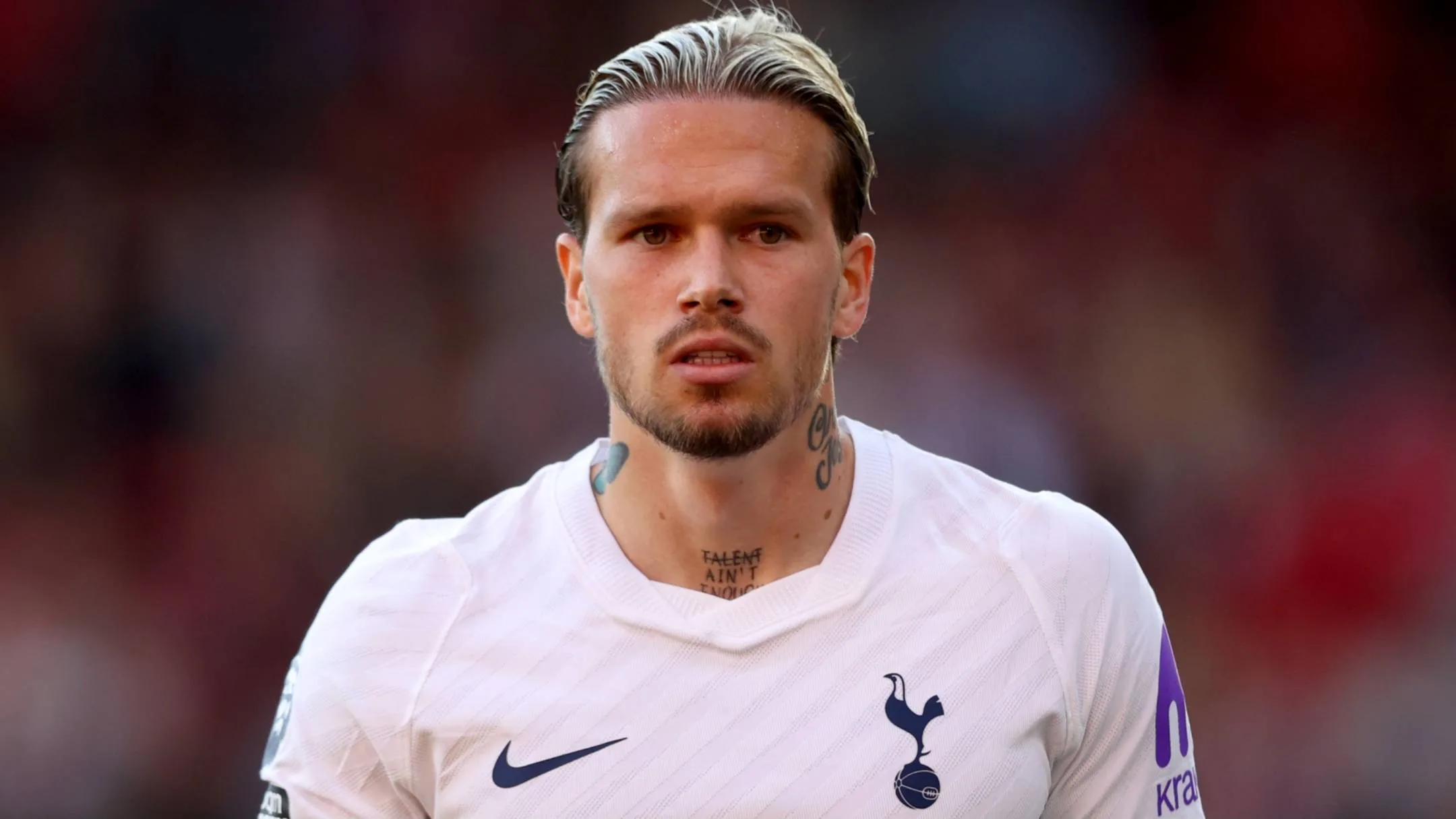
Mykhailo Mudryk’s unsettled period has taken another turn after his dispute with the Ukrainian Association of Football moved into the open. The Chelsea winger, currently on loan with Tottenham Hotspur, has been accused by the UAF of “slander” after making allegations against the federation.
UAF president Andriy Shevchenko responded by saying Mudryk and his representatives had been trying to pin blame on an employee, and he called for a public apology unless the player could prove his claims. Mudryk rejected that version immediately, describing it as a flat-out “lie” and insisting the federation failed to support him properly during the investigation.
“My team and I repeatedly asked the UAF to help establish how I might have been exposed to meldonium and who, if anyone, might have been responsible,” said Mudryk in a statement.
“In several letters to the UAF at the time, my lawyers made clear that we were seeking truthful information that could be independently verified. One of those letters was leaked to the media by the UAF earlier today and clearly shows that my lawyers wanted ‘true, verifiable and reliable information’.
“Further, the UAF were repeatedly unhelpful and even attempted to mislead my team in order to distance themselves from the case. For example, UAF staff testified at my hearing that I was not using the UAF’s supplements and Mr Shevchenko has repeated that assertion in his statement—but I have WhatsApp messages that prove that I was using their products during their training camps. That is, I have evidence to prove that their repeated assertions are wrong.”
Mudryk also used the recent international break to revisit earlier decisions in his career. “Before going to Chelsea , I wanted to join Arsenal ,” he said. “It’s no secret.”
His move to Chelsea in 2023 cost up to $108 million, but he managed only 10 goals in 73 appearances before his ban. He is now at Tottenham on loan with an option for a permanent transfer, though he has featured for just 16 minutes in the Premier League this season.
Spurs boss Roberto De Zerbi backed the forward to respond on the pitch. “I can understand the fans but Mudryk is a good guy and is a good player,” he said.
“He suffered a lot for the situation in the last couple of years. He has just one thing to do. Show on the pitch his qualities and show on the pitch that now he is playing for Tottenham. And Tottenham is a big club like the other clubs—not less at all.”
Chelsea
Mudryk’s Ban, the Questions It Raises, and the Duty Every Player Carries
Mudryk’s case exposes wider anti-doping questions, but FIFA’s rules leave players with ultimate responsibility.
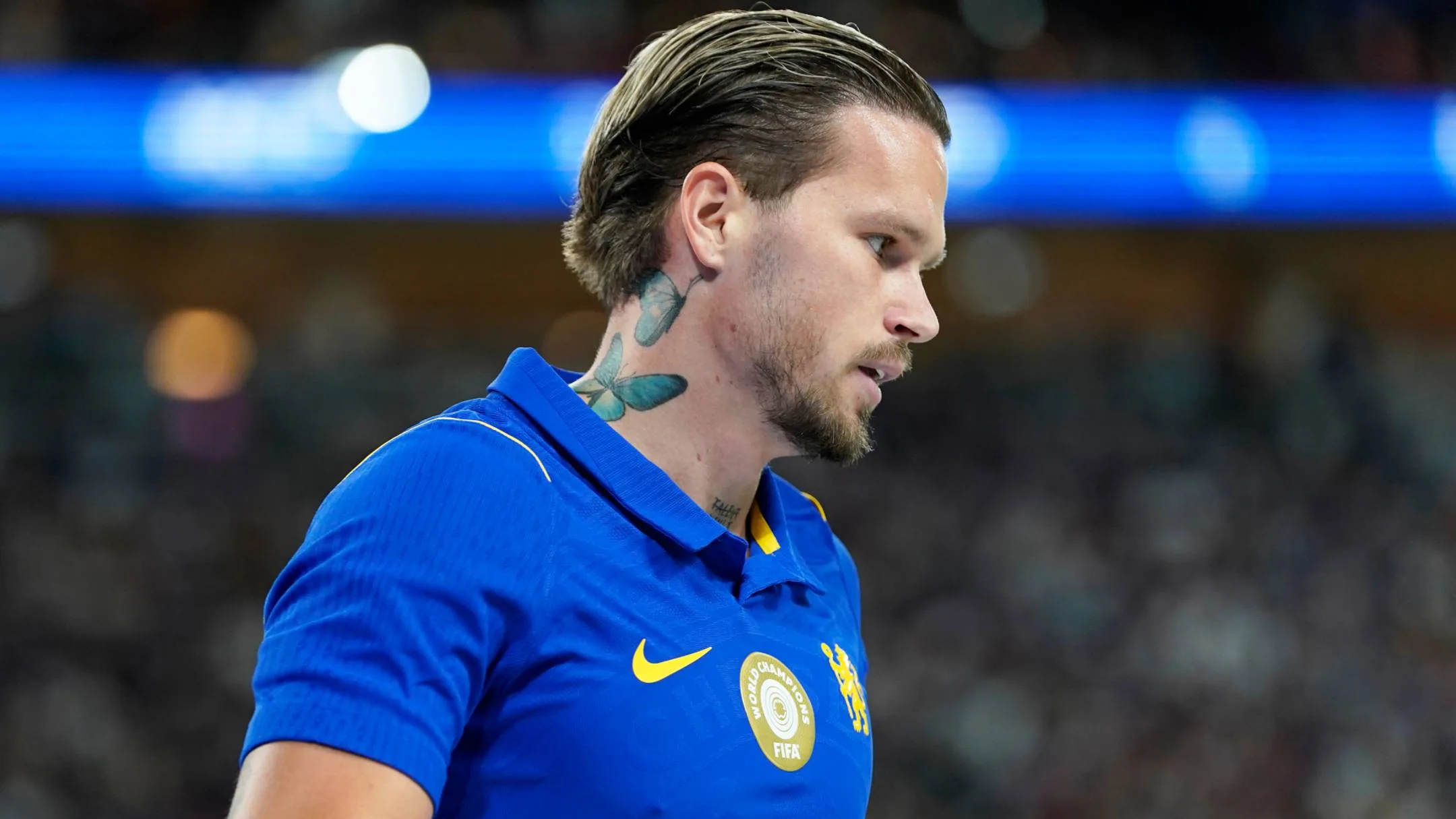
Mykhailo Mudryk’s suspension has become more than a personal setback. After initially receiving a four-year ban over a failed test in December 2024, the Ukraine international has now pointed to a nutritionist on the Ukraine national team as the source of the problem. But even with that allegation, he cannot remove himself entirely from responsibility.
Mudryk’s career at Chelsea had already been uneven during a turbulent spell at the club, and the positive test halted any chance of building momentum. A “low concentration” of the banned substance meldonium was found in his system, and the winger insisted on his innocence. The original punishment was later reduced in July after a change in anti-doping regulations specifically relating to meldonium, a drug shown to improve endurance and aid recovery. He then reached an agreement with the English Football Association and the World Anti-Doping Agency to end his suspension over the summer.
Chelsea manager Xabi Alonso included him in preseason plans before advising him that an exit would be the best route. The 25-year-old then moved to Tottenham Hotspur on loan, where he was reunited with his former Shakhtar manager, Roberto De Zerbi.
In an interview with Ukrainian journalist Dmitry Gordon on his YouTube channel, Mudryk described how he believes the substance entered his body. “I had never heard of a drug like meldonium, never seen it, never come across it in my life. I only learned about it when they told me the news,” he said. “I definitely have ideas. It’s a drug you can only get in Eastern Europe.
“This drug could only have got into my body where I was, and that’s Ukraine. There are no such drugs in England. It supposedly stimulates your heart and helps you, as far as I understand, handle physical load better.
“There are people who keep an eye on it. In the Ukrainian national team we have a nutritionist who hands us pills every couple of days before games. He brings us a little cup. Everyone has to take the pills that are in that cup.”
Mudryk’s remarks may invite scrutiny of the wider setup, but the broader lesson is unavoidable. As FIFA states, “It is each player’s personal duty to ensure that no prohibited substance enters their body,” and “Players are responsible for any prohibited substance or its metabolites or markers found to be present in their samples. Accordingly, it is not necessary that intent, fault, negligence or knowing use on the player’s part be demonstrated in order to establish an anti‑doping rule violation.”
After everything, Mudryk’s final reflection carried the clearest warning: “I just would like, for the future, everyone to understand that you can only rely on yourself.”
Analytics & Stats
Premier League after 10 games: the questions that still shape the season
After 10 games, the Premier League has clearer patterns, but several major questions remain unanswered.
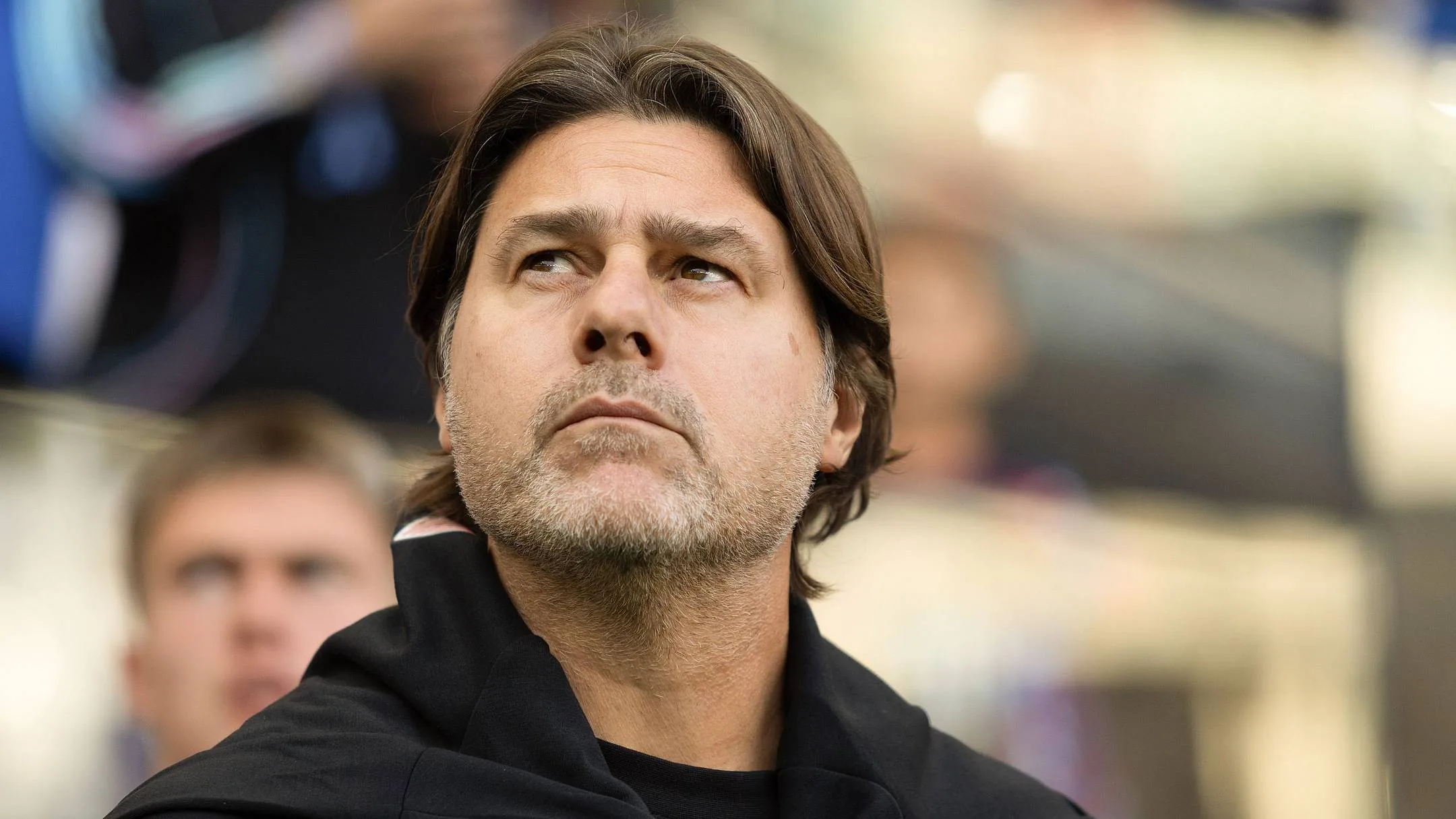
Ten matches into the 2026/27 Premier League season, the broad lines of the campaign are beginning to emerge. Yet with domestic football returning after the November international break, there is still no shortage of unanswered questions across the division.
At the top, Mikel Arteta is handling the kind of dilemma managers usually welcome. Ezri Konsa is in form, William Saliba is back, and the decision between them comes as key fixtures against Manchester City, Brentford, Spurs and Manchester United move into view. Konsa offers strength in duels, while Saliba brings the option of a higher line.
Aston Villa’s six-match unbeaten league run has kept them moving, but it has not been fully convincing. Unai Emery’s side have too often been drawn into frantic, open games and have not controlled them well enough. Their numbers reflect that, with Villa 15th for average possession and third for times dispossessed.
Bournemouth continue to stand out. Only Paris Saint-Germain and Real Madrid have also won their last eight matches across Europe’s big five leagues. Marco Rose’s side are Opta’s favourites for the Europa League and have not allowed European commitments to disrupt their domestic form. Evanilson, Marcus Tavernier and Rayan are operating as a dangerous front three, with Eli Junior Kroupi set to return to the mix.
Brentford are sharing goals, but Thiago is not reproducing the level he reached last season, despite getting into dangerous positions. Brighton, meanwhile, are making a more serious case by the week. They are the only side to beat Arsenal this season, they are the league’s top scorers and they are doing it with confidence and verve.
Elsewhere, Chelsea still need to find the right place for Estêvão, Coventry need points rather than encouragement, Palace are adjusting to Thomas Frank, Everton are stretched by a 21-man squad, Fulham still need a finisher, Hull remain limited, Ipswich keep making errors, Leeds need more from Wilson, Liverpool’s midfield is unsettled, and City’s three straight defeats have raised difficult questions. Newcastle, Forest, Sunderland and Spurs also carry significant concerns into the next phase of the season.