Brentford
Why Mohammed Kudus Followed Thomas Frank’s Attacking Blueprint to Tottenham
Kudus chose Tottenham largely because of Thomas Frank’s record developing attackers at Brentford…


Mohammed Kudus’s decision to move to Tottenham read like a considered career step rather than a rash transfer. After joining West Ham United in 2023 and establishing himself as a leading attacking outlet in east London, he drew interest from multiple suitors this summer. In interviews as a Spurs player he made his preference clear: “only” Tottenham.
Kudus says that clarity came from Thomas Frank’s reputation as a developer of attackers. He pointed to Frank’s work at Brentford and named a string of forwards whose goal returns increased under the Danish coach. The comparison is stark: Bryan Mbeumo went from 10 to 20 goals, Ivan Toney from 24 to 31, Ollie Watkins from 13 to 25, Saïd Benrahma from 9 to 17, and Yoane Wissa from 15 to 19.
That progression fed Kudus’s belief that Frank could accelerate his own growth. “Looking at his work at Brentford with attackers. I can name so many; [Bryan] Mbeumo, Ivan Toney, [Mikkel] Damsgaard. So many attackers I’ve seen his development with them has been really, really massive.
“So I thought that he’d be the perfect guy to help with my development. And how he wants his attackers to play, I think I have the qualities to play like that and that’s how I want to play.”
Frank’s coaching produced outsized transfer fees and moves for some forwards. The draft notes Yoane Wissa joined west London in 2021 with limited top-flight experience and later moved to Newcastle United on Deadline Day for £55 million ($74.1 million), more than six times his prior fee.
Kudus accepts the demands that come with Frank’s methods. “He’s a very demanding coach, offensively and defensively.
“One of my major attributes is getting the ball one-v-one and taking players on. The team try to put me in positions to do that which helps a lot. Just try to create as much as I can, but defensively as always he expects a lot, of course.”
Defensive work and high pressing are non-negotiable. “We press high, whichever opposition we play,” he says of Tottenham’s style. “We press really, really high and that comes with a lot of running demands and high interesting movements and stuff like that, too. The demand from him is very high but it really, really helps the team and you can see that from some of the games already.”
For Kudus, Frank’s track record at Brentford provided the persuasive case. It was enough to make Tottenham the clear next step.

Arsenal
One key issue facing each Premier League side after five matches
Five games in, the Premier League is already revealing title doubts, transition pains and early surprises.
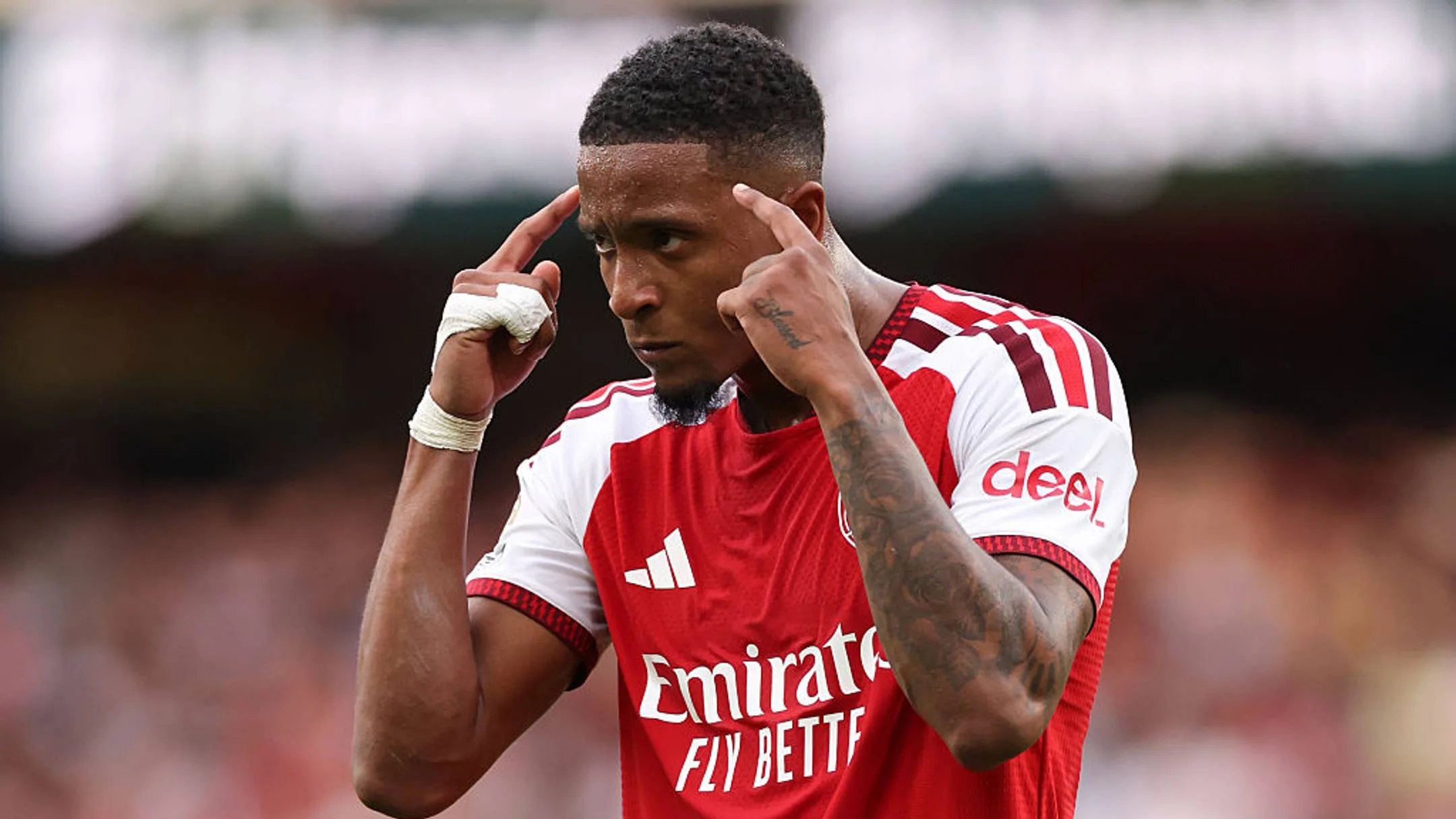
The first five matchdays of the 2026/27 Premier League season have already given shape to a campaign that promised uncertainty from the outset. With the table still settling and another international break leaving a long pause before Matchday 6, there is time to take stock of what has emerged so far.
Arsenal’s title defence has already met resistance after a heavy defeat to Brighton & Hove Albion. Before that trip, they looked close to untouchable, but the champions have not yet shown enough to pull clear of their rivals. Bruno Guimarães has added quality, though injury has delayed his rhythm, while Christos Tzolis has stepped in as a serviceable replacement for Leandro Trossard. Even so, Arsenal’s attack was found wanting in their toughest test to date, with concerns lingering over the goalscoring burden on Bukayo Saka and the lack of a set-piece breakthrough.
Aston Villa, meanwhile, are navigating a period of change after rebuilding their core in the summer. Their first league win of the season offered encouragement, with Johan Manzambi, Nicolas Jackson and João Gomes all making useful contributions. Bournemouth have begun slowly under Marco Rose, but there is little panic as they balance league form with European demands after an opening win at Real Sociedad. Brentford continue to look like a difficult assignment at home, built on physicality and a set-piece threat that has already caused problems for visiting sides.
Brighton’s pressing game has been a feature of the early weeks, while Chelsea’s start under Xabi Alonso has raised serious questions about their structure without the ball. Coventry City finally recorded a first Premier League win in more than 25 years, though goals remain a concern. Everton’s window left them thin on options, Fulham are showing signs of adjustment under Álvaro Arbeloa, and Hull City have been one of the early surprises, even if history offers a warning.
Elsewhere, Ipswich Town, Leeds United, Liverpool, Manchester City, Manchester United, Newcastle United, Nottingham Forest, Sunderland and Tottenham Hotspur all have distinct questions to answer as the season develops.
Bournemouth
Premier League table comparison after five games: where 2026/27 stands against 2025/26
City lead the early table, while Spurs, Bournemouth, Fulham and Palace have all started below last season.

The opening stretch of the 2026/27 Premier League season has lasted longer than usual because of a change in the international calendar, but five games is still only enough to reveal early patterns rather than a settled table. The 20 clubs remain closely packed, and a single result can still reshape the picture quickly.
There is history behind treating this stage with caution. Last season, Wolverhampton Wanderers and West Ham United were the bottom two after five matches, while Bournemouth and Sunderland turned strong starts into European qualification. This year, the early evidence is already pointing in a few different directions.
Manchester City are the only side to have preserved a 100% record. Their 5-3 win over Sunderland, combined with Arsenal’s defeat at Brighton & Hove Albion, sends them into the break top of the table on 15 points, matching Liverpool’s total from the same stage last season. City are also in a much stronger position than they were in 2025/26, when they sat ninth and were eight points worse off.
Brentford and Brighton have made the sharpest gains. Both are five points better off than they were at this point last season, with Brentford rising 13 places and Brighton 11. Keith Andrews’ side were among those tipped for trouble before the campaign, yet they are now being mentioned as a possible European contender. They are one of five unbeaten teams.
Leeds United have also carried their momentum forward, while Newcastle United, Everton and Aston Villa have improved on their starts from last year. Nottingham Forest have the same points total as they did after five games last season, but they are two places higher.
At the other end, Tottenham sit bottom with two points and did not score their first league goals of the season until Aston Villa were already 3-0 up. Bournemouth are still without a first league win under Marco Rose, a clear fall from the fourth place they held after five matches last season.
Fulham and Crystal Palace have also gone backwards, with both lower in the table after managerial changes.
Brentford
Brentford Expose Chelsea’s Frailties in a Flat Evening Under Alonso
Brentford’s discipline and Chelsea’s injuries exposed deeper flaws in Alonso’s side at the Gtech.

Brentford served up a blunt reminder that Chelsea’s early-season attacking numbers need context. For long spells, Keith Andrews’ side reduced the visitors to predictable, low-yield football and forced a performance that lacked control, rhythm and penetration.
The home team offered little decoration, but plenty of discipline. Built on organisation, recruitment and a tightly managed structure, Brentford made Chelsea look one-dimensional for most of the first hour. The Blues had arrived as one of only two Premier League sides to begin the weekend with double-digit goals, yet much of that threat had come from counterattacks and set pieces. No team had produced a larger share of shots from fast breaks than Chelsea’s 22.7% going into the round.
Against Brentford’s compact shape, though, there was no room to breathe. Chelsea ended the match with an open play xG of just 0.58 and forced Caoimhin Kelleher into only two comfortable saves. Their routes forward repeatedly broke down, often ending with hopeful clearances from the left side rather than sustained attacking patterns.
The visitors also lost an early advantage. It was the first time they had failed to score in the opening seven minutes of a Premier League match under Alonso, removing a key chance to settle the contest quickly.
João Pedro’s absence was felt sharply. Alonso had described him as the player who ties the attack together, and the comparison to Karim Benzema underlined his importance. Danny Welbeck worked hard in his place but did not manage a shot, leaving Chelsea short of a central reference point. Pedro’s return should help, but the issues looked deeper than one injury.
At the other end, Chelsea’s defensive problems remained unresolved. For the sixth straight match against Premier League opposition, Alonso’s side conceded at least three goals.
The midfield pairing of Valentín Barco and Jordan Henderson brought more intensity early on, but it did not last. Henderson tried to organise those around him throughout, while Barco drew a hostile response. The energy faded after the hour, and with it Chelsea’s resistance.