Premier League
Peter Bankes Stands By Decision to Void Kolo Muani Goal in Tottenham v Arsenal
Referee Peter Bankes publicly explained disallowing Kolo Muani’s Tottenham goal and his reasoning. .

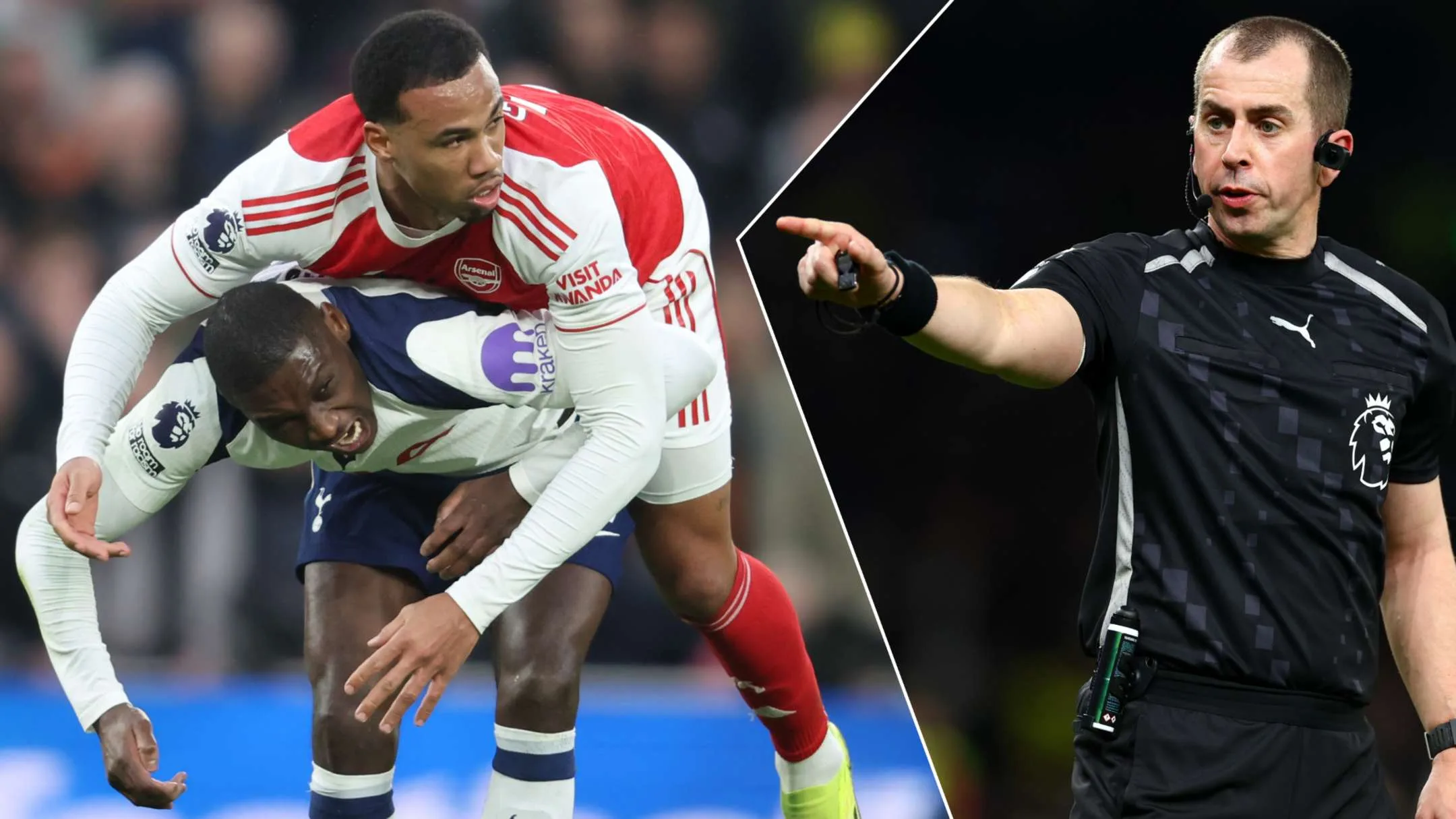
Referee Peter Bankes has publicly defended his decision to disallow Randal Kolo Muani’s goal for Tottenham Hotspur against Arsenal, offering a detailed account of his reasoning on Match Officials Mic’d Up.
Kolo Muani’s celebrations were halted by Bankes’s whistle, a moment that provoked a visible reaction from Tottenham boss Igor Tudor, who furiously gesticulated on the touchline. Several onlookers criticised the call, but the official who made it remained resolute.
Explaining his view, Bankes said: “I see two hands from the Tottenham player into the back of the Arsenal player and that is going to be my main focus,” he outlined. “Once you see two hands in live play, it looks like a push, a clear push.
“I delayed the whistle so that the play could continue, then obviously gave my final decision once the ball had gone into the goal and that allows the VAR then to potentially check if I’ve misread something or if it doesn’t quite look right. But on field it looked a very, very clear offence.”
Bankes also addressed how different viewing speeds influence perception. “Obviously, different speeds can make things look different. In slow motion, it can look different to what you see live,” Bankes continued. “I get one look at it, and I was more than happy that the two hands on the back had enough impact and was an offence. I understand there’s going to be split opinions on it, but for me I’m still comfortable that is enough for a free kick.”
Beyond the specifics of the incident, the exchange highlighted a wider shift in how referees engage with the public. The fact that an official explained a contentious decision on a platform such as Match Officials Mic’d Up is notable. Social media has created an unprecedented avenue of abuse against referees, a group that previously had limited opportunity to respond.
The willingness of officials to speak, together with tools that let them provide considered explanations, appears to be altering the dynamic. Bankes also offered an intriguing insight into the extensive preparatory work a Premier League referee goes through.




Manchester United
Osula’s 90th-Minute Strike Hands Newcastle a 2-1 Win as Carrick’s United Fall Short
United 2-1 defeat: Osula 90′ winner; Casemiro equaliser; Ramsey sent off in stoppage time and drama
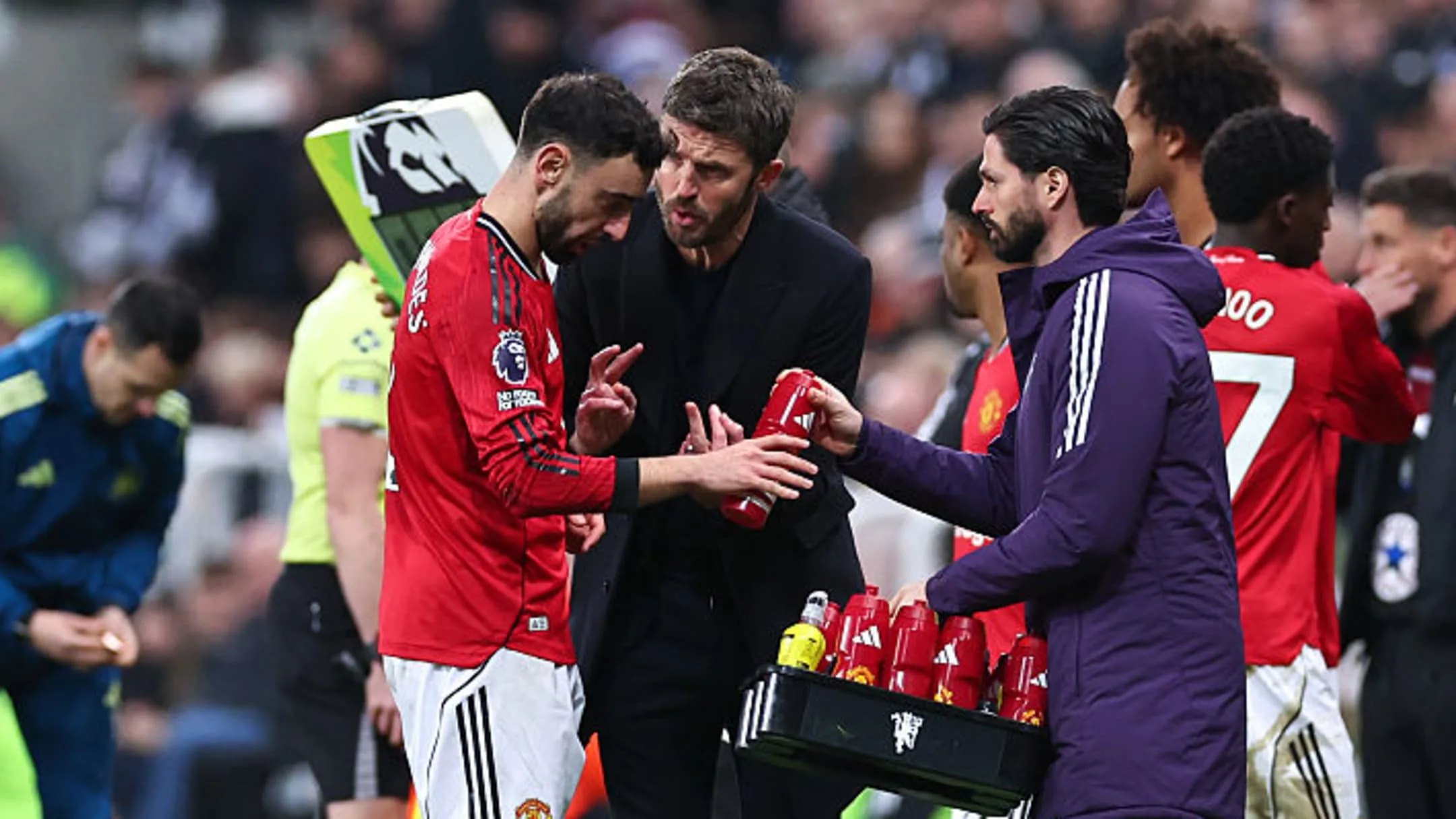
Michael Carrick suffered his first defeat in charge as Manchester United were beaten 2-1 by Newcastle United on Wednesday. William Osula produced the decisive moment in the 90th minute, cutting inside from the right and bending a clinical strike into the far bottom corner.
Newcastle set the tone early, pressing with intensity that unsettled United. The visitors squandered a number of openings in the first 20 minutes, flashing the ball wide, before United gradually established more control. The match turned in first-half stoppage time when Ramsey was sent off after receiving a second yellow card for simulation in the penalty area. Moments later the game saw quickfire goals at either end as Gordon and Casemiro both found the net.
The second half lacked rhythm at first but opened up as the match progressed. Leny Yoro missed a significant opportunity at 1-1 and had a header denied by Aaron Ramsdale. Ramsdale also denied substitute Joshua Zirkzee shortly before Osula’s winner.
United remain third in the Premier League, ahead of Aston Villa. The defeat was a missed chance to increase the cushion on Liverpool in sixth in the race to the Champions League, after the Merseysiders lost on Tuesday.
Casemiro, already confirmed to be leaving at the end of the season, again showed his on-field value. The Brazilian glanced a header beyond Aaron Ramsdale despite registering just 0.06 in xG across his 61 minutes. He produced numerous defensive contributions, searched for forward passes and was strong in the air. That headed equaliser was recorded as his 36th goal involvement since joining the club. Elsewhere, Elliot Anderson scored a late equaliser for Nottingham Forest against Pep Guardiola’s City. Anderson has been linked as a possible replacement, with reported figures that could climb to $133.7 million (£100 million).
Player ratings
GK: Senne Lammens—6.8: Stood little chance on either goal and didn’t have to do that much else.
RB: Noussair Mazraoui—6.7: A first start since returning from the Africa Cup of Nations in January and put in a hard shift. Appeared to leave the game with a knock.
CB: Leny Yoro—6.8: His game is ultimately judged on defending, but a big miss at 1–1 might have been costly.
CB: Harry Maguire—6.7: Overcame recent illness to start just hours after his retrial in Greece ended in a second conviction. Arguably hesitated as Osula was shaping to shoot.
LB: Luke Shaw—6.4: Another who passed a late assessment to make this game.
CM: Casemiro—7.3: Made an important block early on, before his headed equalizer was a remarkable 36th goal involvement since joining the club. Off after just over an hour.
CM: Kobbie Mainoo—6.7: Barely misplaced a pass but didn’t have enough of the ball in the right areas to hurt Newcastle.
RM: Bryan Mbeumo—6.5: Not his night, unusually. Guilty of firing his only shot over the bar from a good position.
AM: Bruno Fernandes (c)—8.1: Gave away the penalty when he caught Gordon in the box, yet made up for it moments later with the free kick that set up the equalizer. Created eight chances.
LM: Matheus Cunha—7.6: Asked questions of the Newcastle defense, even though the left wing is not his preferred position. Made defensive contributions too.
ST: Benjamin Šeško—5.8: Actually saw a bit more of the ball than he did against Crystal Palace, but that big chance he needed to keep his scoring run didn’t come this time.
Subs
Manuel Ugarte (61’ for Casemiro)—6.6; Diogo Dalot (61’ for Shaw)—6.3; Amad Diallo (76’ for Mainoo)—6.1; Joshua Zirkzee (76’ for Mbeumo)—6.6; Tyrell Malacia (85’ for Mazraoui)—N/A. Subs not used: Altay Bayındır (GK), Ayden Heaven, Goodwill Kukonki, Tyler Fletcher.
Match statistics
Possession: Newcastle 45% — Man Utd 55%
Expected Goals (xG): Newcastle 2.22 — Man Utd 1.28
Total Shots: Newcastle 12 — Man Utd 14
Shots on Target: Newcastle 5 — Man Utd 5
Big Chances: Newcastle 2 — Man Utd 4
Passing Accuracy: Newcastle 77% — Man Utd 82%
Fouls Committed: Newcastle 15 — Man Utd 16
Corners: Newcastle — Man Utd
Chelsea
How the next five fixtures will shape Man Utd, Liverpool and Chelsea’s top-five bids
Next five fixtures for Man Utd, Liverpool and Chelsea and how they could affect the top-five race…
Chelsea enjoyed the perfect midweek as their bid to qualify for the Champions League was completely re-energized. A midweek of surprises has compressed the table, leaving Liverpool in sixth and Man Utd in third with just three points separating four sides.
A top-five finish will almost certainly be enough for entry into next season’s Champions League and the next five Premier League games could have a drastic impact on who claims those positions.
Man Utd face Aston Villa (A) on March 15, Bournemouth (A) on March 20, Leeds (H) on April 13, Chelsea (A) on April 18 and Brentford (H) on April 27. Man Utd have the luxury of avoiding European and cup soccer for the remainder of the term, which reduces their midweek congestion compared with Chelsea and Liverpool.
Liverpool’s next five are Tottenham (H) on March 15, Brighton (A) on March 21, Fulham (H) on April 11, Everton (A) on April 19 and Crystal Palace (H) on April 25. Liverpool had been in resurgent form—well, results-wise at least—but their Tuesday night humiliation at Wolverhampton Wanderers rocked their Champions League qualification bid. The Reds have two opportunities to make amends before the March international break. Champions League and FA Cup matches come before the clash with Tottenham on March 15, with Liverpool seeking to do the double over their relegation-threatened visitors. On their return from the Premier League hiatus, Liverpool face Fulham at Anfield. Then comes the first Merseyside derby at the Hill Dickinson Stadium, a fixture that has yielded difficulties for Liverpool away at Everton over the past decade.
Chelsea’s schedule reads Newcastle (H) on March 14, Everton (A) on March 21, Man City (H) on April 12, Man Utd (H) on April 18 and Brighton (A) on April 26. The Blues will juggle European and cup fixtures alongside this run. The trip to Stamford Bridge from Newcastle is a tough test, and the return of league action sees Liam Rosenior’s men host title-chasing Manchester City followed by the clash with Man Utd. The clash with the Red Devils, which Chelsea lost earlier this term after yet another red card, could prove pivotal in the race for the top five.
Paris Saint-Germain
The Contemporary Centre Back: Profiles from 2023–26
Profiles of the modern centre back from 2023–26, highlighting strengths, flaws and leadership.
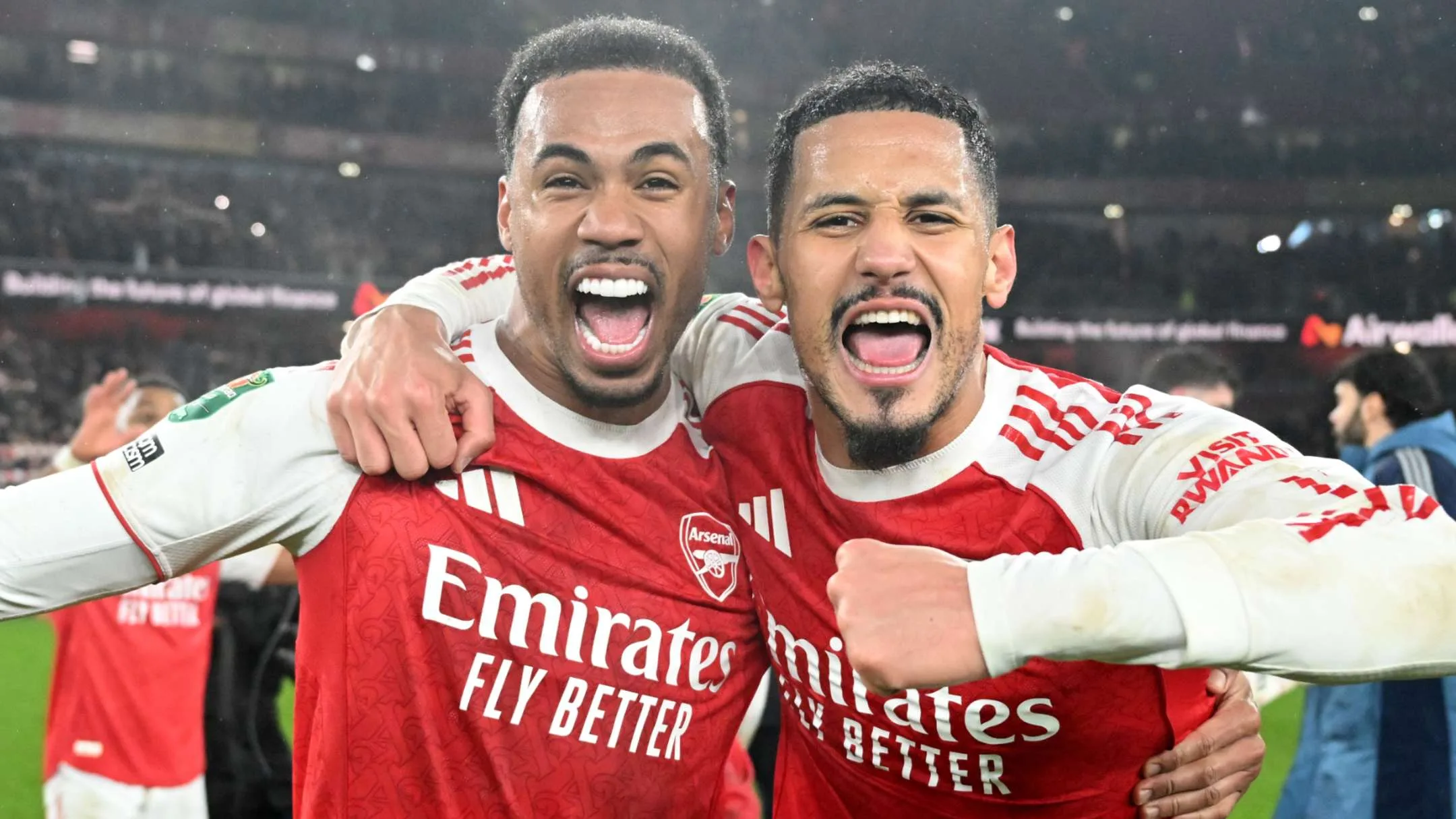
Finding elite centre backs remains one of football’s toughest tasks. Across the last three seasons a clear group has emerged, each offering different traits that matter at the very top.
Cristian Romero is a defender of pure intensity. He “throws himself into tackles,” dominates aerially and has delivered trophies on big stages: a World Cup, two Copa Américas and a Europa League with Tottenham. That raw passion often produces decisive moments, but it also brings reckless fouls and needless bookings that limit his standing among the very best.
Sporting CP’s back-to-back Liga Portugal titles in 2023–24 and 2024–25 owed as much to Ousmane Diomande as to the goals of Viktor Gyökeres. Young and authoritative, Diomande leads Sporting’s back three with speed, aerial power and anticipation, though occasional positioning lapses and temper remain to be ironed out.
Dean Huijsen’s rapid rise from a loan at AS Roma to a Spain international and Real Madrid prospect highlights his calmness, technical comfort and willingness to carry the ball forward. At 6’5″ he combines presence with composure and looks like a long-term defensive investment.
Micky van de Ven’s ceiling is limited only by his fitness. When healthy his exceptional pace makes him almost impossible to beat. Similarly, Malick Thiaw adapted quickly to the Premier League after his 2025 move to Newcastle, offering athleticism, intelligence and set-piece threat in a defence ravaged by injuries.
Antonio Rüdiger and Ibrahima Konaté provide high-energy, physical leadership, while Jonathan Tah’s consistency at Leverkusen earned a long-awaited Bayern move. Gleison Bremer’s absence through an ACL tear underlined his importance to Juventus when fit.
Other profiles include Piero Hincapié’s front-foot pressing, Nico Schlotterbeck’s progressive defending at Dortmund, Manuel Akanji’s chess-like reading of the game, and Marquinhos as PSG’s organising heartbeat. Joško Gvardiol summed up his approach plainly: “I’m happy to be back to my position,” and “Just play simple, protect the goal, defend the goal.”
At Barcelona, Pau Cubarsí combines calm possession and tactical nous; at Crystal Palace Marc Guéhi provided the defensive base for historic club success; Willian Pacho’s 2025 Champions League final intervention illustrated his speed and bravery; and Virgil van Dijk remains, in form, the standard of the position: “I wouldn’t even bother, I’m just too good” was once his defiant line on the pitch.