Chelsea
Rosenior Rejects Puppet Tag and Promises Decision-Making Power at Chelsea
Rosenior insisted he will make the decisions at Chelsea, rejecting the idea he is a puppet. Clearly.

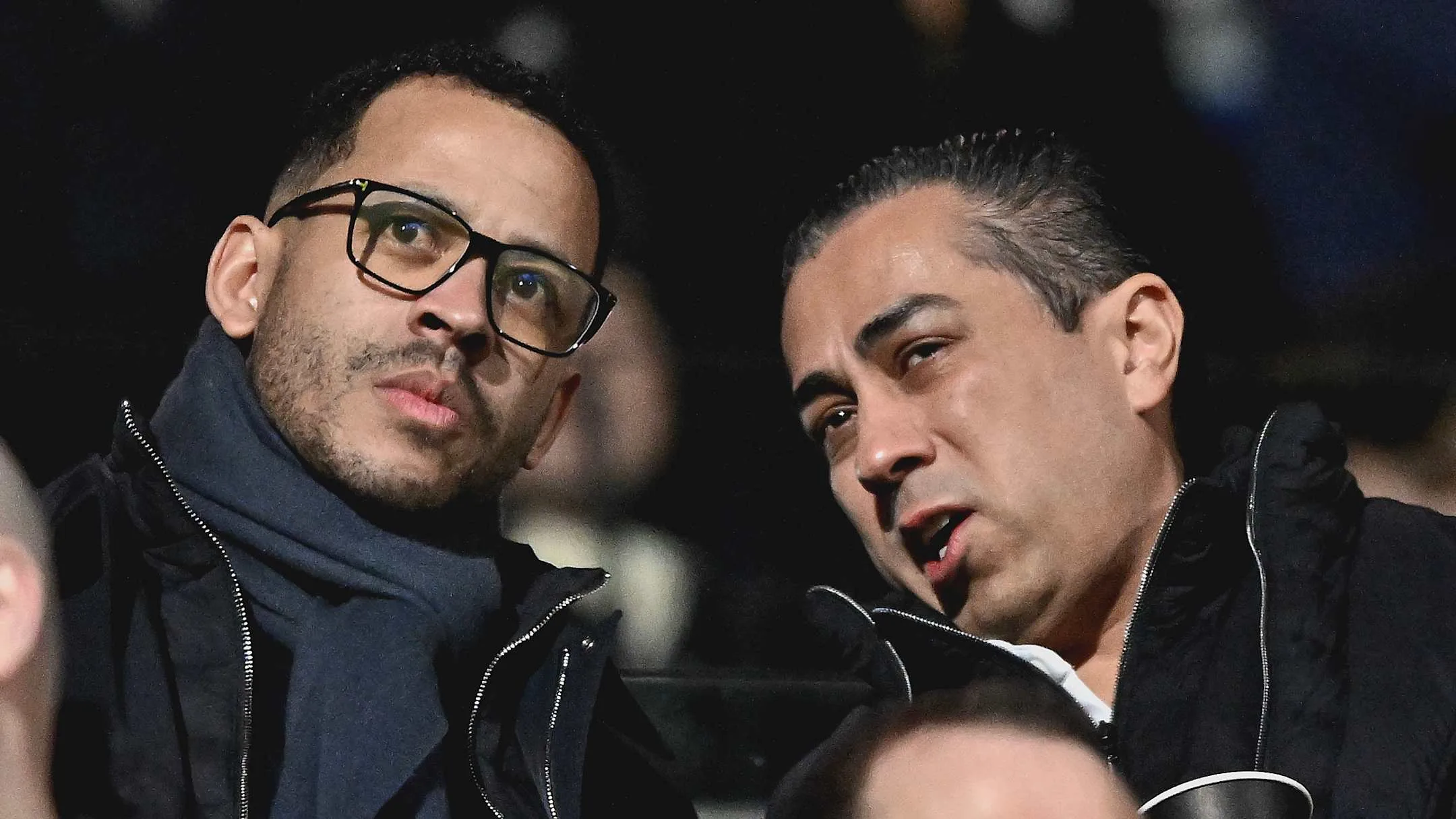
Liam Rosenior used his first Chelsea press conference to draw a clear line under suggestions he will defer to ownership. Having spent the previous 18 months coaching Chelsea’s sister club Strasbourg, where a similar structure is in place, Rosenior was at pains to say he will not be a figurehead.
Maresca’s frustrations with the club’s influential sporting directors and gaggle of co-owners reportedly stemmed from a constant need to defend himself and a sense that his recruitment calls were ignored. The former Leicester City boss saw requests for another centre back last summer and appeals for more senior players around the turn of the year fall on deaf ears.
Rosenior, 41, who had spells at Derby County, Hull City and Strasbourg and is a former Brighton fullback, was explicit: “I don’t think it’s possible to ever be in this job and not be your own man,” Rosenior declared at his first Chelsea press conference, which he prefaced by shaking the hand of every media representative present. “People will see through you straight away.
“I will make the decisions at this club, that’s why I’ve been brought in.
“I understand, I’m not an alien, I know what’s being said in the press but there’s no way you can be successful as a manager if you don’t make the decisions for yourself.”
He refused to adopt the more high-profile profile associated with recent predecessors but projected calm confidence. “I’m not arrogant, I’m good at what I do,” he shrugged.
Rosenior stressed his record: “In every job I’ve worked, whether as an interim, assistant, head coach, relative to the group I’ve worked with, I’ve been successful. I’ve always wanted to be at a club like this but it’s not about just being here, it’s about being successful.
“Nobody can guarantee wins but at the same time I’ve worked very hard for a long time to try and put myself in a position where I can be successful.”
Rosenior watched on as Chelsea lost 2–1 at Fulham, extending a five-match winless run that leaves the club eighth and 18 points behind league leaders Arsenal. He remained measured: “Hopefully, I can add my own ideas, sometimes a different voice helps, but the players haven’t been far away.” He called prioritising competitions “crazy” and highlighted positives around training and player quality.




Chelsea
Three Standouts from Gameweek 29: Palmer, Wharton and Garner
Gameweek 29 standouts Cole Palmer, Adam Wharton and James Garner impressed in Premier League action.

Shock results dominated the midweek slate, none more notable than Wolverhampton Wanderers’s last-gasp win over Liverpool. The round was less chaotic than the weekend, but several individual displays caught the eye of statisticians at FotMob.
Cole Palmer (Rating: 8.6) was central to Chelsea’s response in the Midlands. Chelsea had looked likely to suffer a fourth Premier League match without victory after conceding early at Aston Villa, but they recovered to secure a 4–1 win and capitalise on slips from Liverpool and Man Utd in the race for Champions League qualification. As he’s so often been at Chelsea’s best, Cole Palmer was integral to an important win in the Midlands. The attacking midfielder returned to the scoresheet as he rattled beyond Emi Martínez for his side’s third of the evening, a rare non-penalty goal these days, and his general play laid the foundations for an impressive attacking display.
Adam Wharton (Rating: 8.6) returned to form for Crystal Palace as the Eagles recorded a significant 3–1 away victory at London rivals Tottenham Hotspur. Wharton offered a composed head amid a frenetic end to the first half, supplying two assists to complete Palace’s quick-fire comeback. The first was a simple pass to Jørgen Strand Larsen but the second was a sumptuous through ball poked home by two-goal Ismaïla Sarr.
James Garner (Rating: 8.7) continued a quietly excellent season in Everton’s midfield during their 2–0 win over Burnley. Garner’s set-piece quality provided the opening goal; a teasing free kick delivery to the far post led to James Tarkowski’s opener. He finished the game with more touches than anybody else on the pitch and a match-high 13 defensive contributions, underscoring how influential he has been in Everton’s engine room this campaign.
These three performances were among the brightest in Gameweek 29, each combining tangible statistical impact with decisive moments that helped their teams on the night.
Chelsea
Pedro Neto’s Arsenal Sending-Off Triggers FA Charge That Could Extend Suspension
Pedro Neto faces an FA charge that could extend his suspension after being sent off against Arsenal.
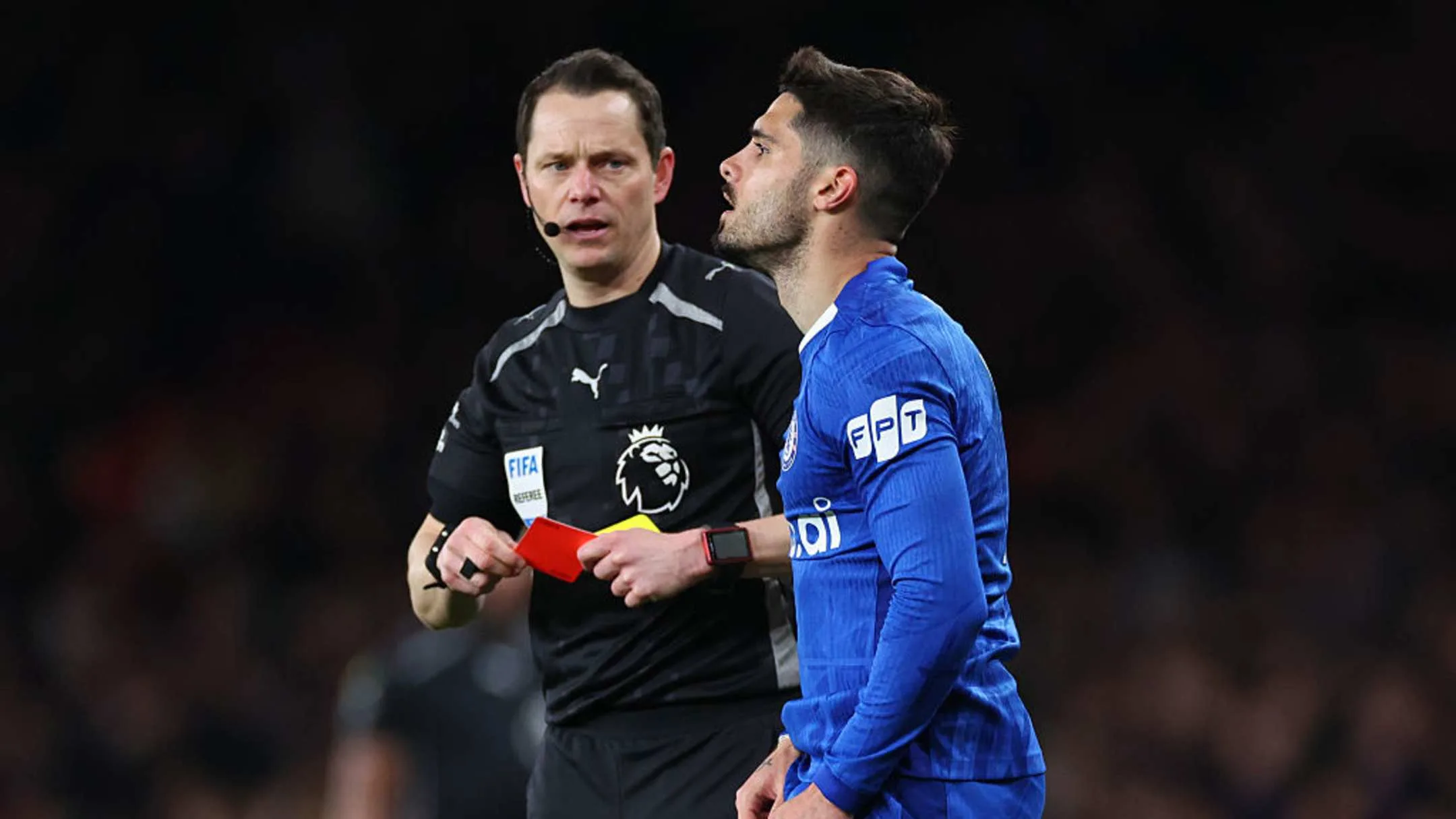
Pedro Neto’s dismissal at Arsenal has developed into a disciplinary case that could keep the Chelsea winger out for longer than the automatic one-match ban. The FA have charged Neto with allegedly “acting in an improper manner” towards referee Darren England, citing that he “failed to leave the pitch promptly and/or used abusive words towards the match officials.”
The red card followed two yellow cards, and Neto’s reaction on the touchline is under scrutiny. He confronted Darren England, then engaged in an exchange with fourth official Stuart Attwell while walking the perimeter of the Emirates Stadium pitch before Chelsea staff escorted him down the tunnel. The sending off produced an immediate one-match ban, which Neto served in Wednesday’s night game with Champions League qualification rivals Aston Villa.
Chelsea did not suffer for his absence in that match. They dismantled Villa 4–1 at home, propelled by a hat-trick from João Pedro. Neto remains a highly regarded right winger, described in the original report as one of the best in his position, but the FA’s additional charge could add at least one more match to his ban if he is found guilty. Neto, the former Wolverhampton Wanderers ace, has until Monday, March 9 to respond to the charge.
Manager Liam Rosenior confirmed Neto had apologised to the squad for the red card and placed the incident in the context of wider disciplinary concerns. Rosenior said: “It needs to improve. My job is to create a culture of accountability, where if you make a mistake it’s OK, you hold your hands up and make sure it doesn’t happen again. But you have to hold your hands up to the original mistake.
“If I make a wrong team selection or I get something wrong, my job is to be accountable. It’s the same for my players in that moment.”
He added: “I just need to see an improvement in the behaviour now. It’s not just Pedro. People speak about dissent; we’ve had needless bookings in terms of fouls. If we are to improve and get to where we want to be, we have to make a conscious step now to make sure it doesn’t happen again.”
The incident follows a difficult start against Unai Emery’s side, where Douglas Luiz opened the scoring after 125 seconds, a blow that came despite a pre-match huddle around the centre spot.
Chelsea
Rosenior points to dressing-room unity after Chelsea’s centre-circle huddles
Rosenior hailed team unity after Chelsea’s pre-kickoff huddles and João Pedro’s hat trick. This week
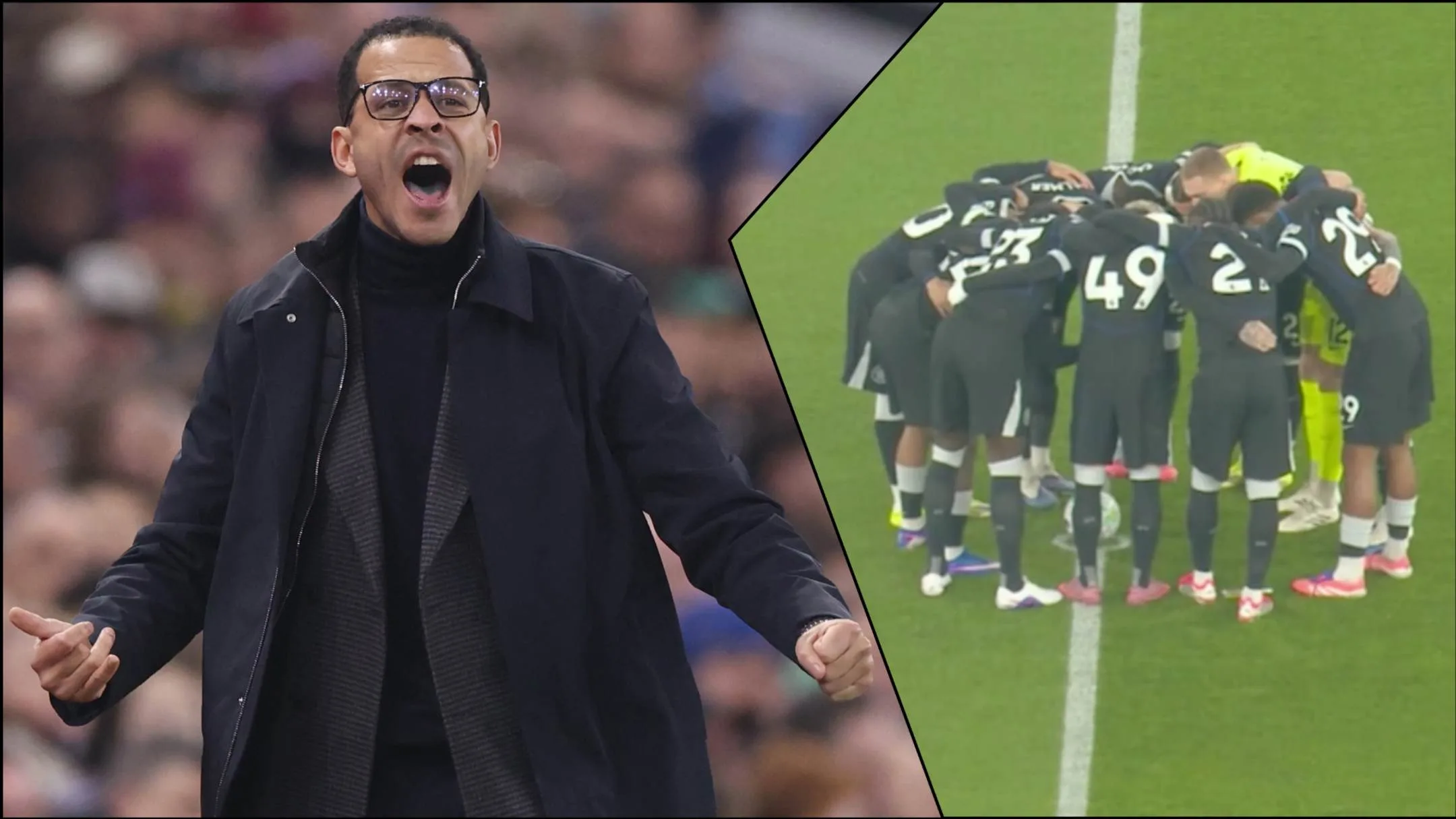
Chelsea’s 4–1 victory at Villa Park on Wednesday is bound to be remembered for João Pedro’s first Premier League hat trick, but the posturing before both kickoffs drew as much attention as the goals.
Seconds after Chelsea started the match, Douglas Luiz put Aston Villa ahead inside 125 seconds with a well-taken opener. The visitors levelled through João Pedro in the 35th minute, and he then put his side ahead in the sixth minute of stoppage time.
Before the opening whistle the Chelsea players gathered in a tight huddle around the ball at the centre circle, and they repeated the ritual before the second-half restart. Amadou Onana and Ollie Watkins appeared impatient as Chelsea’s players stayed clustered around the ball. The Villa Park crowd reacted first with confusion and then with loud boos as the second half began.
For Chelsea’s manager the scene was a welcome sign rather than a provocation. “That comes from unity,” Rosenior told BBC’s Match of the Day after Chelsea climbed up to fifth place, three points behind Aston Villa. “That comes from the players. It doesn’t come from me. As their manager, it makes me really proud to see.
“They’ve taken a lot of message on board from not just myself, but from the staff. Willie Isa is a top man and he’s from rugby, he’s from New Zealand, and he’s spoken a lot about our togetherness and the players have taken it on board.”
Willie Isa was appointed as the club’s player support and development officer in February 2025, a month after his professional retirement. Isa spent a decade and a half at club level and made more than 300 appearances before representing his nation, but those appearances came in rugby league rather than soccer.
Isa’s former head coach at Wigan Warrior, Matt Peet, was confident about the appointment. “He is a cultural architect,” Peet told The Athletic upon Isa’s appointment. “He will make the environment better and all the individuals around the environment better. Ignore the different shape of the ball that he is associated with, Willie’s skill set is all about high-performing teams, leadership and dealing with people. ]