Analytics & Stats
Amorim’s Manchester United tenure in numbers: a season of unwanted records
Amorim leaves after 63 games; 15 Premier League wins from 47, 1.23 points per game, record low. 2025


Ruben Amorim departed Manchester United after a 14-month spell that produced a run of statistics which will define his time in charge. Across all competitions he managed 63 games: 25 wins, 15 draws and 23 losses, with United scoring 122 and conceding 114.
The Premier League record was weaker. In 47 league matches Amorim recorded 15 wins, 13 draws and 19 defeats, scoring 66 and conceding 72. Those results yielded 58 points and an average of 1.23 points per game, the lowest points-per-game figure of any United manager in the Premier League era. The previous low was Ralf Rangnick on 1.54.
Amorim’s overall win percentage across all competitions was 39.68%. That sits well below several recent predecessors: Sir Alex Ferguson 61.34%, José Mourinho 58.33%, Erik ten Hag 56.25%, Ole Gunnar Solskjær 54.76%, Louis van Gaal 52.43% and David Moyes 50.98%.
Player usage under Amorim shows Bruno Fernandes leading appearances with 58. Diogo Dalot played 54 times, Leny Yoro 53, Noussair Mazraoui 49 and Manuel Ugarte 49. Goalscoring was concentrated: Bruno Fernandes led with 20 goals, Amad Diallo scored 10, Joshua Zirkzee and Rasmus Højlund both finished on eight, and Bryan Mbeumo contributed seven.
Amorim’s spell also contained several negative firsts. In December 2024 he became the quickest United manager to reach four Premier League defeats, doing so in 10 games, and he was the first manager since 1932 to lose five of his opening 10 across all competitions. The 2024–25 campaign, half of which was spent under his leadership, produced United’s first-ever season without consecutive wins and ended with club records for fewest wins (10), fewest goals (42), fewest points (39) and most defeats (17).
The 2025–26 season began poorly as Amorim became the fastest manager in Premier League history to reach 15 defeats, reaching that mark in his 28th league game. His final match, a 1–1 draw with Leeds United, completed a run of 15 consecutive away Premier League games without a clean sheet for United.







Analytics & Stats
Opta Supercomputer: Tight Premier League Relegation Picture After Tottenham Defeat
Opta’s model predicts a close relegation battle: Leeds, Tottenham, Forest and West Ham all involved
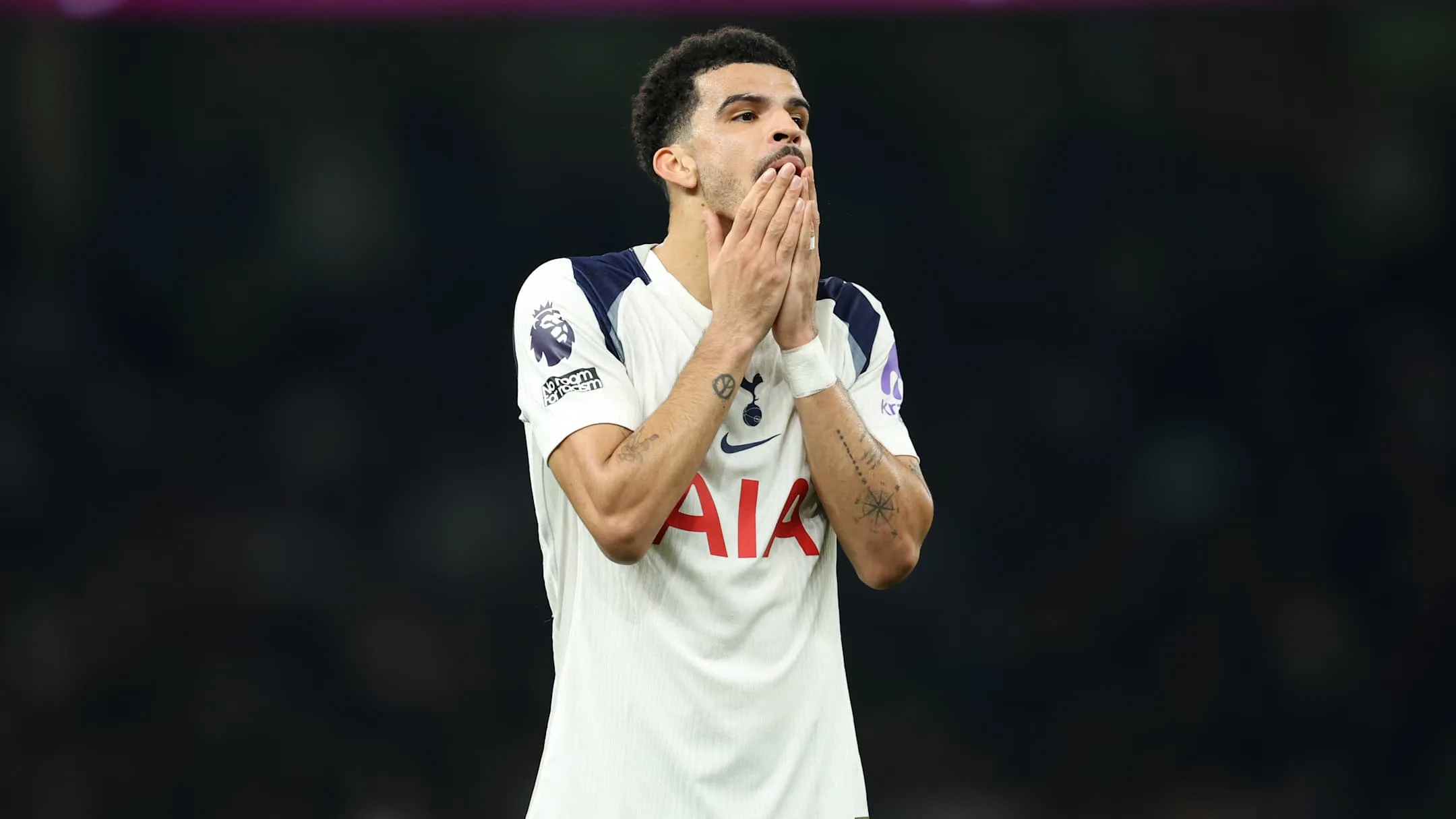
The relegation battle in the 2025/26 Premier League tightened significantly after Tottenham Hotspur’s 3-1 defeat to Crystal Palace. Positive results for West Ham United (a 1-0 win over Fulham) and Nottingham Forest (a 2-2 draw at Manchester City) left both clubs level on 28 points and intensified the fight at the bottom.
Leeds United remain precarious. Daniel Farke’s side sit 15th, just three points clear of the current relegation group, making this a contest that could shift quickly.
Opta’s supercomputer produces the following projection for the bottom six:
– Leeds: current 31 points, expected 42.09, relegation chance 8.09%
– Tottenham: current 29 points, expected 40.04, relegation chance 16.10%
– Nottingham Forest: current 28 points, expected 39.08, relegation chance 26.88%
– West Ham: current 28 points, expected 37.49, relegation chance 49.53%
– Burnley: current 19 points, expected 27.07, relegation chance 99.36%
– Wolves: current 16 points, expected 24.62, relegation chance 99.92%
Wolverhampton Wanderers have improved form after a draw with Arsenal and successive wins over Aston Villa and Liverpool, but the supercomputer underlines that their season was effectively over months ago, with the club not recording a victory until the 20th game. Burnley sit 10 points adrift; Opta’s model projects only eight more points for the Clarets and expects their return to the Championship to be confirmed well before the final day.
The model largely maintains the current ordering and gives West Ham the highest chance of relegation among the quartet fighting to avoid the drop into the second tier. Forest are forecast to finish two points clear of the relegation places, with Tottenham projected to reach 40.04 points and stand as the final side to reach the 40-point threshold. Opta assigns a 16.10% chance of relegation to Igor Tudor’s side, a near doubling of their previous prediction before Thursday’s defeat. The fixture between Tottenham and Forest on March 22 now carries clear significance for both clubs.
Analytics & Stats
Opta Rankings: Which Premier League Sides Have the Hardest Remaining Fixtures
Opta rankings expose which Premier League sides face the toughest remaining fixtures this season…

We are deep into the final quarter of the Premier League season and Opta’s Power Rankings make clear which clubs face the steepest tests. The dataset lists mean difficulty scores for each side’s remaining fixtures, with Wolves (88.83) and Leeds (89.38) among the friendlier schedules and Everton (92.57) and Crystal Palace (92.30) toward the more difficult end.
The full set of mean difficulty figures runs from Wolves at 88.83 up to Everton at 92.57, with notable entries including Brighton (90.13), Aston Villa (90.28), Arsenal (90.30), Tottenham (90.49), Brentford (90.64), Nottingham Forest (90.72), Sunderland (91.06), Newcastle (91.21), Manchester United (91.33), Bournemouth (91.40), Fulham (91.40), Manchester City (91.44), Liverpool (91.52), Burnley (91.66), Chelsea (91.70), West Ham (92.01), Crystal Palace (92.30) and Everton (92.57).
Chelsea supporters will be concerned: Opta shows the Blues have the highest mean difficulty among the top-seven sides. The report notes Chelsea have taken points from Liverpool, Manchester City and Aston Villa, and still have to face Liverpool and Manchester City again.
In the title race, the rankings suggest Arsenal hold a scheduling edge over Manchester City. Arsenal’s only remaining match against a current top-seven side is the trip to City in April. City, by contrast, still face Chelsea, Aston Villa and Arsenal, plus potentially testing away fixtures at Everton and Bournemouth.
Aston Villa, meanwhile, register one of the clearest runs among the teams competing for Champions League qualification, with a relatively straightforward closing schedule according to the numbers.
Manchester United and Liverpool both confront tricky finishes as they chase a top-five place; United’s path includes games against Villa, Chelsea and Liverpool, while Liverpool must play Chelsea, Villa and travel to Old Trafford in the closing weeks.
At the other end, Tottenham, Leeds, Nottingham Forest and Bournemouth occupy varied positions on the difficulty scale, with Leeds and Wolves among the clubs with the kinder runs remaining.
Analytics & Stats
What Manchester United Must Learn After Carrick’s First Loss
Carrick’s first defeat shows missed big chances, midfield imbalance and the thin margins in results.

Michael Carrick’s first defeat since becoming interim manager in January exposed several clear lessons for Manchester United. The run that followed his appointment — six wins from his first seven games, a draw with West Ham United and an unbeaten stretch that, when combined with his 2021 caretaker spell, extended to nine league matches — had masked deeper issues. Only Herbert Bamlett (1927) and Ole Gunnar Solskjær (2018–19) had matched similar starts in the club’s history.
Senne Lammens called the performance at St James’s Park a “a collective off-day” that the players now “have to learn from.” Since beating Arsenal on Jan. 25, Manchester United haven’t been brilliant. Results continued largely because of resilience rather than dominance: the Fulham victory required a 94th-minute winner from Benjamin Šeško; Spurs spent more than half the game with 10 men after Cristian Romero’s red card; Everton was another narrow win courtesy of Šeško; and United were trailing against Crystal Palace until the Eagles were reduced to 10 early in the second half.
Newcastle followed a similar pattern. Even after the Magpies had a player sent off in the first half, a Newcastle penalty and an individual strike from William Osula turned a potential narrow victory into a narrow defeat. FotMob’s numbers underline the difference: United led overall attempts (14–12), shots on target excluding penalties (5–4) and ‘big chances’ (4–3), but missed three ‘big chances’ to Newcastle’s two. That matched the total of big chances missed across the three previous matches combined.
Casemiro scored United’s equaliser deep into first-half stoppage time, his 36th goal involvement since joining the club, but he is a traditional No. 6 and is leaving in a matter of months. Kobbie Mainoo offers quality as a deep-lying playmaker, yet United lack an all-round box-to-box engine on the scale of Sandro Tonali, Declan Rice, Moisés Caicedo or Tijjani Reijnders. Under Sir Alex Ferguson, United often recruited opponents’ best performers — Wayne Rooney, Roy Keane, Andy Cole, Dwight Yorke, Teddy Sheringham, Robin van Persie and even Carrick himself — which makes Tonali a summer target to consider.
Time in-season is precious; fixture congestion after Christmas leaves little room to regroup. That scarcity of recovery and reflection only increases the cost of missed chances and midfield imbalance.