FPL
Hugo Ekitiké Linked with £8.5m Fantasy Premier League Price Following Liverpool Move
Hugo Ekitiké enters Fantasy Premier League at £8.5m following Liverpool transfer and preseason start.

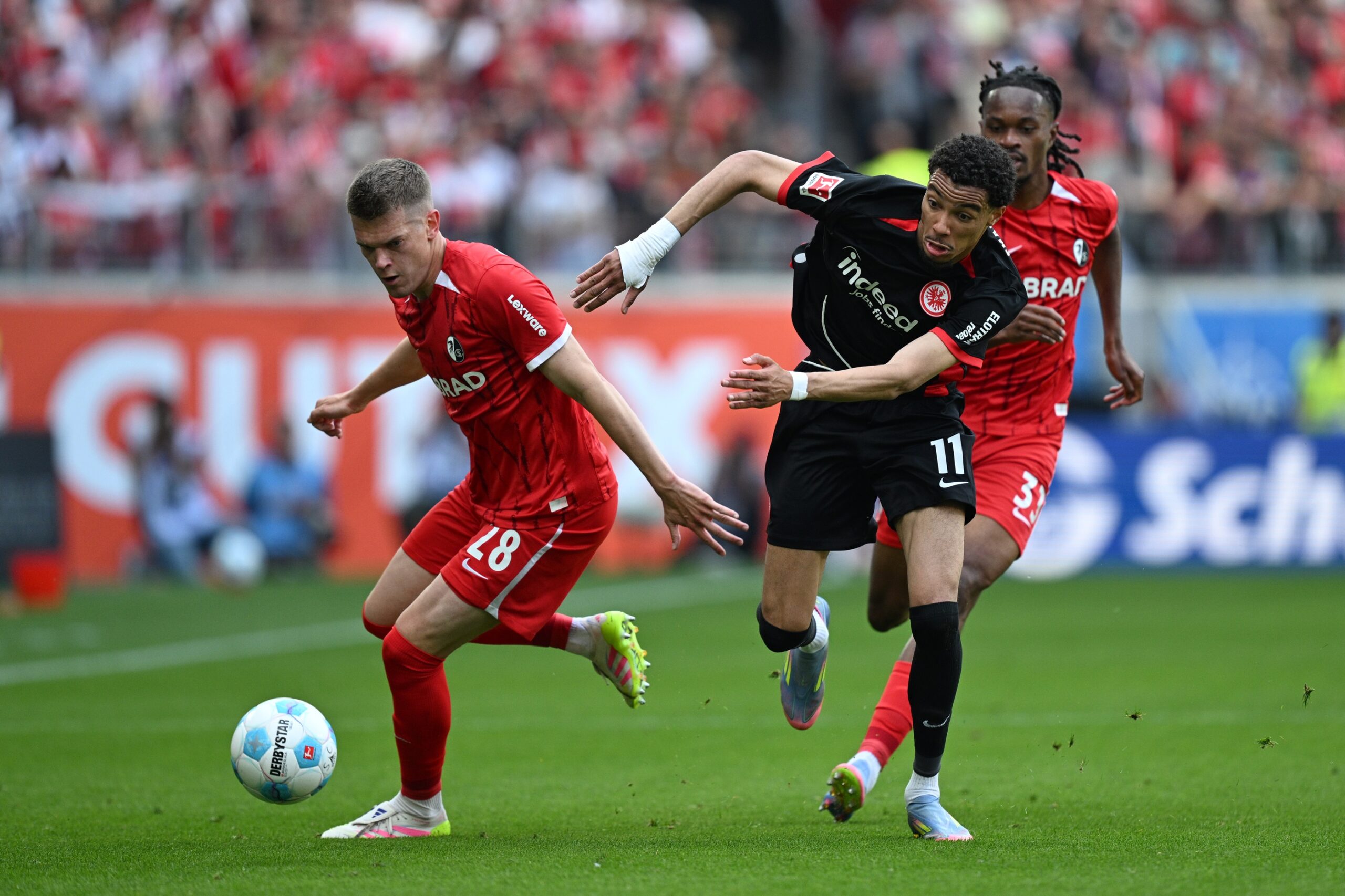
Hugo Ekitiké has been assigned a Fantasy Premier League value of £8.5 million as the 2025/26 season approaches, offering managers an intriguing new forward option. The French striker recently completed his transfer from Eintracht Frankfurt to Liverpool, joining compatriot Florian Wirtz and fellow newcomers Jeremie Frimpong, Giorgi Mamardashvili, and Milos Kerkez on Merseyside.
Ekitiké has already begun pre-season duties in Asia, integrating with his new team ahead of Liverpool’s campaign kickoff. His initial FPL valuation matches that of Florian Wirtz, though it remains to be seen how quickly he will settle into Brendan Rodgers’s attacking setup.
Liverpool’s opening fixture at Anfield against Bournemouth is expected to feature Ekitiké leading the attack. However, the precise offensive formation is yet to be finalized, with options including Wirtz playing either centrally or on the left wing, and the presence of established attackers Cody Gakpo and Luis Díaz—assuming Díaz remains with the club. Pre-season matches against AC Milan, Yokohama F. Marinos, Athletic Club, and the FA Community Shield are likely to provide clarity on the team’s attacking roles.
Ekitiké’s performances in these fixtures, particularly in the Wembley Community Shield against Crystal Palace, will be key in determining his suitability as an FPL asset. Should he impress, he might represent a cost-effective alternative in the forward line. However, Fantasy managers may opt for more proven selections such as Erling Haaland or take a risk on other new arrivals like Viktor Gyökeres.
Additionally, ongoing transfer speculation surrounding Alexander Isak could further influence FPL strategies during the summer window.
For those looking beyond player choices, a selection of creative FPL team names for the season is also available to inspire managers.







Fixtures
GW10 Gibbs-White: hold or switch to Tavernier?
Keep Gibbs-White with cover unless a sale funds a clear upgrade. Tavernier offers a cheaper GW10 starter; compare the saving and the next fixtures.

Keep Gibbs-White for GW10 if you can cover Manchester City at home and have no clear use for the money from a sale. Tavernier offers a cheaper route to a starting midfielder, but make the switch to improve your squad rather than to escape one difficult fixture.
At current purchase prices, Gibbs-White costs £7.9m and Tavernier £6.6m. That £1.3m gap deserves attention if it pays for an upgrade you want elsewhere. Check your own selling price before planning the move: your available budget may differ from the gap between their purchase prices.
Gibbs-White has a case for patience
Gibbs-White has averaged 90.0 min/match, with 0.60 expected goal involvements per 90 minutes. That combination gives owners a reason to keep him when the rest of the XI looks strong enough.
Manchester City at home makes GW10 an awkward week to need a return. You can bench him if you have a stronger alternative, though keeping him does not require benching him. Judge that choice against the player who would take his place.
Forest then face Bournemouth away in GW11, Chelsea at home in GW12 and Hull City away in GW13. Consider those matches before using a transfer on a one-week escape. You may want Gibbs-White back in your XI once the City fixture has passed.
Our hold recommendation applies to existing owners with cover. A manager buying a midfielder for GW10 faces a different decision and can choose Tavernier without paying for a sale first.
Tavernier offers a useful saving
Tavernier has averaged 83.3 min/match and recorded 0.61 expected goal involvements per 90 minutes. His attacking involvement rate is close to Gibbs-White’s, at a lower purchase price. Gibbs-White has the stronger playing-time average; neither player’s historical rate guarantees future points or starts.
Bournemouth visit Ipswich Town in GW10, then host Forest in GW11. For a manager who needs a midfielder to start now, we lean Tavernier. He offers the immediate fixture and leaves more money for the rest of the squad.
The later schedule needs attention too: Fulham away in GW12, Brighton at home in GW13, Hull City at home in GW14 and Arsenal away in GW15. Pick the matches in which you intend to start him before committing to the transfer.
You can map both transfer plans in We Play FPL, using future squad drafts to compare your planned line-ups across several Gameweeks. Include the second purchase that the saving would fund, so you judge the effect on your whole XI.
Spend the saving with a purpose
Sell Gibbs-White for Tavernier if you need the GW10 starter or can name a worthwhile improvement that the released money funds. A vague intention to spend the money later gives you less reason to move now.
Keep Gibbs-White if you can field a strong XI, have cover for the City match and would leave the saving unused. You retain his playing-time record and avoid spending a transfer on a problem your bench can cover.
Before confirming either plan, refresh prices and team news. For an existing owner, we lean towards holding until the sale solves a specific squad problem. For a new GW10 purchase between these two, Tavernier gets our vote on price and the immediate fixture.
Differentials
GW9 budget midfield: Tonali, Enciso or Rudoni?
Tonali offers playing time and defensive contributions, Enciso more attacking involvement, and Rudoni a saving. Match the choice to your planned starts.

Pick your cheapest playable midfielder around the job he needs to do. At £5.3m, Sandro Tonali offers a strong playing-time record and more defensive contributions than Julio Enciso or Jack Rudoni. Enciso gives you more attacking involvement for another £0.2m. Rudoni costs £4.9m, with a shorter average appearance to weigh against the saving.
We would consider Tonali for a slot that needs dependable playing time, Enciso when attacking returns take priority, and Rudoni when the extra cash improves another starter. Each choice involves a compromise. Decide your planned starts before spending a transfer on a small price difference.
Tonali: playing time with a defensive contribution caveat
Tonali has averaged 87.1 minutes per match for Spurs. His 10.07 defensive contributions per 90 minutes, or DefCon/90, exceed Enciso’s 6.84 and Rudoni’s 7.95. He has the strongest case of the three if you want playing time and a route to extra points through defensive work.
Keep your expectations measured. Across his last six league matches, Tonali recorded 12, 11, 11, nine, 15 and 12 defensive contributions. Those near misses show why you should allow for matches without a defensive contribution return. A season average cannot tell you which side of the scoring threshold he will finish on in a particular fixture.
He also has the lowest attacking involvement rate in this comparison: 0.21 expected goal involvements per 90 minutes, or xGI/90. You accept less attacking threat in exchange for his playing-time record and defensive contribution rate.
Spurs host Crystal Palace in GW9, visit Leeds in GW10 and host Ipswich Town in GW11. Tonali fits a plan that needs cover across those weeks, provided the final team news supports his selection. His average playing time describes his record so far; it guarantees no future start.
Enciso: pay £0.2m for more attacking involvement
Enciso costs £5.5m and has averaged 80.6 minutes per match for Ipswich Town. At 0.46 xGI/90, he has offered more than twice Tonali’s attacking involvement rate. You pay £0.2m extra for that route to returns while accepting a lower defensive contribution rate and less playing time per appearance.
His immediate fixtures are Hull City away in GW9 and Bournemouth at home in GW10, followed by Spurs away in GW11. Check whether you need him for that third fixture before treating him as a purchase for the whole run.
We would lean towards Enciso over Tonali if the £0.2m leaves your other plans intact and you want attacking potential from this midfield slot. Expected goal involvements measure season-to-date performance, so avoid reading 0.46 as a forecast for the next match.
Rudoni: the saving comes with a playing-time trade-off
Rudoni costs £0.4m less than Tonali and £0.6m less than Enciso. He has averaged 69.4 minutes per match for Coventry City, alongside 0.52 xGI/90 and 7.95 DefCon/90.
His attacking involvement rate leads this group, but he has played fewer minutes per appearance. Compare the time you expect him to spend on the pitch as well as his per-90 threat. Do not add a permanent penalty role to his buying case while that role remains uncertain.
Coventry host Sunderland in GW9, visit Everton in GW10 and host Crystal Palace in GW11. Rudoni makes sense when you can use those home fixtures and spend the saving on another starter. A cheap substitute you seldom select may be enough; a midfielder you need for several consecutive starts deserves a closer look at playing time.
Choose the slot before making the transfer
All three have the official FPL midfielder classification and current available status. Availability alone confirms no place in the starting XI. Recheck the team news before the GW9 deadline.
Map out the starts you need and compare the midfield options in We Play FPL, where you can review player statistics and upcoming fixtures side by side. Use that comparison to test whether the saving improves your intended XI.
Our preference depends on the squad: Tonali for his playing-time record and defensive work, Enciso for more attacking involvement at a modest extra cost, or Rudoni to release money for a specific upgrade elsewhere. Keep your current enabler if a sideways move leaves the rest of your team no better off.
Chip Strategy
GW9 Liverpool defence: Jacquet, Araujo or Van Dijk?
Jacquet offers Liverpool defensive value at £5.1m; Van Dijk has the stronger playing-time record. Compare the price tiers and plan your starts from GW10.

Jeremy Jacquet is our first Liverpool defender to consider if you want to keep the cost down. At £5.1m, he costs £0.3m less than Ronald Araujo and £1.3m less than Virgil van Dijk. His playing-time record and defensive contribution rate make that saving worth taking seriously.
For a new purchase, we would reassess after Arsenal at home in GW9. You can then decide whether Liverpool’s GW10–14 fixtures suit the weeks you need a defender. Van Dijk offers the stronger playing-time record if you have room for £6.4m; Araujo needs a clearer reason for the extra spend over Jacquet.
Jacquet offers the cheaper route
Jacquet has averaged 85.3 minutes per match, with 9.37 defensive contributions per 90. Araujo has averaged 61.6 minutes per match and 7.85 defensive contributions per 90. Neither average promises a future start, but Jacquet has given owners more playing time so far.
The attacking numbers offer little reason to pay up for Araujo. Jacquet has 0.07 expected goal involvements per 90 (xGI/90), compared with Araujo’s 0.02. Both rates are low, so we would buy either for the defensive role and budget fit rather than an expectation of regular attacking returns.
Araujo has the lower expected goals conceded rate: 0.97 xGC/90 against Jacquet’s 1.16. That deserves a place in the comparison, but the players have spent different amounts of time on the pitch. We would not treat it as proof that choosing Araujo gives you a better chance of a clean sheet in the next match.
Our lean is Jacquet when choosing between the two at current prices. Fresh selection news could change that call. Paying another £0.3m makes more sense if you can identify a role or playing-time advantage that the current record does not show.
Van Dijk costs £1.3m more for a stronger minutes record
Van Dijk has averaged 90.0 minutes per match. That is the strongest record of the three, alongside 9.75 defensive contributions per 90. His 1.20 xGC/90 and 0.05 xGI/90 do not establish a large expected-performance advantage over Jacquet.
At £6.4m, we would choose Van Dijk when you can afford the premium and place a high value on his playing-time record. You still need to check availability and selection news; a historical average cannot guarantee his next start.
For a tighter budget, Jacquet leaves £1.3m available elsewhere. Compare what you gain from that saving with the extra playing-time confidence you want from Van Dijk before committing to either player.
Plan the starts from GW10
Liverpool’s schedule after Arsenal includes three away matches in five:
- GW10: Crystal Palace away.
- GW11: Man Utd at home.
- GW12: Everton away.
- GW13: Sunderland at home.
- GW14: Chelsea away.
You need a plan for that whole stretch. A lower price helps, but you may still want another defender available for selected away fixtures. You can compare Liverpool’s defensive options in We Play FPL using player statistics and upcoming fixtures, then map out the starts in the planner.
We would shortlist Jacquet for value and Van Dijk for the stronger playing-time record, then revisit the choice after GW9 with fresh team news. Araujo’s lower xGC/90 merits attention, but his shorter average appearances and higher price leave us preferring Jacquet for the cheaper slot. These season-to-date rates describe past performance; they do not predict clean sheets or attacking returns.