Analytics & Stats
Arteta Defends Arsenal’s Set-Piece Methods as Peers Criticise; Guardiola Urges Adaptation
Arteta defends Arsenal corners after wider criticism; Guardiola insists coaches must adapt on pitch.

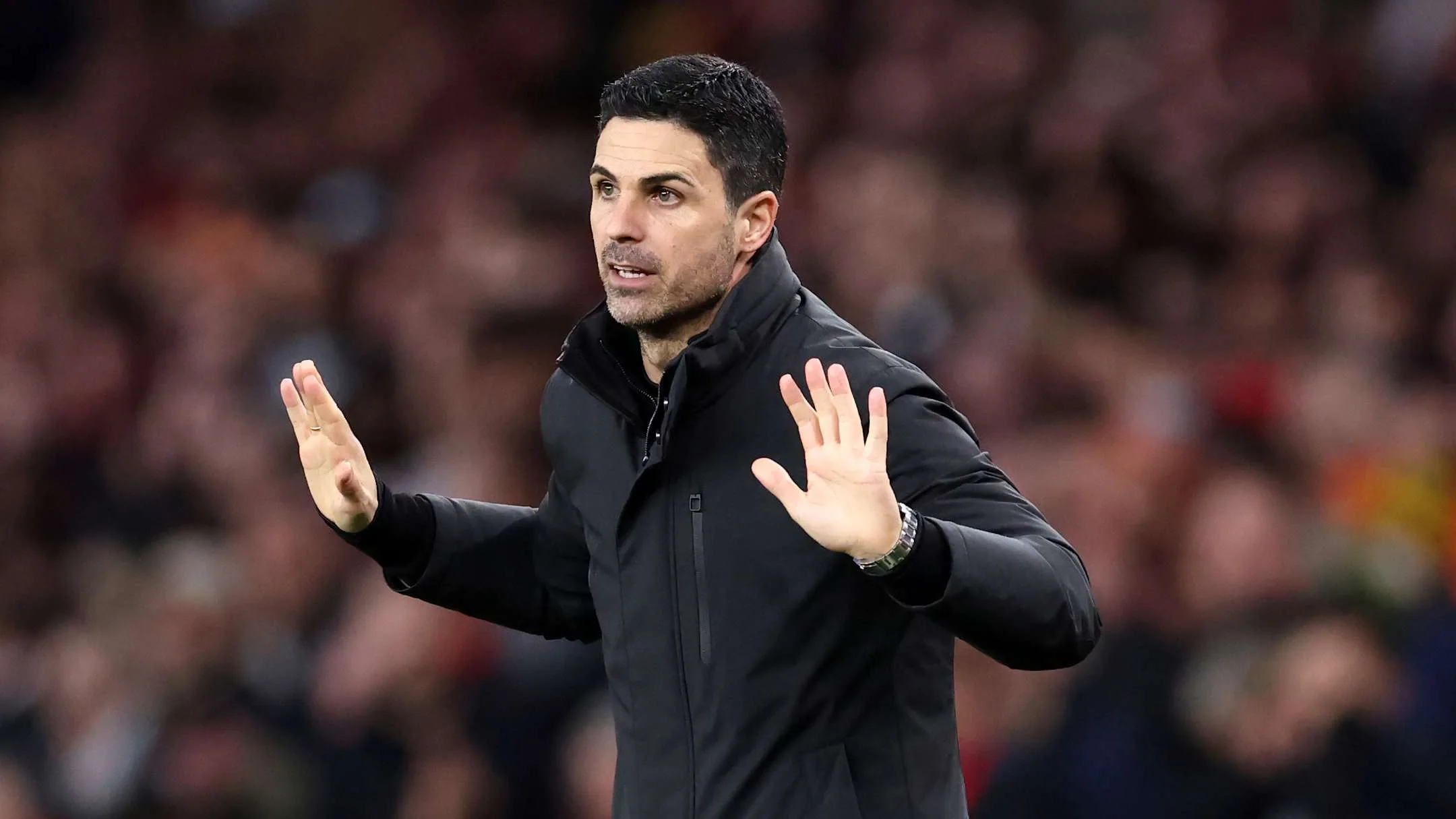
A growing chorus of Premier League managers has taken aim at Arsenal’s set-piece methods, but Mikel Arteta has framed the debate differently: his main concern is that his team have not converted enough dead-ball opportunities.
Liverpool’s Arne Slot led the criticism, lamenting how “his heart as a former player” doesn’t like the rough treatment in penalty boxes. “Here, you can almost hit a goalkeeper in the face and the referee still says, ‘Play on,’” he claimed. Brighton boss Fabian Hürzeler attacked Arsenal’s corner routines more directly: “For me, the main topic is [to] make a clear rule how much time you can waste for a corner, for a throw-in, for a free-kick,” Hürzeler fumed in midweek. “When Arsenal has a corner and they are leading, sometimes they spend over one minute just to take a corner.”
Opta data underpins that complaint: Arsenal take an average of four minutes and 18 seconds to prepare for corners each game, the most in the division. The piece noted it would be quicker to drive from London to Brighton (one hour, 56 minutes) than watch a supercut of Arsenal’s preparations for corner kicks over the course of the entire season (two hours, five minutes).
Michael Carrick added his voice: “It wasn’t long ago we were told you couldn’t lay a hand on anyone in the box and it would be stamped out,” he grumbled. “It’s crept in. The success of set pieces, corners in particular, probably in terms of being able to put so many bodies close together, has made more teams do it because the success rate is so high.
“It’s understandable why there are so many teams doing it. As a game, it doesn’t feel like we’ve got that balance right.”
Arteta, refusing to be drawn on the timing criticism, called it “part of the job.” He added: “I am upset we haven’t scored more and that we have conceded [from set pieces] as well. We want to be the best and most dominant team in every aspect of the game. That is the trajectory and the aim of this team.”
Arteta argued the broader issue is the evolution of man-to-man marking: “There are phases, and there are moments when a team has an opportunity to do certain things, and the game is evolving, and the game is becoming more and more difficult [in open play],” he fretted. He pointed to a Chelsea match in which Liam Rosenior’s use of Cole Palmer and Enzo Fernández bamboozled Martín Zubimendi. Arteta adjusted the brief so Zubimendi would only deal with Fernández while one of Gabriel or William Saliba tracked Palmer; Chelsea scarcely had a sniff thereafter.
WhoScored data shows set-piece goals across major leagues: Premier League 202 (25.6%), Serie A 155 (23.6%), Bundesliga 145 (21.2%), La Liga 128 (18.6%), Ligue 1 99 (16.4%).
Pep Guardiola chose restraint. “I understand completely the reason why Arne said that and in some aspects I agree,” Guardiola conceded. “You can sit and complain, but you have to adapt,” Manchester City’s revered tactician insisted. “You have to adapt and especially adapt in the way it is whistled [refereed] and conducted in the Premier League.” He added: “Football is about how, when the opponents create problems for you, you have to find a solution.”






Analytics & Stats
Matchday 10 in Review: A Chaotic Premier League Weekend Across the Table
Matchday 10 delivered landmark wins, costly mistakes and more pressure on several Premier League clubs.

Ten matches into the 2026/27 Premier League season, the picture remains unsettled. Matchday 10 brought landmark moments, costly errors and a few results that will sit uneasily with clubs still trying to define themselves.
Everton opened the weekend with a win that gave David Moyes a notable milestone, while Chelsea and Manchester City both suffered further damage to their title hopes. Liverpool responded well after last weekend’s defeat, Arsenal kept another surprise result at bay, and Manchester United against Aston Villa delivered the kind of frantic contest that refuses to behave itself.
At the sharp end, Manchester City’s visit to Nottingham was shaped by a costly defensive display, with Joško Gvardiol, Elliot Anderson and Marc Guéhi all part of the story. It left Enzo Maresca under increasing pressure after a third straight loss, with supporters growing restless.
Chelsea’s defeat was equally troubling. João Pedro’s absence was felt badly, and the opening 20 minutes were particularly poor, with the midfield and attack failing to win a duel or a tackle. Levi Colwill’s half-time substitution after conceding the penalty felt, in effect, like a rescue move from Xabi Alonso.
Elsewhere, Brentford’s 200th Premier League match ended without a shot on target, while Igor Thiago’s red card gave Michael Oliver a decision to make. Tottenham, meanwhile, had the ball at Elland Road but not the threat to match it, taking only seven shots and producing just 0.72 xG.
Ipswich again left with nothing despite not being overwhelmed, and Gary O’Neil was clear about the errors behind both goals: “If you give the ball to the opposition number nine twice, then it’s going to be difficult. So that was basically the story of the game, really.”
There were brighter moments elsewhere. Everton’s second-half surge produced a strong win, Bournemouth made it four league victories in a row, and Leeds ended a five-match winless run. Liverpool’s response against Crystal Palace was built on a goal and assist from Florian, while Brighton’s comfortable victory over another B side kept talk of an unlikely title challenge alive.
Analytics & Stats
Opta forecast sends Man Utd deeper into danger as Arsenal stay clear at the top
Opta’s latest projections put Manchester United in danger while Arsenal remain strong title favourites.
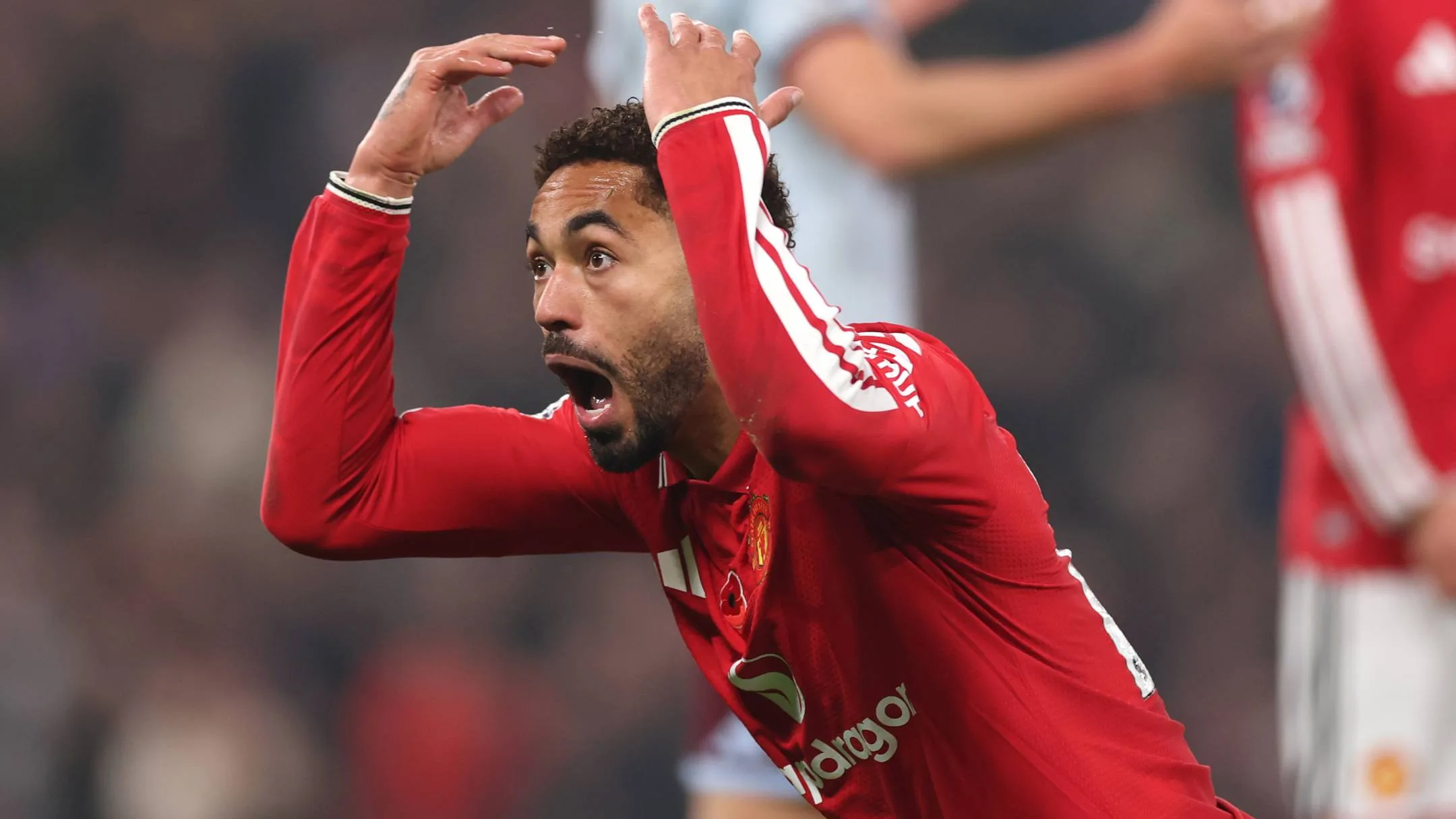
Opta’s latest supercomputer forecast paints a bleak picture for Manchester United, with the club projected to finish 13th on 44.26 points and carrying a 21.58% relegation chance. That comes after Michael Carrick’s side were confirmed in the relegation zone following Sunday’s 4-4 draw at Old Trafford, a result that leaves them 18th in the actual table.
“It doesn’t matter, the table,” Chelsea manager Xabi Alonso insisted heading into the second international break of the season. It is a line that may resonate with several clubs lower down the standings, but the numbers released by Opta suggest United’s situation is especially troubling. The club are set to spend at least 15 days in the relegation zone, their longest stretch since the autumn of 1986.
The model places Newcastle 12th on 47.35 points, with Nottingham Forest, Fulham, Ipswich, Hull, Sunderland, Coventry and Crystal Palace all predicted to finish below them. Crystal Palace, bottom of the projected table, are given a 49.52% relegation chance. In more than one-fifth of Opta’s 10,000 simulations, United are relegated for the first time in half a century.
At the top end, Arsenal are clear favourites to retain the title, projected to finish with 82.29 points and a 74.61% title chance. Manchester City are next on 70.85 points, followed by Brighton on 67.82. Liverpool and Chelsea complete the projected top five, while Brighton are also expected to be strong contenders for a top-four place.
“We’re in November,” Michael Carrick was keen to remind everyone after Manchester United’s position in the relegation zone was confirmed. That may be true, but the wider context is unflattering. No team has gone from a top-three finish to winning just one of their first 10 league games since Arsenal 73 years ago.
Elsewhere, Brighton’s rise is backed by the numbers, while Fulham’s unbeaten four-game run and the struggles of City’s rivals have added further weight to Opta’s projections. Chelsea’s path is less convincing, with concern around their reliance on João Pedro for attacking invention, despite their place in the projected top five.
Analytics & Stats
Michael Carrick’s Manchester United record and how it stacks up against Ruben Amorim
Carrick’s numbers are slipping fast, and United’s latest collapse has revived awkward comparisons.
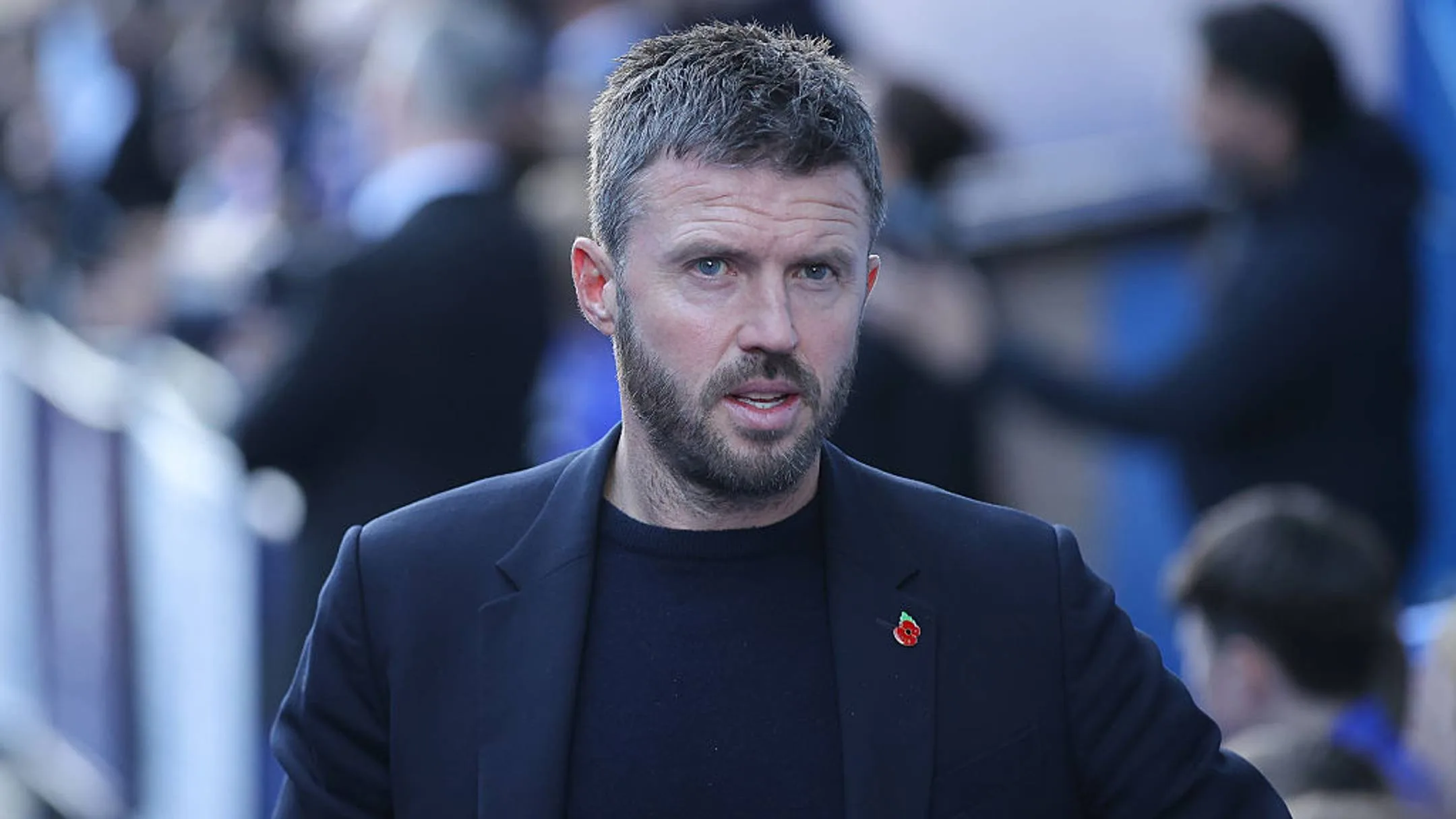
Manchester United have once again settled into a familiar pattern, with Michael Carrick now carrying the burden of a club still searching for stability. As has often happened in the years since Sir Alex Ferguson left, early encouragement has given way to mounting concern.
Supporters may continue to point their frustration in other directions, but the manager remains the figure most likely to absorb the consequences when standards drop. Ruben Amorim understood that reality, even if his own failings at the club were more obvious. He is now in Milan, working to rebuild his reputation after leaving Old Trafford at the start of the year.
Amorim’s time in charge ended with one of the poorest records in modern United history. The question now is whether Carrick, whose own numbers have declined sharply this season, is in danger of sliding beneath that already low benchmark.
The comparison is instructive. Amorim oversaw 63 matches, winning 25 and losing 23, with a 39.7% win rate. Carrick, by contrast, has managed 33 games so far, collecting 16 wins, eight draws and nine defeats, which leaves him on 48.5%.
Amorim’s broader tenure lasted 14 months and included a strong run to the 2025 Europa League final, where United beat Athletic Club in the last four before losing to Tottenham Hotspur in the showpiece. Yet his Premier League record was weaker, with only 15 wins from 47 games and a league win rate of 31.9%.
Carrick’s early spell as interim boss in late 2021 went better, with two wins and a draw from three matches after Ole Gunnar Solskjær departed. Later, after taking over from Amorim in January, no team earned more points from the moment he returned to the Old Trafford touchline until the end of the season than United. They won 12 of 17.
That has not carried over into 2026/27. United have won only two of 13 matches, against newly promoted Ipswich Town and Champions League debutants Sabah. Carrick’s win rate has dropped to 15.4%, while their goal difference stands at -7 after three successive defeats by a combined eight goals.
The warning signs were visible last season. The Guardian reported that United earned 12.7 more points than expected under Carrick, with eight one-goal wins suggesting a run that was difficult to sustain. That fragility has now been exposed. A 2-0 defeat to Chelsea stretched their winless run to nine games, their worst such spell since October and November 1988.