Bayern Munich
Müller: How a 2014 Manchester United Proposal Nearly Redirected His Career
Muller reveals he considered Manchester United in 2014, but Bayern refused to sell him then. openly.


Thomas Müller has confirmed he seriously considered a move to Manchester United in 2014 after receiving what he described as an “interesting” offer at a moment he judged to be right in his career.
“There was a moment, because Louis van Gaal, my most influential coach, was at United and I thought about it, to be honest,” Müller said when he was shown a 2014–15 Manchester United shirt during an appearance on the Away Days YouTube channel. At the time Bayern Munich would not entertain a departure and Müller remained at the club.
Müller had previously come close to leaving Bayern before his breakthrough, nearly joining Hoffenheim in search of regular first-team football until Hermann Gerland intervened. Louis van Gaal’s return to Munich in 2009 had already helped establish Müller as a key figure, while colleagues such as Bastian Schweinsteiger, Philipp Lahm and Holger Badstuber were also reshaped in that era.
“It was an interesting offer [from United] and was the right moment,” Müller reflected. “But I had three years [on my] contract and Bayern denied [a transfer] from the beginning.
“That was also a good feeling for me, that Bayern said, ‘No, we want to keep you any way, no chance to leave.’ Then, I extended my contract and I was happy at Bayern. There was no decision [to make] about not feeling good at Bayern, but it was a nice offer and with Louis van Gaal as a coach, interesting for me.”
By the end of 2013–14 Müller had made 256 appearances for Bayern, scoring 99 goals and collecting 11 trophies including the Champions League within the 2012–13 treble. Manchester United were only a year removed from their last Premier League title but had finished seventh under David Moyes.
In later interviews Müller acknowledged United had tried to sign him “many times.” Louis van Gaal has said efforts were made in 2014 and 2015, with reports of a £70 million proposal and claims from Karl-Heinz Rummenigge that United had tabled a ‘‘mad offer’’. Van Gaal has suggested family hesitancy affected negotiations.
Müller left Bayern the following year and said bluntly: “I’m not the right guy for them and they are not the right club for me,” before joining Major League Soccer. He signed for the Vancouver Whitecaps towards the end of the 2025 regular season and helped them to a second-place Western Conference finish and an MLS Cup final. “Very intense,” he said. “I joined the Whitecaps in August, so I had a crazy four months, right before the playoffs started. We had a good run, the deepest playoff run in the history of the club.”

Arsenal
Ranking the 12 most effective attacking trios in world soccer
A look at the most dangerous attacking trios in world soccer, from Arsenal to Bayern Munich.
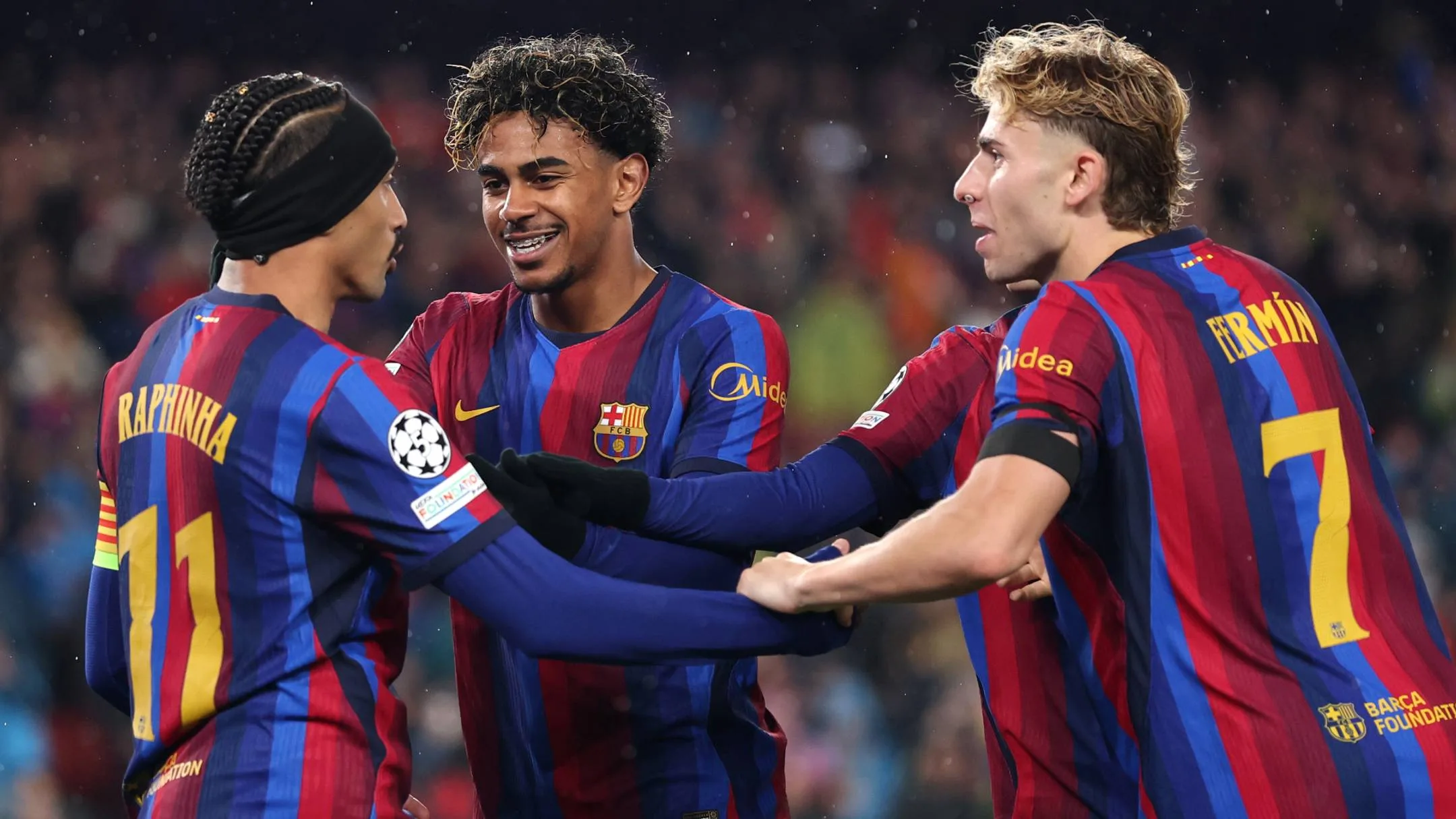
Three forwards used to be a luxury. In modern soccer, they are often the standard. Tactical changes, especially those shaped by Pep Guardiola and the rise of midfield control, have pushed teams away from old strike partnerships and back toward front threes that can attack from multiple angles.
That does not mean every trio works in the same way. Some rely on a central scorer, others on wide players who create and finish, and a few mix a No. 10 into the structure. Across the game, the best attacking units now tend to blend movement, intelligence and goals rather than simply stacking names on a teamsheet.
Arsenal’s title-winning attack is a good example of that balance. Bukayo Saka has still been one of Europe’s top wingers despite injury problems, Kai Havertz remains awkward for defenders to handle, and Christos Tzolis has brought a clinical edge from the left after replacing Leandro Trossard.
Bournemouth have also built a trio with real variety. Evanilson has adapted quickly to the burden of replacing Dominic Solanke, Rayan has added a different threat from the right since arriving at the start of 2026, and Marcus Tavernier is finally receiving wider recognition after a strong start to 2026-27.
Elsewhere, RB Leipzig continue to assemble attacking talent around Antonio Nusa, with Rômulo and Brajan Gruda giving the side different qualities in the final third. Liverpool’s new front three carry huge expectations, though they still have work to do before they match the legacy of Sadio Mané, Roberto Firmino and Mohamed Salah.
Como stand out for their collective chemistry, with Nico Paz offering class between the lines, Martin Baturina adding craft, and Anastasios Douvikas often benefiting from the work of others. Roma’s trio, featuring Donyell Malen, Matias Soulé and Rodrigo Mora, are also growing into their roles under Gian Piero Gasperini.
At the sharper end of the list, Erling Haaland remains the most devastating presence, while Rayan Cherki and Jérémy Doku give him supply and support. Chelsea’s new “JP Morgan” line, built around Cole Palmer, Morgan Rogers and João Pedro, made an early statement under Xabi Alonso.
Real Madrid’s stars still need time to fully click, but the most complete trio in the rankings belongs to Bayern Munich. Harry Kane, Michael Olise and Luís Diaz combined for 109 goals across all competitions in 2025-26, a return that underlined their standing among the best front threes in the game.
Arsenal
Ødegaard Bayern claim lands a blow to Arteta’s Arsenal project
Reports say Ødegaard is open to Bayern, a possibility that could unsettle Arteta’s plans.
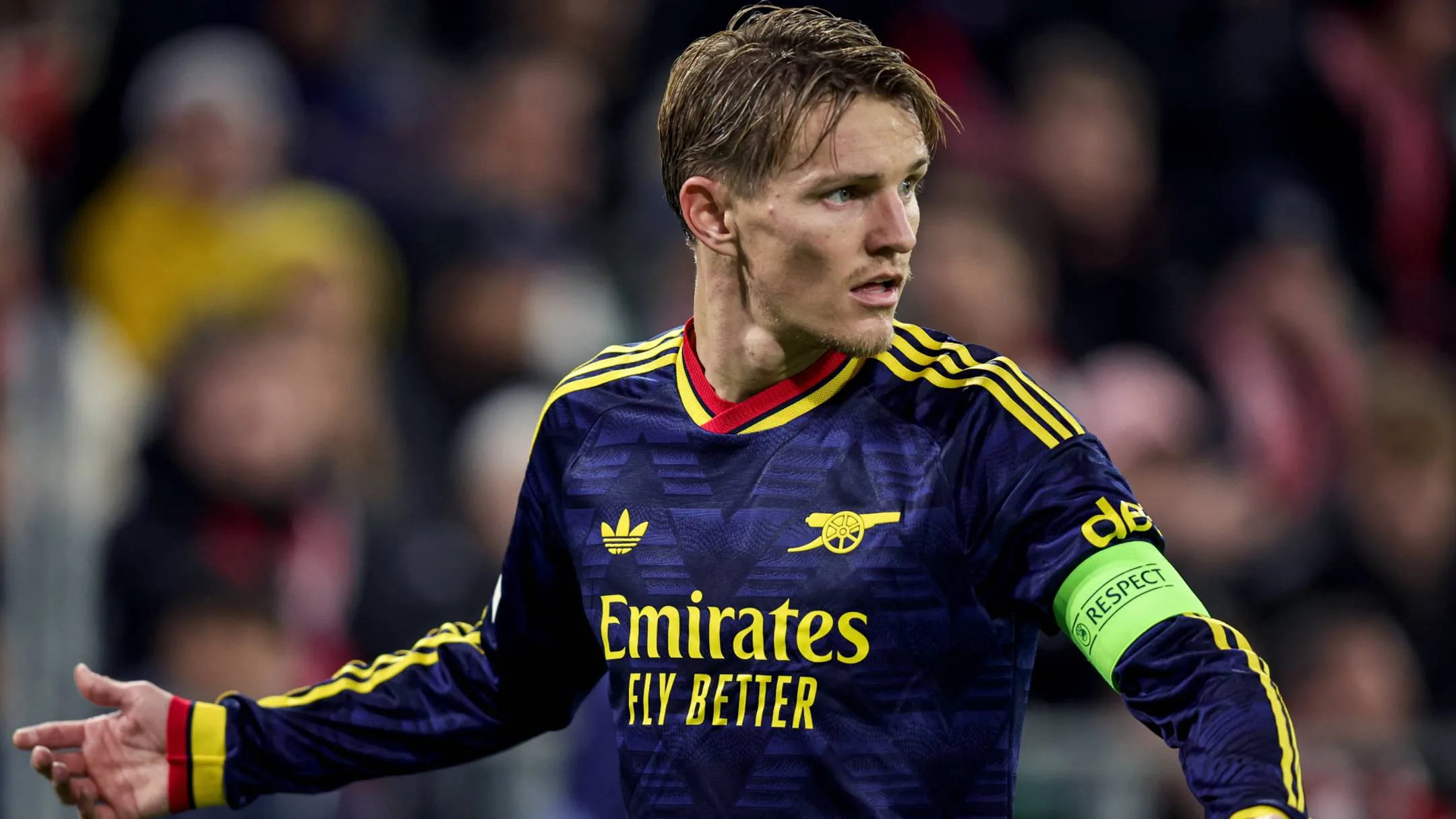
Martin Ødegaard has emerged in a surprising new transfer story, with reports suggesting the Arsenal captain is open to joining Bayern Munich. The claim adds an awkward twist for Mikel Arteta, especially given the timing and the player’s importance to the club’s current direction.
Previous links between Ødegaard and Bayern have been treated as speculative, but this round of reporting is said to carry “new momentum” after Sky Germany indicated that the midfielder may be willing to move to Bavaria. Arsenal are believed to want to secure fresh terms for the 27-year-old, yet the club is already dealing with Declan Rice’s lucrative renewal.
Bayern, notably, are not said to be pushing aggressively for the move. Instead, the German side are reportedly prepared to wait while Ødegaard’s contract situation remains unresolved. With less than two years left on his current deal, the uncertainty is enough to create concern around one of Arsenal’s most influential figures.
For Arteta, the issue goes beyond one contract. He has repeatedly spoken about building a club that can challenge at the very top, and his ambition has been clear. “It’s certainly the ambition of the club and the owners to be the best club in the world,” Arteta declared ahead of the current campaign. He also said he wants “the best facilities, the best stadium, the best supporters” and “the best players in the world.”
That is why the possibility of losing Ødegaard would cut so deeply. Arsenal’s captain is viewed as a central part of the manager’s project, a trusted lieutenant whose influence is felt across the pitch. Gabriel provides the defensive base, Rice drives the midfield and Bukayo Saka carries the star billing, but Ødegaard remains the player who best reflects Arteta’s ideas.
He is fundamental to Arsenal’s work in possession and without it, and his growing output in front of goal has only strengthened his standing. He is also a key presser, making his value to the team even greater. Any hint that he could leave would challenge the image of a side still moving upward.
Arsenal
Bayern Munich and Arsenal Combined XI: a close call with the Gunners just ahead
Arsenal and Bayern meet in the Champions League, and a combined XI just about leans toward the Gunners.
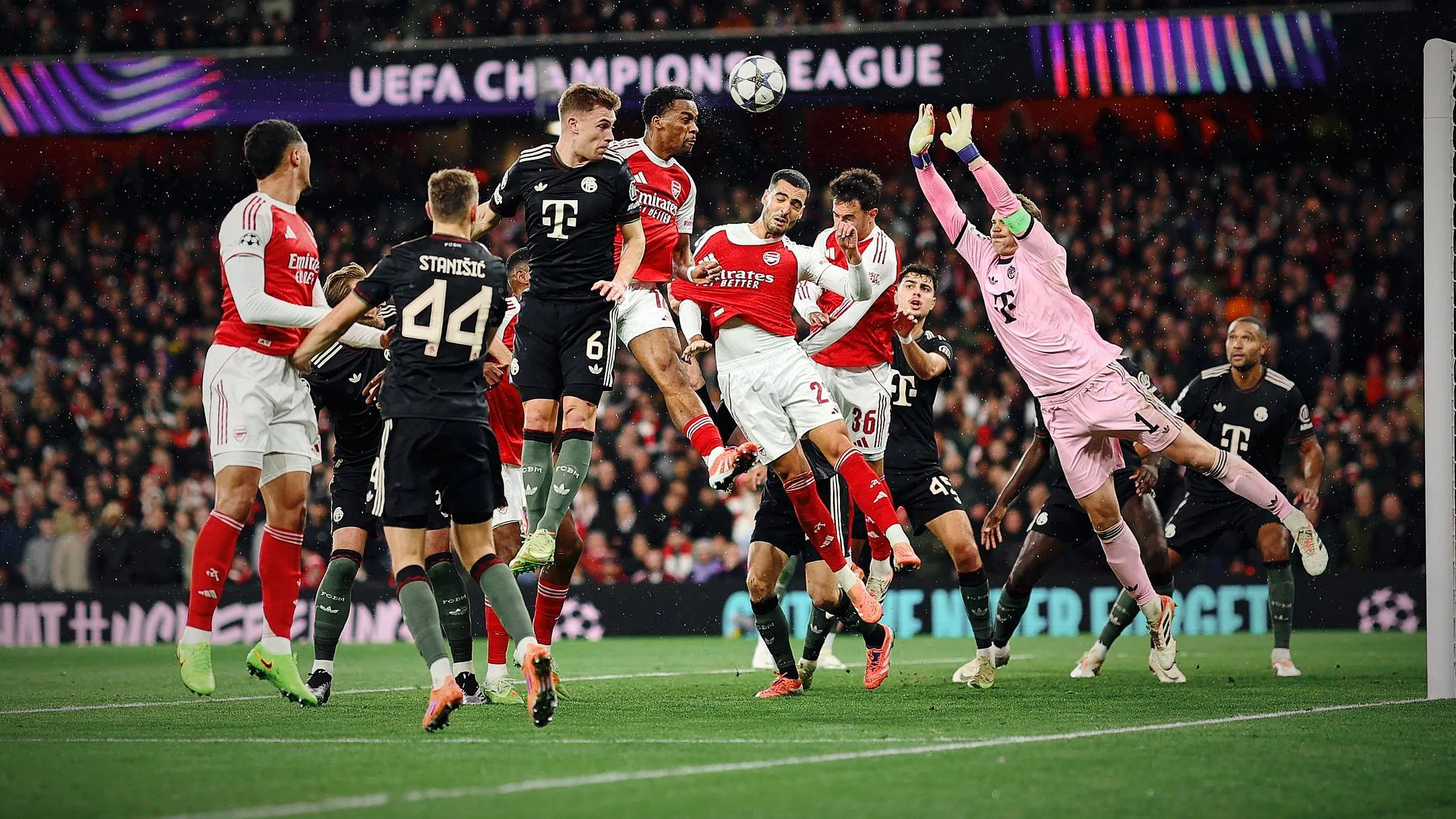
Bayern Munich against Arsenal stands as the marquee match of Wednesday’s Champions League programme, and it is easy to see why. Between them, the two clubs offer a remarkable spread of talent, even if injuries and suspensions trim the field of available stars.
With that in mind, here is a fresh look at a combined XI drawn only from the players available for selection, and Arsenal just about come out on top.
In goal, David Raya earns the nod. Manuel Neuer has been carrying a foot injury and remains doubtful, but even if he were fully fit, Raya’s recent level has been enough to place him in most mixed teams. Neuer remains the classic stopper, exceptional at the one job he is there to do, but Raya’s consistency gives Arsenal the edge.
At right-back, Jurrien Timber gets the call ahead of Konrad Laimer. Timber has established himself as one of the game’s top full-backs, and he arrives with the confidence of an assist against Lille in this competition last time out.
Gabriel is an automatic inclusion at centre-back. Arsenal’s defensive structure has been built around him, and he continues to deliver the blend of power, athleticism and technique that makes him such a difficult opponent. Alongside him, Dayot Upamecano is elevated by Vincent Kompany’s influence, with his form now strong enough to place him in the conversation at the very highest level.
On the left, Riccardo Calafiori edges Alphonso Davies. Calafiori’s game has opened up this season, and he is now contributing at both ends rather than only defending.
Joshua Kimmich anchors the midfield with his usual control, while Declan Rice is included after his standout display when these sides met last season, helping Arsenal to a 3-1 win. Aleksandar Pavlović completes the engine room after quietly becoming a major figure in Bayern’s possession game.
Bukayo Saka takes the wing spot, while Michael Olise would have been a strong contender but is suspended. In attack, Harry Kane is the obvious choice. He remains the best striker in the world and has nine goals in 10 games this season, a total that would satisfy most forwards, even if it sits a little below his own standards.