Arsenal
Arteta urges Premier League to enlarge matchday squads to protect players’ welfare
Arteta has asked for matchday squads to grow so, more players keep hope and mental well-being today.

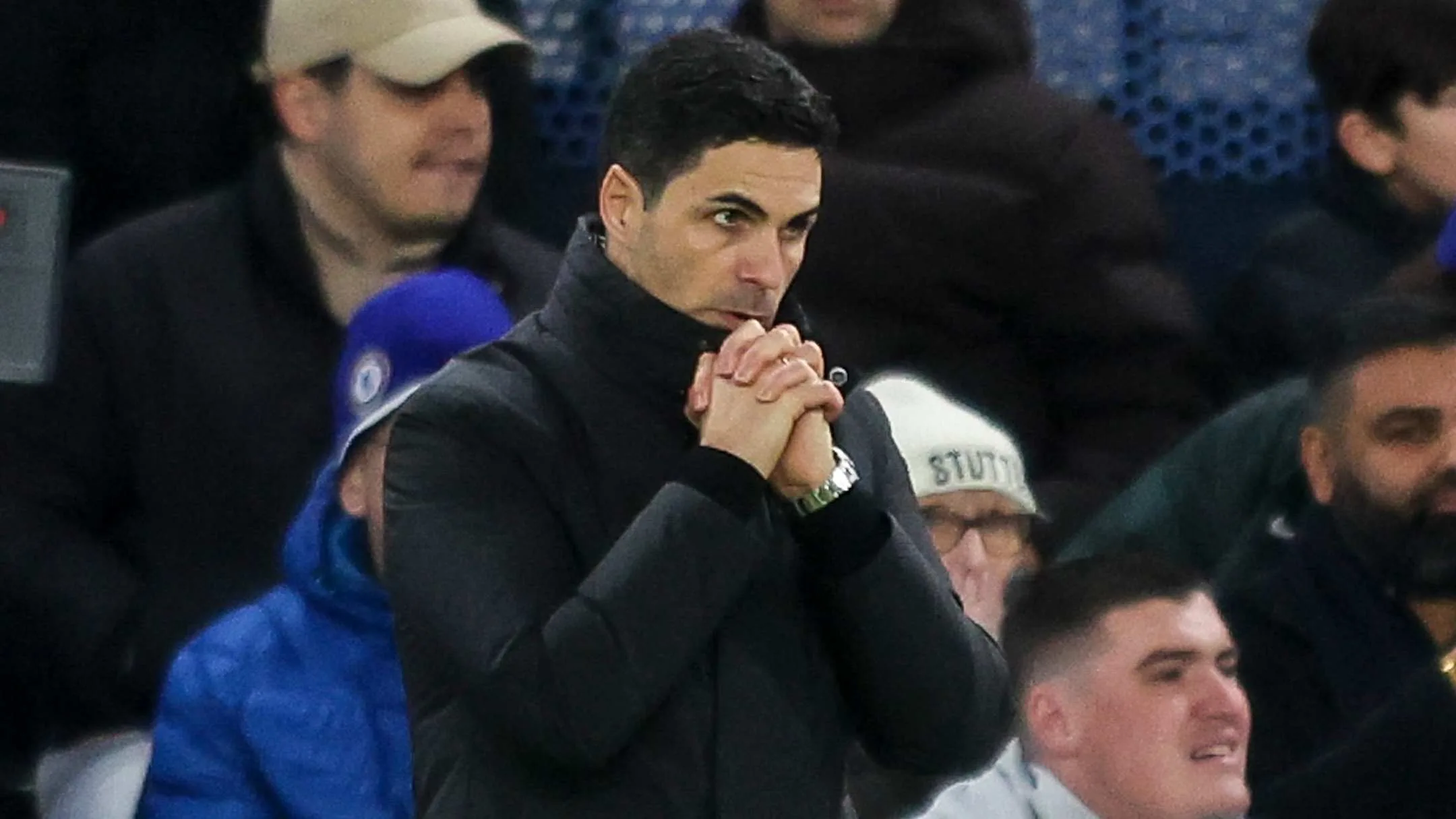
Mikel Arteta has publicly asked Premier League decision makers to expand matchday squads so more professionals can remain involved each weekend. He argued that raising the number of outfield players from 18 to 20 would ease the psychological burden on those excluded from selection.
“Next season, instead of 18 outfield players, hopefully, it will do 20,” the Arsenal boss told assembled media on Friday morning. “I beg them from here, like it’s in the Champions League, because it’s much better to manage the squad, to maintain the value of the players, to maintain the mental health of the players, because nobody wants to get [left] out of the squad.”
Arteta added: “It doesn’t make a lot of sense to restrict [squad sizes],” and added, “I think it’s better for absolutely everybody. That’s my opinion.” His instant logic is clear: a larger matchday list lets a manager use more options to influence a game and manage minutes.
The appeal is particularly relevant given the current distribution of squad market values. Transfermarkt data ranks Arsenal top with an average squad market value of £45.7 million, followed by Manchester City (£39.2m), Liverpool (£34.7m), Chelsea (£32.1m) and Tottenham (£26.2m). The list continues through to Burnley at £7.5m. That disparity underlines the argument that the five-substitute era and larger benches have tended to favour clubs with deeper resources.
Sean Dyche captured that criticism when the extra substitutions first arrived. “I think it quite obviously favours the big clubs because they can keep more players happy and more players involved by making more changes,” he sniffed in 2020.
Arteta acknowledged the human cost of selection decisions, noting the weekly reality managers face. “We have a really unique job, which is we have the ability to transform somebody’s life, career, which is great,” he reflected. “But as well, every week we have to tell somebody, ‘Tomorrow you don’t do the job. You’re not even allowed to travel with the team.’”
That tension between squad management and individual welfare is central to the case Arteta has presented to the league.

Arsenal
Arsenal face major selection doubts before Liverpool trip
Arsenal’s injury list is growing before Liverpool, with Rice, Saka, Saliba and others in doubt.
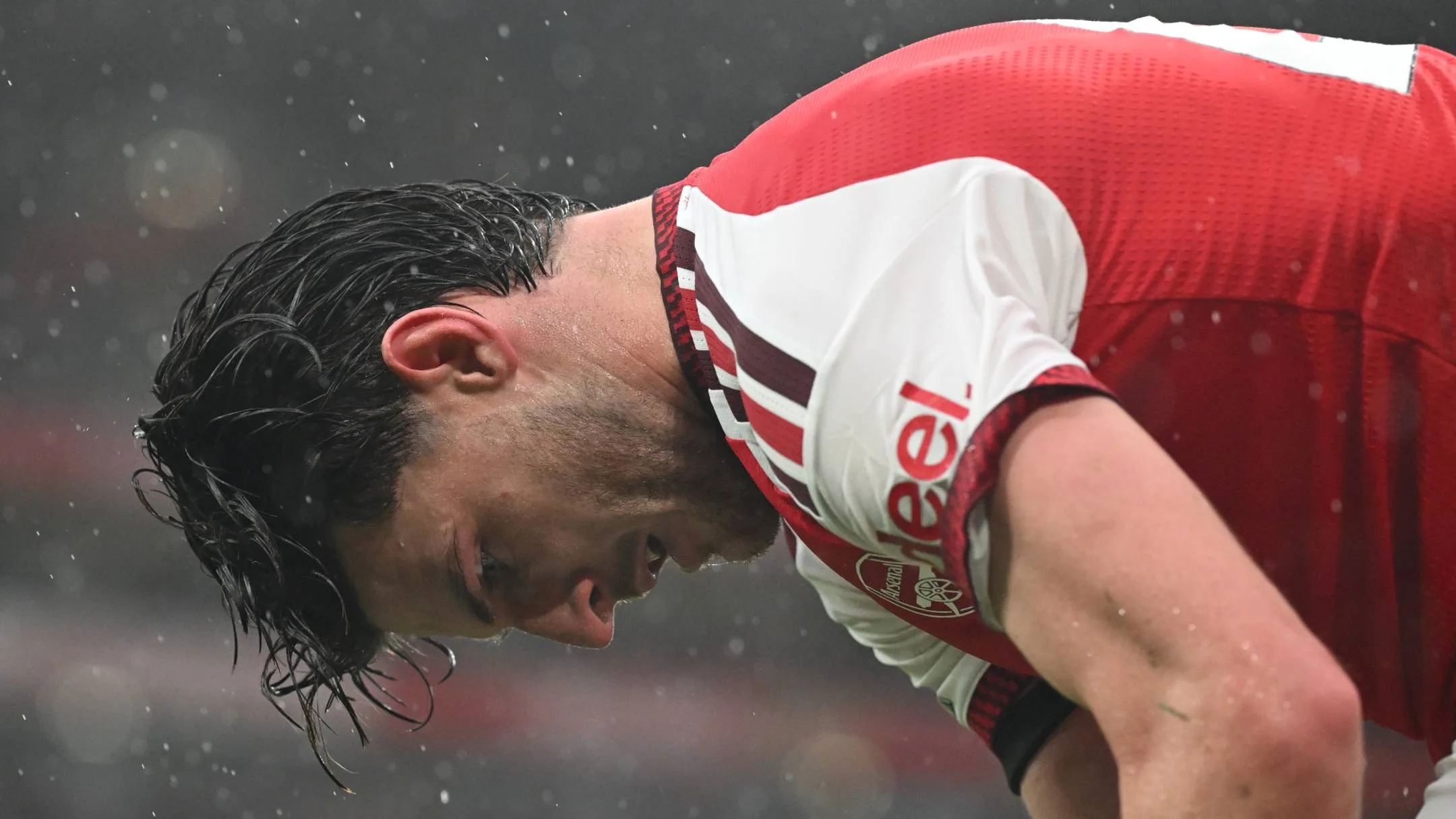
Mikel Arteta has been left juggling a growing list of fitness worries ahead of Arsenal’s trip to Liverpool, with Declan Rice among those under an injury cloud. The midfielder was forced off against Everton last weekend after, in Arteta’s words, he finished with “a problem”, leaving his availability for Sunday’s clash at Anfield uncertain.
Rice is not the only concern. Arteta admitted after Arsenal’s Carabao Cup exit that “Riccardo was out, Noni was out with an ankle and Declan Rice finished with a problem the other day,” underscoring the scale of the issue facing his side.
Some absences, though, are already clearer. Bukayo Saka has joined William Saliba on the list of long-term injuries after damaging his left quad in the Champions League draw with Bayern Munich. Saka is expected to miss at least six weeks and will not be back before the start of December at the earliest.
Saliba’s situation remains less defined. The defender has not played this season since surgery on a persistent back problem that became too much for him at this summer’s World Cup. Arteta has described the signs in his recovery as “very, very positive”, but he has not offered a return date, with the end of November mentioned only as a loose target.
There is also uncertainty around Christos Tzolis. The summer signing picked up a thigh problem while on international duty with Greece in the fall and was ruled out for around three weeks. He may yet have a role on Sunday, but his status remains unresolved.
Elsewhere, Max Dowman will not be able to win Arteta over through the FA, although Arsenal could still try to secure the teenager’s availability by appealing his red card against Fleetwood. The 16-year-old was dismissed for kicking out at Harrison Neal, with the force described as minimal but still enough for a straight red. With no VAR at this stage of the Carabao Cup, Michael Salisbury’s on-field call stood at the time. Dowman was found guilty of violent conduct, which the FA Handbook describes as “when a player uses or attempts to use excessive force or brutality against an opponent when not challenging for the ball.”
Arsenal
Arteta’s anger explained after Dowman’s dismissal against Fleetwood
Arteta’s response to Dowman reflected his wider demand for emotional control under pressure.
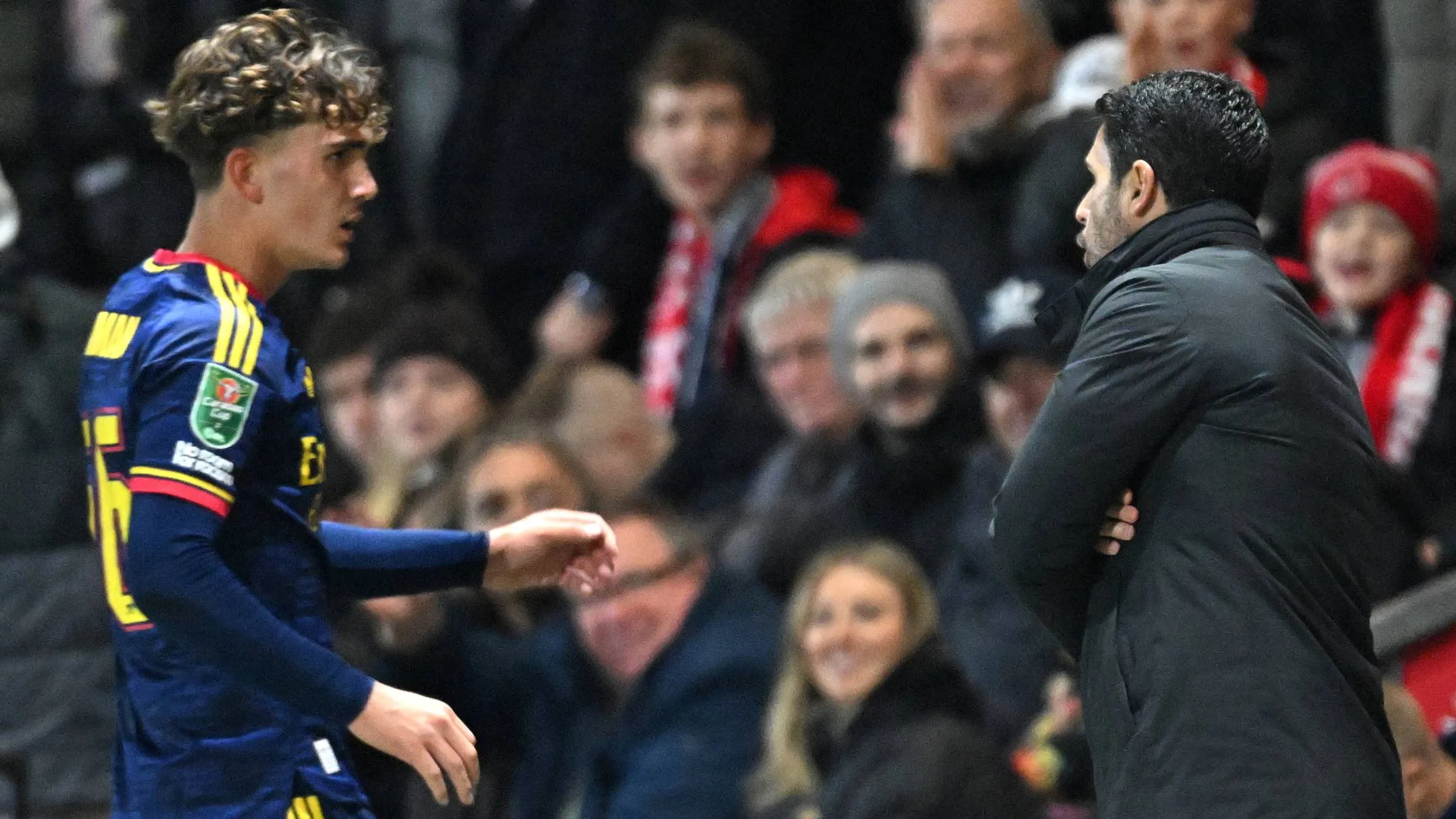
Mikel Arteta made no attempt to cushion Max Dowman after the youngster’s first red card in senior football during Arsenal’s disappointing Carabao Cup exit to Fleetwood Town on Tuesday.
It was a difficult night throughout for Arsenal. After falling behind 1-0 in the first half to a goal cheaply surrendered by fellow teenager Marli Salmon, the visitors spent the remainder of the match forcing the issue. They produced 26 shots in all, with seven ending up on target, but the pressure never translated into the result they needed.
Dowman was central to some of the missed opportunities. He first scuffed a clear opening across goal before setting up Kai Havertz for a fine chance that the German failed to convert. Beyond the missed chances, the winger also spent much of the evening coping with a physical challenge from Fleetwood.
Referee Michael Salisbury only awarded one foul against Dowman, and that came in the 85th minute with the score at 1-1. Harrison Neal then launched into a full-blooded challenge near the touchline, scissoring the teenager’s standing leg. Dowman responded by kicking out at the midfielder in the middle of a large confrontation, and Salisbury soon produced a red card.
As Dowman headed down the tunnel, Arteta was heard shouting, with the manager later saying: “We know when we prepare the context of the match, we’re very clear on what to expect,” he added. “Emotionally, we have to dominate, but we’re very clear.”
That reaction fitted a theme that has run through Arteta’s work this season. Emotional control has become one of his repeated messages, alongside the idea that Arsenal must handle the moment rather than be carried away by it.
“Emotional dominance” has been a regular phrase in recent weeks, and Arteta has been clear about what he wants from his side. “We have to be emotionally dominant regardless of what the context is. It’s easy to say, very difficult actually to do,” he said earlier this month.
This was Dowman’s first red card for Arsenal, but his second dismissal of the month. The England U-19 international had already been sent off in a behind-closed-doors friendly against the U.S.
Arsenal
Arteta Questions Touchline Standards After Latest Booking
Arteta said he is tracking rival managers after receiving his second yellow card of the season.
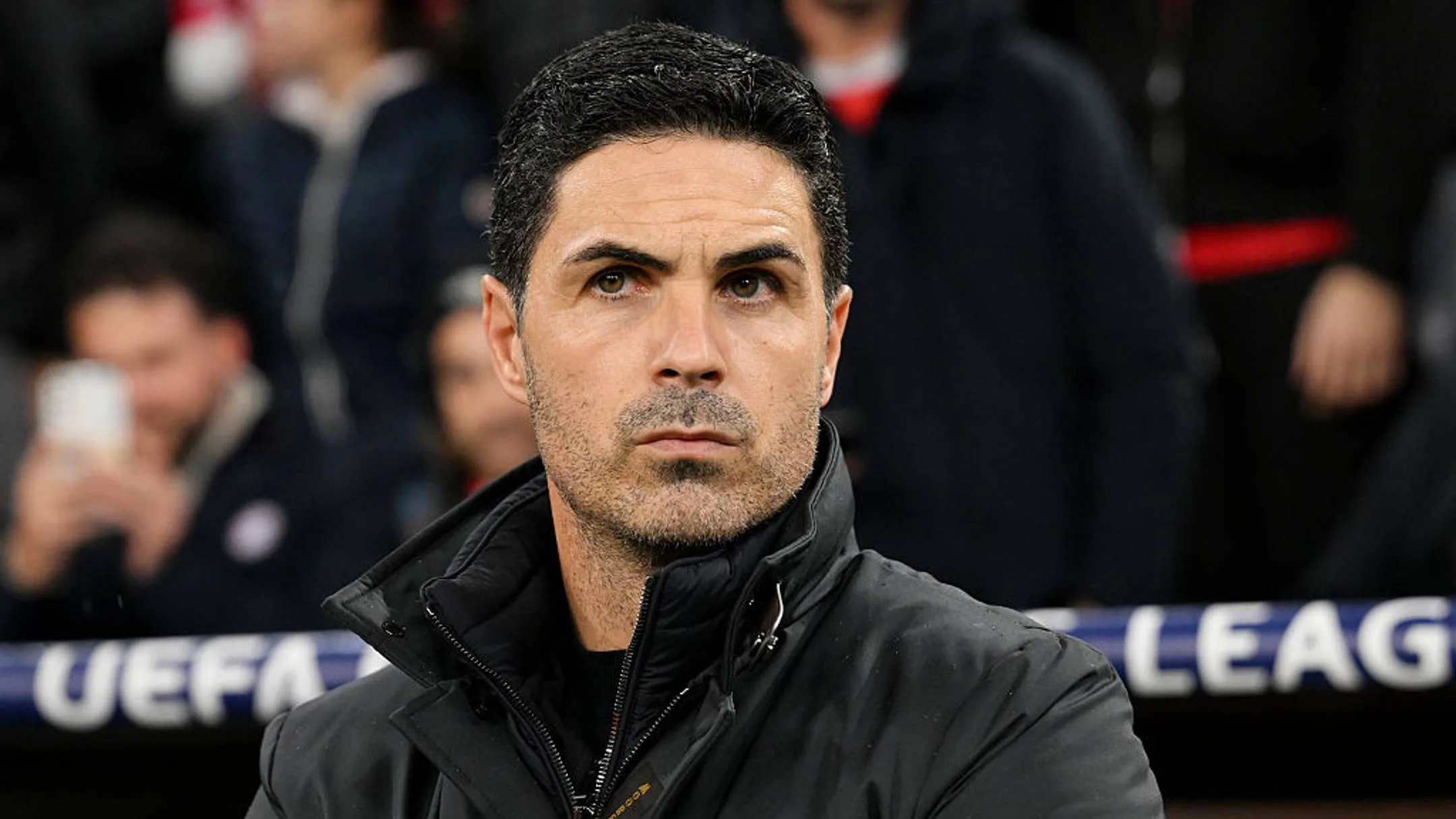
Mikel Arteta has taken aim at what he sees as inconsistent discipline for Premier League managers after collecting his second yellow card of the season on Saturday.
The Arsenal boss said he is keeping records of rival coaches who step beyond their technical area without being punished, insisting he will not ignore what he believes is uneven treatment from officials. Known for his constant energy on the sideline, Arteta argued that others are getting away with behaviour that brings him immediate sanction.
“I do have to be careful,” Arteta said when asked about his caution in his postgame press conference. “And we need to have good sensors there. There are managers that have the record in the league, 36 times in 10 minutes leave the touchline, no yellows.
“So I’m clipping all of that. I have a massive storage of images. So if somebody is going to say, ‘I’m not in the record yet, somebody else has the record.’
“Then it’s 36 yellow cards in 10 minutes for the manager. I don’t know where we’re going to be. Let’s see.”
The issue is more than a matter of irritation. Once a manager reaches three yellow cards, an automatic one-match suspension follows. Six cautions bring a two-game ban, while nine lead to a three-match punishment. With only late October reached, Arteta is already halfway to that first threshold.
That means his next booking would remove him from the touchline for Arsenal’s following match, regardless of any argument he might make with his own “massive storage of images.” Even a spirited defence would not alter the sanction.
His post-match comments did not stop there. Despite Arsenal’s gritty win over Everton, Arteta also criticised the schedule, saying the workload had been far from ideal.
“We’re very happy with the victory, the performance and the week, because we were given a terrible schedule,” Arteta said. “Playing Sunday afternoon, then Wednesday night in Munich, coming here really late on Thursday and then having to play again in the Premier League against a really tough opponent on Saturday at 3 p.m.
“We have overcome some injuries, and I’m really proud of the mentality of the team in the conditions today.”