Manchester United
Interim Heat: The Carrick Debate and United’s Managerial Dilemma
Neville wants a Tuchel or Ancelotti; Keane opposes Carrick; Rooney sees clear potential. A firm note


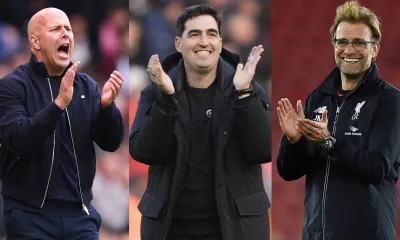
Manchester United’s 3–2 win over Arsenal has reawakened a familiar debate about long-term leadership at the club. Gary Neville warned against rushing the decision and urged United to seek a successor “in the mould of either Carlo Ancelotti or Thomas Tuchel” when Michael Carrick leaves at the end of the season.
Neville cautioned that emotion has too often driven appointments. “Manchester United have acted emotionally a number of times in the last 12 years,” he said. “I honestly could not be happier with the last two weeks. The familiarity in what I’m watching feels like I’m watching my team play again properly.
“They played properly, with intensity. I think it’s right that Carrick keeps the job until the end of the season and then hands the baton over to a Tuchel or an Ancelotti, someone of that world-class ilk.”
The appeal of Tuchel or Ancelotti rests on contrasting credentials. The draft noted both have Champions League success and could be available after the World Cup; the pair represent distinct managerial styles. Ancelotti has said: “There are two types of coaches: those who do nothing and those who do a lot of damage. I try to be in the first. The game is for the players and you can tell them a certain strategy but then the decisive thing is their quality and commitment.” The piece contrasted that view with Tuchel’s more interventionist reputation.
The article recalled Ole Gunnar Solskjær’s early caretaker surge: eight straight wins and a 74% win rate across 19 matches, including victories over Arsenal and Chelsea and that dramatic Champions League knockout of Paris Saint-Germain. His subsequent permanent record fell to a 52% win rate over 149 games and ended without a trophy.
Not all former players agree on Carrick. Roy Keane remained unconvinced: “Two great performances but anyone can win two games,” he said, and added, “If United win every game until the end of the season, I still wouldn’t be giving him the job,” and “I still wouldn’t be convinced he’s the man for the job. Absolutely not.
“They need a bigger and better manager. The size of the club and the challenges they face over the next few years, you want a manager who you feel can get them winning league titles.
“Are we going to sit here and believe Michael Carrick can get United winning league titles? It’s not enough for me. I don’t believe he is the man to get them winning league titles.”
Wayne Rooney backed Carrick strongly: “Of course he can,” and added, “I think Michael Carrick’s got an opportunity to show everyone, to show Manchester United, that he’s capable of doing that job.” “What we’ve seen is he’s very capable of doing it,” Rooney continued. “And if it continues like this, there’ll be a massive pressure on the Manchester United board to put him in at the end of the season.
“I know they’ve been there with Ole before, but I think this feels a little bit different.” Danny Murphy reacted with audible scepticism in studio, while Keane had previously questioned Carrick’s credentials, his backroom staff and even his wife before the Manchester derby. The piece also noted Ruben Amorim required 11 months to collect consecutive Premier League victories, a point Keane ignored in his criticism.
Carrick himself downplayed the speculation: “What happens next [manager position] I’m not going to be answering it every week,” he warned. “I’m enjoying it and I’ll continue to do what I can.
“I know from our perspective it’s just about moving forward to the next game. It’s been less than two weeks that we’ve been together, so it’s just keep getting good habits and good routines. The boys have been fantastic with that. ]




Manchester United
Carrick Says United Must Be Built Back to Ferguson-Level Standards
Carrick says United can reach Ferguson’s standards again, but only through patience.
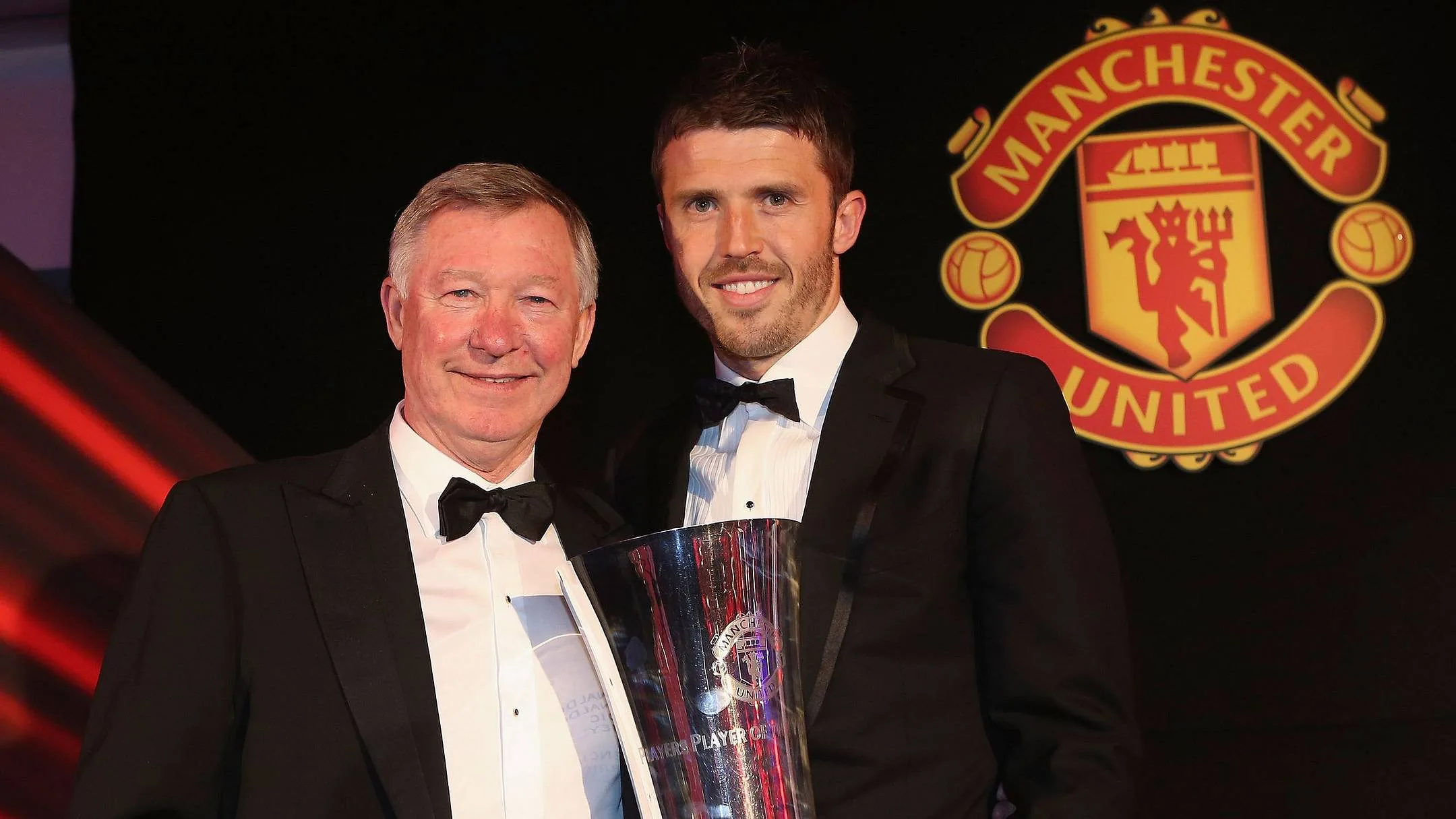
Michael Carrick believes Manchester United can, in time, rediscover the level of success associated with Sir Alex Ferguson, though he stressed that such a return cannot be rushed.
Speaking on the 40th anniversary of Ferguson’s appointment at Old Trafford, Carrick said the club’s recent history and longer-term aims demand patience and realism. He underlined that progress has to be constructed step by step, not delivered instantly.
“it’s not impossible”
“It’s not impossible, anything is possible,” Carrick said on Friday. “You’ve got to build, you got to be realistic, you got to put things in perspective as well. The recent history that we have and where we want to get to, it’s not going to happen in a blink of an eye, it’s not going to happen overnight.
“Success does take time and we don’t like having to spend time, but it does take a period of time to build. We showed a really quick response and improved a lot last season. It shows what is possible, but again, sustaining it is the key, consistency is the key. There’s no other way of doing it, there’s no shortcuts to it, and in the end, thats where you get to. But it’s definitely possible.”
Carrick also noted how hard it is to achieve lasting success, saying the challenge is as real now as it was in Ferguson’s era. “It’s difficult to bring success. It was difficult then, and it’s difficult now. It just shows you how tough it is to have sustained success, never mind moments of success. We’ve got to live in the moment. We know what we’ve got to do, and we’ve got to be focused on bringing success week to week in games.
“Then things fall into place. If you do that enough, and do it often enough, you’ll bring a bigger version of it [success].”
Ferguson arrived in the red side of Manchester on Nov. 6, 1986, and went on to define an era. He ended United’s 26-year wait for a league title in 1992–93, then added 13 Premier League titles before retiring after the 2012–13 season. His 528 Premier League wins remain a record.
Under Ferguson, United also completed the treble in 1998–99 and finished with 38 trophies in total. Carrick, who said he is now closer to Ferguson than he was as a player, described his influence as “immense.”
He also acknowledged that the modern game does not allow many managers the time Ferguson was given. “The game has certainly changed, no doubt,” Carrick said. “It always does. It evolves, and it had evolved by the stage probably after Sir Martin and in the years after that to then Sir Alex. It evolves all the time, that’s how it is.
“It changes, and we’ve got to deal with what’s in front of us. There’s always different things to compare, but we have to live in the present as well and definitely use past experiences to help us. Time and patience, but we’re all desperate to win football matches and win them as quickly as we possibly can.”
Manchester United
Carrick’s position steadied after fans turn on the players
Fans backed Carrick while players were booed, helping convince United to keep him for now.
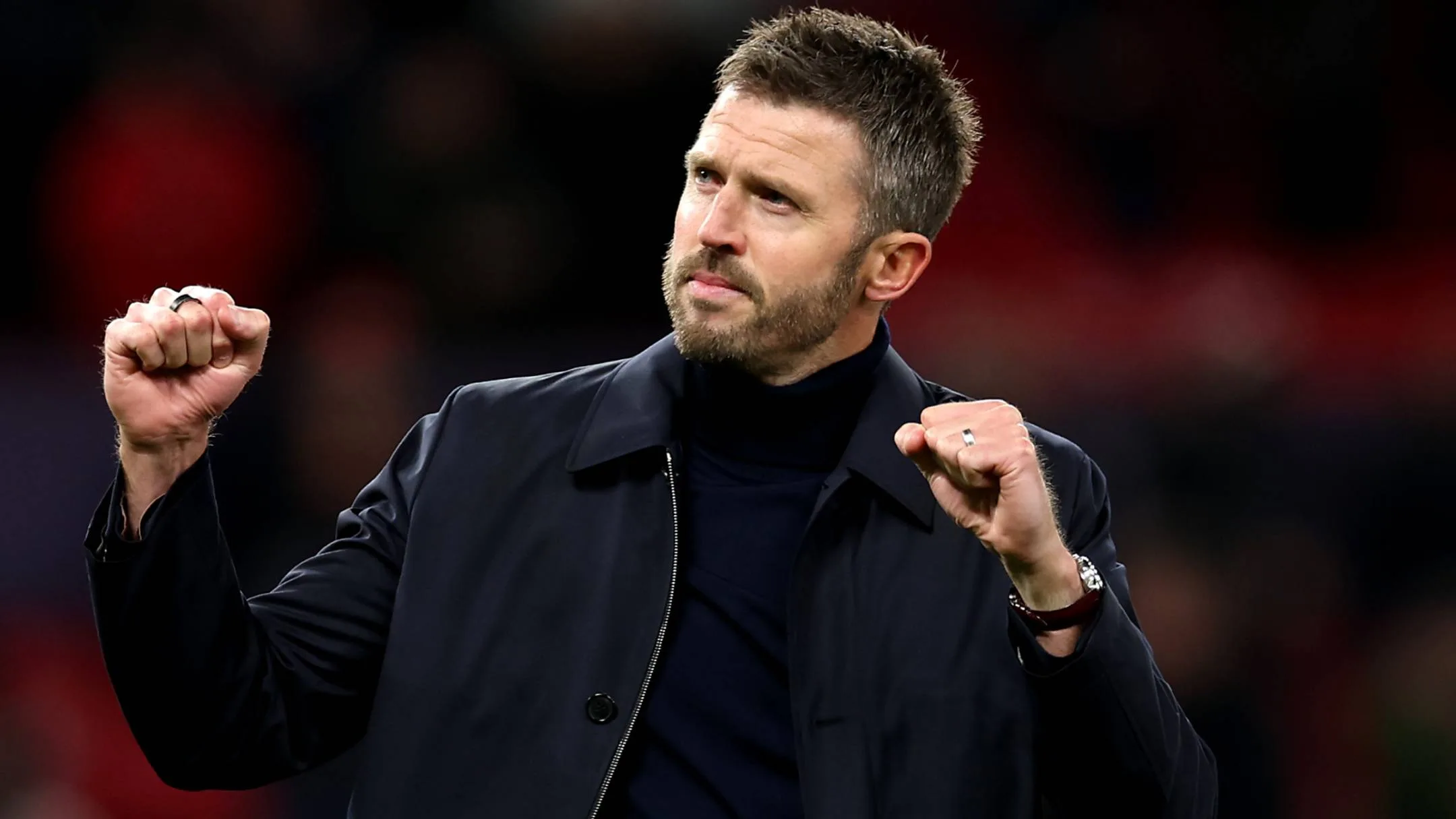
Manchester United’s support base may have played a decisive role in keeping Michael Carrick in place, after a striking split in the reaction at Old Trafford prompted what one report described as a “moment of realization” inside the dressing room.
Carrick was met with warm applause and songs from his playing days, while the players were booed heavily once he made his way down the tunnel. That contrast was not lost on those in the squad, who were said to understand that Carrick would not immediately “pay the price” for the team’s poor form. As David Ornstein put it, “We’ve not managed to see off another coach,” became the conclusion, with a determination to “put this right.”
The decision-makers, including sporting director Jason Wilcox and chief executive Omar Berrada, are understood to have assessed the mood inside the dressing room after the defeat to Bournemouth. That process left them willing to give Carrick at least until the approaching international break.
United’s next outing brought another defeat, though the performance was more competitive. They were the better side in a goalless first half against Chelsea, only to lose control after the interval. The hosts took the lead within five minutes of the restart, before Lisandro Martínez’s red card on the hour mark opened the door for Cole Palmer to convert a decisive penalty.
There was further evidence of resolve in midweek against Roma. United trailed 2-0 at the break and looked vulnerable to a heavier defeat, but responded to win 3-2. Even so, the second half was shaped by the fact that Roma failed to register a shot, on target or otherwise.
Several players have publicly backed Carrick, insisting the dressing room remains behind him. Bruno Fernandes, recalled after being dropped for questioning his manager’s tactics against Como, has also suggested limited communication with the coach during the tense period.
Ornstein also said the broader managerial market mattered. United were not thought to have a clear “dream target” available immediately, while Eddie Howe and Julian Nagelsmann both have supporters inside the club. Antonio Conte, meanwhile, was not viewed as an obvious short-notice option if a summer pre-season was required.
Manchester United
Glazer revenue claim underlines Manchester United’s deeper problem
Glazer’s latest claim has revived debate over Manchester United’s commercial strength and on-pitch decline.
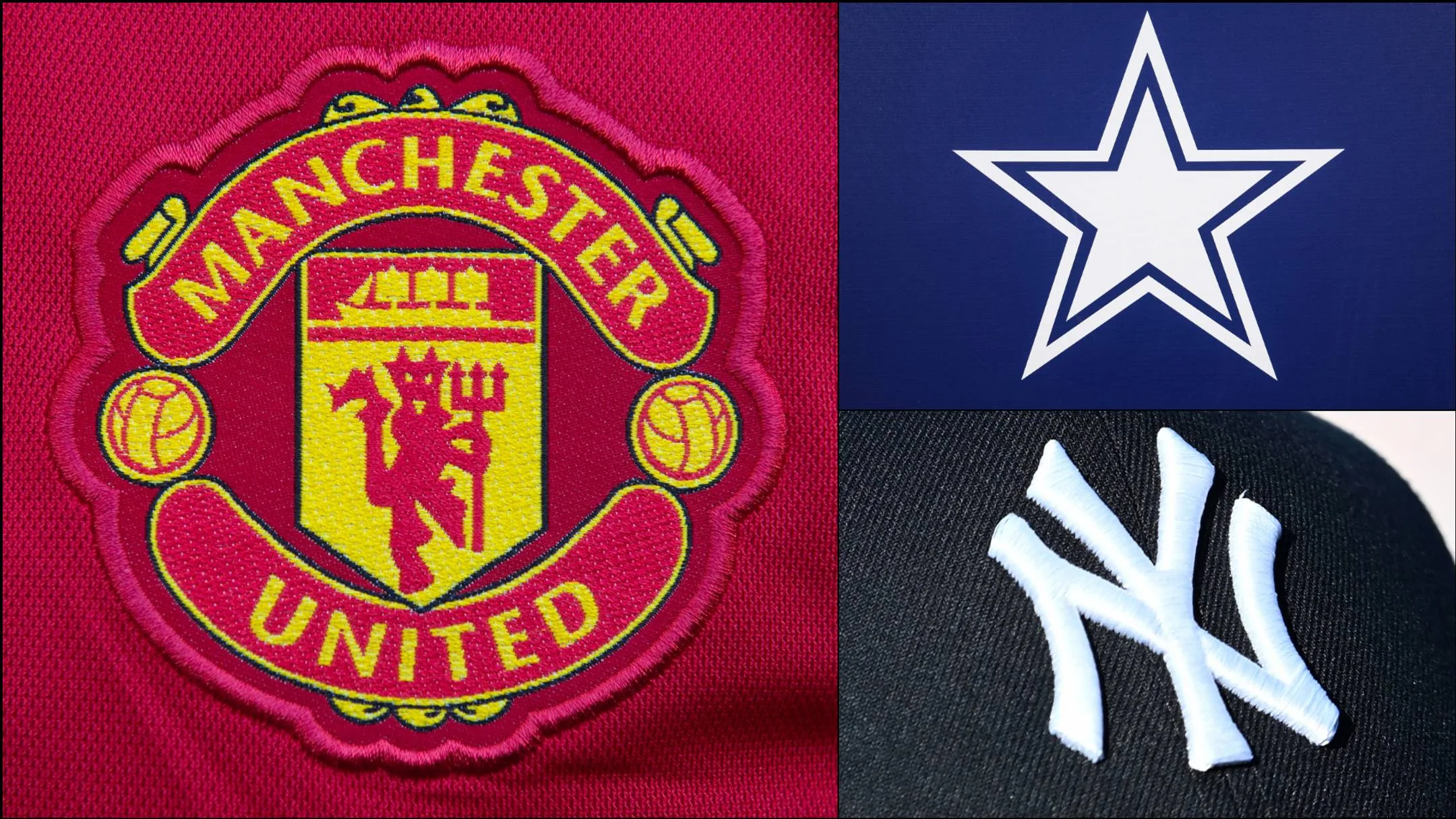
Avram Glazer has reignited frustration around Manchester United by arguing that the club can still attract major commercial income even when results on the pitch fall short. The remark, reported as part of a discussion with investors at Deutsche Bank’s inaugural Sports Investment Conference, has only sharpened scrutiny of the club’s ownership model and its long-running disconnect between sporting standards and business strength.
Manchester United have now cycled through seven managers in 13 years, with Michael Carrick said to have been close to the exit before a chaotic Champions League comeback briefly changed his outlook. That sequence has done little to dispel the sense that the club has been shaped by confusion rather than clarity since Ferguson’s departure.
The Glazer family has owned a majority stake since the controversial leveraged buyout in 2005, and fans have long accused them of treating the club as an asset rather than a football institution. Former defender Paul Parker once captured that anger by calling the club “the highest-profile ATM machine in world football.”
Glazer’s latest point, conveyed by The Athletic, was that United “are not dependent on success on the pitch for commercial power,” and he is understood to have compared the club with the Dallas Cowboys and the New York Yankees. Both are historic names whose value remains immense despite long gaps since their most recent major triumphs.
But the comparison only goes so far. While Manchester United remain among the game’s strongest commercial operations, their financial standing has been eroded by the rise of rivals whose on-field progress has translated into greater off-field strength. United’s commercial revenue has grown by only 9% over the past decade, far behind the expansion delivered by clubs such as Arsenal, Liverpool and Tottenham Hotspur.
That trend points to the central flaw in Glazer’s argument. United may still be powerful commercially, but their decline on the pitch has allowed others to close the gap, leaving the club less exceptional than it once was.