Manchester City
What sanctions could follow the Premier League verdict on City?
City’s verdict has raised huge questions. The Premier League now faces unusual choices on punishment.

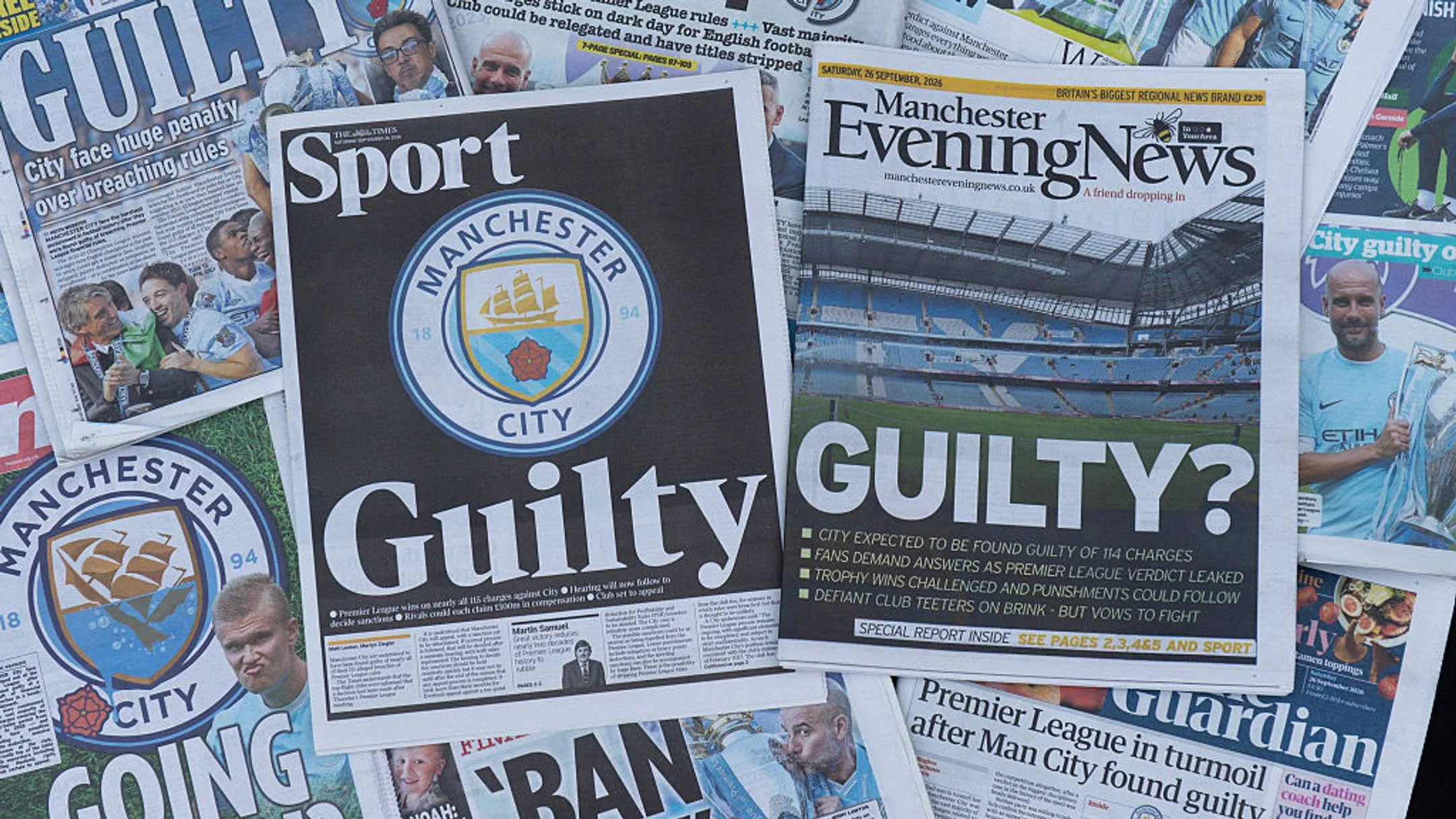
The verdict has landed, and the Premier League is now facing one of the most awkward disciplinary questions in its history. A 40-page report from the independent commission has confirmed the scale of the deceit, leaving the competition with a problem that goes far beyond routine punishment. The case is not closed either, with City set to appeal before Friday, Oct. 2, a move they intend to make.
So the issue becomes less about what has happened and more about what should happen next. The league handbook offers familiar options, from fines to expulsion, while also leaving room for “such other penalty as it shall think fit.” That final phrase gives the governing body a wide field of possibilities, and the scale of the case makes ordinary treatment feel inadequate.
One obvious reference point is Nottingham Forest, who were deducted four points in March 2024 for a single financial breach. Using that as a benchmark, the arithmetic becomes extreme: 114 breaches multiplied by four points produces 456 points. Spread across eight seasons, that would leave City starting each top-flight campaign on –57 points. It is, at the very least, a punishment that would satisfy Derby County fans.
There are other imaginative routes too. One is to block all transfers until 2043, by which time the cost of a backup fullback would presumably be absurd. Another is to reopen every title, European place or relegation battle that might have been altered, with affected teams replaying their matches against City using the same lineups as the original day.
The idea could even be pushed further by restoring the squad to its pre-era state, replacing Erling Haaland with 45-year-old Elano for the 2026-27 season. A one-off draft in which the rest of the league picks from City’s current squad would also create immense interest, especially from those at the bottom of the table.
Whatever follows, this is not a normal disciplinary case. The league now has to decide whether standard punishment is enough, or whether the verdict demands something far more creative.


Fulham
Manchester City and Fulham meet with different pressures on each side
City need a response, but Fulham arrive organised, unbeaten in four, and improving under Arbeloa.
Manchester City return to Premier League action looking to halt a three-match domestic slide, with the break arriving at an opportune moment for the sky-blue half of Manchester. Their recent run has prompted concern about how exposed they have been in defensive transition, and the need for greater security in midfield has become clear.
Fulham arrive at Etihad Stadium in steadier form. Unbeaten in four, they have moved on from a poor opening spell that left them at the foot of the table. They now sit 15th with 10 points from as many games, though the wider table remains tightly compressed in the middle.
The visitors have begun to look more coherent under Álvaro Arbeloa, who was heavily doubted on arrival. Their improvement has been built on balance, possession and the influence of Alex Iwobi, alongside the creativity of No. 10 Josh King. Recent wins over Coventry City and Ipswich Town were narrow but controlled, and they followed those with 1–1 draws at Aston Villa and against Newcastle United.
City, by contrast, lost three successive Premier League matches before the break, even if a 3–2 Champions League victory over RB Leipzig came in the middle of that slump. Maresca has urged calm and has been given time to reset, but the challenge remains the same: his team must become less vulnerable to the counterattack.
Fulham’s recent numbers suggest they are capable of making this uncomfortable. Just six goals have been scored in their last four league matches, with only two conceded, a reflection of the control they have established. City will need patience if they are to rediscover winning form.
The head-to-head record offers little encouragement for the visitors. Manchester City have won the last 20 meetings, while Fulham have not taken points off them since September 2011 and last beat them in 2009.
Manchester City
What the reported Apollo collapse could mean for Manchester City’s transfer plans
Apollo’s reported collapse leaves Manchester City facing fresh uncertainty over funding and transfers.
Manchester City’s financial outlook has reportedly taken a significant hit after a proposed $2 billion loan from Apollo Global Management was “scrapped” following the club’s guilty verdict in September over more than 100 breaches of the Premier League’s financial rules.
City have continued to insist on their innocence and have repeatedly pointed to “a comprehensive body of irrefutable evidence.” That material, which is believed to include documents and bank statements, is central to the club’s appeal and underpins the confidence inside the organisation. Outside the club, however, the response has not been nearly as supportive.
According to the Financial Times, Apollo had been preparing to inject $2 billion into the City Football Group, with the agreement understood to be in the “final stages.” The report says the deal collapsed after the guilty finding, even though City’s appeal remains ongoing.
The timing matters. Khaldoon Al Mubarak had only recently claimed that City Football Group and its 11 clubs were worth at least $10 billion, yet the loss of such a large external investment will still be felt across the wider operation.
The reported Apollo package was intended to “refinance existing credit facilities” and provide “extra liquidity”, a phrase that in practical terms points to more flexibility for daily running costs, including money that can be used for potential transfers.
City’s ownership has also put fresh equity into the structure. Sheikh Mansour bin Zayed Al Nahyan was found to have injected £100 million ($131.5 million) into City Football Group through Newton Investment and Development at the end of October. It is not clear whether that move was a direct reaction to the lost Apollo funding, though that is how it has been framed.
Even so, the amount is far smaller than the sum Apollo had been expected to provide. The Financial Times points to rising “uncertainty” around the club’s financial future as the Premier League case continues.
Barcelona
Balde’s Situation Could Trigger Wider Winter Moves in Europe
Balde could move in January, and Barcelona’s decision may influence several European transfer plans.

Barcelona’s stance on Alejandro Balde may shape more than one transfer story this winter. The left back has been drifting toward an exit since last summer, and January now appears to offer the first realistic chance for a move away from his boyhood club.
Hansi Flick made his view plain in August when he said Balde was not “100% here” during a summer dominated by links with Manchester United. Even after repeated public declarations of loyalty, the defender never won back full trust. By mid-October, he had managed only one appearance for the defending Spanish champions, and his route back into the side looks increasingly blocked. Flick’s latest criticism was pointed: “[Balde] did not have the confidence he usually needs to play his game, nor the conviction to play as the team wants, pressing high.”
The Athletic report that Barcelona remain open to selling Balde once the winter window opens. He has played just 124 minutes this season, and as another La Masia graduate, any transfer fee would count as pure profit. For a club with well-known cash flow issues, especially after spending around €180 million ($198 million) last summer, that matters. The report also says Barcelona need departures if they want to pursue “significant arrivals” in January.
That departure could fund their main winter objective, a centre back, with a left-footed option wanted to eventually replace Iñigo Martínez. The belief is that Barcelona will not win the Champions League until Pau Cubarsí has a proper partner in central defence. A veteran addition would also help steady Flick’s high line.
If Balde leaves and a centre back arrives, the defence would change significantly. Gerard Martín could move back to left back, João Cancelo could shift right, and Flick would gain balance on both flanks once Jules Koundé and Xavi Espart return. Eric García is another option, which would also ease Frenkie de Jong out of emergency defensive work.
United remain a possible destination. Their need at left back is obvious after missing out last summer and living with Luke Shaw’s injury problems, while Diogo Dalot has struggled on the left. Under Mauricio Pochettino, they are expected to target the position again, and Balde could be available at a lower price. A deal could even open the door to Lisandro Martínez, whose difficult season and expiring contract may tempt United to sell before May.
There is also a Manchester City angle. The Athletic say Joško Gvardiol was Barcelona’s top defensive target last summer, but his new contract ties him to the Etihad Stadium until 2032.

Bruno Fernandes sets out why he has not signed a new Manchester United deal

Guimarães Fades as Arsenal’s Mental Test Breaks Down at Newcastle