Aston Villa
What number could Morgan Rogers wear if he joins Chelsea?
Chelsea’s move for Morgan Rogers could raise a simple question: which shirt number would he take?

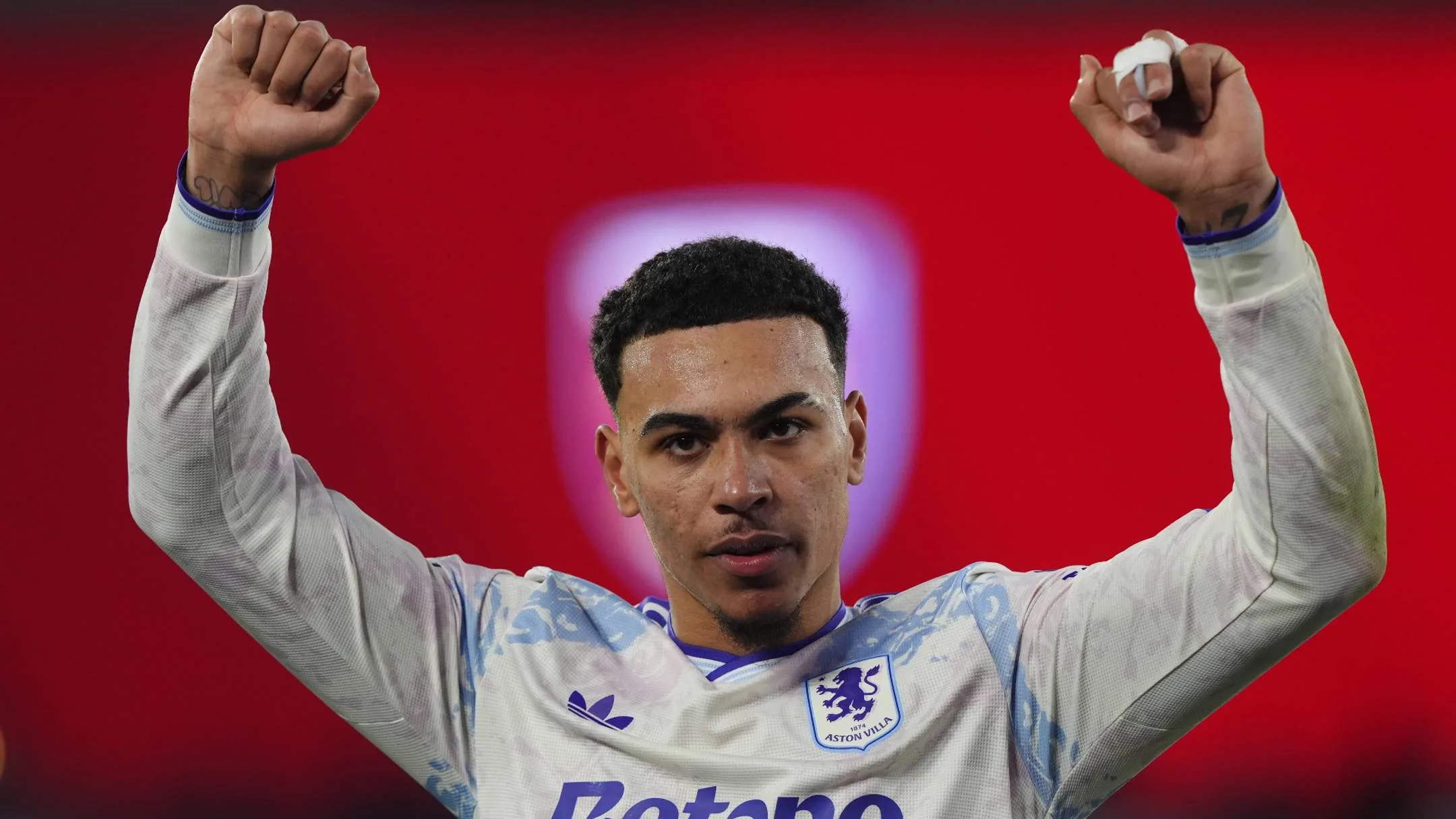
Morgan Rogers once described himself, in his own words, as “a bit of a geek for football knowledge.” If Chelsea’s reported move for the Aston Villa playmaker happens, that detail may become part of a much bigger conversation.
At the reported fee of $157.3 million (£117 million), Rogers would become the most expensive player in Chelsea history and the most costly British player ever signed by any club. But before the numbers on the contract, there is a more familiar question to consider: which shirt number would he take?
Rogers has already shown he can attach meaning to a squad number. During a teenage loan spell with Lincoln City in League One, he was left with limited options and chose No. 27 after deciding, “I was looking at the numbers and thought none of these.” He later explained that it was “the only number that looked remotely O.K. at the time.” The choice mattered because of the 7, a digit he wanted after growing up idolizing Cristiano Ronaldo.
That number stayed with him. “I wasn’t necessarily sold on it but because then I had a good loan, it kinda stuck with me,” he said. “It’s always the number I’d pick if I go to a club.”
At Chelsea, though, No. 27 already belongs to Malo Gusto. No. 7 is also unavailable because it is held by Pedro Neto. The most obvious opening appears to be No. 17, now vacated by Manchester United-bound Andrey Santos, while No. 37 remains another possible option.
Chelsea’s current list of unused or recently assigned numbers also includes 2, 3, 13, 16, 18, 22 and 26. There have also been whispers of a possible move for Gusto, which would reopen the No. 27 route for Rogers. Yet Chelsea’s reported valuation of $100.8 million (£75 million) for a backup right back makes that scenario difficult to imagine.

Aston Villa
Chelsea move for MacPhee underlines the value of set-piece expertise
Chelsea are close to appointing Austin MacPhee, a move that strengthens their set-piece department ahead of 2026-27.

Chelsea are reportedly closing in on the appointment of Austin MacPhee, who is expected to join Xabi Alonso’s coaching setup before the 2026-27 season begins.
MacPhee is set to leave Aston Villa after five seasons and step into the set-piece coach role at Chelsea, taking over from Bernardo Cueva. Cueva will remain part of Alonso’s staff, although in a behind-the-scenes capacity.
The move highlights how far the game has shifted. Set-piece coaching is no longer a detail tucked away on a staff chart. In modern soccer, dead-ball situations now carry major weight, with some teams placing them alongside, or even above, open-play structure as a route to goals.
What once passed almost unnoticed is now treated as a core part of club planning. Specialists in this area can shape results, and Chelsea appear to have targeted one of the most respected names in that field.
MacPhee’s work at Aston Villa made the club one of the most dangerous set-piece sides in Europe. His methods were described as innovative, creative and lethal, giving Unai Emery’s attack an added threat from dead-ball situations.
The numbers support that reputation. Villa scored 29 set-piece goals last season, the joint-most in Europe’s top-five leagues alongside Arsenal. Chelsea, by comparison, scored 21.
In a sport where efficiency from set pieces can be decisive, Chelsea are strengthening a department that has become increasingly important across the game.
If MacPhee does arrive, it will be the third separate piece of business between Chelsea and Aston Villa during the summer transfer window. Earlier in the month, Chelsea made attacking midfielder Morgan Rogers the most expensive British player in history, paying a club-record $157.3 million (£117 million) to sign the England international from Villa.
Arsenal
Premier League clubs step up 2026/27 preseason with fixtures spread across the world
Premier League clubs are spread across Europe, Asia and the US in a busy 2026/27 preseason.

With the World Cup having only recently concluded, Premier League clubs are already deep into their 2026/27 preseason programmes. The calendar is tight, the travel is heavy and the purpose is clear: get players ready, test combinations and give new faces a chance to make an early impression.
Arsenal, the reigning champions, are among the later starters. Their first friendly comes on Aug. 1 against Girona in Catalonia, before further meetings with Real Betis, Borussia Dortmund and Como. They will then face Manchester City in the Community Shield at the Principality Stadium in Cardiff.
Aston Villa have already opened with a 5-0 win over Walsall and continue across Europe and Asia, while Bournemouth began with a 4-1 victory against St. Pauli. Brentford and Brighton & Hove Albion both have short schedules remaining, with each taking on European opposition in mid-August.
Chelsea’s first run under new manager Xabi Alonso takes them to Australia for matches against Western Sydney Wanderers and Tottenham Hotspur, before trips through Hong Kong, Jakarta and Malaysia. Their final friendly is against Real Sociedad at Stamford Bridge.
Elsewhere, Everton have mixed early results and face a demanding route through Scotland, Germany and home soil before meeting Lille. Fulham also have work to do after a behind-closed-doors defeat to Norwich City. Hull City, Ipswich Town and Coventry City all have their own preparations mapped out, while Crystal Palace have already played twice and continue with fixtures in Italy and Germany.
Liverpool’s schedule includes a United States tour against Sunderland, Wrexham and Leeds United, followed by Monaco and two games against Como on Aug. 16. Manchester City are taking a lighter approach, starting with Inter in Hong Kong before facing the K-League All-Stars, Atlético Madrid and Arsenal. Manchester United, meanwhile, have already lost to Wrexham and beaten Rosenborg 5-0, with Atlético Madrid, Paris Saint-Germain, Leeds United and Milan still to come.
Newcastle United, Nottingham Forest, Sunderland and Tottenham Hotspur also remain busy, with each club using these final weeks to sharpen up before the league begins.
Aston Villa
Chelsea’s Garnacho Call Ends With Aston Villa Loan
Chelsea have moved Alejandro Garnacho to Aston Villa, ending a short Stamford Bridge spell with only modest financial gain.

Chelsea have confirmed Alejandro Garnacho’s exit, with the winger joining Aston Villa on loan and closing a turbulent 12 months at Stamford Bridge.
For Chelsea, the move marks the end of a first season that never settled into the sort of success the club had hoped for when the deal was pushed through. The pursuit of Garnacho had been in motion for a long time. Chelsea’s recruitment team had identified him in January 2025, after he was dropped from the Manchester United squad by then-manager Ruben Amorim, and then waited through the following summer before finally striking terms.
The agreement eventually reached on Aug. 30, 2025, was worth £40 million ($54 million at the time), having risen from an opening offer of £25 million. The Daily Mail later reported that Garnacho did not even speak to then-manager Maresca before arriving, though Maresca did approve the move. It was a signing largely shaped by recruitment rather than coaching intervention.
Questions had followed Garnacho from United, particularly around attitude and off-field behaviour, but those issues did not surface at Chelsea. By all accounts, he remained a dependable figure around the dressing room. The difficulty was on the pitch, where the returns never matched the investment.
He made 24 Premier League appearances and scored once. Even allowing for only 14 starts, that output was not enough to force his way into a crowded forward unit. His work rate was never in doubt, but his end product was far less convincing.
Cole Palmer, Estêvão and Pedro Neto all offered more, while Jamie Gittens endured a similar struggle in his own debut campaign. Chelsea have also added more competition this summer, with Morgan Rogers’s £117 million ($154 million) move further reducing Garnacho’s space on the left side.
From Chelsea’s point of view, the deal still produces a modest return. Having bought Garnacho for £40 million, they are expected to recover around £43 million ($57 million) through the loan fee and future transfer clause. It is a small profit, and one that helps balance the books shortly after Rogers arrived, even if the wider question is whether the time and effort were worth it.