Champions League
How Match Officials Bridge Language Barriers on the Pitch
Referees use English, gestures and cards to communicate and manage matches with multilingual players

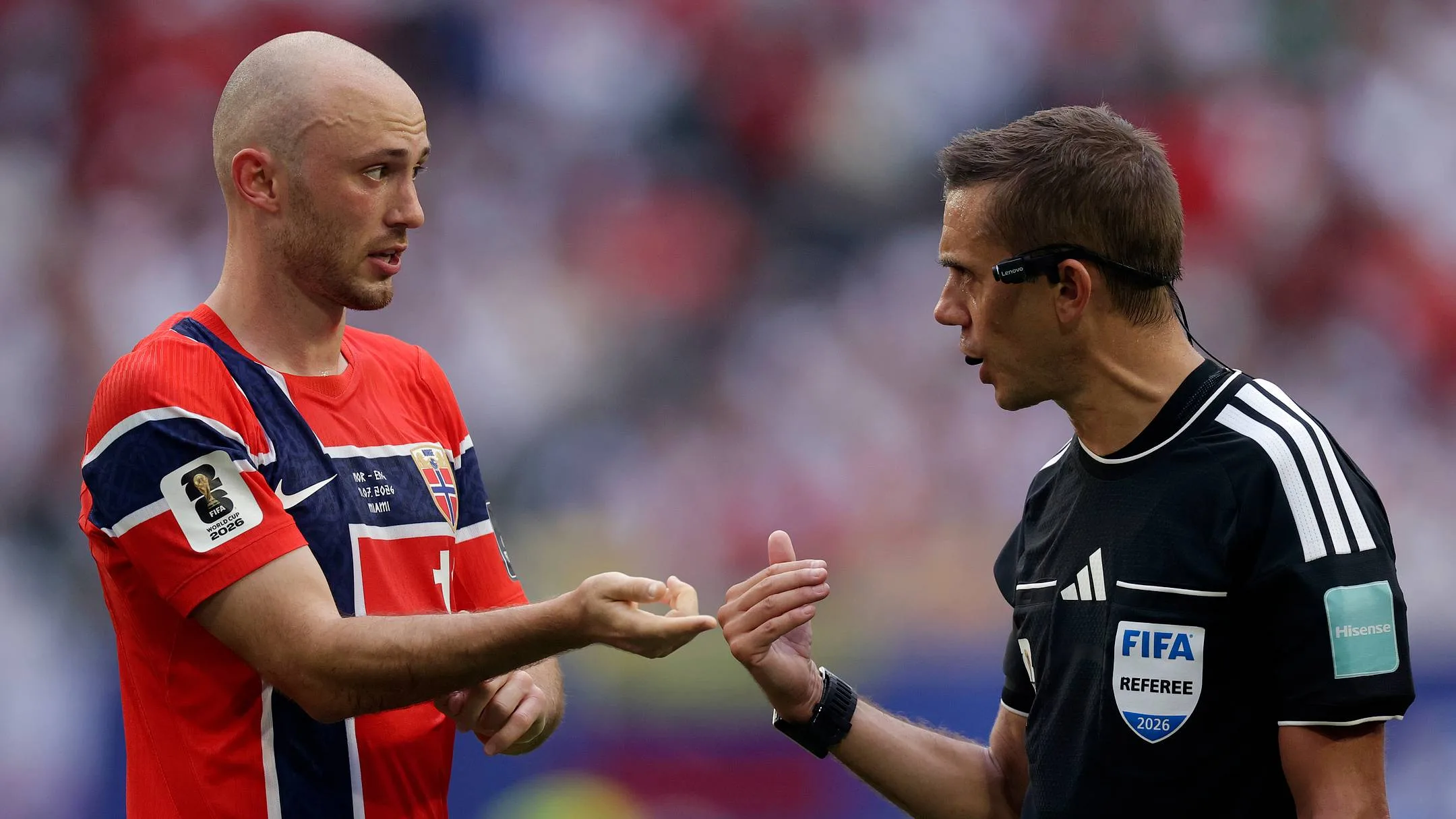
Communication is one of the least visible but most demanding aspects of refereeing.
At club level officials regularly oversee matches involving players from many countries. Continental competitions such as the UEFA Champions League increase the linguistic mix, and at the World Cup referees can face players from nations that share no common language at all.
The laws of the game provide non-verbal tools: whistles, hand signals, flags and cards. Yellow and red cards were introduced to overcome language barriers at international tournaments, giving referees a way to show disciplinary decisions without words. Despite that, speaking remains essential. Verbal exchanges help calm players, explain decisions, manage confrontations and announce VAR rulings to the crowd.
On the international stage FIFA designates English as the primary language on the field. Officials selected for tournaments such as the World Cup are expected to communicate confidently in English, and that language is used for official match reports and tournament documentation. FIFA also encourages referees to speak at least one additional official language, typically Spanish, French or German. Since many elite referees come from non-English-speaking countries, it is common for World Cup officials to be bilingual or even multilingual.
Domestic competitions are more straightforward. In the Premier League, officials appointed by the Professional Game Match Officials Limited operate in English for on-field communication, VAR discussions and official reports. The same principle applies in Spain, where La Liga referees conduct matches, communicate with VAR and complete official documentation in Spanish.
UEFA follows a similar approach for European club competitions. English is used as the common language in the Champions League, Europa League and Europa Conference League, allowing referees to manage players from dozens of countries using one shared language.
Refereeing today is therefore a blend of universal signals and spoken clarity. Cards and gestures remain vital, but the ability to communicate verbally in a shared language is central to managing modern matches.

Champions League
Iraola sets out Ekitiké recovery outlook after Champions League call
Iraola says Ekitiké could return by January 2027, after a surprise Champions League squad call.
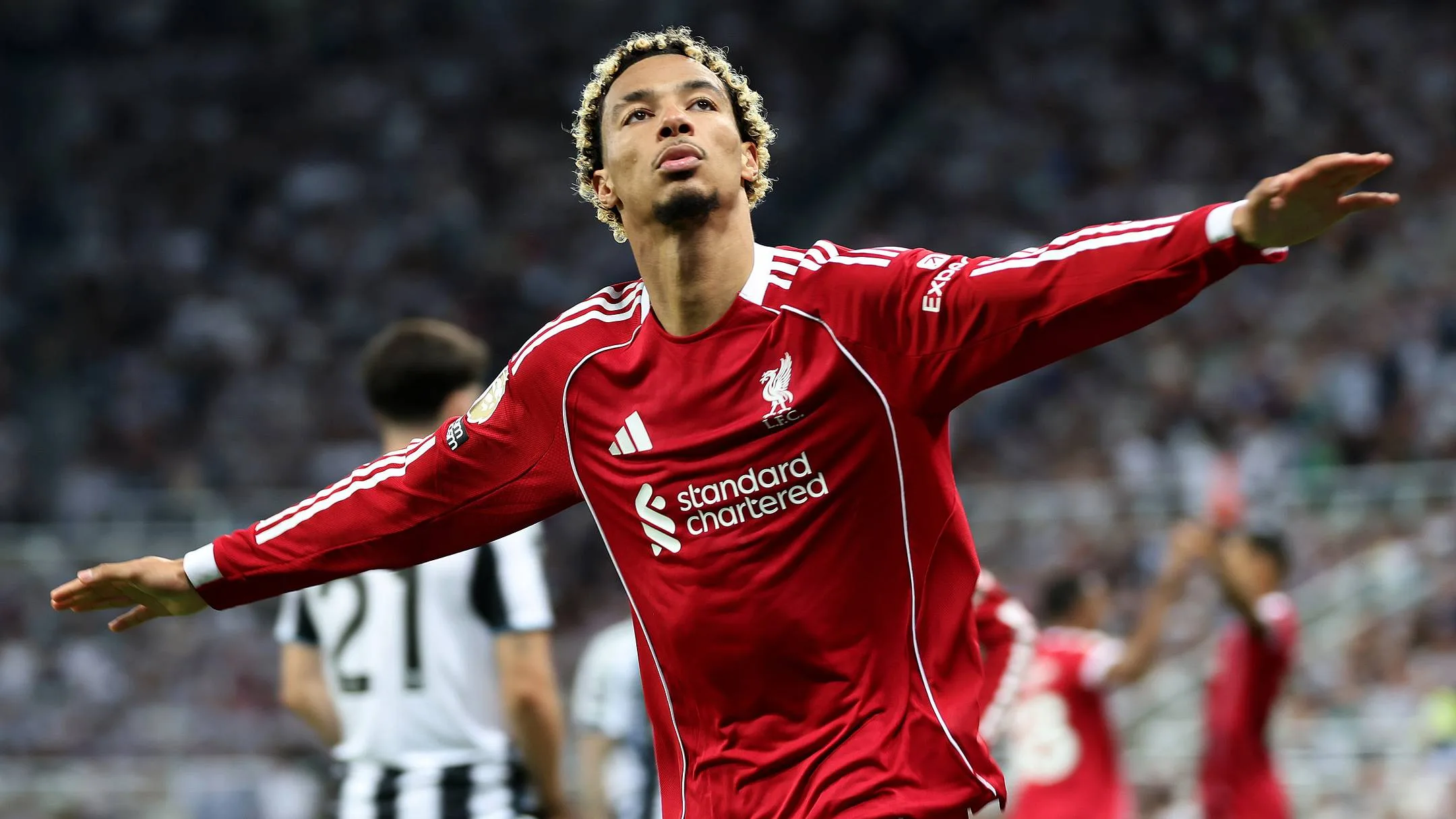
Liverpool manager Andoni Iraola says there is hope that Hugo Ekitiké can return to action by the end of January 2027, despite the forward still being some way from full fitness.
His inclusion in Liverpool’s Champions League roster for the league phase raised eyebrows, especially with Federico Chiesa and Wataru Endō left out, but Iraola explained that the decision was made with the medical department after assessing the squad list for Europe.
“I think it’s difficult with these long-term injuries, I think he’s still far [away],” Iraola revealed.
“But we had a meeting with the medical department to analyze when we completed the [squad] list for the European games. There is a reasonable chance that he could help us in the last two games of the group stages.
“But it’s still very early to say. It’s very early because it’s a long-term injury [and] a big part of the rehab [he] is still to meet. But if we decide to put him there, it is because there is a hope and there is a realistic chance that he could help us in January.”
The issue of how to fit Ekitiké and Alexander Isak into the same side has been discussed for more than a year. Liverpool had already spent $106 million (£79 million) on Ekitiké when Isak became the most expensive player in Premier League history.
Former boss Arne Slot was left to solve the problem, although Isak’s early fitness issues and later leg break meant the pair only shared the pitch for 186 minutes across eight appearances.
When Ekitiké does return, he is expected to be eased back as Isak’s deputy. Even so, once fully fit, the 24-year-old is unlikely to be content with a backup role for long.
Slot also suggested another route, saying Ekitiké could operate as a winger alongside Isak. The Frenchman made one appearance on the right side of Liverpool’s attack last season.
Arsenal
Ballon d’Or 2026 coach shortlist: Emery, Kompany and Arteta in contention
Emery, Kompany and Arteta headline a strong 2026 Coach of the Year shortlist after major seasons.
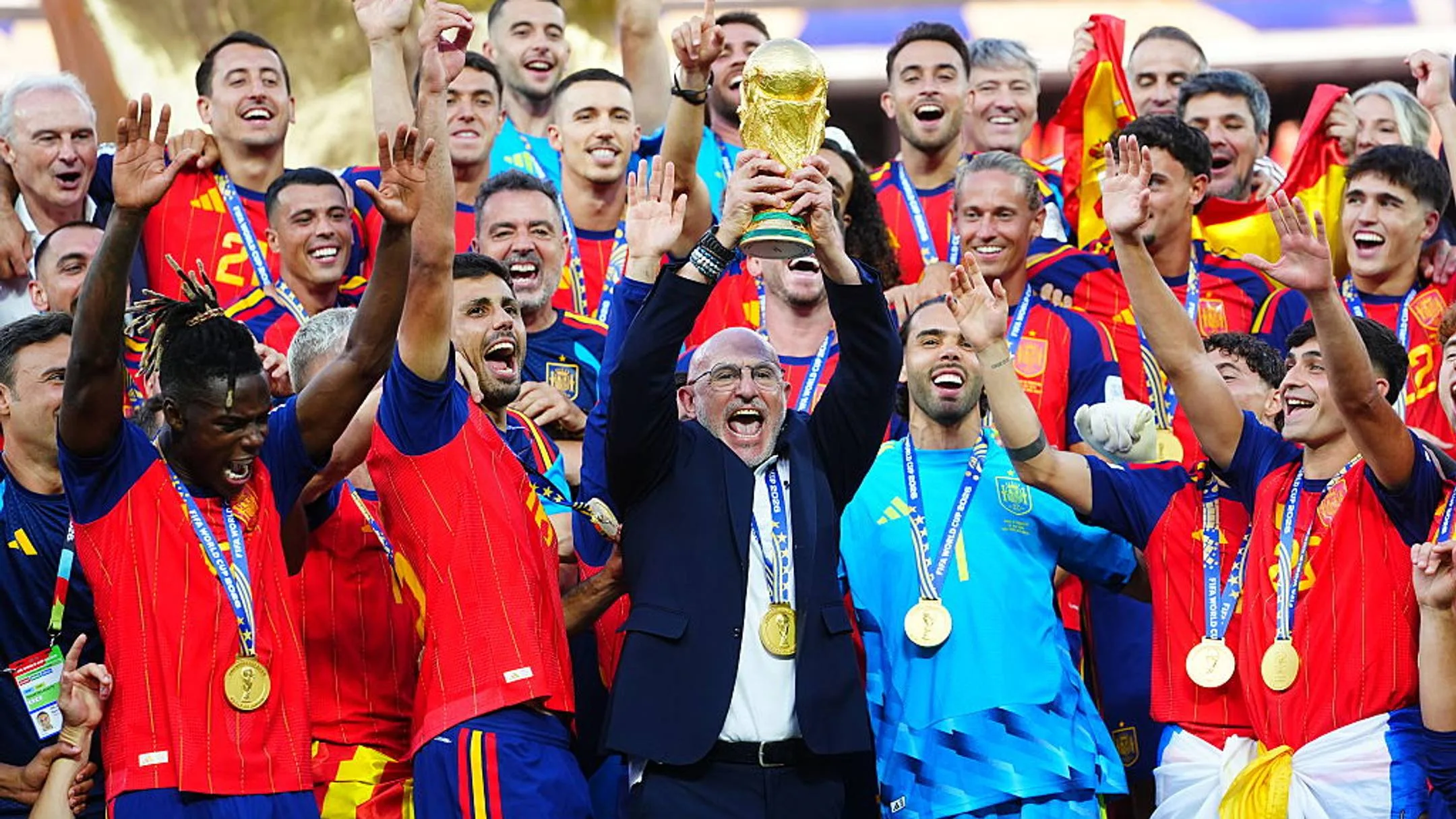
Five managers have been named on the shortlist for the 2026 Men’s Coach of the Year award, also known as the Johan Cruyff Award. It is only the third year the honour has been presented, after Carlo Ancelotti and Luis Enrique collected the first two trophies.
Enrique is on the list again, joined by three other Spanish managers, while the previous two winners both came from Champions League-winning campaigns. That pattern may not continue this time, with the field shaped by very different achievements across domestic and European football.
Unai Emery stands out after steering Aston Villa to their first major trophy in 30 years. Villa won the Europa League, a competition Emery has now claimed for a record-extending fifth time in his career and with three different clubs. He had already taken Villa back into the Champions League for the first time since 1982 in the previous season, and he then added a fourth-place Premier League finish to go with the club’s trophy breakthrough. It was enough to confirm his place among the most important managers in the club’s history.
Vincent Kompany also made a strong case in his second season at Bayern Munich. The German side won the Bundesliga, the German Cup and the German Super Cup, losing only once in a 34-game league campaign. Bayern scored 122 Bundesliga goals, averaging 3.5 per game, as Kompany’s team combined power with control. Their Champions League run ended in a narrow semifinal defeat to Paris Saint-Germain, though they did end their long struggle against Real Madrid by beating them in the quarterfinals.
Mikel Arteta’s case is built on a long-awaited breakthrough for Arsenal. After 22 years, the club finally won the Premier League, with Arteta rewarded in his sixth full season in charge. Arsenal also went unbeaten throughout the Champions League until the final, where they lost on penalties to PSG. Even without the European crown, it was a season that showed clear progress, both at home and abroad.
Arsenal
Ballon d’Or 2026 club nominees confirmed as PSG, Arsenal and Bayern lead the way
PSG, Arsenal and Bayern Munich headline the 2026 Club of the Year shortlists.
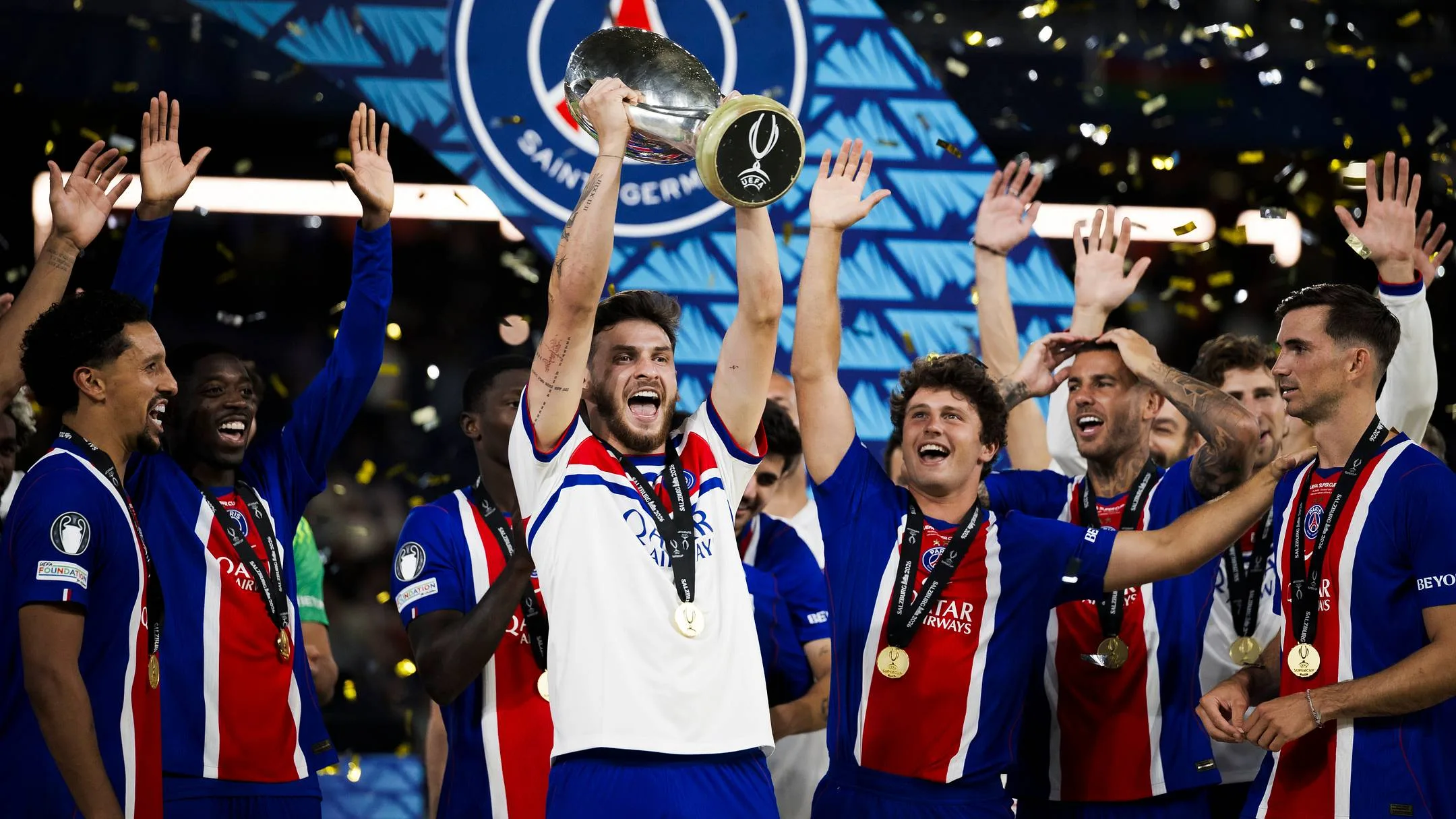
The nominees for the 2026 Club of the Year awards have been revealed, with Paris Saint-Germain aiming to retain their place at the summit after last season’s success.
PSG won the 2025 prize after establishing themselves as European champions, and they return to the frame once more after holding onto their Champions League crown last season. The French side will go into the ceremony in London on Oct. 26 among the leading contenders for Men’s Club of the Year.
Arsenal are also in the running after a season that brought their first Premier League title in 22 years under Mikel Arteta. They were denied in the Champions League final by PSG on penalties, but remain in strong form and are expected to be challengers for another domestic title while continuing their push for European success.
Bayern Munich complete the European heavyweight presence on the men’s shortlist. The Bundesliga champions impressed with their attacking play, driven by England striker Harry Kane, who is also among the leading Ballon d’Or contenders. Vincent Kompany’s team were involved in a Champions League semifinal with PSG that is already being spoken of as one of the standout ties in the competition’s history.
The list is completed by Bodø/Glimt, whose wins over Atlético Madrid and Manchester City marked them out as major overachievers, and Flamengo, who added the Copa Libertadores to their Campeonato Brasileiro triumph.
The Women’s Club of the Year award, first presented in 2023, has also produced a strong field. Barcelona, winners of the first two editions before Arsenal took the trophy in 2025, return after a season that brought them Europe’s top prize and a domestic treble.
They are joined by Bayern Munich, Manchester City, OL Lyonnes and Club América on the women’s shortlist.