Arsenal
Arsenal to Assess Saliba’s Back After World Cup as Surgery Remains an Option
Arsenal must decide Saliba’s back issue after the World Cup; surgery could delay 2026–27 start soon.

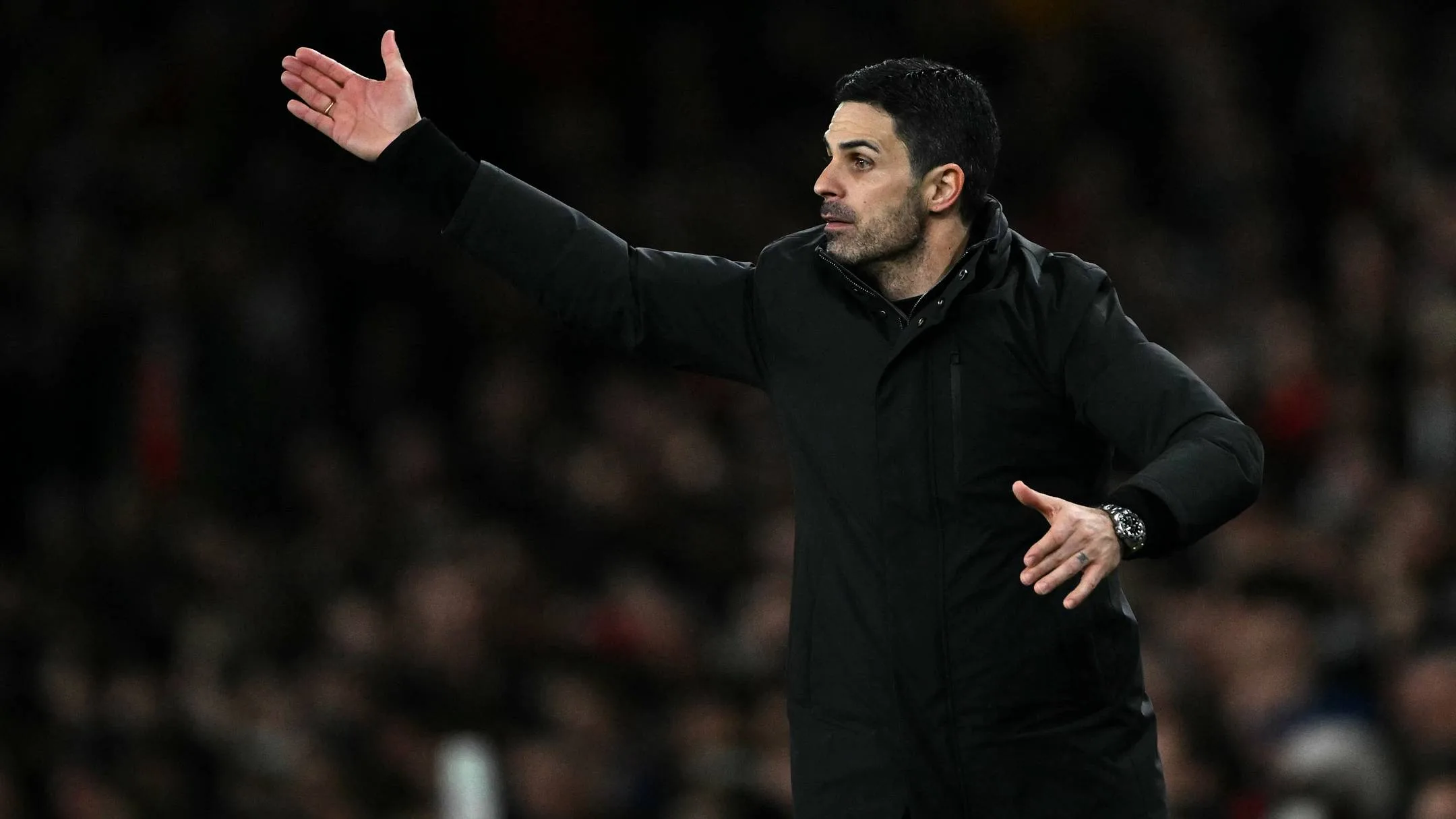
Arsenal must make a clear decision on William Saliba’s persistent back problem once the World Cup concludes, L’Équipe reports. Medical staff and those close to the centre back have flagged ongoing concerns about his long-term fitness, with the player seen grimacing during parts of team training before Monday’s game.
As it stands, and has been the case for a while now, Saliba is expected to continue to play through the injury. The club will still need a formal treatment plan after the World Cup. Arsenal could continue with a conservative management strategy, but surgery has not been ruled out and remains a possible course of action.
If the issue is aggravated during the tournament, any further damage this summer could significantly delay his participation at the start of next season. The specifics of Saliba’s current ailment remain unclear at present, and it is not yet known whether this problem is connected to the back injury that sidelined him in March 2023.
Supporters will recall that Saliba missed three months in 2023 while recovering from that earlier back injury. Many fans saw his absence that season as a factor in Arsenal’s slip in the Premier League title race. Those memories contribute to the current anxiety around the possibility that a recurring condition may require more definitive treatment.
Should Saliba undergo surgery after the World Cup, he would almost certainly not be ready for the start of the 2026–27 season, although recovery timelines can vary depending on the exact nature of the intervention. Arsenal’s title defence is due to begin on August 22, a little over a month after the World Cup final on July 19. With France listed among the pre-tournament favourites, Saliba will be hoping for a deep run, perhaps lasting until the very last day.

Arsenal
Raya fitness doubt eases as Arteta awaits more scans
Arteta says Raya is out for Dortmund, but early scans suggest the Arsenal keeper may not be sidelined long.
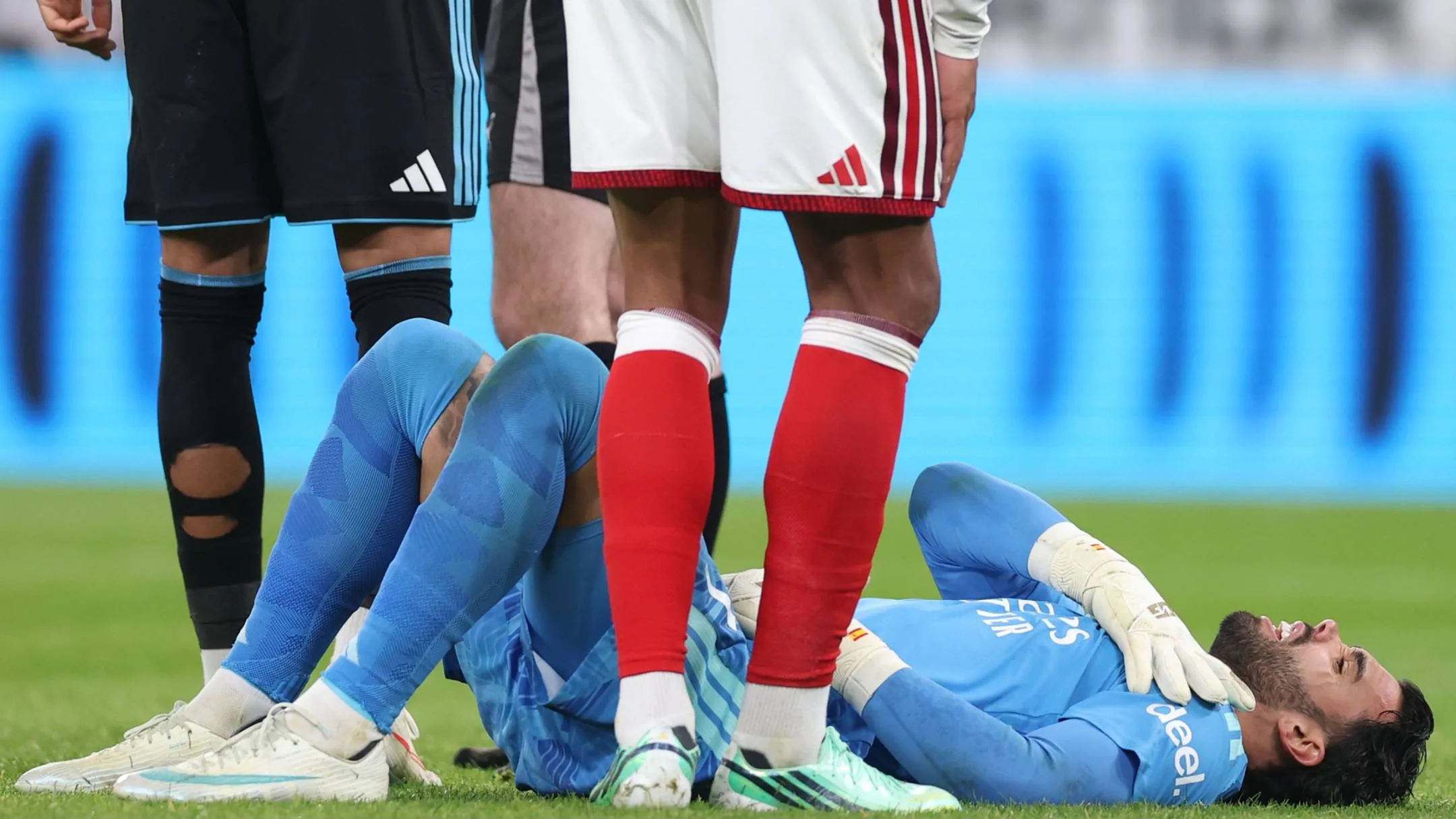
Arsenal have been given a more reassuring update on David Raya after Mikel Arteta ruled the goalkeeper out of Tuesday’s Champions League meeting with Borussia Dortmund.
Arteta said the Spaniard will not be available for the match, though the early indications from Sunday’s MRI scan suggest the issue may not keep him out for long. The manager admitted that the pain Raya felt immediately after the incident caused real concern inside the camp, but the latest signs point away from anything major.
“He is not fit for tomorrow [against Dortmund] unfortunately, but it doesn’t look too serious, we need some more tests tomorrow but it is quite encouraging,” Arteta told the media.
He expanded on the worry generated by the way Raya reacted at the time. “With the pain he was showing immediately after the action, we were all quite worried, but it seems to be better than we expected.
“The doctor explained [how it happened], it’s quite technical. When you actually look at the action, it does not seem to be much in it, but yeah, the extent of the pain he had and how much he was struggling, it was quite worrying.”
Arteta then added: “We expected something much worse, because he could almost not handle the amount of pain that he had at that moment. The first tests we’ve done show something that is much more encouraging.
“No need for surgery which was the main fear, because that would rule him out for months, so let’s see.”
Raya will undergo further checks while the rest of the squad prepares for Dortmund. Arsenal now face a waiting game over whether he might recover in time for this weekend’s visit of Manchester City, with Arteta leaving the door open but offering no certainty.
“Tomorrow we will have more tests and we will know,” Arteta smiled.
If Raya cannot recover in time, Arteta must choose between Kepa Arrizabalaga and Illan Meslier to start in goal against Dortmund.
Arsenal
David Raya injury leaves Arsenal awaiting scans and return timeline
Arsenal await scans on David Raya after the goalkeeper limped off against Newcastle United.
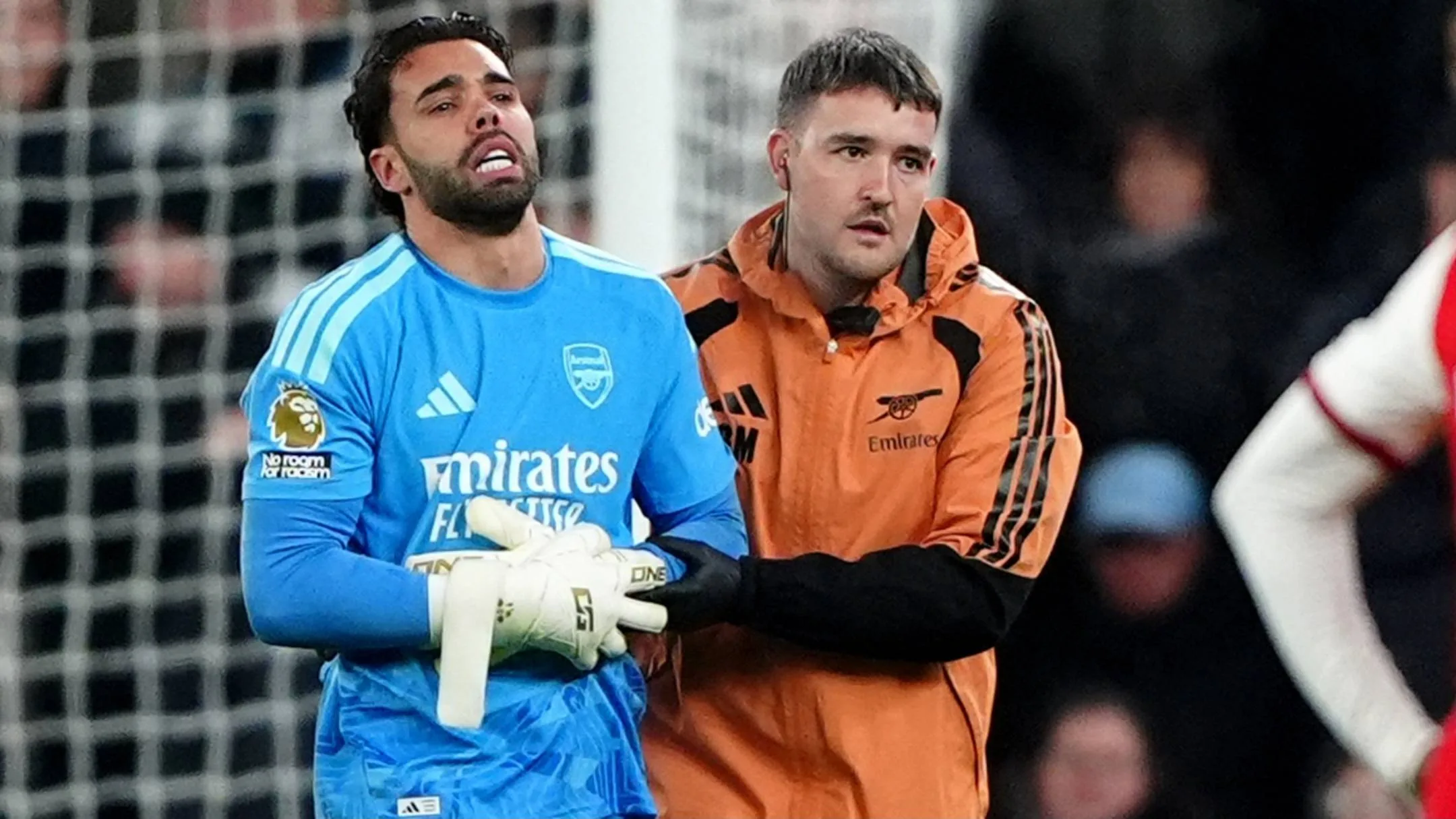
Arsenal are waiting on a clearer picture of David Raya’s injury after the goalkeeper was forced off in the 2-2 draw with Newcastle United, in a moment that initially appeared so minor that some suspected he was trying to create a pause in play.
The concern for Arsenal is obvious. Raya has become central to Mikel Arteta’s side, and any spell without him would be significant. Arteta admitted after the match that the club still do not know the full extent of the problem. “Obviously it’s not good David had to come off but at the moment I don’t know [the prognosis],” Arteta said after the game, revealing the goalkeeper will be sent for further scans to determine the nature of his injury.
Although Raya left the pitch holding his forearm, the sense is that the issue may be linked to his shoulder. The limited contact involved points toward either a dislocation or a strain, but the real answer will only come once the scans are completed.
That uncertainty leaves Arsenal in a difficult position. The shortest possible absence would still be a concern, while a more serious internal injury could keep him sidelined for weeks or even months. In the best-case scenario, Raya may be available again before the end of the month.
For now, Kepa Arrizabalaga is expected to step in for Arsenal, with Illan Meslier likely to move up into the matchday squad as third choice during Raya’s absence.
What is already clear is that several major fixtures are likely to arrive too soon. Tuesday’s Champions League clash with Borussia Dortmund will come too quickly, and the same may also be true of the Premier League meeting with Manchester City on Nov. 29.
December then brings a demanding run of games for Arsenal, including Real Madrid’s visit to the Emirates on Dec. 9, three days after the north London derby against Tottenham Hotspur. Manchester United follow on Dec. 20, before the year closes with Crystal Palace and Fulham.
Arsenal
Guimarães Fades as Arsenal’s Mental Test Breaks Down at Newcastle
Guimarães returned to Newcastle under pressure, and Arsenal lost control as emotions overtook the game.
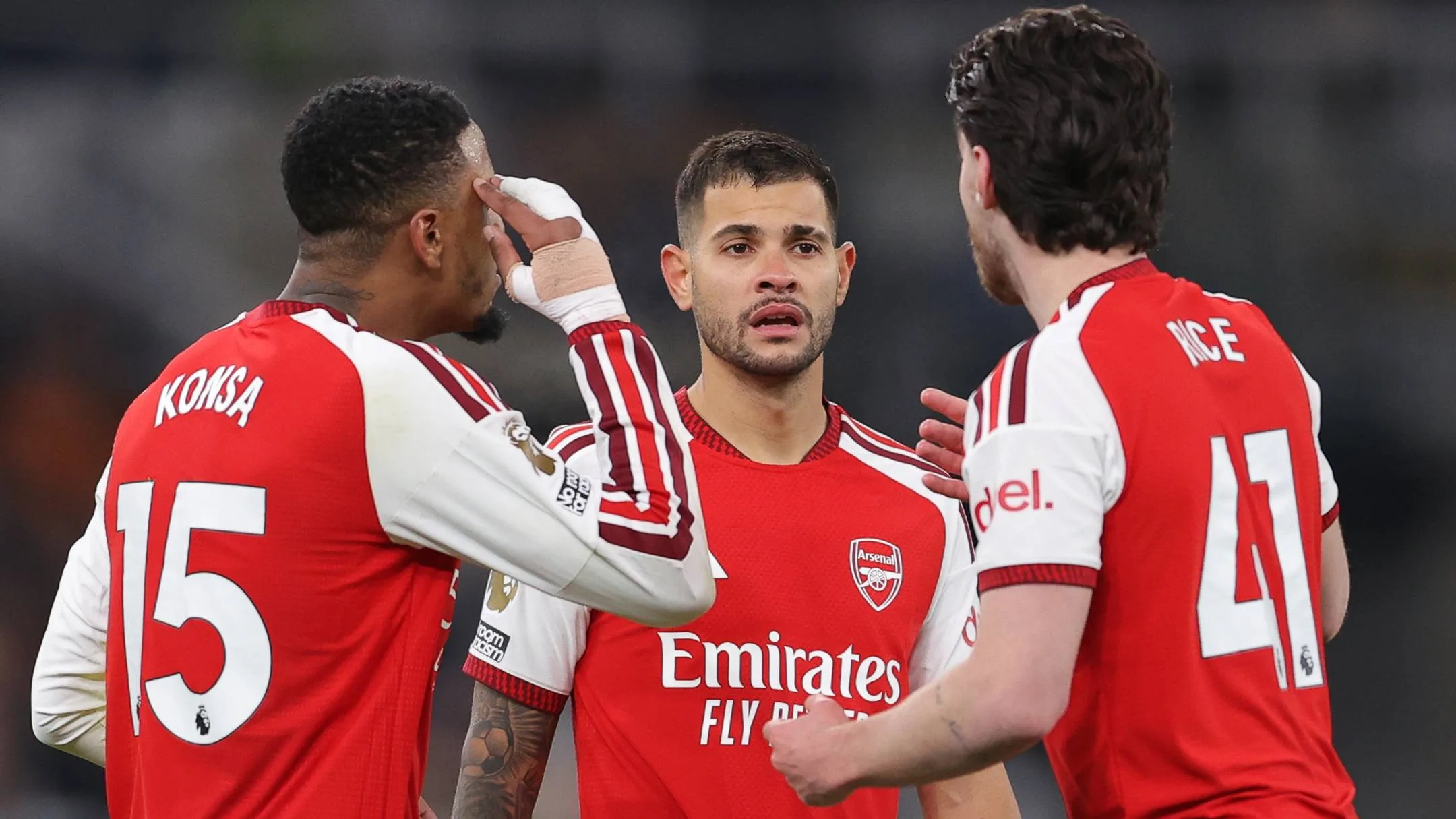
Bruno Guimarães returned to Newcastle with a heavy burden on his shoulders and found no shortage of resistance. After moving to Arsenal in a summer transfer that divided opinion, the Brazilian was greeted by a hostile crowd and spent much of his 70 minutes trying to survive the moment rather than shape it.
The Arsenal midfielder had been told to prepare himself emotionally, with Mikel Arteta again underlining the importance of “emotional dominance.” But the challenge did not go as planned. Guimarães, who once described Newcastle as a place where he “never felt so loved like the way I was at Newcastle,” was booed and chased through a match that became increasingly uncomfortable for the visitors.
His early work was cautious. Across the first 25 minutes, he barely risked a pass forward, apparently hoping to keep the noise to a minimum by limiting his involvement. That restraint gradually eased, and he started to move with more freedom before the interval, including one burst forward and an attempt to challenge a cross from Declan Rice that drifted just wide. Even then, Arteta was not satisfied and was seen berating him for drifting out of position.
The second half told a harsher story. David Raya’s injury early after the restart drained Arsenal’s momentum, and the visitors never recovered. Martin Ødegaard’s loose touch and an error from Eberechi Eze opened the door for Newcastle, who moved in front through Malick Thiaw after a corner.
Guimarães’ influence disappeared almost completely after the break. In his 25 second-half minutes he managed only five touches, while Ødegaard had three as Arsenal were overrun. Newcastle scored twice, forced off Arsenal’s goalkeeper and came close to a third before the visitors registered a shot after the interval. Matthias Jaissle said Arsenal were “shaking” in those closing stages.
Yet Newcastle were not fully in control either. The home crowd grew restless during a flat first half, and the energy of the comeback left them exposed while protecting a 2–1 lead. In a match defined by nerves, neither side handled the emotional demands cleanly.