International
Cristiano Ronaldo’s Most Notable Touchline Flashpoints, Ranked
Ronaldo’s outbursts have become part of his legacy, from armband throws to World Cup frustration and more.

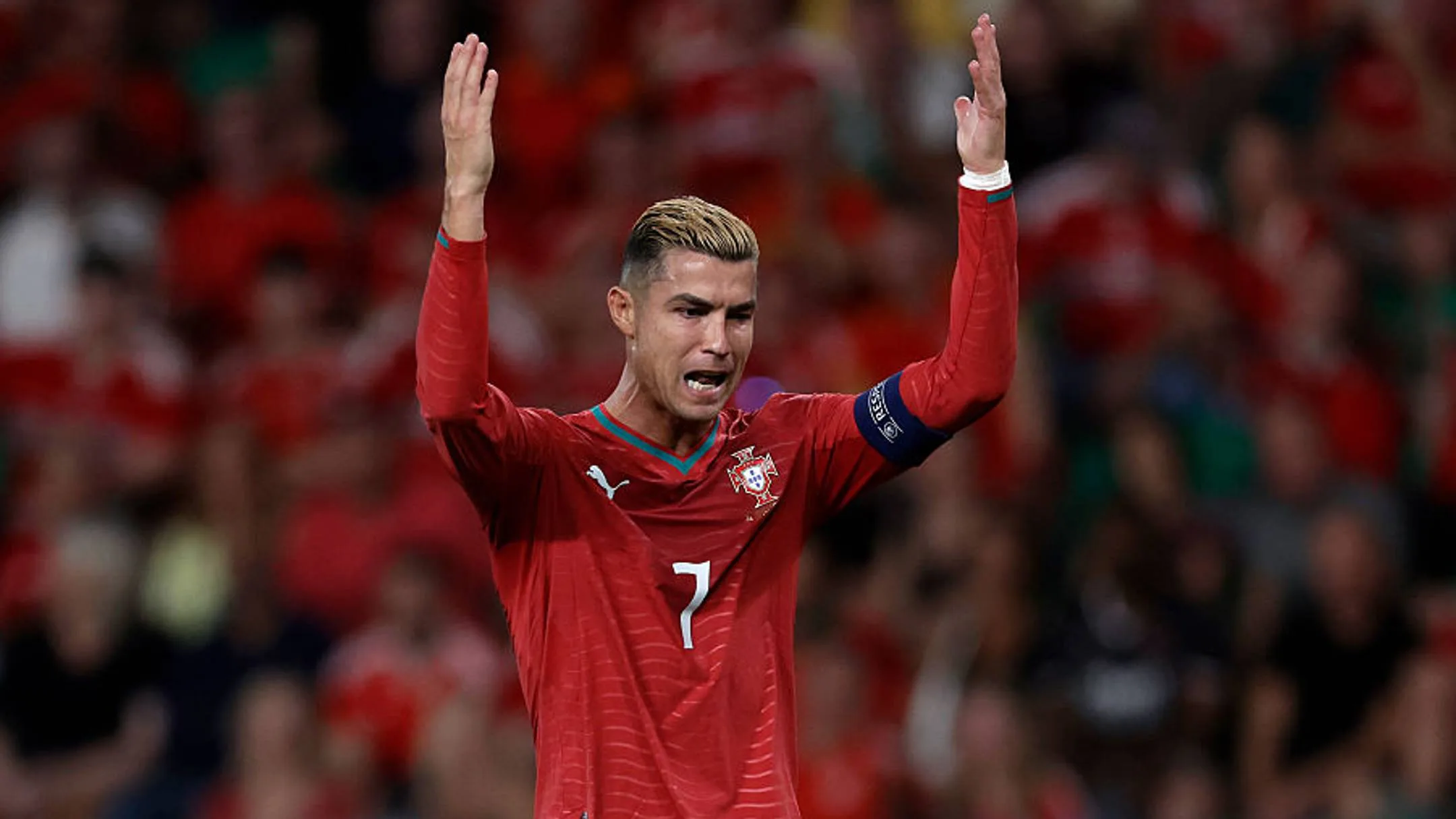
Cristiano Ronaldo has rarely been a player to absorb frustration quietly. Across club and international football, his reactions have often become part of the story, alongside the goals and the silverware.
One of the most talked-about moments came in a World Cup qualifier against Serbia, when Ronaldo believed he had scored a late winner after getting to the ball before the goalkeeper. Stefan Mitrović then cleared it from clearly behind the line, but with no VAR available the referee allowed play to continue. Ronaldo reacted with visible anger, threw his armband to the ground after being booked for dissent, and later wrote on social media: “There are difficult times to deal with, especially when we feel that an entire nation is being harmed.”
That was not the first time his armband became a casualty of frustration. In a 2010 friendly against Spain, Ronaldo produced a superb finish that should have stood, only for Nani to head in from an offside position. The goal was disallowed, and Ronaldo responded by making a strange little dance on the spot before dropping his armband to the grass. Portugal still won 4-0, though the decision clearly did little to calm him.
There was also his reaction during a league match for Real Madrid against Almería in the closing stages of the 2014-15 season. Álvaro Arbeloa scored from a cross when Ronaldo had been positioned at the back post and ready to add to his own tally. While the rest of the side celebrated, Ronaldo smashed the ball back into the net in anger.
His Manchester United return in 2021 also produced an ugly moment. After a 1-0 defeat away at Goodison Park, Ronaldo was filmed swiping a phone from a young fan’s hands as he walked down the tunnel. He later received a two-match ban and was cautioned by the police.
The 2022 World Cup brought another difficult chapter. Ronaldo scored once from the penalty spot in the group stage, then reacted badly when substituted in a 2-1 defeat to South Korea. Fernando Santos later said, “I didn’t like it, not at all. I didn’t like it.” Ronaldo was then left out against Switzerland, where Gonçalo Ramos scored a hat trick.




International
Solbakken says Haaland issue reflects punishing calendar, not alarm
Solbakken blamed a brutal schedule after Haaland was withdrawn early in Norway’s win over Portugal.
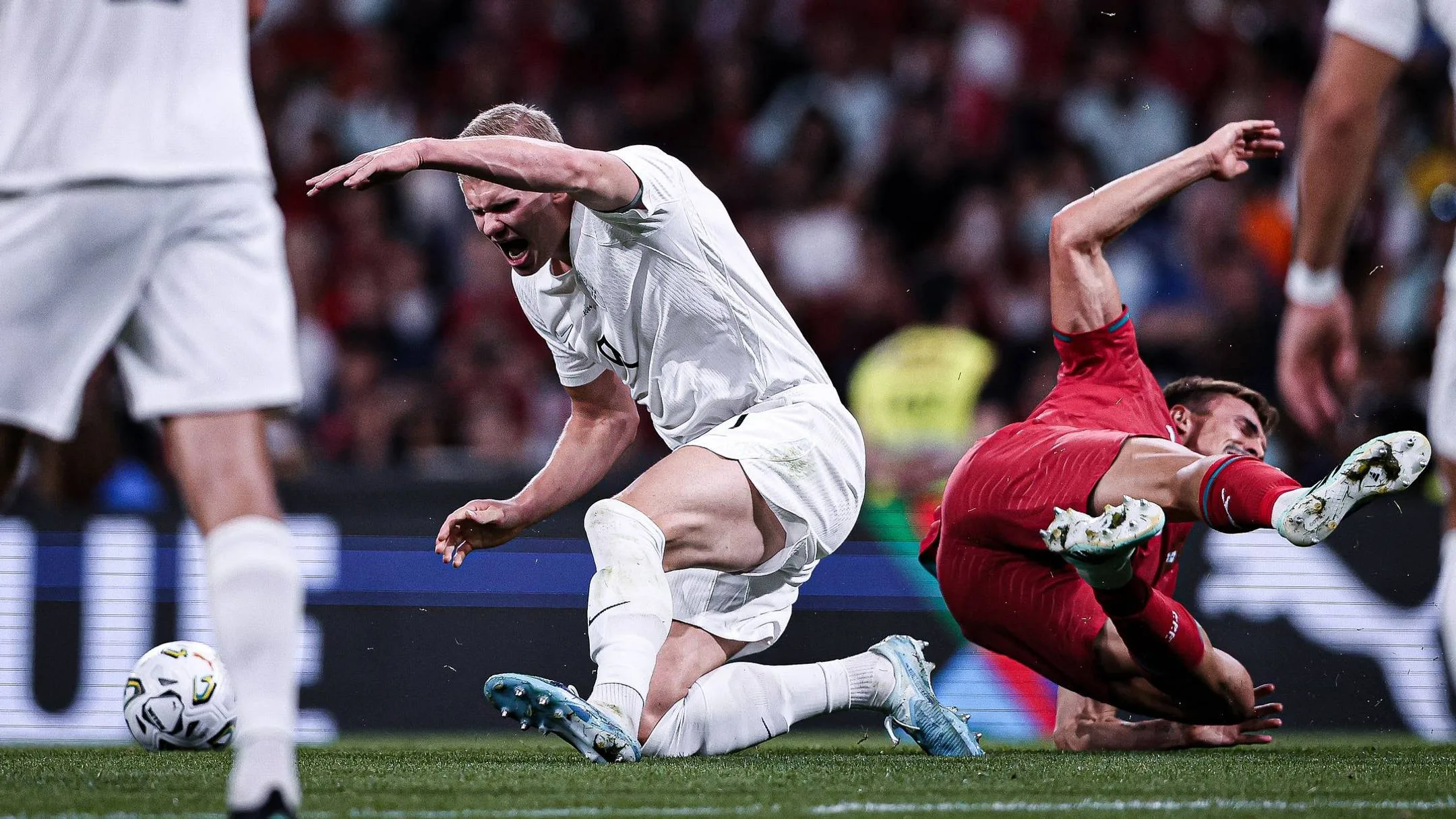
Norway manager Ståle Solbakken has moved to ease concern over Erling Haaland after the forward was withdrawn early, framing the decision as the result of exhaustion rather than anything more serious. He pointed to what he called a relentless workload, saying it is all part of an increasingly punishing football calendar.
“There are many players who are really exhausted,” Solbakken explained. “[Sander] Berge and [Martin] Ødegaard are practically scraping rock bottom. Erling was digging deep for a long time. I think he took a real beating and served as an excellent target man. We were hoping for 60, and he managed 65. That’s a lot of positives.”
Going into the match against Portugal in Porto, Haaland already knew he might not complete the full game. There was some thought given to protecting him for the second half, but that plan was quickly ruled out.
“He put in a good 60 minutes today,” Solbakken reasoned. “He played two full 90-minute matches against Denmark and Portugal. He was tired against Wales. That’s why we had a heart-to-heart yesterday. We went through the various possibilities.
“He could perhaps have played the last 45 minutes against Portugal. That was a topic of discussion. But he has a really bad feeling about that kind of thing. He’s had experiences where he was brought on in the League Cup, and it didn’t go particularly well. I’m very pleased that he managed to dig deep and deliver a good 60 minutes.”
With Norway’s internationals complete and Manchester City not back in action until Sunday’s trip to Anfield, Haaland now has a brief break. Norwegian outlet Dagbladet reported that he travelled from Portugal to Málaga for some warm weather after the fixture.
Solbakken was blunt about the broader strain on players, especially those in the Champions League and those with limited rest after major summer tournaments. “It’s a grueling schedule,” he lamented. “For those playing in the Champions League who’ve had little time off, it’s more brutal than for the others. Especially for the players who didn’t get a summer break because of the World Cup and going deep into the tournament. We did that.
“Having so little vacation and then heading straight into high-intensity leagues—and then you have this international break on top of that—it’s not about making excuses. It’s just insane. Especially for the smaller nations.”
Haaland remains near the top of the minutes table despite the heavy load, sitting third on 2,789 minutes. He is, as the draft notes, a victim of his own success: too important to leave out, and now feeling the strain that comes with that demand.
International
Klopp’s Wirtz praise overlooks the bigger Liverpool question
Klopp praised Wirtz, but his Serbia display did not solve the Liverpool puzzle or explain it.
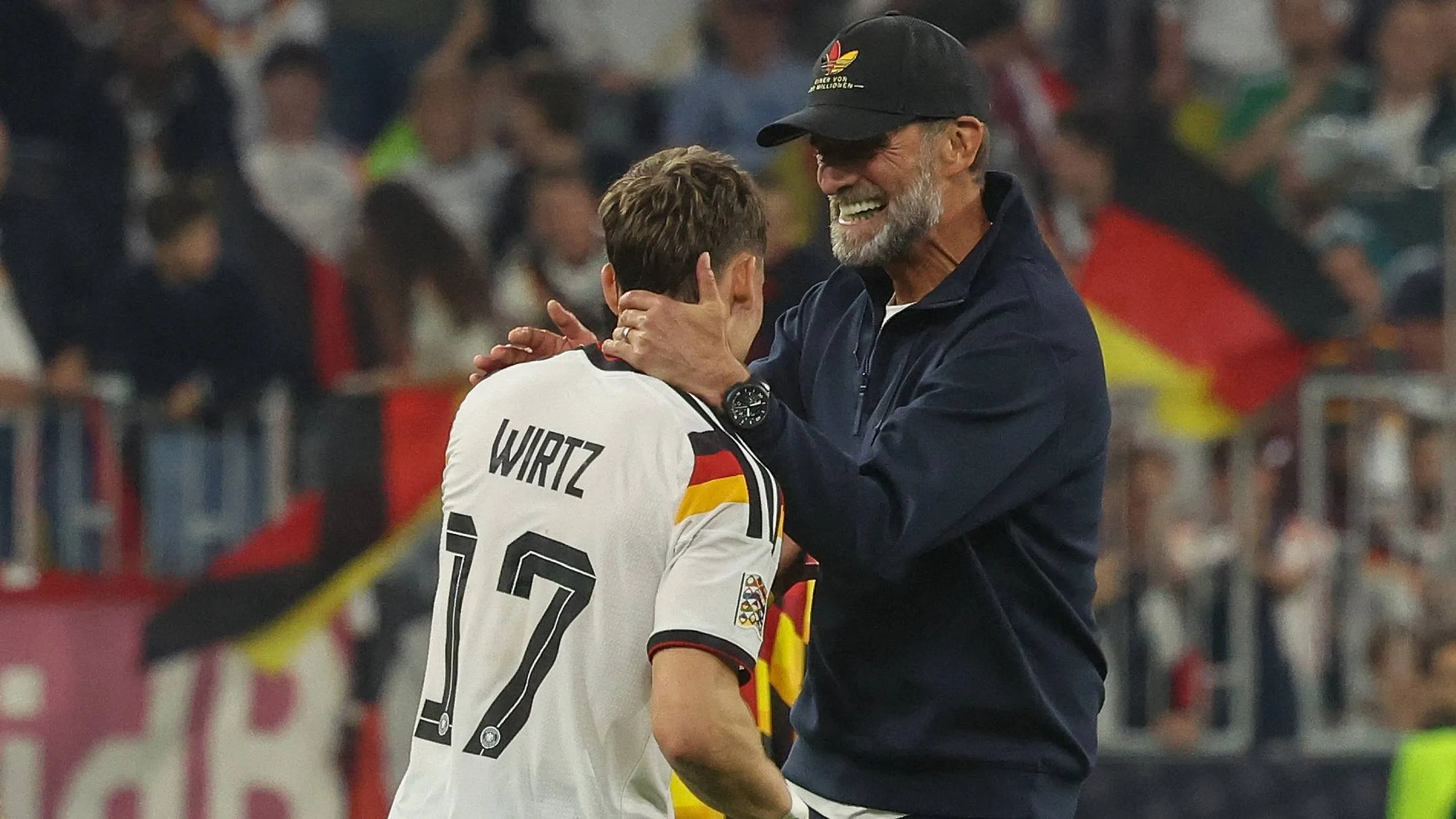
Jürgen Klopp urged Liverpool supporters to “be happy” after Florian Wirtz delivered a standout display for Germany against Serbia, but that reaction papers over the reason the midfielder has looked short of his best on Merseyside.
Klopp was glowing in his assessment. “He was bursting with joy and worked incredibly hard,” he said. “That was exceptional; he played a fantastic game. Our style of play suits him.
“I don’t know what he has to do to make everyone happy, but everyone in Liverpool should be happy today.”
There is no doubt Wirtz was influential. He scored once, created six chances, and registered more key passes than anyone else on the pitch. He also finished with more chances created than misplaced passes, a sharp contrast to his return across six Liverpool appearances this season, where he has managed only one assist and is still waiting for his first goal.
But the national-team context matters. Wirtz has not been dominant every time he has played for Germany. He failed to score at the World Cup when Germany were knocked out by Paraguay in the round of 32, and he was anonymous in last weekend’s defeat to Greece. Serbia, too, offered favourable conditions. They are on a five-match losing streak after failing to qualify for the largest World Cup ever, and have conceded at least two goals in each of those defeats.
Wirtz himself acknowledged the space he was given. “The opponent gave us more space because they were a bit more disorganized and perhaps looked to counter more,” he said. “That created more spaces that we utilized well.”
He also admitted his preference: “What do I need to be at my best?” Wirtz shrugged. “Ideally, a lot of space in every game so I can do what I want!”
That is the problem. Liverpool do not regularly offer that kind of freedom. The player also looks more effective when allowed to roam, yet this season he has largely been confined to the left wing. Against Serbia, he moved across the attacking third and benefited from the movement around him. “The players around me also made it very easy for me today,” Wirtz explained. “There was a lot of movement in our game, and we were all eager to play football. That makes it easier to shine.”
International
Seven Ballon d’Or disputes that still define the award
A look at the Ballon d’Or’s most disputed decisions, from early exclusions to modern outrage.
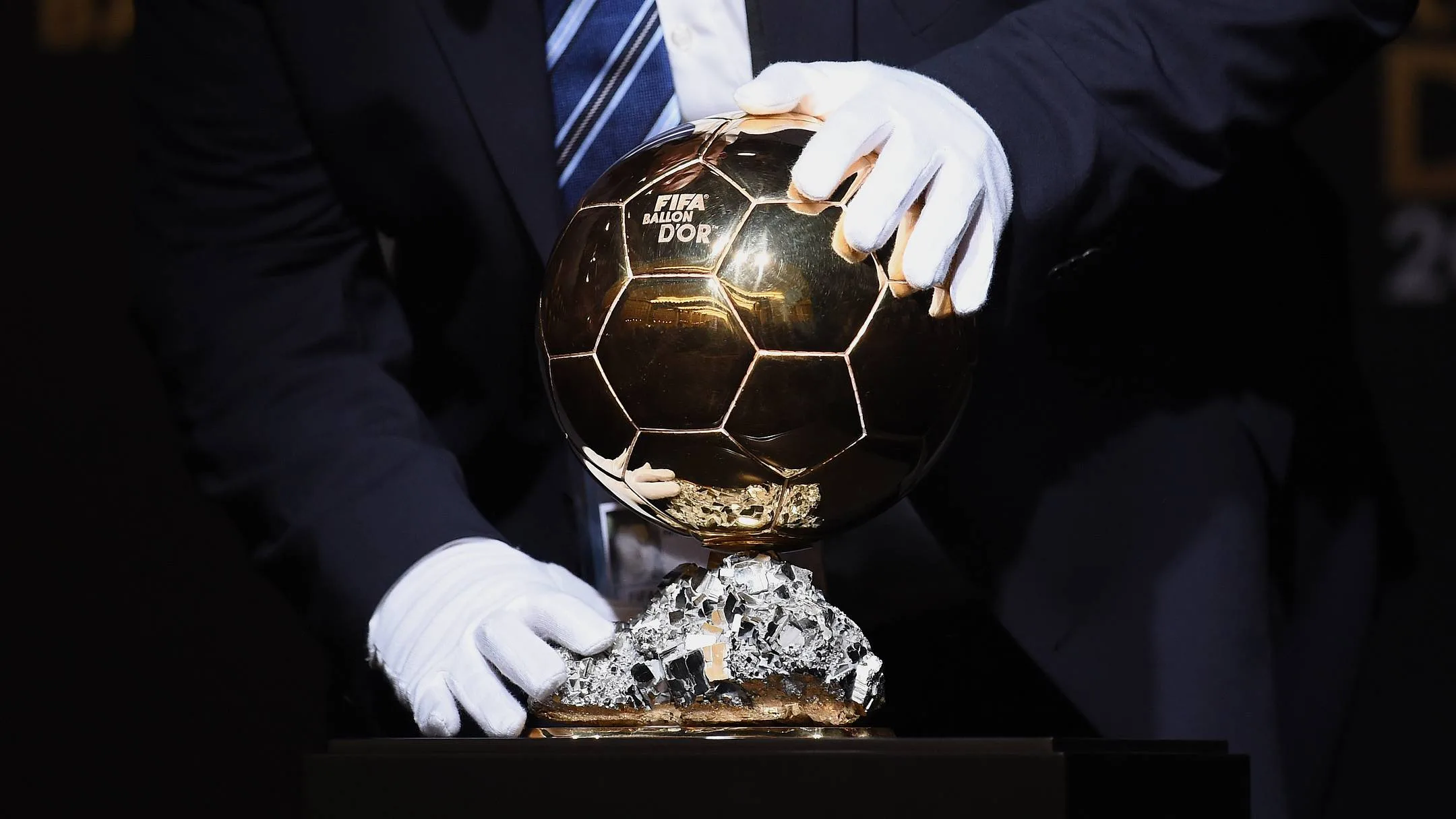
The Ballon d’Or was created in the mid-1950s by writers Gabriel Hanot and Jacques Ferran as a journalistic prize for the best European player in Europe. What began as a straightforward honour has become one of football’s most argued-over awards, with every era producing its own flashpoints.
By 2026, the contest sits in a different world. The Messi-Ronaldo period and the wider rise of individual acclaim have only intensified the debate, with stars such as Kylian Mbappé and Lamine Yamal now openly seeking votes. Yet the award has never been decided unanimously, and its history is crowded with choices that have baffled observers.
The early rules left out the world’s great non-Europeans until 1995, which means names such as Pelé, Diego Maradona, Mario Kempes and Romário do not appear among the winners. The inconsistencies did not stop there, as players such as Alfredo Di Stefano and Omar Sívori were eligible through dual citizenship.
Kevin Keegan’s 1978 win remains one of the oddest, especially when set against the year he had, while Kenny Dalglish finished only eighth despite 31 goals and a European Cup final winner. More recently, Erling Haaland’s 52 goals in 53 games during Manchester City’s treble season still were not enough to prevent Lionel Messi taking the prize.
The 2010 vote also caused lasting frustration. Messi profited from split support between Andrés Iniesta and Xavi, while Wesley Sneijder, central to José Mourinho’s treble-winning Inter Milan side and the Netherlands’ run to the World Cup final, ended up fourth. Diego Milito, despite a major season, was not even nominated.
Michael Owen’s 2001 success is still disputed, with Raúl’s La Liga dominance prompting the headline “Stolen Ballon d’Or” in Spain. In 2003, Pavel Nedvěd beat Thierry Henry, who had become the first player to reach 20 league goals and 20 assists in a Premier League season.
The 1960 result also drew scrutiny, as Luís Suárez prevailed while Ferenc Puskás finished second despite 47 goals in 36 games. More recently, Vinícius Jr being passed over for Rodri led to Madrid’s boycott of the Paris ceremony and a pointed statement from the club.