Chelsea
Premier League Matchday Four: a chaotic ranking of every club’s weekend
Matchday Four delivered VAR noise, red cards, late goals and several worrying displays across the Premier League.


Matchday Four brought a familiar mix of controversy, frustration and the occasional moment of quality, with VAR once again framed by talk of a “lighter touch.” Yet beyond the debate, the football itself produced a wide range of performances across the division.
Newcastle’s momentum under Matthias Jaissle disappeared at Elland Road on Monday, where they were passive and out of sorts on what their manager described as a “tough night.” Crystal Palace also came away dissatisfied, even if Pierre Sage felt his side “deserved at least a point” against Ipswich Town. That view was not widely shared after Axel Disasi’s red card left Palace exposed before stoppage time completed the damage.
Brighton ultimately pulled clear, but Coventry began well and made Bart Verbruggen work hard before the interval. Frank Lampard admitted, “We did some good stuff,” before adding, “then the game became very, very difficult for us.”
Manchester United’s display against Manchester City was another case of wasted opportunity. They struck the post twice and Bryan Mbeumo even saw a close-range effort kept out by Gianluigi Donnarumma, yet they still allowed the match to be decided by a refereeing mistake after being given favourable conditions.
Aston Villa’s problems under Unai Emery deepened in another home defeat, while Chelsea remained thrilling and chaotic in equal measure. Xabi Alonso summed up the feeling with, “I hope one day you will say it was a boring game and we won,” as the brilliance of the front three continued to coexist with serious defensive problems.
Arsenal survived a tense contest, with Mikel Arteta praising Sunderland: “They are a really, really good side,” he said, “and in any other moment we could’ve conceded.” Bournemouth and Brentford produced one of the most disjointed but competitive games of the round, while Tottenham’s second straight goalless draw left Roberto De Zerbi joking, “In Italy, I should be the best coach, no? Two games, two clean sheets.”
Everton were solid rather than sparkling, Liverpool under Andoni Iraola were alarmingly blunt, and Nottingham Forest ended a long wait for victory at Villa Park with a coordinated display. As for Brighton, Lewis Dunk’s long-range finish summed up a day when things simply fell their way.





Chelsea
Clearlake takes full control as Boehly exits Chelsea role
Clearlake have taken full control of Chelsea after buying out Todd Boehly and Mark Walter.
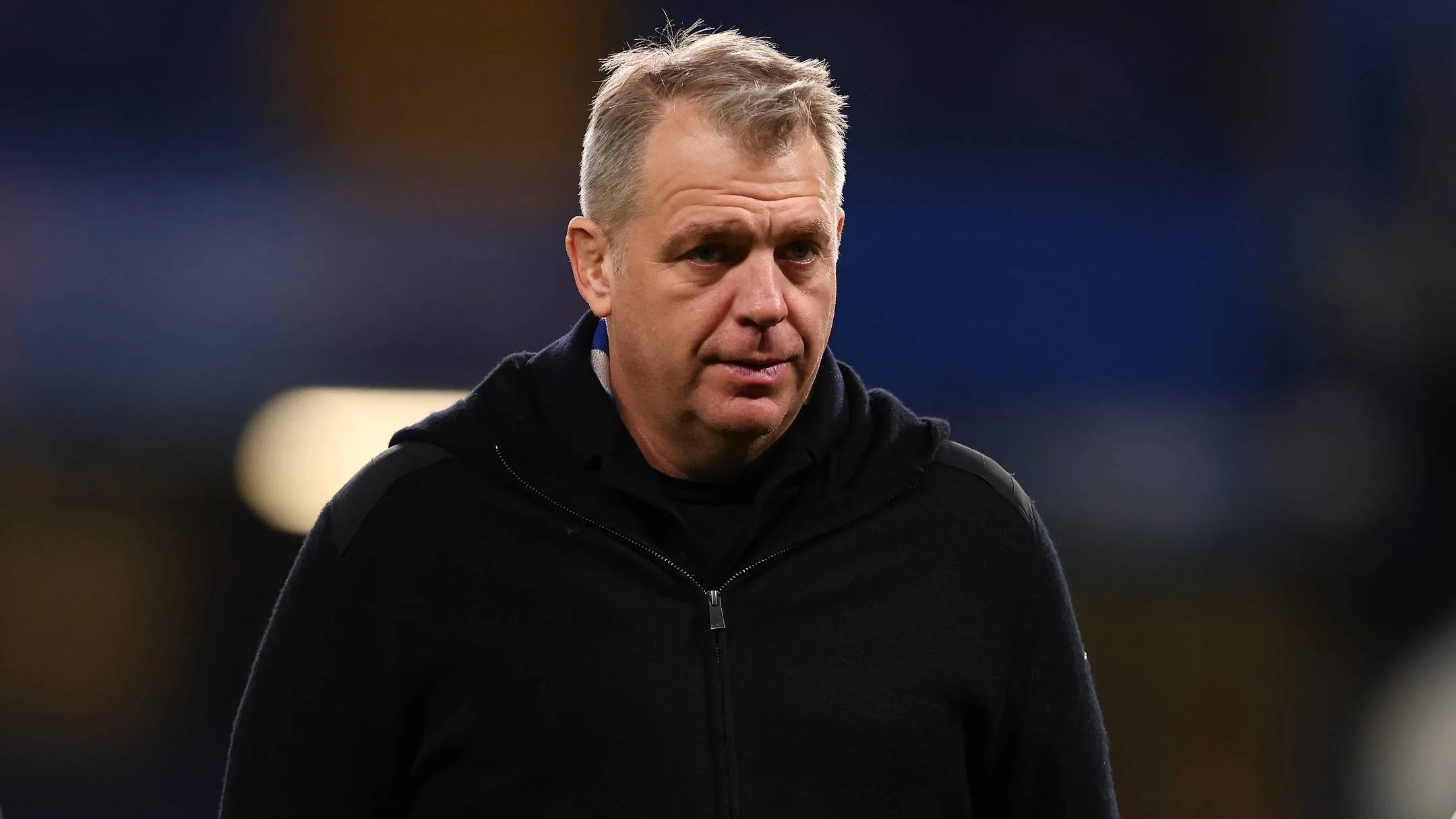
Chelsea’s ownership picture has shifted again, with Clearlake Capital now holding full control after buying out the shares previously owned by Todd Boehly and Mark Walter.
The deal has been completed, and The Times reported that Clearlake paid close to £1 billion, or $1.3 billion, to remove Boehly and Walter from their stakes. Boehly’s departure comes after years in which he had been the most visible figure in the club’s ownership structure, despite owning only 12.8% of Chelsea’s shares.
In a statement, Boehly said: “It has been an honor to serve as Chairman of Chelsea Football Club,” Boehly said in a statement. “I would like to thank the many who helped secure a bright future for the Club, including the English Premier League, the coaches and players, the talented leadership and staff at Chelsea , and the legions of dedicated fans.
“I have valued my partnership with Clearlake and the wider ownership group, and the collective decisions and investment we have made to support the immediate and long-term success of the Club. I am confident that Chelsea is well positioned for continued success under Clearlake’s leadership.”
Clearlake co-founders Behdad Eghbali and José E. Feliciano responded by praising Boehly’s role and underlining the direction they intend to take. They said: “Todd has been an important partner throughout our ownership of Chelsea, and we thank him for his time and contribution as Chairman. He will always be a part of the Chelsea story and family.
“Clearlake has served as Chelsea’s majority owner since 2022, and as we move to full control our focus is to continue investing in the Club’s infrastructure, sporting performance, player development and delivering long-term success for Chelsea and the Club’s supporters.”
The split appears to have been driven by two separate issues. Walter’s involvement became complicated by an investigation into financial misdealings, while Boehly had long been linked with disagreements inside the ownership group, something repeatedly denied by those in charge.
Boehly is not facing any allegations connected to the accusations against Walter, but his exit has now ended his role as chairman. Clearlake can now make decisions directly rather than relying on boardroom votes where major issues had previously divided the group, including Stamford Bridge and its future.
On the football side, little is expected to change. Clearlake are set to continue their recruitment model, while manager Xabi Alonso retains full backing. The owners have also stated there will be “no changes to the day-to-day operations, leadership or strategy at the club.”
Arsenal
KMI backs referee after Gabriel incident in Chelsea clash
KMI backs the no-red-card call for Gabriel after the chaotic Martínez incident.

The Premier League’s Key Match Incident panel has backed the decision not to send off Gabriel for the first-half clash with Emiliano Martínez in Arsenal’s win over Chelsea in early September.
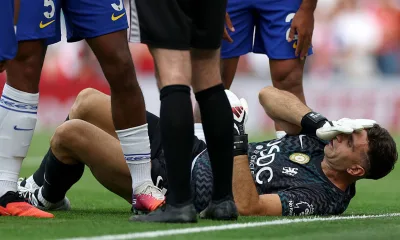
The incident came during a frantic scramble inside the box after Calafiori’s shot was blocked. With several players on the floor and the ball loose, the scene quickly became tangled, as bodies converged and each side tried to clear, finish, or simply claim possession. In that melee, Gabriel swung at the ball but instead caught Martínez near the eye with his boot. The goalkeeper required treatment, and Chelsea players immediately called for a red card.
Neither Chris Kavanagh, the referee, nor the VAR official judged the challenge to merit a dismissal. Arsenal went on to recover from being behind and won 2-1, one of the early headline matches of the 2026-27 Premier League season.
The KMI panel, made up of five independent members who assess major refereeing calls from every game, ruled unanimously that the on-field decision was correct. “The panel unanimously supported the referee’s call of no red card,” the panel’s ruling stated. “Multiple players were on the ground competing and challenging for the loose ball, and the action of Gabriel was not deemed to be an act of violent conduct or serious foul play.”
That conclusion aligns with the FA’s definition of violent conduct, which covers the use or attempted use of excessive force or brutality when not challenging for the ball, or against other individuals.
In the panel’s view, Gabriel was trying to direct the loose ball toward goal in a crowded sequence, rather than making a deliberate act of excessive force. Despite the contact with Martínez’s face, the referee, VAR and KMI all reached the same conclusion: no red card was required.
Analytics & Stats
What Chelsea Can Take From Xabi Alonso’s Leverkusen Start
Chelsea’s defensive issues under Alonso echo the early Leverkusen struggles that later turned around.

Chelsea’s opening spell under Xabi Alonso has already prompted scrutiny, largely because the side have made games far more open than they would like. After six matches, they have conceded 12 goals, a tally better only than Crystal Palace, Coventry City and Ipswich Town in the Premier League. The figures point to a team producing excitement, but also one that is leaving too much behind the ball.
That is not unfamiliar territory for Alonso. When he arrived at Bayer Leverkusen on Oct. 5, 2022, the club were second-bottom in the Bundesliga and had made their worst start to a season in more than 40 years. His first game brought an immediate lift, a 4-0 win over Schalke, but the weeks that followed were far less comfortable. Defeats to Porto, Eintracht Frankfurt and RB Leipzig, plus draws with Wolfsburg and Atlético Madrid, meant six games had produced 14 goals conceded.
The criticism was blunt at the time. Simon Rolfes said, “We’re conceding too many goals,” while Alonso’s response was equally direct: “Too many,” was the manager’s blunt admission.
He did not abandon his ideas. Alonso shifted Leverkusen from a four-man defence to a 3-4-2-1, kept faith with the structure and argued that understanding would come with time. “We need to better control when and how we reach the ball,” he said, stressing the need for smarter risks and clearer positioning between teammates.
That patience eventually paid off. His seventh match ended in a 5-0 win over Union Berlin, the start of a five-game winning run that reset the mood and laid the groundwork for the Bundesliga title 18 months later.
Chelsea’s own numbers show a similar balance of threat and fragility. They have scored 18 goals in Alonso’s first six games, compared with Leverkusen’s nine in the same span. Yet the concern remains the same: a side that attacks well, but has not looked solid enough.
After the 2-2 draw with Hull City, Alonso again pointed to the need to cut out a “soft” streak. He kept the message measured when speaking to club media: “It’s early days for us,” he said. “It’s one month together and in one month, we know the idea, the concepts, the mentality, but it’s too early to know it’s already built.
“It will take longer, but we need to learn from everything and from this [against Hull] as well.
“For sure, I think it will come. At the moment, we are not having that feeling we are solid enough. With work and with games, I think it will get better.
“Overall, I think we are attacking better than we are defending. In every aspect, so we know that it’s a big topic and a theme for us.”