Man Utd
Shaw Injury Leaves United Exposed After Summer Recruitment Gaps
Shaw’s latest injury issue exposes United’s left-back shortage after a summer transfer window that felt unfinished.


Manchester United are once again facing questions over squad balance after Luke Shaw missed Thursday’s Champions League win over Sabah because of injury.
Before the match, Carrick explained why the left back was left out. “It’s a little bit of [managing him],” Carrick said of Shaw’s absence before the game. “He came off the other day with a little bit of cramp. We didn’t want to take any risks really.
“We tried to manage him so we will see how he is after this one.”
The issue comes at an awkward moment for United, whose summer business in 2025 focused heavily on attack before a midfield rebuild arrived in 2026 with the arrivals of Youri Tielemans, Andrey Santos and Carlos Baleba. That spending addressed one part of the squad, but the window closed with a clear sense of frustration over the failure to bring in another left back to challenge Shaw.
That omission now looks more significant because United are back in four competitions this season, leaving little margin for error when injuries strike. The timing is especially awkward so soon after the market shut, with the club already needing to manage the same thin depth it chose to live with.
Patrick Dorgu filled in for Shaw against Sabah, though his best role remains uncertain. Under Carrick, he has been used on the left wing, despite arriving primarily as an attacking wing back for Ruben Amorim’s ultimately doomed 3-4-2-1 system.
Dorgu handled Thursday’s assignment without issue, but the challenge ahead is a different matter entirely. Sabah’s level meant there was always likely to be a clear gap in quality, something Sunday’s derby will not offer. Kaheem Parris represented the test on Thursday, while the next one could come from Antoine Semenyo, Phil Foden or Rayan Cherki.
Carrick will want his side to attack at home, but the space to commit everyone forward will not be as generous. Dorgu’s adventurous style may prove too risky.
United hope Shaw will be available again soon. The 31-year-old does not appear to have suffered anything serious, yet his long injury record means caution remains essential and risks are unlikely to be taken.


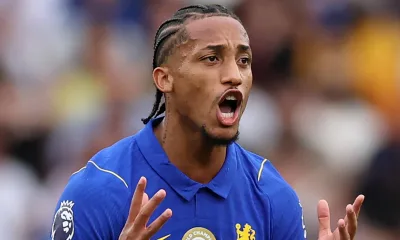


Man Utd
United’s Left-Back Gamble Leaves Carrick Short Again
United strengthened midfield but left back remains unresolved, and Carrick must manage until January.

Manchester United spent the summer reshaping one part of the squad while leaving another unresolved, and the decision is already showing its limits. Michael Carrick had identified left back as a priority at one stage of the window, but the club never delivered the reinforcement he wanted.
United explored several options. A move for Lewis Hall was attempted, but Newcastle United would not shift. After Carrick clarified his preferences, the club also looked at Arsenal’s Miles Lewis-Skelly, according to Ornstein. Even so, attention soon moved elsewhere as United pushed through a third midfield signing of the summer, with their long-standing interest in Carlos Baleba finally paying off.
Ornstein later reported that a Deadline Day loan move for Manchester City’s Rayan Aït-Nouri was considered, but United were not willing to accept the obligation-to-buy clause City wanted. A loan for Barcelona’s Alejandro Balde also came under review, yet Barcelona were only open to an outright sale. By the time the window closed, the left-back issue remained untouched.
That outcome was not without context. Midfield reconstruction had become the main target after Casemiro departed, while Manuel Ugarte would likely have followed if not for the ACL injury he suffered at the World Cup. With Kobbie Mainoo and Bruno Fernandes potentially the only senior midfield options, recruitment in that area was treated as essential, particularly with Champions League football returning and the schedule becoming more demanding.
The midfield rebuild still brought setbacks. A move for Atalanta’s Éderson fell through late on, and United also missed out on Matheus Fernandes and Elliot Anderson, both of whom joined other big Premier League clubs. Even so, the club redirected its resources and spent in the region of $200 million to bring in Santos from Chelsea, Tielemans from Aston Villa and Baleba from Brighton & Hove Albion.
Less than 10 games into the campaign, the lack of depth at left back is already obvious. Luke Shaw has missed United’s last two matches, Patrick Dorgu has been used there despite being signed as a winger last season, Harry Amas has already been introduced in the role, and Ornstein has also suggested Noussair Mazraoui as another option.
Man Utd
Opta forecast shows costly consequences after United’s derby setback
Opta’s latest projection leaves United sixth after a disputed derby defeat and a costly early setback.
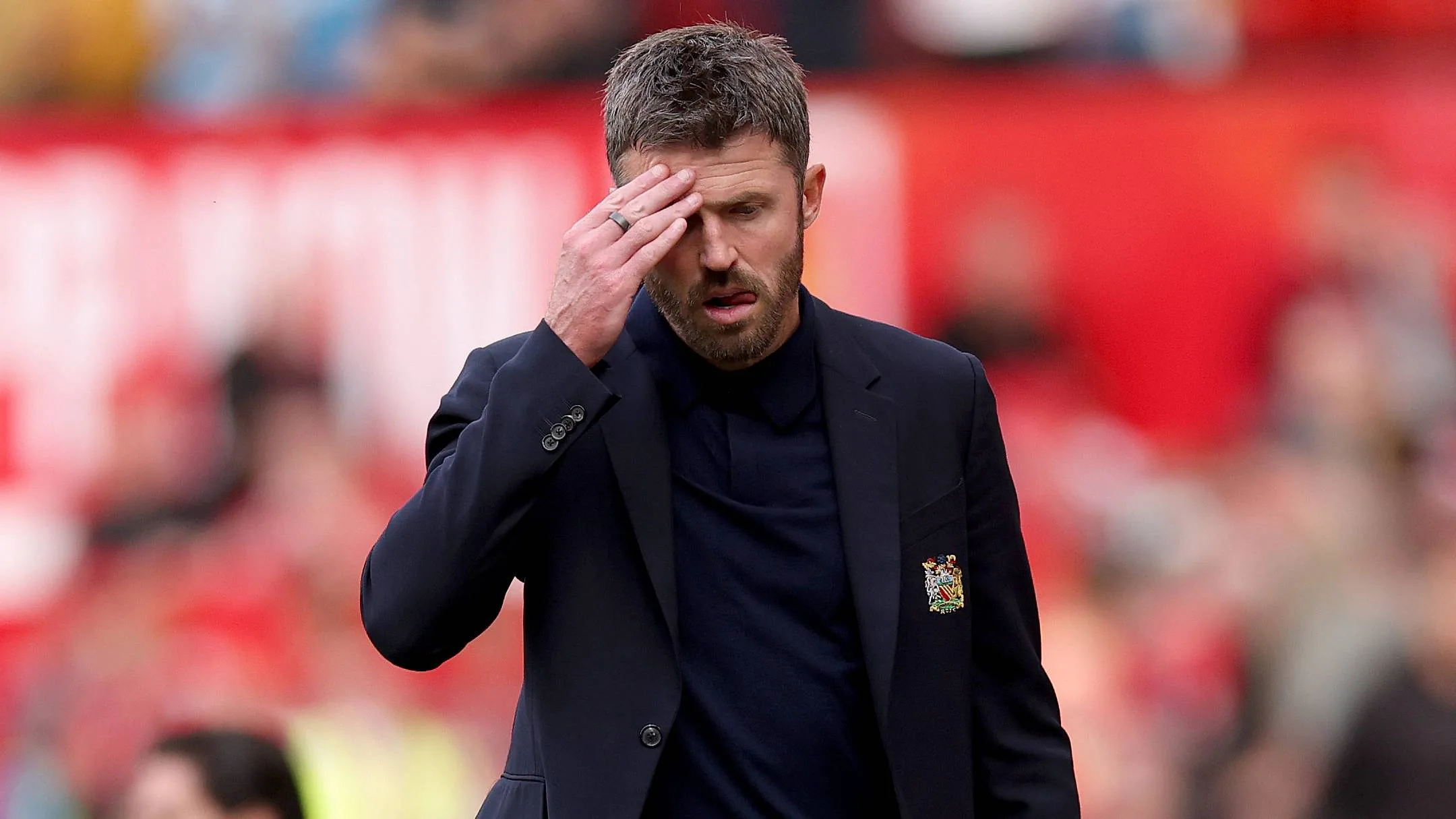
Michael Carrick was furious after Manchester United’s disputed 1-0 loss to Manchester City, and the wider picture may be just as damaging as the result itself. Although the season is still in its early stages, the defeat has already been framed as one that could shape the months ahead.
Soon after the final whistle, Pro Ref, the organisation previously known as PGMOL, accepted that the decision was wrong and sent United a formal apology. Carrick made his view clear afterwards, saying: “The explanation I got was he [Fernández] wasn’t interfering with play, so I just don’t get it,” Carrick, said after the game. “I can’t understand how they’re trying to help referees by putting so many layers behind them, with so many people, so many bodies, so many screens and so many offices to try to come up with the right decisions.
“If that’s how the rules are interpreted, that you’re not interfering with play when you’ve thrown yourself at the ball six yards from goal and pretty much nearly touched it, then I don’t know. On top of that, even the line they drew was a bit dubious.
“It’s worrying if that’s really how the game’s seen by those who are officiating it. I don’t know where you go. I don’t really know how you go and get another explanation on that one.”
With only four matches played, 102 points remain on offer, but Opta’s supercomputer has still produced a table that offers little comfort for United supporters. The projection has them finishing sixth, outside the Champions League places.
That would leave United just one point behind Brighton & Hove Albion in fifth, a gap made harder to accept given the match itself. A goalless draw was the sense of the occasion, and United may even have felt they could take all three points once City were reduced to 10 men after Phil Foden’s early red card. Those extra points would have lifted them above Chelsea into fourth in Opta’s predicted standings.
The projected table is tight, with fewer than three points separating fourth and sixth. That narrow margin underlines why the outcome is so significant, because sixth place would also mean a major financial setback and, in turn, a blow to recruitment, wages and the ability to match rivals higher up the table.
Man City
Haaland decides derby as United waste the advantage of City’s red card
Haaland settled a derby City finished with 10 men, while United failed to make their advantage count.
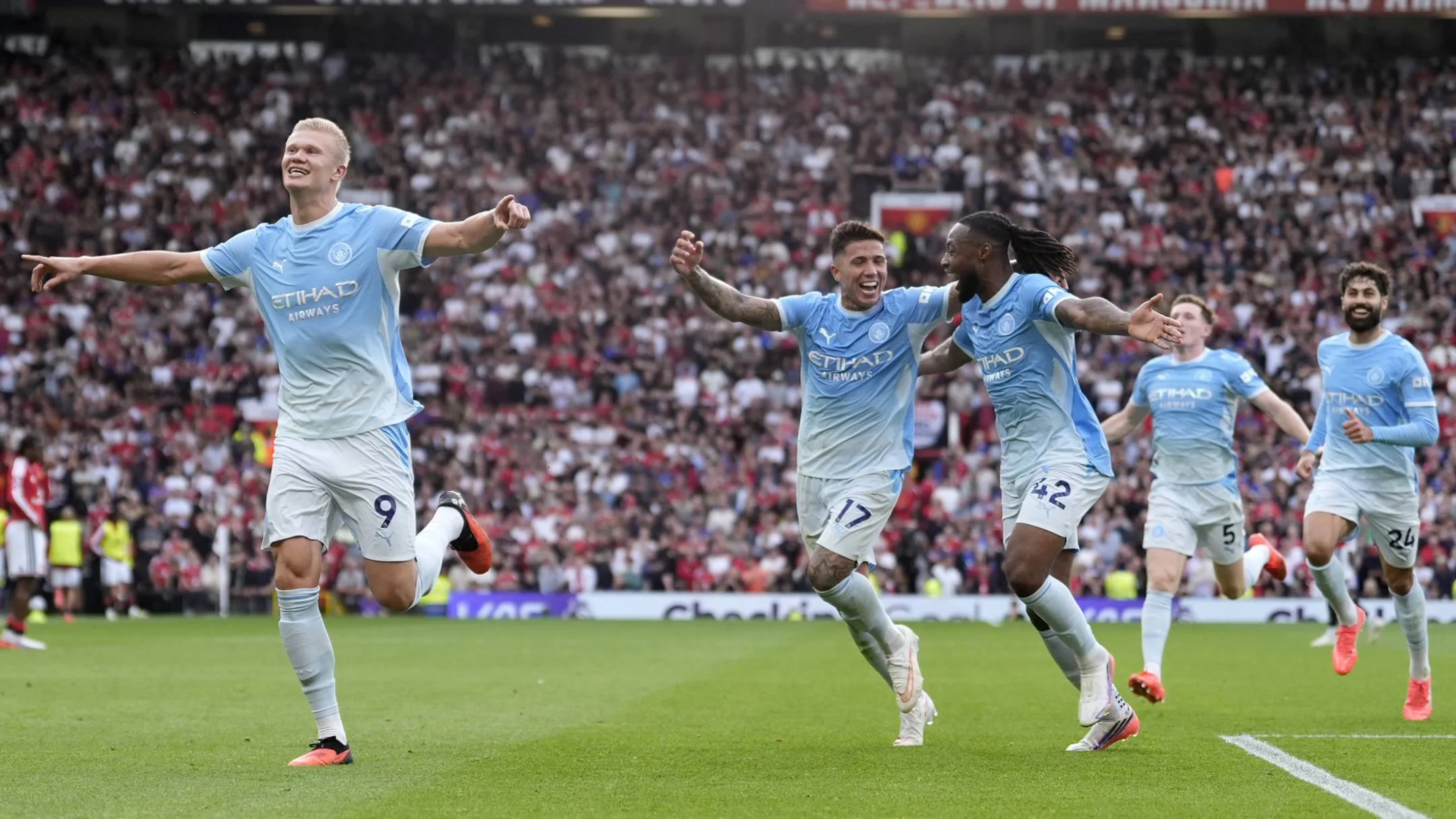
Manchester United left Old Trafford with a result that felt more painful because of the circumstances, as Erling Haaland’s lone goal handed Manchester City a 1-0 win in a derby shaped by Phil Foden’s dismissal. City spent most of the match with 10 men, yet still found a way to take control of the contest after the red card changed the rhythm of the afternoon.
Foden’s intervention should have tilted the balance toward United, especially after the hosts had been growing into the game. Instead, the incident altered the structure in City’s favour. With Elliot Anderson isolated at the base of a 4-1-4-1, United initially caused problems by drawing him into awkward decisions, particularly as Matheus Cunha kept dropping from the forward line. But once City reshaped into a compact 4-4-1, they became harder to break down and gave Anderson far more protection.
That left United searching for solutions they did not find. More than 40 minutes passed after Foden’s dismissal before Gianluigi Donnarumma was forced into a save, and the best opening of the closing stages was wasted by Bryan Mbeumo at stoppage time. The broader picture was stark: a team with the numerical advantage failed to turn it into control, while the side with 10 men grew more organised and disciplined.
There were solid individual displays in the United side, with Kobbie Mainoo standing out in midfield and several defenders coping reasonably well. For City, Donnarumma produced the decisive intervention when required, Matheus Nunes came through a physical duel on the right, and Haaland again showed his reliability in the key moment. His finish, awkward as it looked, was enough to settle a match that United failed to manage after the sending-off.
The numbers reflected the frustration for the hosts. United had 55 percent possession and 16 shots, but City created the cleaner openings and made theirs count. In a derby of fine margins, the team with the red card left with the points.