Premier League
Premier League clubs reshape their squads in a record-breaking 2026-27 window
Premier League clubs leaned heavily on domestic deals as a record summer reshaped several squads.


The 2026-27 summer window produced a clear pattern across the Premier League: clubs largely traded with each other, and the market settled into a familiar domestic shuffle once the dust had cleared. Richard Masters summed up the mood with a warning that, “Heroes come and go,” adding, “we are seeing a bit of a change of the guard.”
Arsenal made one of the headline moves, bringing in Bruno Guimarães from Newcastle United for £75 million. Their business was otherwise measured rather than extravagant, with Christos Tzolis arriving from Club Brugge, while Piero Hincapié, Ezri Konsa and free agent Illan Meslier added depth. The club also moved on Leandro Trossard, Jakub Kiwior, Gabriel Jesus, Fábio Vieira and Christian Nørgaard, among others.
Chelsea were again among the biggest spenders, with Morgan Rogers arriving from Aston Villa for a club-record £117 million. They also signed Maxence Lacroix, Geovany Quenda and several others, while Enzo Fernández left for Manchester City in the joint-most expensive Premier League transfer in history. Chelsea’s departures included Nicolas Jackson, Marc Cucurella, Andrey Santos, Liam Delap and Trevoh Chalobah.
Liverpool saw major exits, with Ibrahima Konaté, Andy Robertson and Mohamed Salah all leaving on free transfers. Their standout arrival was Bradley Barcola from Paris Saint-Germain for £123 million, while Jérémy Jacquet and Víctor Muñoz also came in. Ronald Araújo joined on loan.
Manchester City added Enzo Fernández and Elliot Anderson, with the latter becoming the fourth-most expensive transfer of all time. Their outgoings included Rodri, James Trafford, Nico González, Tijjani Reijnders, Sávio, Omar Marmoush and Nathan Aké.
Manchester United concentrated their spending in midfield, signing Carlos Baleba, Andrey Santos and Youri Tielemans, while Tottenham responded to last season’s scare with a sweeping rebuild built around Sandro Tonali and Mateus Fernandes.
Across the division, the window was defined by heavy internal movement, major fees and a clear willingness to reshuffle established squads rather than look far beyond the Premier League market.





Bournemouth
Carragher urges Iraola to confront Wirtz question after another subdued outing
Carragher says Iraola may soon have to decide on Wirtz after another low-impact Liverpool display.

Jamie Carragher has asked Andoni Iraola to make a difficult call on Florian Wirtz, arguing that the Liverpool midfielder’s level for Liverpool remains far below what was expected when he arrived last summer.
The discussion intensified after Liverpool’s narrow win over Bournemouth on Sunday. Wirtz started in the No. 10 role and was credited with three chances created, but his influence on the game was limited. He finished with 0.05 expected assists and 0.22 expected goals, while every attempt he made was blocked immediately. Carragher felt the performance offered little evidence that the player is moving closer to the standard Liverpool hoped for.
“Nothing is happening there at all,” Carragher said on Sky Sports.
“That was one of the poorest I’ve ever seen him in a Liverpool shirt. I’ve been critical of the fact that he hasn’t got the numbers. But normally when you watch Wirtz, he’s neat and tidy, he keeps possession, there’s things that you like. He gets out of a tight situation where you’re normally expecting your player to lose the ball.”
Carragher’s view has now shifted beyond form. He suggested the issue may not be temporary, but instead representative of what Wirtz actually is.
“I worry [because] I don’t think Wirtz is in poor form since he came to Liverpool. I actually think what we’re seeing is what he is. It was just in the back of my head [for 12 months].
“I don’t see how he’s going to hurt you. It’s just neat and tidy. And in some way, the price tag for that type of player should be half of what Liverpool have paid. The worry for Wirtz now is that his performances so far, or what he’s given Liverpool, is so low. Where we were expecting him was to take Liverpool to another league title, to take Liverpool to a Champions League .”
He added that the “gap” between expectation and reality is “almost too big” to close, even with improvement. Carragher compared Wirtz with Kiernan Dewsbury-Hall, Morgan Gibbs-White and Emiliano Buendía, who he believes are adding more regular value for their teams.
That led to the question of selection. Carragher pointed out that Iraola has already been willing to leave Ryan Gravenberch out for much of the season, and said Wirtz should be judged in the same way, especially with Manchester City next after the international window.
“Wirtz wouldn’t be in my Liverpool team. Manchester City at home, for me, he can’t be in the team,” Carragher said. “The things I’ve liked so far about Iraola, he’s had the courage to make big decisions. Ryan Gravenberch has just signed a hefty contract on a five-year deal on massive money. He’s not playing. Sooner or later he’s going to have to make a decision on Florian Wirtz. I hope it’s sooner. Not because I don’t like Florian Wirtz, I’m desperate for the kid to do well. I just want Liverpool to win.”
Chelsea
Chelsea’s New Signings Under Alonso: Early Returns Across the Squad
Chelsea’s summer arrivals have produced mixed returns under Xabi Alonso after five Premier League matches.

Xabi Alonso has now taken charge of Chelsea for five Premier League matches, and the first impression has been one of mixed outcomes rather than clear progress. Some of the club’s summer arrivals have barely featured, while others have had enough minutes to show both promise and the limits of what they can offer at this stage.
At the bottom of the list are Emmanuel Emegha and Marco Palestra, both still waiting for their Chelsea debuts after injuries and delayed returns disrupted their starts. Emegha’s early summer work in behind-closed-doors friendlies was cut short, while Palestra, signed for $62 million (£47 million), remains sidelined despite Alonso repeatedly suggesting he would be back soon. For Geovany Quenda, the picture is not much brighter. The 19-year-old has managed only 27 minutes since arriving from Sporting CP, and his path into the side remains blocked across several roles.
Jordan Henderson finally made his first appearance in the fifth game of the season, starting in the 3-0 defeat at Brentford. The veteran’s leadership has been evident, but his real value will be judged by what he produces on the pitch. Valentín Barco, meanwhile, has been used sparingly but has looked steady enough in limited outings, mainly in the Carabao Cup, even if Alonso has preferred other options in midfield.
Emiliano Martínez has brought experience to the goalkeeping role, but he has not dramatically changed Chelsea’s defensive issues. There is still concern after 10 goals were conceded in four games. Maxence Lacroix has been more prominent, and early performances against Fulham and Brighton & Hove Albion suggested he could be a key figure, though recent mixed displays have placed him under renewed pressure.
Pep Chavarría has perhaps offered the most encouraging value. Used mainly from the bench, he has settled well and exceeded modest expectations, even if questions remain at both ends of the pitch.
Arsenal News
Xhaka withdrawn from Switzerland squad after admitting forged Covid certificate
Xhaka is out of Switzerland’s squad after admitting he obtained a forged Covid-19 certificate in 2022.
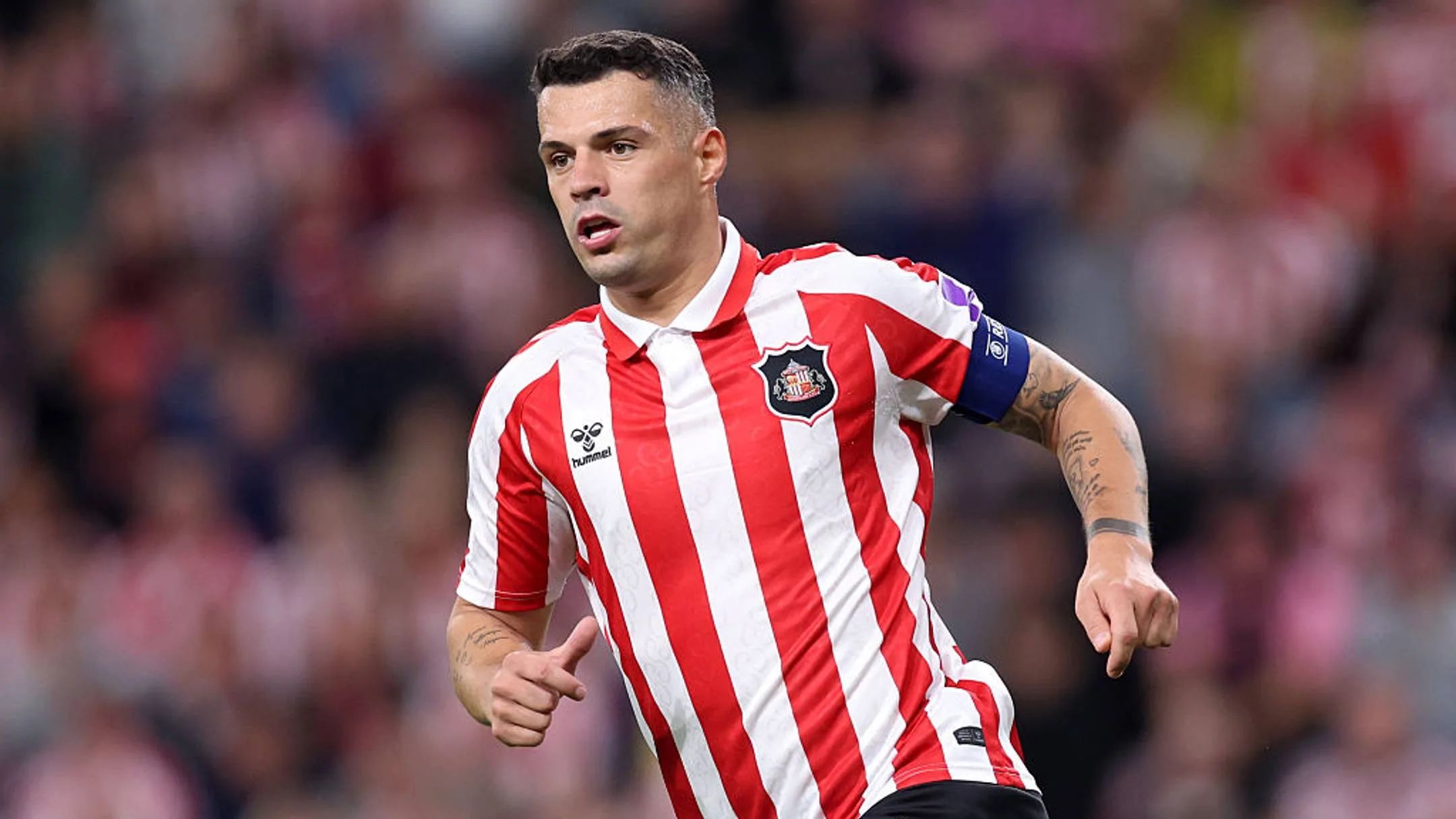
Granit Xhaka has been taken out of Switzerland’s squad for the rest of this international window after acknowledging that he obtained a forged Covid-19 vaccination certificate in 2022.
Xhaka said the decision was “not the right course of action” and described it as a “mistake.” He also issued an apology, but the matter has moved beyond a public statement. Before posting his message as an Instagram story, he had already been in contact with the Swiss Football Association (SFV).
The issue resurfaced after Blick ran the headline last Friday, ‘Did Xhaka buy a fake Covid certificate?’ The report said the document was obtained from a doctor in Lucerne. Police searched those premises in 2023 and “evidence seized.”
On Sunday, after the news emerged in Switzerland, Sunderland manager Régis Le Bris declined to address it directly, saying it was not his “area to speak about those problems or situations.” Xhaka had played the full 90 minutes in a 5-3 defeat to Manchester City, and had previously been an Arsenal player in 2022.
The prosecutor’s office in Lucerne confirmed to Blick that proceedings have been opened against Xhaka and the doctor involved. “The aim,” they say, “is to clarify whether there has been any criminally relevant conduct in connection with the possible fraudulent procurement of a false certification and/or forgery.” Xhaka is due to be questioned in early October.
The SFV said it “welcomes” Xhaka addressing the matter publicly and taking responsibility, after discussions with the national team legend on Sunday night.
“At the same time, we jointly concluded that it is in the team’s best interest to complete this training camp without him,” SFV president Peter Knäbel said. “Our priority now is to calm the situation and focus entirely on the team and the upcoming challenges in the UEFA Nations League. After the conclusion of this international match window, we will reassess the situation together with Granit and discuss the next steps.”
The broader issue is not vaccination itself. In Switzerland, vaccination was never a legal requirement, though proof of vaccination was needed for access to certain venues or travel. The central question is the alleged procurement of false or forged official documents.