Ipswich Town
Why Maguire’s effort counted for Manchester United against Ipswich
Maguire’s shot was off target, so United’s goal stood after VAR checked the accidental handball.


Manchester United were forced to recover from behind as they chased their first Premier League win of the 2026/27 campaign, and the decisive moment came with a hefty dose of fortune.
After the interval, the Red Devils started at a furious pace and soon found the goal that put them ahead. Harry Maguire won the ball on the edge of the box, surged into the area and struck at goal, but the finish was heavily deflected by Ipswich defender Jacob Greaves and ended up in the net.
The twist was that Maguire’s attempt would not have stood had he actually hit the target himself. Because his shot was off target, the goal was credited as an own goal by Greaves, and that distinction proved decisive.
There was, however, an immediate question over the build-up. Maguire’s arm had made contact with the ball as he regained possession, raising the possibility of a handball offence. In normal circumstances that might have brought the move under scrutiny, but the key technical detail was that Maguire was not the direct scorer. The action was judged to be accidental, and VAR did not intervene to overturn the goal.
The Laws of the Game state: “It is an offense if a player scores in the opponents’ goal … immediately after the ball has touched their hand/arm, even if accidental.”
In other words, Maguire would have been penalised had he finished the move himself. Because his effort went wide before the deflection took effect, the goal was allowed to stand. A cleaner strike from the centre back, one that needed no deflection to go in, would actually have been ruled out.
The Premier League Match Center confirmed: “The referee’s call of goal for Manchester United was checked and confirmed by VAR—with it deemed that Maguire was not the immediate goalscorer after an accidental handball.” VAR also told Craig Pawson: “It’s an own goal and the accidental handball is not punishable, so we recommend you award the goal.”






Aston Villa
Premier League Gameweek 4 predictions: derby day heads the weekend card
A full set of Gameweek 4 score predictions, including the Manchester derby and Arsenal’s trip.
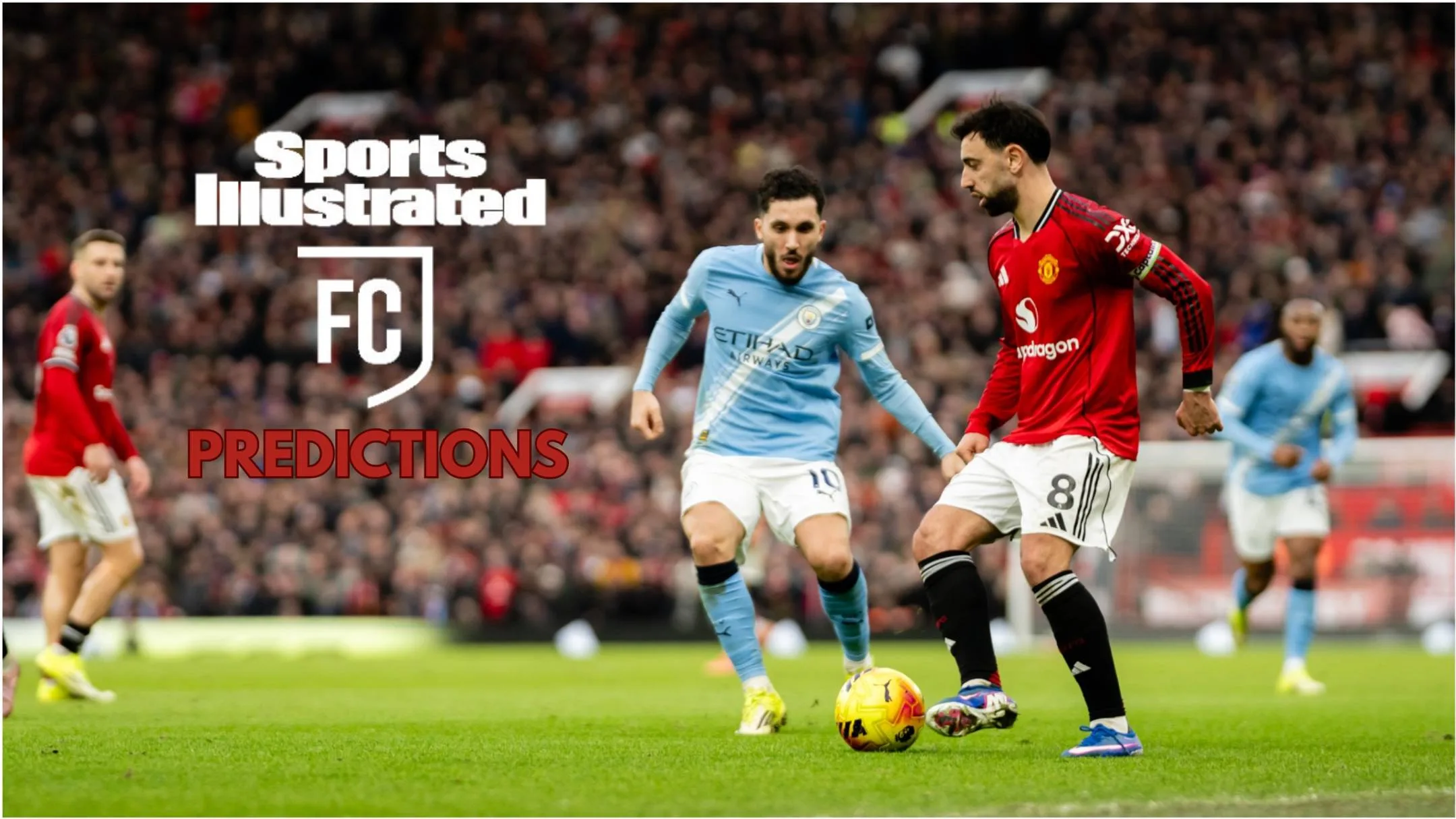
The first midweek stretch of the season has already brought Champions League and Carabao Cup action, and the Premier League schedule now tightens again around Gameweek 4.
Sunday’s Manchester derby is the clear centrepiece, but there is plenty elsewhere to weigh up, from Chelsea and Liverpool enjoying home advantage to Arsenal facing a testing trip away from home.
Here is a revised look at how the weekend may unfold, based strictly on the evidence from recent form, results and context in the draft.
Aston Villa are tipped to edge Nottingham Forest 2-1, with both sides still searching for their first league win and Villa Park likely to favour the home team. Bournemouth and Brentford could cancel each other out in a 1-1 draw, while Chelsea are expected to make short work of Hull and win 3-0 as their attack meets a defence that has impressed but may not be able to sustain that level.
Crystal Palace are backed to beat Ipswich 2-1 after a timely lift in form, and Liverpool are forecast to defeat Fulham 3-1, with the hosts carrying momentum into the fixture. Tottenham and Everton look set for a 1-1 draw, a result that would fit the recent frustrations around Spurs and the unbeaten start made by the visitors.
Arsenal are predicted to keep their perfect start going with a narrow 1-0 win at Sunderland, while Brighton are expected to leave Coventry with a 3-1 victory. The weekend’s biggest game, Man Utd against Man City, is called as another 1-1 draw, reflecting uncertainty on both sides despite City’s winning run.
Monday closes with Leeds against Newcastle, a meeting that could finish 2-2 after both clubs have shown enough going forward to suggest another open contest.
Atlético Madrid
Kerkez says Liverpool cannot yet maintain Iraola’s press for a full match
Kerkez says Liverpool are still adjusting to Iraola’s pressing demands after their first win of the season.

Milos Kerkez has admitted Liverpool are still learning how to handle Andoni Iraola’s demanding style, with the defender saying the team cannot yet press for the full 90 minutes at the level the manager expects.
After a month in which the same issues have remained in place, Liverpool finally recorded their first win of the season on Friday, taking the points at the third attempt with a 2-0 victory over Ipswich Town. Kerkez said the result did not hide the fact that the physical demands of Iraola’s approach are still being worked through.
“When you press like us, it’s a bit tough to do it for all the game and all the 90 minutes,” he told club media . “We can do it for the first 30 to 35 minutes and in some ways we can do that in the second half at the beginning, but then it’s all about staying compact and talking to each other.
“That’s what we said also that we need to improve, and as defenders we are happy with the clean sheet. We defended pretty well their crosses and the set pieces. Like I said, everyone was 100% focused.”
There were clear signs on Friday that Liverpool are beginning to absorb Iraola’s ideas. The performance featured intense running, two early goals from Alexander Isak and a Premier League-high sprint speed from Bradley Barcola in his first appearance off the bench.
That said, the match also served as a reminder that the road ahead remains long. Ipswich may have been a useful starting point, but the standard of opposition is set to rise quickly.
Wednesday’s meeting with Atlético Madrid will provide the next test of whether Liverpool can turn those early signs into something more consistent. Kerkez’s assessment was guarded but optimistic, suggesting the squad are starting to get to grips with the manager’s expectations even if the full physical load is not yet in place.
Aston Villa
Premier League matchday three: a flawed, revealing set of performances across the board
Matchday three showed Premier League quality everywhere, but also familiar flaws, late swings and missed chances.

Martin Ødegaard’s claim that “all of the teams are good” has already been tested by three weeks of Premier League football, and matchday three offered more evidence that quality in this division is abundant, but perfection remains elusive.
Across the round, several teams produced encouraging spells without turning them into clean, controlled wins. Some were left to regret missed chances, others survived by narrower margins than expected, and a few drifted into the familiar territory of being competitive without quite being convincing.
At one end of the scale, Liverpool were pushed hard by Ipswich, with Gary O’Neil admitting: “I hate having to talk about good performances when you don’t get points because you need to maximize them,” while Ipswich could not consistently threaten a side that still looked vulnerable at times.
Aston Villa’s visit to the MKM Stadium was harder to explain. Unai Emery insisted the match had gone exactly as intended, although the performance raised obvious questions about how a game plan can survive without even a shot on target.
Chelsea began sharply, with Morgan Rogers’s second-minute volley setting the tone after a set-piece routine, but Arsenal gradually took control. Chelsea created almost nothing after the interval, while Martin Ødegaard’s winner underlined the difference between a bright start and a complete performance.
Elsewhere, Hull’s seven points from three games drew a playful Champions League reference from Sergej Jakirović, while Tottenham remained stubbornly in the middle ground. Roberto De Zerbi’s side were held to a goalless draw that suited neither heaven nor hell.
There were also reminders that strong starts can unravel quickly. Bournemouth led 2-0 at St. James’s Park before another late setback, while Everton earned a point thanks to Ainsley Maitland-Niles’s 96th-minute strike and Manchester United were undone by Everton’s set-piece threat after a flat first half.
Elsewhere, Brighton “woke up too late,” Nottingham Forest were left frustrated by a disallowed goal, Brentford needed a triple half-time change to find a response, and Leeds experienced a textbook game of two halves. Sunderland, meanwhile, secured a different outcome from the same spot and the same goalkeeper, when Enzo Le Fée produced a far better penalty than he had before.
For Manchester City, Erling Haaland again provided the decisive edge, as Coventry’s resistance made the result far less straightforward than expected.