Premier League
Transfer fees by age: the record holders from 16 to 40
A look at football’s transfer records by age, from teenage prospects to veteran signings.

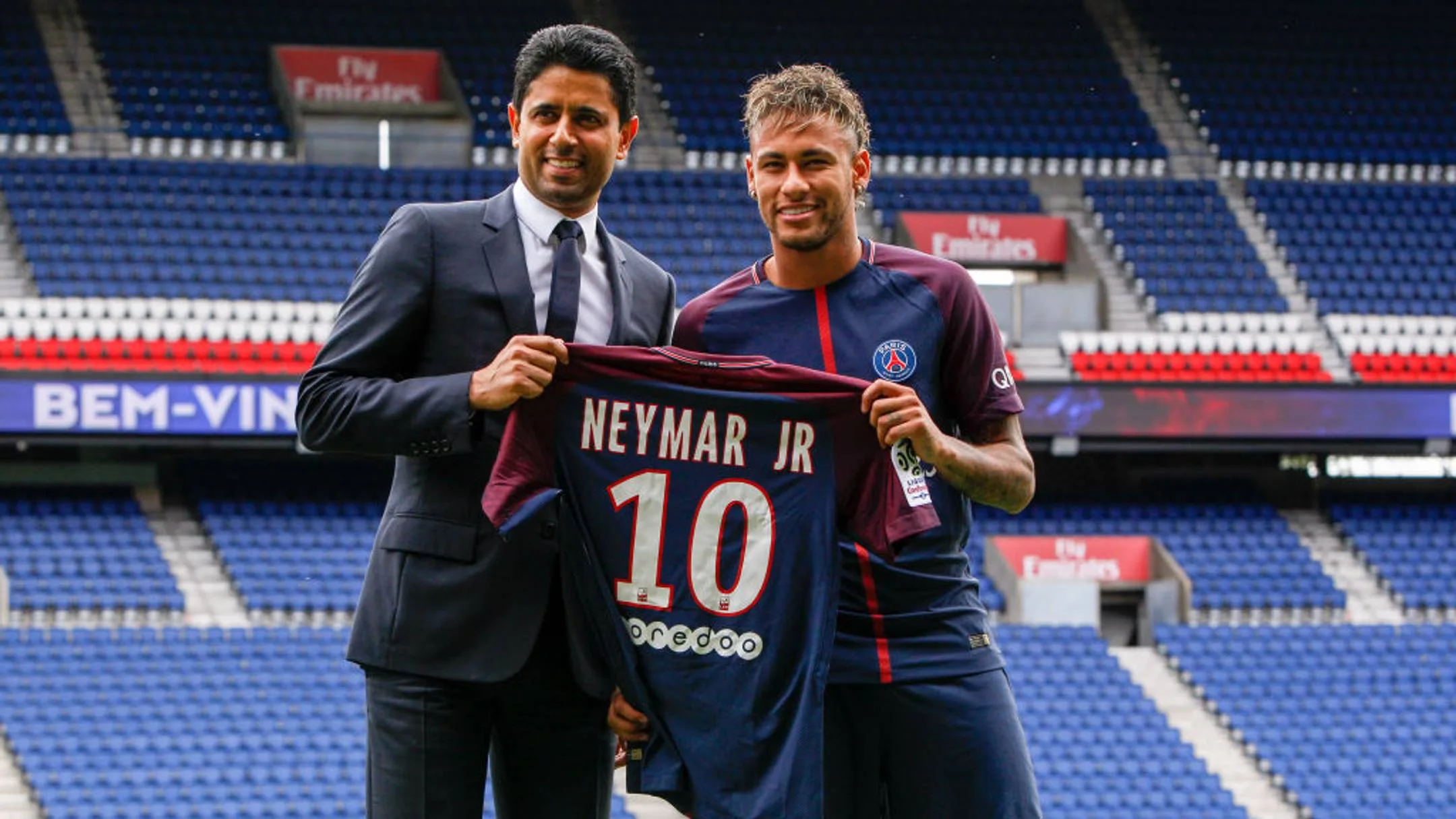
Newcastle United’s sale of Bruno Guimarães to Arsenal was framed around more than the headline figure. The Premier League champions agreed to pay $101 million (£75 million), and the argument put forward afterwards was that the fee made sense in relation to age and position.
“It’s a world-record fee for a player of his age,” Hopkinson argued.
That line did not fully survive scrutiny. Barcelona had already paid more for a 28-year-old Antoine Griezmann in 2019, while Real Madrid’s purchase of Eden Hazard that same year was another reminder that age-based transfer records can be messy. Hopkinson later sharpened the point, making clear the figure was a record in midfield terms.
“It’s a fee that satisfies us,” he said “It’s the highest fee for a player in that position at that age. Is that a good deal for Newcastle United? I believe it is.”
On that reading, no 28-year-old midfielder has ever cost more than Bruno Guimarães.
The broader picture is more revealing. Transfer fees rise sharply through the ages where clubs are buying both proven performance and future peak years, then begin to fall once players move beyond 30. The pattern is clear across the list: Neymar remains the most expensive 25-year-old ever, Kylian Mbappé sets the mark at 19, and the record for 18-year-olds now belongs to Ayyoub Bouaddi after his summer move to Manchester City.
There are also notable exceptions. Age 27 stands out as relatively modest compared with the surrounding brackets, despite the usual belief that it is a player’s peak year. At the other end of the scale, 40-year-old records sit far below the nine-figure deals associated with elite players in their prime.
The draft’s table shows how the market shifts from potential to performance, then gradually to decline. It is a reminder that transfer records are not only about reputation or fame, but about age, timing and what clubs believe they are buying at each stage of a career.





Manchester City
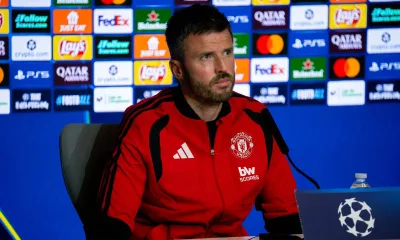
Dias says City spoke immediately after verdict as focus turns back to PSG
Dias says City quickly addressed the verdict as focus shifts to PSG at the Etihad on Wednesday.
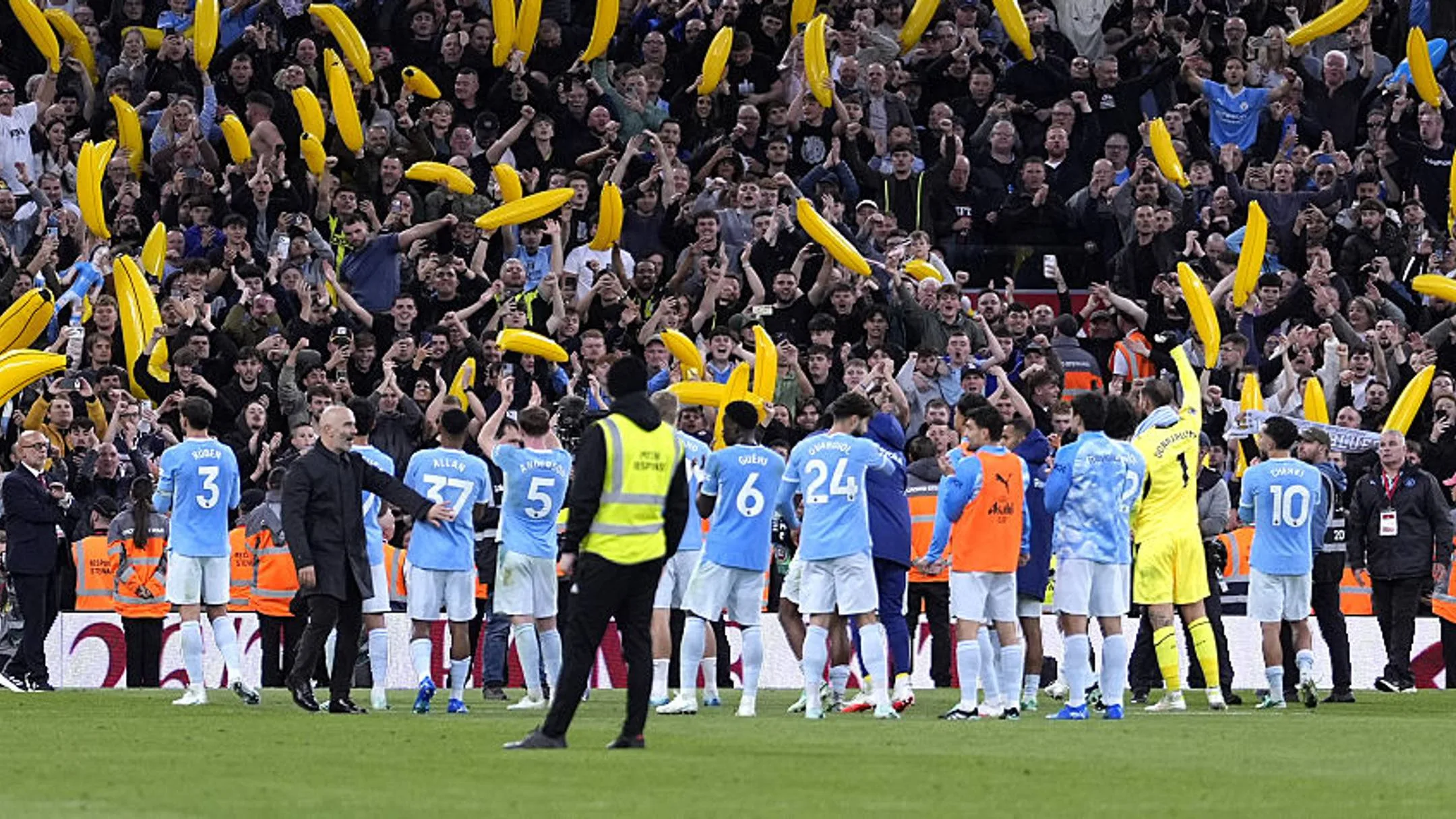
Rúben Dias has said Manchester City players wanted to confront the Premier League’s guilty verdict against the club as soon as they returned from the international break.
With City preparing to welcome Paris Saint-Germain to the Etihad Stadium on Wednesday, their first home fixture since the verdict emerged, the defender explained that the squad felt it was important to get together quickly. Pep Guardiola will be there in support.
“When the news came out, we felt we should have a conversation as soon as we got back,” Dias said. He added that the aim was to make sure everyone was aligned and settled. “We moved forward from there. It happened at a time when we weren’t together, but we quickly talked to each other, calmed down and moved on.”
The wider picture remains unresolved. City continue to deny wrongdoing and maintain that they are fighting what they view as an injustice based on one “false accusation,” while the football calendar keeps moving. The appeal verdict is due before the end of January, although that may not be the end of the process.
For Dias and his teammates, the demands of playing on create an awkward backdrop. The longer the situation remains open, the harder it becomes to separate the football from the case itself, and the Premier League’s position is inevitably under scrutiny.
Supporters have responded with defiance. At Anfield, a banner in the away end read, “In Khaldoon [Al Mubarak] we trust,” while chants in support of Sheikh Mansour were also heard. A familiar Hull City chant was adapted in the second half as well.
Speaking on Sky Sports after City’s win over Liverpool, Gary Neville said it was “difficult” to separate the team’s on-field quality from the verdict and the club’s conduct. He also described the situation by saying, “This is really bad for the Premier League .”
Dias insisted the squad can only continue focusing on what they can control. “We are very good at focusing on our work and being happy whenever we come to work. Our minds are only on that. These are the things we can control and that we have always enjoyed doing so much,” he said. “We have complete confidence in the club.”
There was also reaction to the celebrations after the Liverpool match. “We won 3–0 at Anfield, what do you want us to do?” manager Enzo Maresca said. “We work every day to win games. It’s the only thing we can be focused on.”
Arsenal
Arteta on Messi’s Dowman Claim and the Arsenal Teen’s Rapid Rise
Arteta backs Dowman’s rise after Messi-linked praise, with Arsenal managing the teenager carefully.
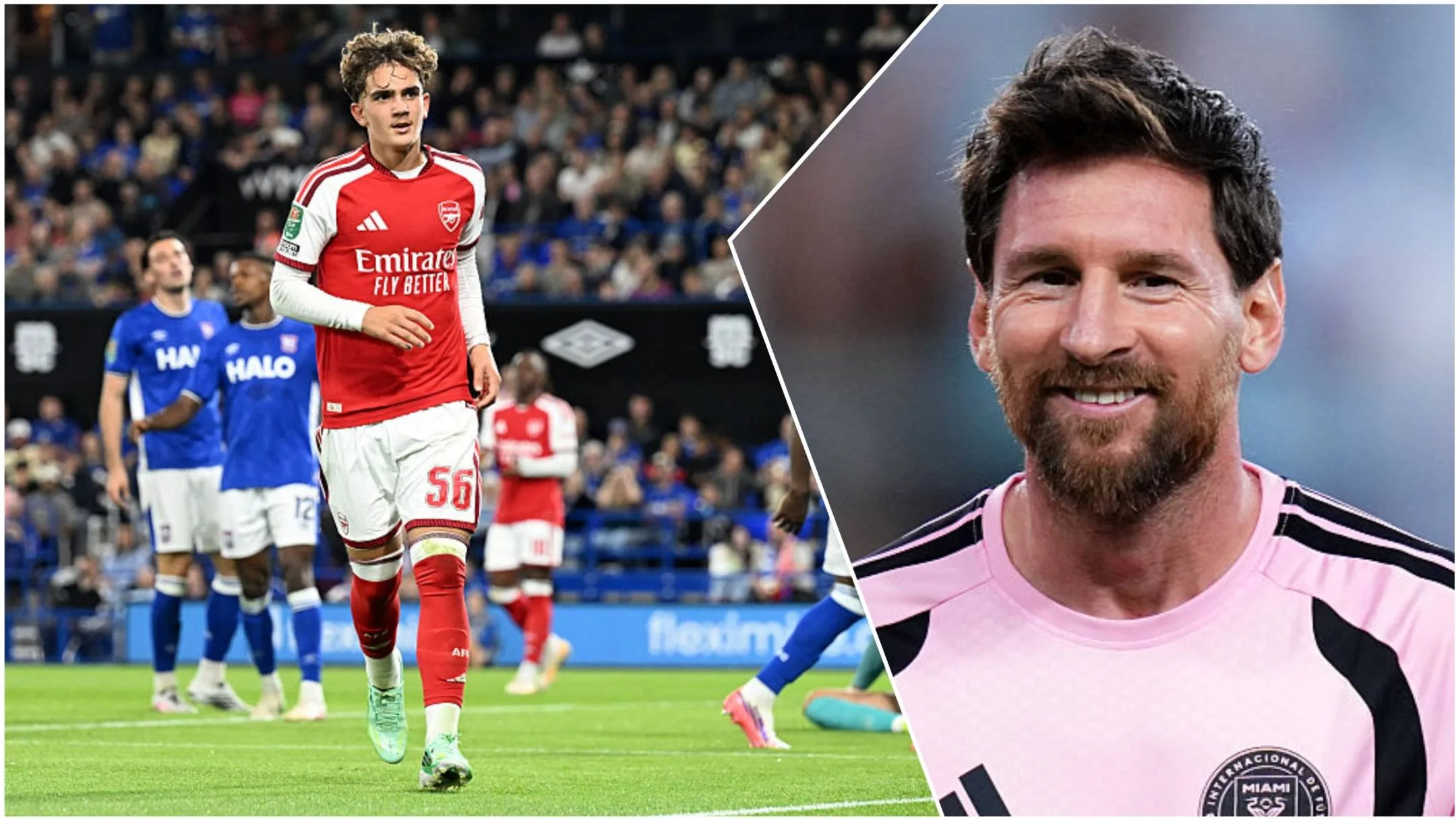
Mikel Arteta has welcomed Lionel Messi’s apparent backing of Max Dowman, even if the source of the prediction remains open to doubt. A recent adidas campaign placed the Arsenal teenager among 10 players expected to shape football’s next era, with Messi framed as the figure making the selections.
The commercial has understandably prompted some scepticism, not least because every player featured is signed to adidas. Even so, Dowman’s progress at Arsenal has already been striking. By 16, he has advanced at a pace that points toward the possibility of top-level football in time.
Arteta was asked this week about Messi’s supposed view of the youngster, and he responded in full support of the idea. “If Messi, who is the best ever player, says that … his eyes are I think better than anybody else’s. Hopefully he’s right,” the Arsenal boss said.
For Arteta, the wider point matters more than the campaign itself. Dowman has already broken through in unusual fashion, playing Under-18s football for Arsenal at 13 and then turning out for the Under-21s at 14. He is the Premier League’s youngest ever goalscorer and its second youngest player. He is also the youngest Premier League champion and the youngest ever Champions League player.
This season, Dowman has scored twice in a Carabao Cup win for Arsenal and has made one Premier League appearance, while continuing to share time with the Under-21s. He will not turn 17, and therefore cannot legally drive in the U.K., until Dec. 31.
Arteta believes the teenager’s ceiling remains enormous. “In the few appearances he’s had, he’s already done remarkable things. That’s somebody that is touched with a special gift,” he said.
“He’s a joy to watch. The way he moves, the way he touches the ball, the way he carries himself, it’s just different. And that’s what makes him unique.”
Jack Wilshere, who managed Dowman in Arsenal’s Under-18s and once coached him as a 13-year-old, has also described the scale of his talent. “Don’t get into a duel, take one or two touches, move it around,” Wilshere recalled telling him. “He picked up the ball, dribbled round five players, squared it and we [scored]. I have never seen anything like it.
“He went on with us and developed a bit more, and physically his numbers were a joke … the metrics they use now—high-speed running, sprints, total distance—were Premier League level and he was 14. He can be what he wants. He’s got a good family around him as well.”
Wilshere added that the next stage is consistency. “get into the team and stay in the team,” he said. “He’ll probably have to play on the sides if he wants a run in the team.” Arteta, meanwhile, believes Dowman can adapt when the time comes.
Manchester City
How Manchester City Could Face Immediate Expulsion Before Appeal Is Decided
Manchester City face pressure over expulsion rules as executives weigh action before the appeal verdict.
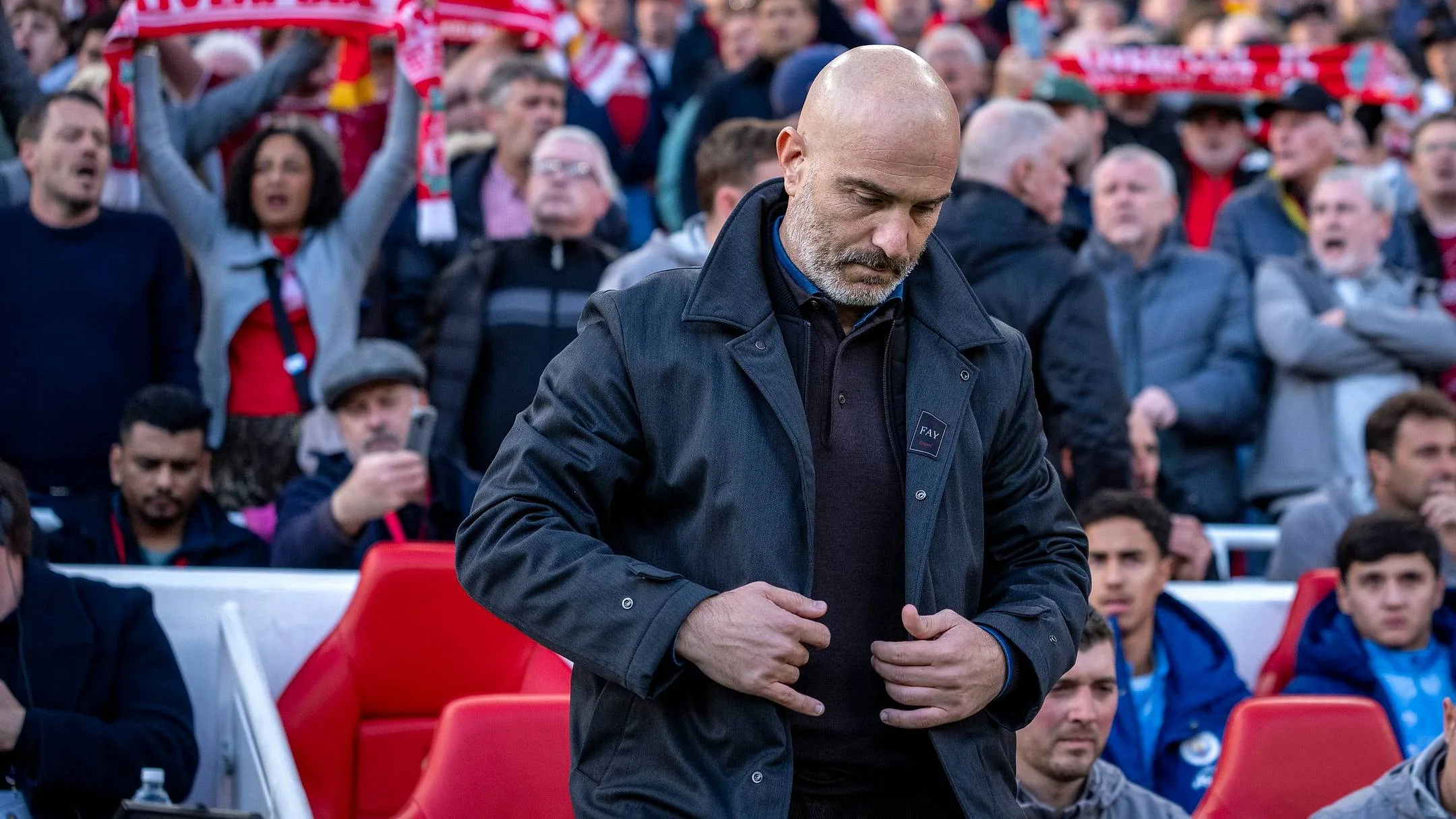
Manchester City’s weekend victory over Liverpool ensured there was no immediate fallout from the guilty verdict, at least on the pitch. But off it, the situation remains unresolved, with the club still appealing and maintaining that its innocence will be established.
For now, no sanction has been imposed. That leaves the Premier League in a holding pattern, even though its own rules do provide a route for the most severe outcome of all: expulsion.
Under Rule B6 of the league’s regulations, members can vote to remove a club from the competition. The rule states: “The League may expel a Club from membership upon a special Resolution to that effect being passed by a majority of not less than three-quarters of such members as (being entitled to do so) vote by their representatives or by proxy at a General Meeting of which notice specifying the intention to propose the Resolution has been duly given.”
In practical terms, that means 15 clubs could join forces to force City out immediately. The Independent has reported that discussions of that possibility have already taken place among several club executives.
One executive was quoted as saying: “This is a farce that will lead to protest, damage to the integrity and reputation of the competition, and possibly even violence,” one is quoted as saying. “The board has a duty at law to its shareholders to protect, enhance and promote the interests of the Premier League.”
The rule exists for a reason, and in theory it gives clubs the power to act if they believe expulsion serves the competition’s interests. Even so, that prospect is widely viewed as unlikely in the present climate.
Any attempt to remove City would almost certainly face a successful legal challenge, which would only deepen the uncertainty already surrounding the case.
Despite that, pressure for action is not easing. Club executives are still pushing for an immediate response, with growing concern that the season cannot continue along its current course.