Chelsea
Cole Palmer: Chelsea’s four-hat-trick landmark and a warning to rivals
Palmer insists he can still improve after becoming Chelsea’s first to score four PL hat-tricks. This

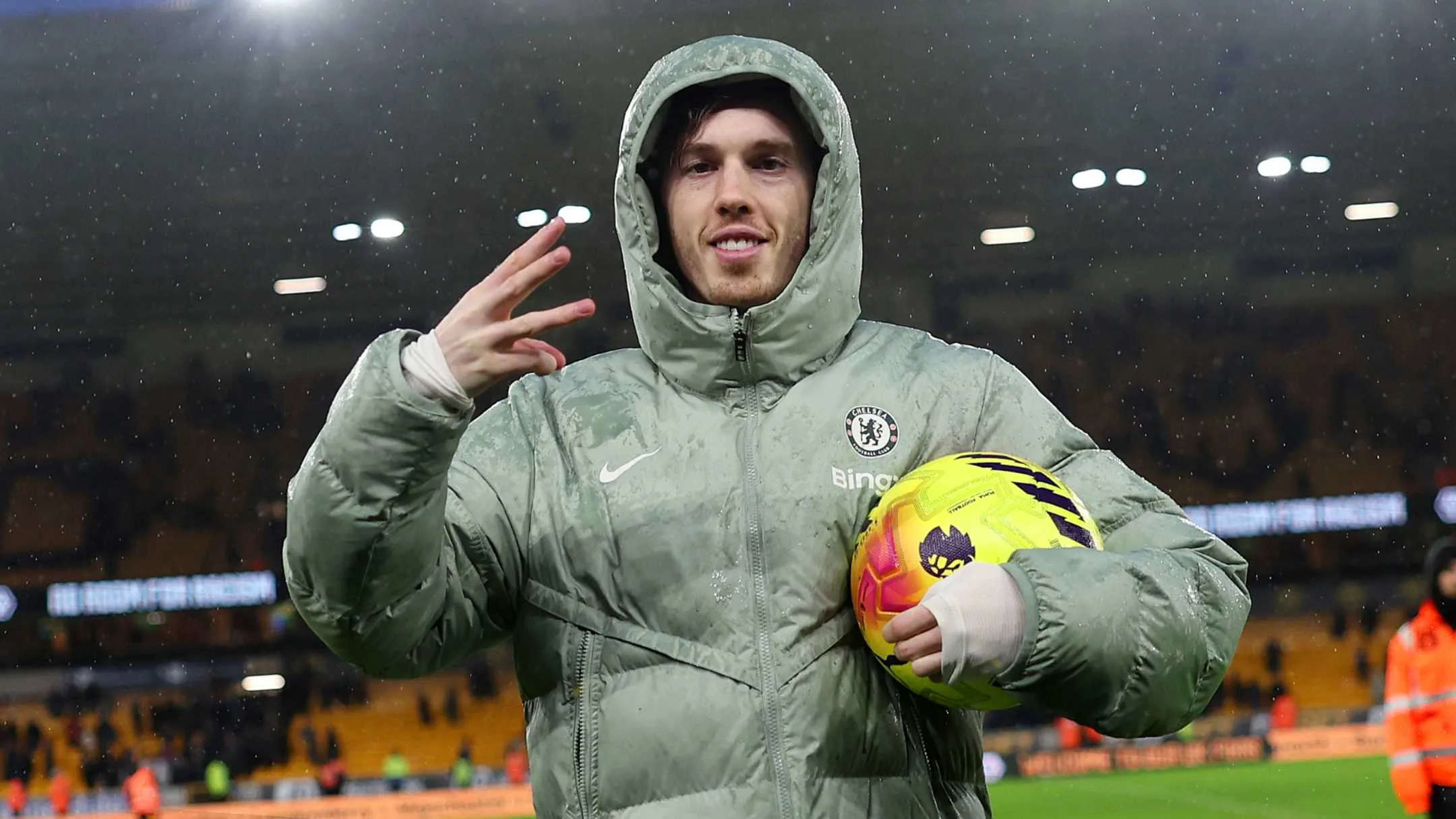
Cole Palmer set a new mark for Chelsea by becoming the first player to record four Premier League hat-tricks for the club. The 23-year-old delivered that milestone in a 3–1 win at Wolverhampton Wanderers on February 7, 2026, adding to hat-tricks against Manchester United (4–3, April 4, 2024), Everton (6–0, April 15, 2024) and Brighton (4–2, Sept. 28, 2024).
After the Wolves match Palmer took the platform to insist he has further progress in him and to address a season that has been disrupted by injury. “It felt good to score some goals and get three points,” Palmer told BBC Match of the Day.
On the question of his fitness he was candid. “I don’t think just yet,” he replied when asked if he was “100% fit”. “Obviously people don’t know what goes on behind the scenes but being injured the whole season is not ideal and when I’m not able to perform as I want to because I’ve been injured, and still dealing with the injury, but hopefully I can get over the injury soon by managing it. I know what level I can provide when I feel 100% fit.”
Palmer also addressed external noise after celebrating his first penalty by covering his ears. “Everyone loves to chat rubbish, don’t they?” he said. “I don’t pay too much attention to it. You see things. But I feel like I’ve come from a strong place anyway so I don’t pay attention to it.” Reports in January linking him with a return to Manchester and a move to Manchester United were dismissed as “rubbish,” a point Liam Rosenior had been vocal about.
The wider context is availability rather than ability. Palmer’s goal in the Euro 2024 final hauled England level against Spain, yet over the next 18 months he won just three more caps and missed six of eight international breaks through injury. Palmer was also one of the players worked with briefly by Thomas Tuchel during a June window affected by Chelsea’s Club World Cup participation. In Tuchel’s single match with Palmer he started as a No. 10 flanked by Noni Madueke and Morgan Rogers. Palmer praised his current manager’s impact, saying “Life under Liam is amazing” and adding “he gives us all confidence. Lets us be ourselves, play free. I’m sure when I’m back proper fit you’ll see the best of me.”

Aston Villa
Alejandro Garnacho’s career path has turned into a struggle for minutes
Garnacho’s rise has given way to frustration, with Chelsea and Aston Villa both offering little respite.

The international break is usually a chance for players to step away from club football. For Alejandro Garnacho, that luxury does not really exist.
There was a time when the winger looked destined for much bigger things. Signed by Manchester United as a highly rated teenager, he made his senior debut at 17 in April 2022 and had already become one of the side’s most effective players by the 2023-24 season. That campaign ended with him finishing sixth in the Kopa Trophy voting, a sign that his rise had gathered real momentum.
What followed was far less predictable.
In December 2024, Garnacho and Marcus Rashford were omitted from a matchday squad for the derby against Manchester City after manager Ruben Amorim said he was unhappy with their training performances. Garnacho returned quickly and was praised for the way he responded, while Rashford never played under Amorim again. But his situation soon worsened as he found it difficult to fit into Amorim’s winger-less system.
The relationship reached its breaking point after the 2025 Europa League final, when Garnacho questioned why he had not started. Amorim then told him to find a new club, and Chelsea moved in. They had considered a January 2025 approach before paying $54 million (£40 million) six months later.
However, the move did not develop as hoped. Chelsea’s recruitment team drove the deal and Enzo Maresca had not spoken with Garnacho before his arrival, which went some way to explaining his limited starts. He was not criticised for attitude or work rate, but his end product was modest, with eight goals in all competitions and only one in the Premier League.
Chelsea then accepted that offers could be entertained after one season, leading Garnacho to Aston Villa on loan with an obligation to buy under certain conditions. Even there, the search for rhythm has stalled. Unai Emery has given him just 31 minutes this season, with his latest appearance coming on Sept. 5. He was an unused substitute against Coventry City in the Carabao Cup and remained on the bench for the win over Tottenham Hotspur.
“Work, work, train, work,” Emery said, while also noting that other players are “giving us things I want.” For Garnacho, the message is clear.
Chelsea
Chelsea’s New Signings Under Alonso: Early Returns Across the Squad
Chelsea’s summer arrivals have produced mixed returns under Xabi Alonso after five Premier League matches.

Xabi Alonso has now taken charge of Chelsea for five Premier League matches, and the first impression has been one of mixed outcomes rather than clear progress. Some of the club’s summer arrivals have barely featured, while others have had enough minutes to show both promise and the limits of what they can offer at this stage.
At the bottom of the list are Emmanuel Emegha and Marco Palestra, both still waiting for their Chelsea debuts after injuries and delayed returns disrupted their starts. Emegha’s early summer work in behind-closed-doors friendlies was cut short, while Palestra, signed for $62 million (£47 million), remains sidelined despite Alonso repeatedly suggesting he would be back soon. For Geovany Quenda, the picture is not much brighter. The 19-year-old has managed only 27 minutes since arriving from Sporting CP, and his path into the side remains blocked across several roles.
Jordan Henderson finally made his first appearance in the fifth game of the season, starting in the 3-0 defeat at Brentford. The veteran’s leadership has been evident, but his real value will be judged by what he produces on the pitch. Valentín Barco, meanwhile, has been used sparingly but has looked steady enough in limited outings, mainly in the Carabao Cup, even if Alonso has preferred other options in midfield.
Emiliano Martínez has brought experience to the goalkeeping role, but he has not dramatically changed Chelsea’s defensive issues. There is still concern after 10 goals were conceded in four games. Maxence Lacroix has been more prominent, and early performances against Fulham and Brighton & Hove Albion suggested he could be a key figure, though recent mixed displays have placed him under renewed pressure.
Pep Chavarría has perhaps offered the most encouraging value. Used mainly from the bench, he has settled well and exceeded modest expectations, even if questions remain at both ends of the pitch.
Chelsea
Palmer’s England setback could strengthen Chelsea’s early-season momentum
Palmer’s England setback may disappoint him, but Chelsea can benefit from his extra rest.

Cole Palmer must wait a little longer for another chance to convince Thomas Tuchel on the England stage, but the delay may suit Chelsea just fine.
Palmer has not featured for England since March 2026 and missed this summer’s World Cup. A strong start to the 2026/27 season had earned him a recall, and Tuchel accepted that he deserved the opportunity to show he belongs in the squad full-time. That opportunity now looks set to slip away for the time being.
Inside Chelsea, there will be sympathy for the player, but also a clear sense that his absence from international duty could help club matters. The mood around the team is not especially bright after two defeats and a draw, yet Palmer has been one of the clearest positives under Xabi Alonso.
His return to form has been reflected in the numbers. Four goals and two assists in seven games represent an encouraging opening stretch, and Palmer himself has spoken about enjoying his football again in Alonso’s fluid forward line. Tactics have helped, but so has the value of a proper summer break.
Last season was hindered by the lingering effects of a groin injury, and his output dropped to 11 goals and three assists in all competitions. Given that context, being left out of England’s World Cup squad was painful but not unexpected. It also created the long recovery period he needed.
For the first time in months, Palmer was able to step away from the demands of match football and focus purely on recovery between May and August. That pause has clearly paid off in the opening weeks of the campaign.
Chelsea supporters wanted to see him back on the international stage, but few would oppose another three-week break if it produces the same level of sharpness. Tuchel, though, has made his stance clear. He values the same core of players and prioritises what he sees from them in an England shirt.
Since Tuchel arrived in January 2025, Palmer has played only 158 minutes for England across three appearances. Injuries and poor form have limited his chances, while others have moved ahead by making the most of their own opportunities.
Palmer has already worked his way back into Tuchel’s thinking once this month, and could do so again by maintaining his goals and assists for Chelsea. For now, however, the bar appears higher after another international window away from England.