Man Utd
Amorim criticises academy culture after players’ social-media response
Amorim labelled some academy players ‘entitled’ and warned the club must change its culture. in 2025

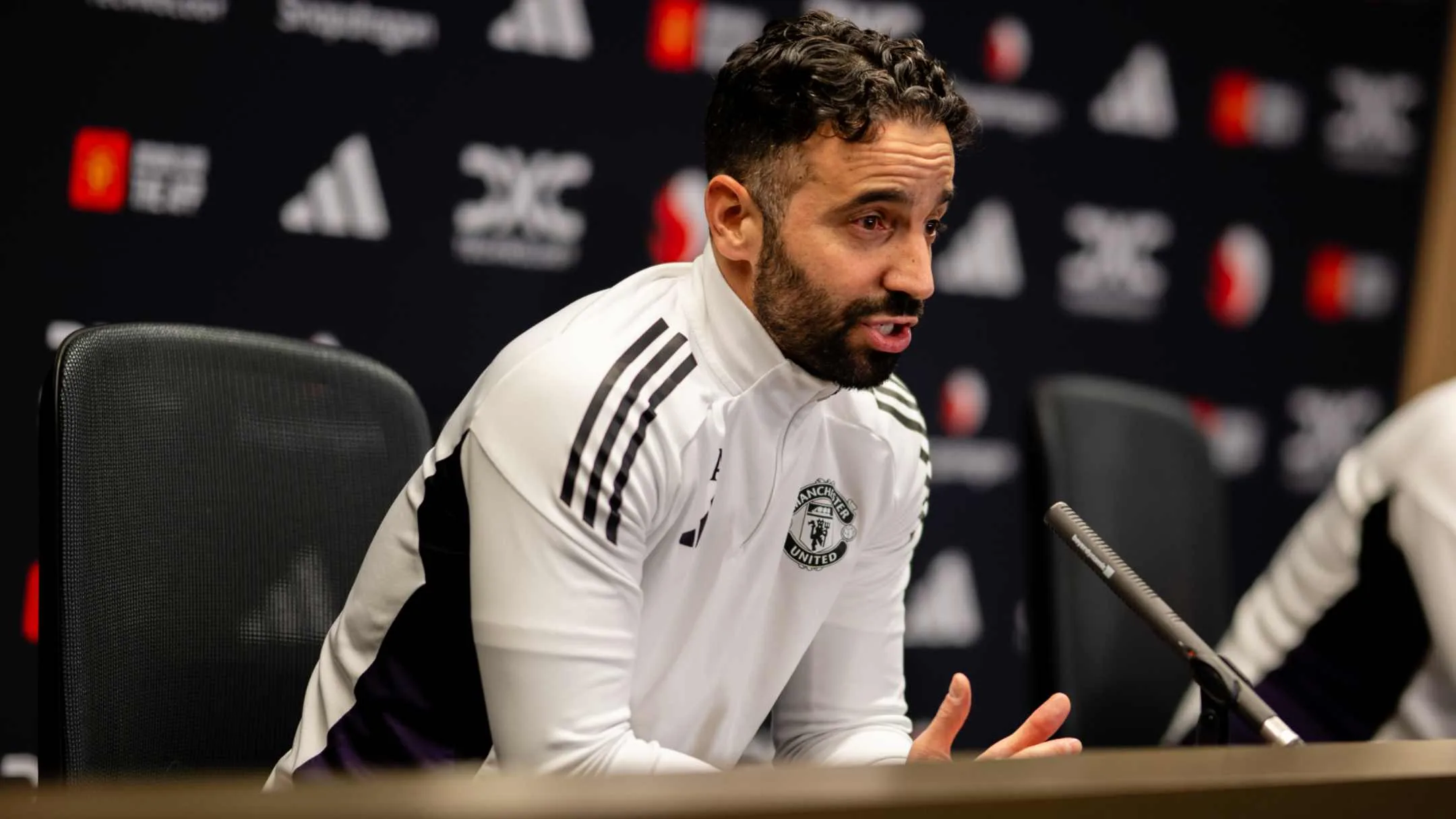
Ruben Amorim again addressed concerns about the attitude of Manchester United’s younger players on Friday, singling out members of the academy as “entitled” and saying none had come to his office to discuss his earlier comments. The manager made the remarks ahead of Sunday’s trip to Aston Villa and defended his broader message about standards within the club.
Bruno Fernandes’ recent interview also featured in the discussion. Amorim confirmed the 31-year-old had spoken to officials before conducting the interview, the manager noting the captain “said what he is feeling.”
Amorim pointed to the reaction from some academy graduates after he previously questioned standards. Chido Obi and Harry Amass posted pictures on social media celebrating individual successes after suggestions they were not meeting the standards required to be a Man Utd player.
Amorim said his intent was not to be negative but that the players’ responses illustrated a wider cultural problem. “Sometimes strong words is not bad words, sometimes difficult moments is not the bad things for the kids,” Amorim said.
“We don’t need to be always with accolades in everything in every situation, we are not helping. That’s why when you guys talk about a lot of players nowadays that they go against the clubs and everything happened because they feel entitlement.
“I have that feeling all the time that we need to fight against this feeling. Sometimes I’m the first one to say that I’m failing this club inside the pitch, I have that feeling we are not performing the way we should be but outside the pitch, I guarantee you I’m not failing to this club.
“I think it’s something in our club, and we talk about the players sometimes forget about what it means to play for Manchester United. We as a club sometimes forget who we are and that’s that’s the feeling that I have. I understand everything is the environment, is the moment of the players, the kids they feel entitled.
“They feel free to respond to the manager with a picture, my office is open, nobody is coming to talk to me. And that is the way we can solve things. I think we need to change first as a club and then everything is going to change.”
On the reaction to his remarks he added: “I didn’t say anything wrong. I just spoke about how the luck of playing for Manchester United,” he continued. “Sometimes you play for Manchester United and you go see different realities and you understand that football can be so different and that you are really lucky to be in Manchester United.
“That was my point but, again, let’s move on and with the time that I think these things will change.”
Off the field Amorim is also trying to secure more consistent performances. United are sixth in the Premier League, an improvement on last season, but they continue to frustrate, most recently in Monday’s 4–4 draw with Bournemouth, a game in which they surrendered a 2–1 lead to trail 3–2, went 4–3 up and then conceded a late equaliser to Eli Junior Kroupi.

Fulham
Cunha Salvages Point as United’s Dip Draws Concern
Cunha’s late equaliser spared United defeat, but a poor second-half dip raised fresh concerns.
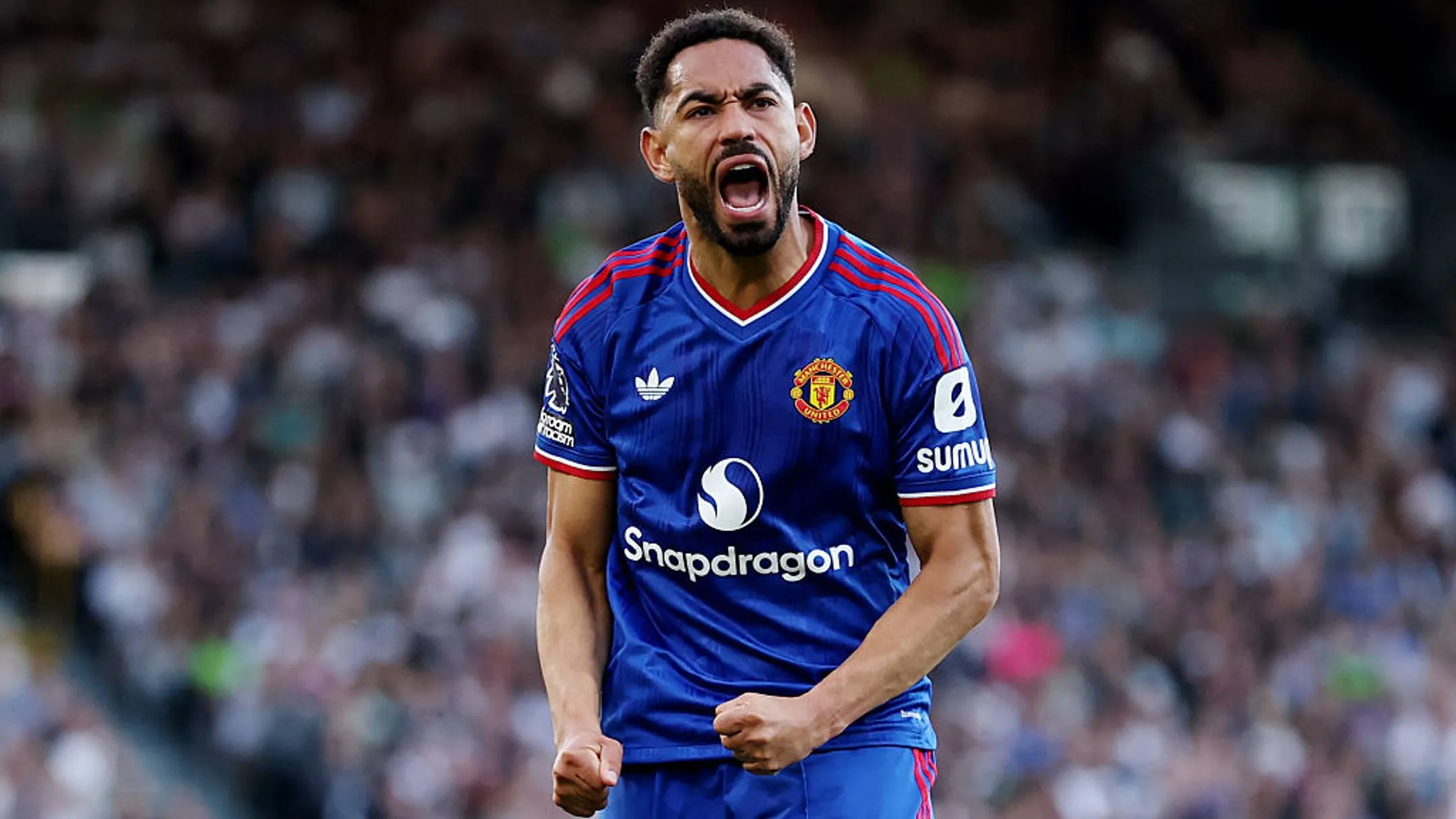
Matheus Cunha rescued a 1-1 draw for Manchester United at Craven Cottage after Lisandro Martínez’s own goal had given Fulham the advantage. It was a result that spared United a defeat, but it did little to calm the criticism that followed a second-half collapse in intensity.
The first half was lively enough without producing a goal, with United showing occasional fluency through quick passing and tidy combinations. After the interval, though, the level dropped sharply. That decline became the major talking point of the afternoon, especially after Gary Neville described the 15 minutes after halftime as the “worst” he’d ever seen his club play since he started watching the Red Devils as a 5-year-old in 1980.
Michael Carrick will take the point, but the performance against one of the Premier League’s early strugglers raised more questions than answers. United looked most dangerous when speed entered their play, yet that rhythm was too infrequent to control the contest for long.
Marcus Rashford’s display summed up the frustration. Having lost some of the momentum that followed his reintegration, the England international wasted several promising openings and never found the conviction United needed. His lack of intensity in front of goal matched the wider drop-off in the team’s attacking cohesion.
There were brighter individual showings. Senne Lammens impressed in the first half despite limited success with Fulham’s goal, while Bruno Fernandes came close to scoring when he struck the post. Kobbie Mainoo also maintained his standards before being withdrawn late on, and Cunha finished with a decisive contribution after earlier involvement in the goal sequence at the other end.
In the end, United left with a draw that felt more like a warning than a recovery.
Fulham
Šeško ruled out as United wait on injury assessment
Šeško missed United’s visit to Fulham while Carrick waits on an injury assessment.
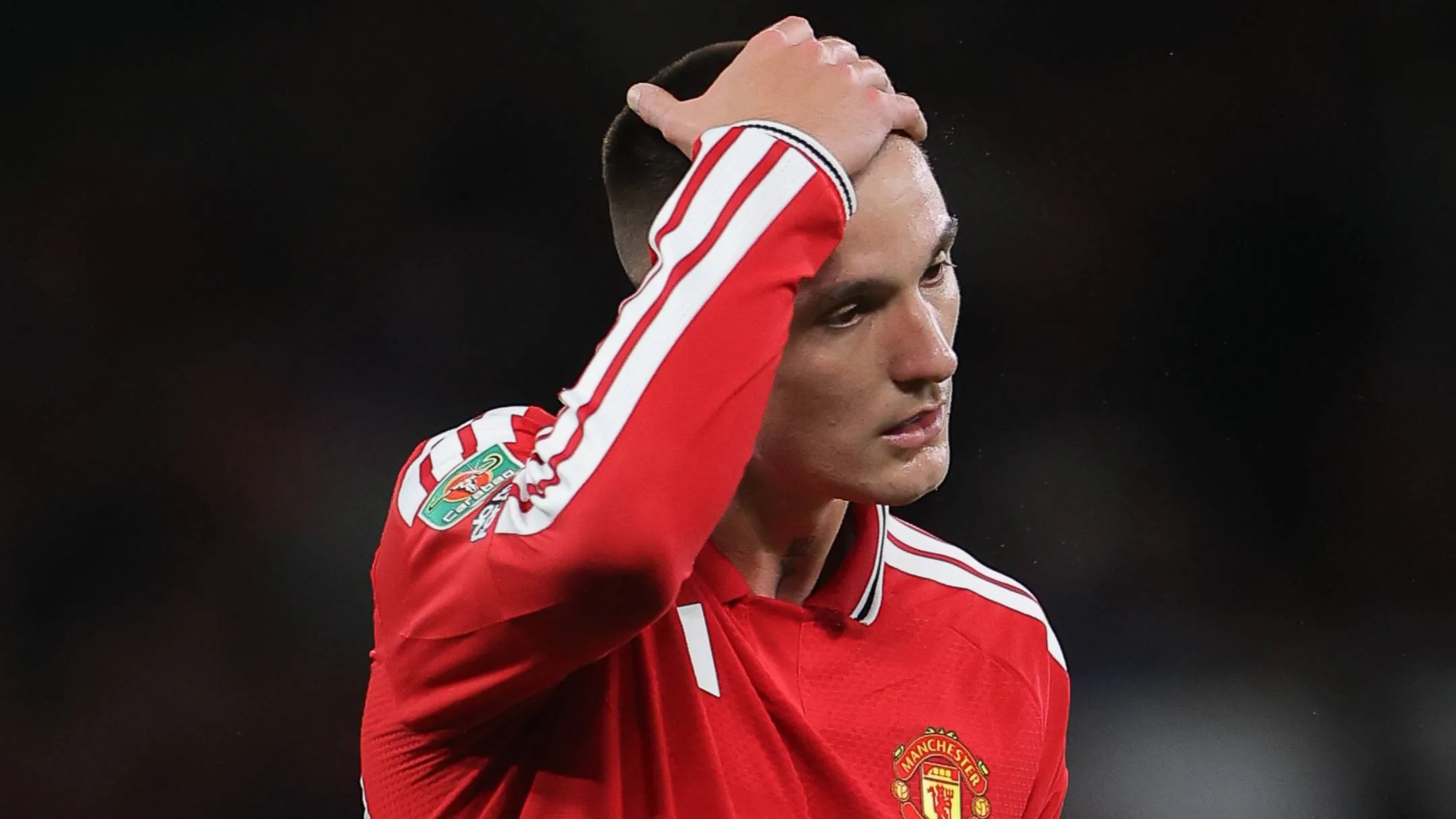
Benjamin Šeško was absent from Manchester United’s squad for the trip to Fulham after Michael Carrick confirmed the striker is being assessed over an unspecified injury.
Carrick had managed Šeško carefully at the start of the season, using him as a substitute in United’s first four Premier League matches. The 23-year-old was then fit to start the club’s opening Champions League game of the campaign, where he scored in the win over Sabah FK, and he also featured in Wednesday’s Carabao Cup meeting with Brighton & Hove Albion.
Earlier this month, Šeško had sounded upbeat about his recovery, saying: “I think waiting a little bit longer was a great decision, and now it’s healed, so it’s perfect,” Šeško insisted earlier this month.
Carrick’s latest update offered little clarity on the situation. Speaking to Sky Sports, he said: “He pulled up after the game the other day with a little bit of pain, so we’ll have to see how he is,” was all the Manchester United manager would offer.
In Šeško’s absence, Matheus Cunha kept his place through the middle. That decision left some fans frustrated, particularly with Amad Diallo unavailable on the right and Bryan Mbeumo regularly deployed there instead of being used as a central option.
Cunha brings link play and combines neatly with Bruno Fernandes, but he does not offer the same direct running that Mbeumo provides. Even so, Fulham’s tendency to leave space for opponents this season means United may still find openings without Šeško.
There is also anticipation around Carlos Baleba, who has still not made his Manchester United debut. Signed for $93.7 million (£70 million) and unveiled almost a month ago, he arrived from Brighton with an ankle injury. His first appearance could be confirmed at Craven Cottage.
Man Utd
United’s Left-Back Gamble Leaves Carrick Short Again
United strengthened midfield but left back remains unresolved, and Carrick must manage until January.

Manchester United spent the summer reshaping one part of the squad while leaving another unresolved, and the decision is already showing its limits. Michael Carrick had identified left back as a priority at one stage of the window, but the club never delivered the reinforcement he wanted.
United explored several options. A move for Lewis Hall was attempted, but Newcastle United would not shift. After Carrick clarified his preferences, the club also looked at Arsenal’s Miles Lewis-Skelly, according to Ornstein. Even so, attention soon moved elsewhere as United pushed through a third midfield signing of the summer, with their long-standing interest in Carlos Baleba finally paying off.
Ornstein later reported that a Deadline Day loan move for Manchester City’s Rayan Aït-Nouri was considered, but United were not willing to accept the obligation-to-buy clause City wanted. A loan for Barcelona’s Alejandro Balde also came under review, yet Barcelona were only open to an outright sale. By the time the window closed, the left-back issue remained untouched.
That outcome was not without context. Midfield reconstruction had become the main target after Casemiro departed, while Manuel Ugarte would likely have followed if not for the ACL injury he suffered at the World Cup. With Kobbie Mainoo and Bruno Fernandes potentially the only senior midfield options, recruitment in that area was treated as essential, particularly with Champions League football returning and the schedule becoming more demanding.
The midfield rebuild still brought setbacks. A move for Atalanta’s Éderson fell through late on, and United also missed out on Matheus Fernandes and Elliot Anderson, both of whom joined other big Premier League clubs. Even so, the club redirected its resources and spent in the region of $200 million to bring in Santos from Chelsea, Tielemans from Aston Villa and Baleba from Brighton & Hove Albion.
Less than 10 games into the campaign, the lack of depth at left back is already obvious. Luke Shaw has missed United’s last two matches, Patrick Dorgu has been used there despite being signed as a winger last season, Harry Amas has already been introduced in the role, and Ornstein has also suggested Noussair Mazraoui as another option.