Man Utd
Amorim Rejects Resignation Talk as Questions Over Tactics and Results Intensify
Amorim dismisses resigning after Brentford loss; insists result pain, not fear of losing job. Today.

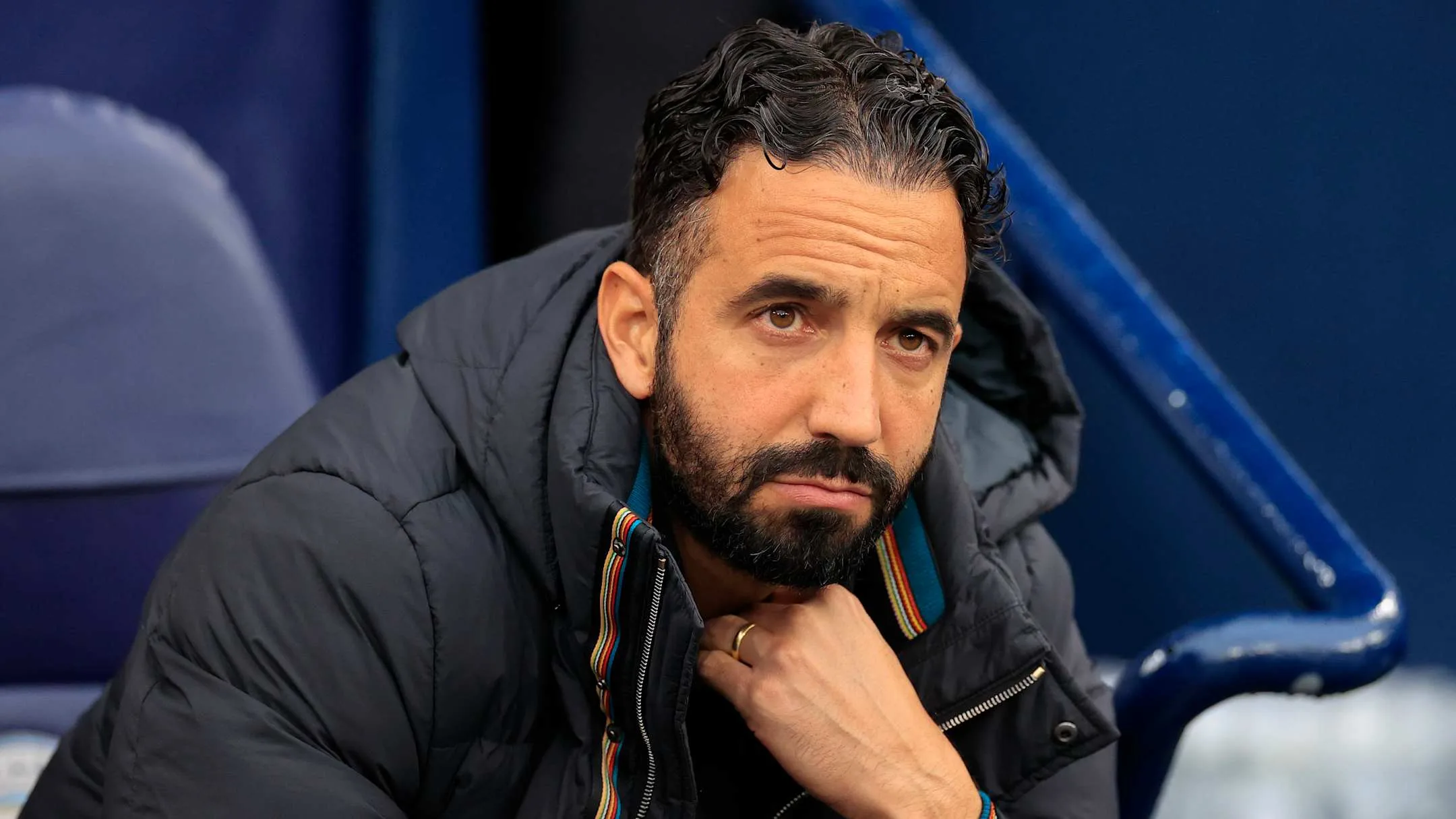
Ruben Amorim pushed back strongly against suggestions he will resign after a press conference consumed by questions over his Manchester United future and his preferred 3-4-2-1 system. The mood followed last weekend’s 3–1 defeat at Brentford, a loss that renewed focus on the Portuguese coach and the recently appointed number one, Altay Bayındır, whose goalkeeping was described in the original report as more questionable.
Amorim repeated that he will not walk away and spoke at length ahead of Saturday’s match with Premier League newcomers Sunderland. He reflected on what matters most to him personally and professionally, saying: “Because the worst thing in this job is to not win games. That is the same feeling I had in Casa Pia when I lost in the third division,” Amorim said, when asked why he doesn’t fear losing his job.
“And then it’s a job. Of course, it’s a dream to be here. And I want to continue here. And I want to fight for this. But the problem is now, what makes me suffer is to lose games, not to lose my job.
“You fear to lose your job when you have to pay the bills and I don’t have that feeling. I just want to continue this. But when we don’t win games, that is the suffering that I have. It is not the fear of losing the job. I don’t care. I’m telling you when we finish the game and you can see me, I don’t care about my job. That hurt of not winning games or failing. That is the thing that hurts me the most.”
He also stressed the limits of his control: “That is a decision of the board. I cannot do that. Sometimes I have that feeling and losing is hard. It’s so frustrating when you create the momentum, go to the next game, and something happens.
“That feeling sometimes hurts me a lot. Also the players and especially the staff here. But that is not my decision. And I think it would be really hard to leave if I don’t do everything to follow my career here.”
On assurances from the board, he added: “I’m not concerned about that and nobody here is naive. We understand that we need results to continue the project,” and later: “We will reach a point that is impossible for everyone because this is a very big club with a lot of sponsors, with two owners. So it’s hard. That balance is really hard. So I’m not concerned about that.
“What I want is to see my team winning or losing playing the same way and we are not doing that, in the simple things of playing football that anyone can do.
“So my biggest problem is [if] my players believe in you guys when they say the problem of our team is the system. I get crazy about that because I can see the team, I see this team playing in a different system.
“We need to play the same way with the same power with the same intensity with the same focus. If you do that, the system doesn’t matter.”
Reports on Friday stated that Sir Jim Ratcliffe will ultimately decide Amorim’s fate but is currently inclined to keep him until season end while United overhaul the squad following summer clear-outs including André Onana, Marcus Rashford and Alejandro Garnacho. A later report in The Telegraph suggested Amorim could be sacked if United lose to Sunderland, with “acute pressure” ahead of Liverpool after the international break. The draft states chief executive officer Omar Berrada, director of football Jason Wilcox and majority owner Joel Glazer will have significant input on any decision.

Man Utd
United’s Left-Back Gamble Leaves Carrick Short Again
United strengthened midfield but left back remains unresolved, and Carrick must manage until January.

Manchester United spent the summer reshaping one part of the squad while leaving another unresolved, and the decision is already showing its limits. Michael Carrick had identified left back as a priority at one stage of the window, but the club never delivered the reinforcement he wanted.
United explored several options. A move for Lewis Hall was attempted, but Newcastle United would not shift. After Carrick clarified his preferences, the club also looked at Arsenal’s Miles Lewis-Skelly, according to Ornstein. Even so, attention soon moved elsewhere as United pushed through a third midfield signing of the summer, with their long-standing interest in Carlos Baleba finally paying off.
Ornstein later reported that a Deadline Day loan move for Manchester City’s Rayan Aït-Nouri was considered, but United were not willing to accept the obligation-to-buy clause City wanted. A loan for Barcelona’s Alejandro Balde also came under review, yet Barcelona were only open to an outright sale. By the time the window closed, the left-back issue remained untouched.
That outcome was not without context. Midfield reconstruction had become the main target after Casemiro departed, while Manuel Ugarte would likely have followed if not for the ACL injury he suffered at the World Cup. With Kobbie Mainoo and Bruno Fernandes potentially the only senior midfield options, recruitment in that area was treated as essential, particularly with Champions League football returning and the schedule becoming more demanding.
The midfield rebuild still brought setbacks. A move for Atalanta’s Éderson fell through late on, and United also missed out on Matheus Fernandes and Elliot Anderson, both of whom joined other big Premier League clubs. Even so, the club redirected its resources and spent in the region of $200 million to bring in Santos from Chelsea, Tielemans from Aston Villa and Baleba from Brighton & Hove Albion.
Less than 10 games into the campaign, the lack of depth at left back is already obvious. Luke Shaw has missed United’s last two matches, Patrick Dorgu has been used there despite being signed as a winger last season, Harry Amas has already been introduced in the role, and Ornstein has also suggested Noussair Mazraoui as another option.
Man Utd
Opta forecast shows costly consequences after United’s derby setback
Opta’s latest projection leaves United sixth after a disputed derby defeat and a costly early setback.
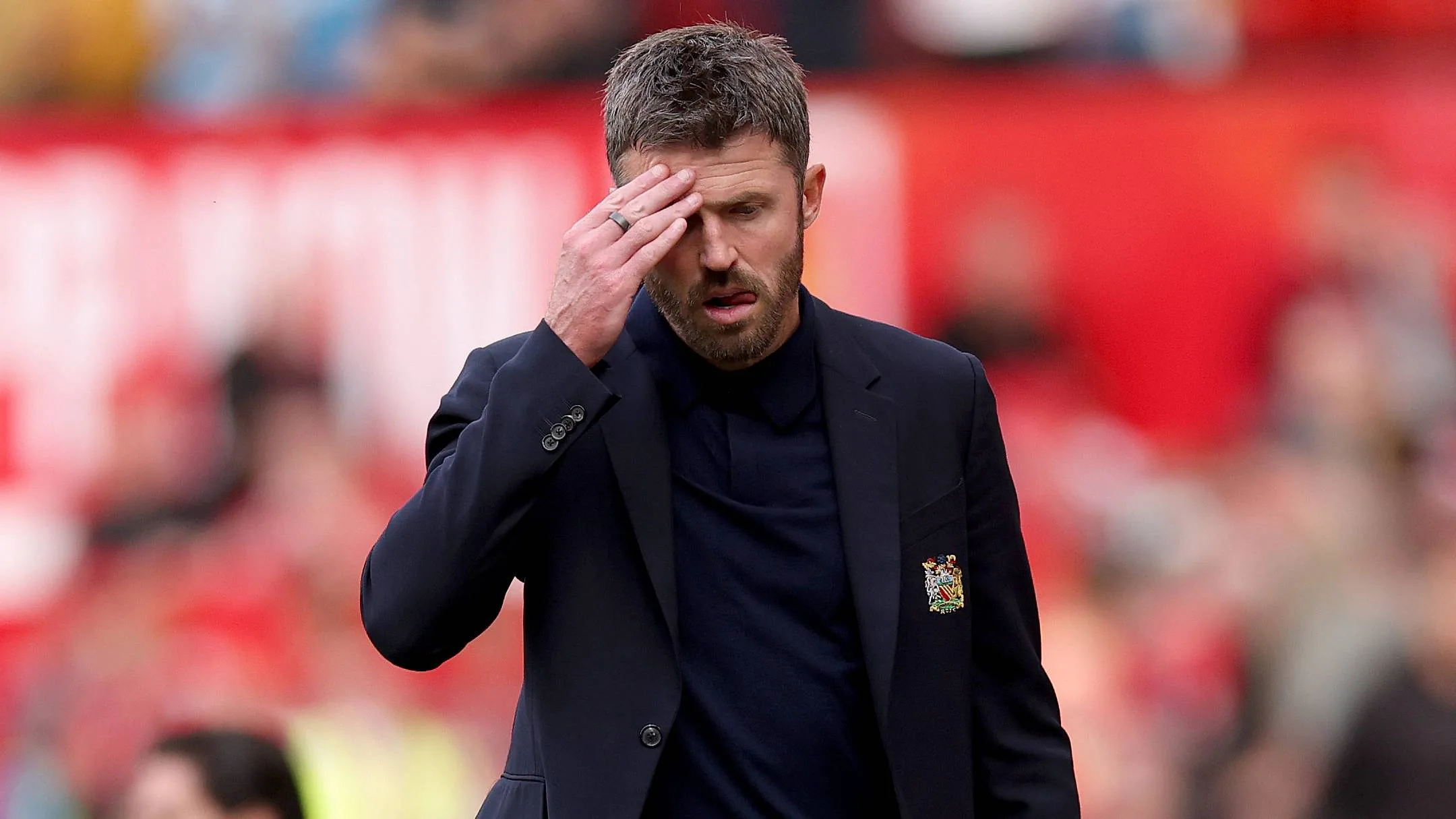
Michael Carrick was furious after Manchester United’s disputed 1-0 loss to Manchester City, and the wider picture may be just as damaging as the result itself. Although the season is still in its early stages, the defeat has already been framed as one that could shape the months ahead.
Soon after the final whistle, Pro Ref, the organisation previously known as PGMOL, accepted that the decision was wrong and sent United a formal apology. Carrick made his view clear afterwards, saying: “The explanation I got was he [Fernández] wasn’t interfering with play, so I just don’t get it,” Carrick, said after the game. “I can’t understand how they’re trying to help referees by putting so many layers behind them, with so many people, so many bodies, so many screens and so many offices to try to come up with the right decisions.
“If that’s how the rules are interpreted, that you’re not interfering with play when you’ve thrown yourself at the ball six yards from goal and pretty much nearly touched it, then I don’t know. On top of that, even the line they drew was a bit dubious.
“It’s worrying if that’s really how the game’s seen by those who are officiating it. I don’t know where you go. I don’t really know how you go and get another explanation on that one.”
With only four matches played, 102 points remain on offer, but Opta’s supercomputer has still produced a table that offers little comfort for United supporters. The projection has them finishing sixth, outside the Champions League places.
That would leave United just one point behind Brighton & Hove Albion in fifth, a gap made harder to accept given the match itself. A goalless draw was the sense of the occasion, and United may even have felt they could take all three points once City were reduced to 10 men after Phil Foden’s early red card. Those extra points would have lifted them above Chelsea into fourth in Opta’s predicted standings.
The projected table is tight, with fewer than three points separating fourth and sixth. That narrow margin underlines why the outcome is so significant, because sixth place would also mean a major financial setback and, in turn, a blow to recruitment, wages and the ability to match rivals higher up the table.
Man City
Haaland decides derby as United waste the advantage of City’s red card
Haaland settled a derby City finished with 10 men, while United failed to make their advantage count.
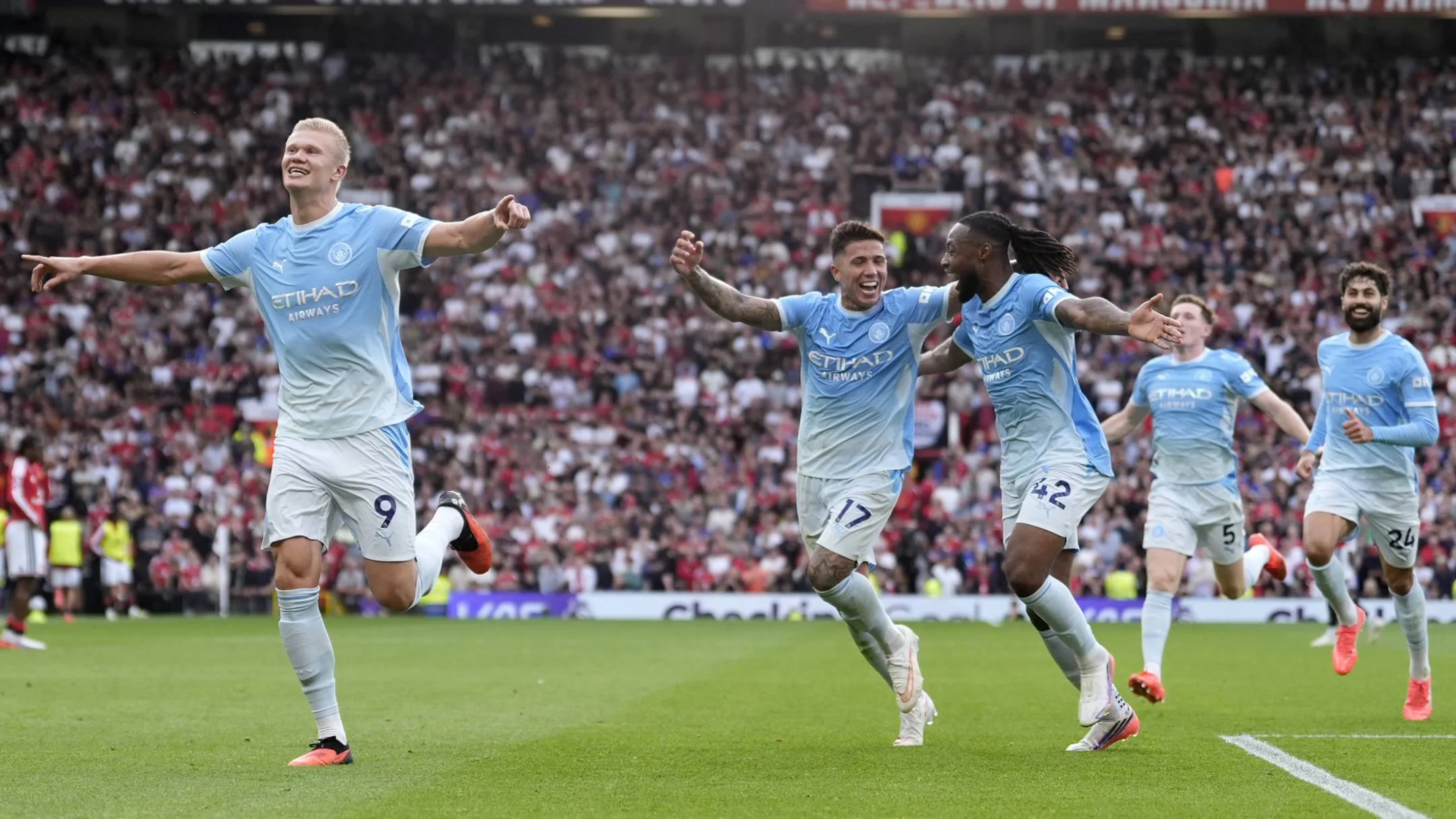
Manchester United left Old Trafford with a result that felt more painful because of the circumstances, as Erling Haaland’s lone goal handed Manchester City a 1-0 win in a derby shaped by Phil Foden’s dismissal. City spent most of the match with 10 men, yet still found a way to take control of the contest after the red card changed the rhythm of the afternoon.
Foden’s intervention should have tilted the balance toward United, especially after the hosts had been growing into the game. Instead, the incident altered the structure in City’s favour. With Elliot Anderson isolated at the base of a 4-1-4-1, United initially caused problems by drawing him into awkward decisions, particularly as Matheus Cunha kept dropping from the forward line. But once City reshaped into a compact 4-4-1, they became harder to break down and gave Anderson far more protection.
That left United searching for solutions they did not find. More than 40 minutes passed after Foden’s dismissal before Gianluigi Donnarumma was forced into a save, and the best opening of the closing stages was wasted by Bryan Mbeumo at stoppage time. The broader picture was stark: a team with the numerical advantage failed to turn it into control, while the side with 10 men grew more organised and disciplined.
There were solid individual displays in the United side, with Kobbie Mainoo standing out in midfield and several defenders coping reasonably well. For City, Donnarumma produced the decisive intervention when required, Matheus Nunes came through a physical duel on the right, and Haaland again showed his reliability in the key moment. His finish, awkward as it looked, was enough to settle a match that United failed to manage after the sending-off.
The numbers reflected the frustration for the hosts. United had 55 percent possession and 16 shots, but City created the cleaner openings and made theirs count. In a derby of fine margins, the team with the red card left with the points.