Everton
Liverpool Survive Derby Scare to Stay Perfect After 2-1 Win Over Everton
Liverpool beat Everton 2-1 in the Merseyside derby to extend their lead and keep a perfect start too.

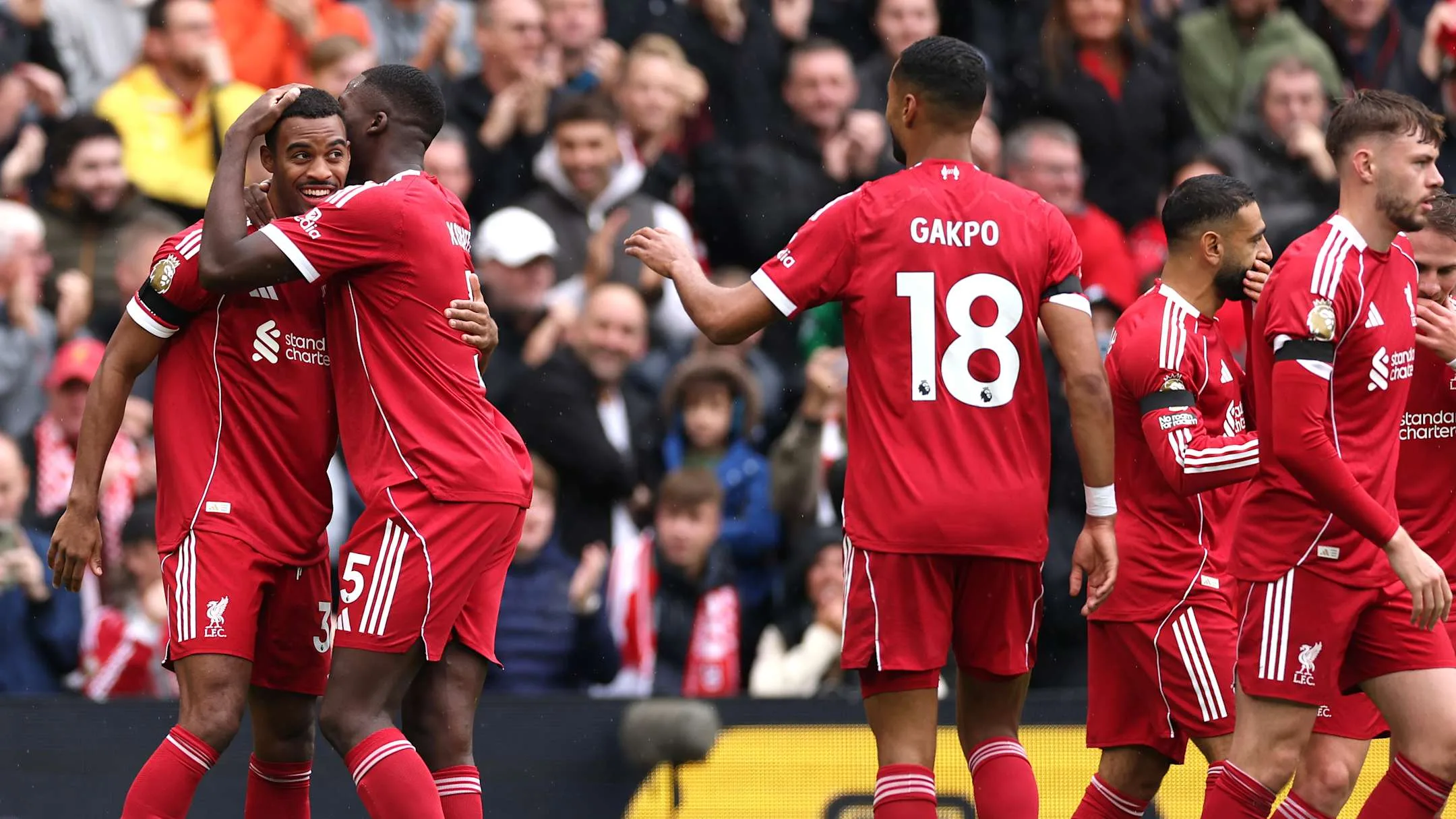
Liverpool extended their early-season run with a 2-1 Merseyside derby victory, holding off a spirited second-half response from Everton to preserve a perfect start to the campaign. Everton reduced the deficit through Idrissa Gueye, but Liverpool clung to their narrow advantage until the final whistle.
First, the result underlined both resilience and recurring vulnerability. Liverpool have needed goals in the 83rd minute or beyond to win all five of their competitive matches this season, yet this derby was settled by two first-half strikes. That said, the Reds have surrendered two-goal leads on three separate occasions this season and they threatened another collapse after the break. Questions over concentration and defensive organisation will persist, but a sixth straight win remains a noteworthy achievement and keeps them clear at the summit of the Premier League.
Second, Ryan Gravenberch’s shift into a deeper role continues to pay dividends. His transformation into a defensive midfielder was crucial to Liverpool’s Premier League title triumph last season, and he is building on that form in Arne Slot’s double pivot. Gravenberch produced a sumptuous finish in the derby and earlier starred in the midweek victory over Atlético Madrid with an all-action display. He supplied an assist for Mohamed Salah’s effort at Anfield and earned another assist when his through ball was fired home by Ekitiké. The Netherlands international managed just four assists last season, yet has already produced four goal contributions in six matches this term, adding valuable balance to Liverpool’s engine room.
Third, the forward options are showing encouraging depth. All eyes were lasered on Alexander Isak midweek as the record Premier League signing made his Liverpool debut. There were encouraging signs during his hour-long outing against Atléti, particularly after he missed the entirety of pre-season due to his self-imposed exile at Newcastle United. Meanwhile Ekitiké continued his excellent start to life in English football with a well-taken strike in the derby. The Frenchman now has four Liverpool goals including his effort in the Community Shield and contributed strongly in both attack and defence during his appearance.

Carabao Cup
Carrick Reveals Rashford Asked to Come Off Against Everton
Carrick confirmed Rashford asked off against Everton after feeling discomfort, leaving United short.

Manchester United were left with a late concern after Marcus Rashford requested a substitution during Sunday’s match against Everton, with Michael Carrick confirming the winger had been feeling discomfort.
Rashford showed no obvious sign of injury while on the pitch, but Carrick said after the game that the player had been “feeling a bit of something,” which led to him being replaced by Patrick Dorgu.
“He’s done very well,” Carrick said of Rashford. “As I said during the week, he’s done ever so well since he came back.
“I thought he looked really sharp again today and dangerous. That final little moment didn’t quite drop for him, but nevertheless, I thought he created really good opportunities, and there was a big threat throughout the game.”
The exact issue remains unclear, and Carrick did not provide any further detail on whether the problem could keep the 28-year-old out for a short spell or something longer in the worst case.
It is an awkward moment for United, who are about to enter a run that includes their Champions League and Carabao Cup campaigns, with three matches coming in the next nine days. Even without an injury worry, that schedule would demand rotation.
Carrick’s options on the wing are limited. Dorgu, normally a left back, was the player chosen to step in, a reflection of the shortage of alternatives in that area.
United do not have a natural left-wing replacement for Rashford. Matheus Cunha spent a lot of time there last season, but he never fully looked at ease in the role, and using him wide would also force a change further up the team.
Aston Villa
Premier League matchday three: a flawed, revealing set of performances across the board
Matchday three showed Premier League quality everywhere, but also familiar flaws, late swings and missed chances.
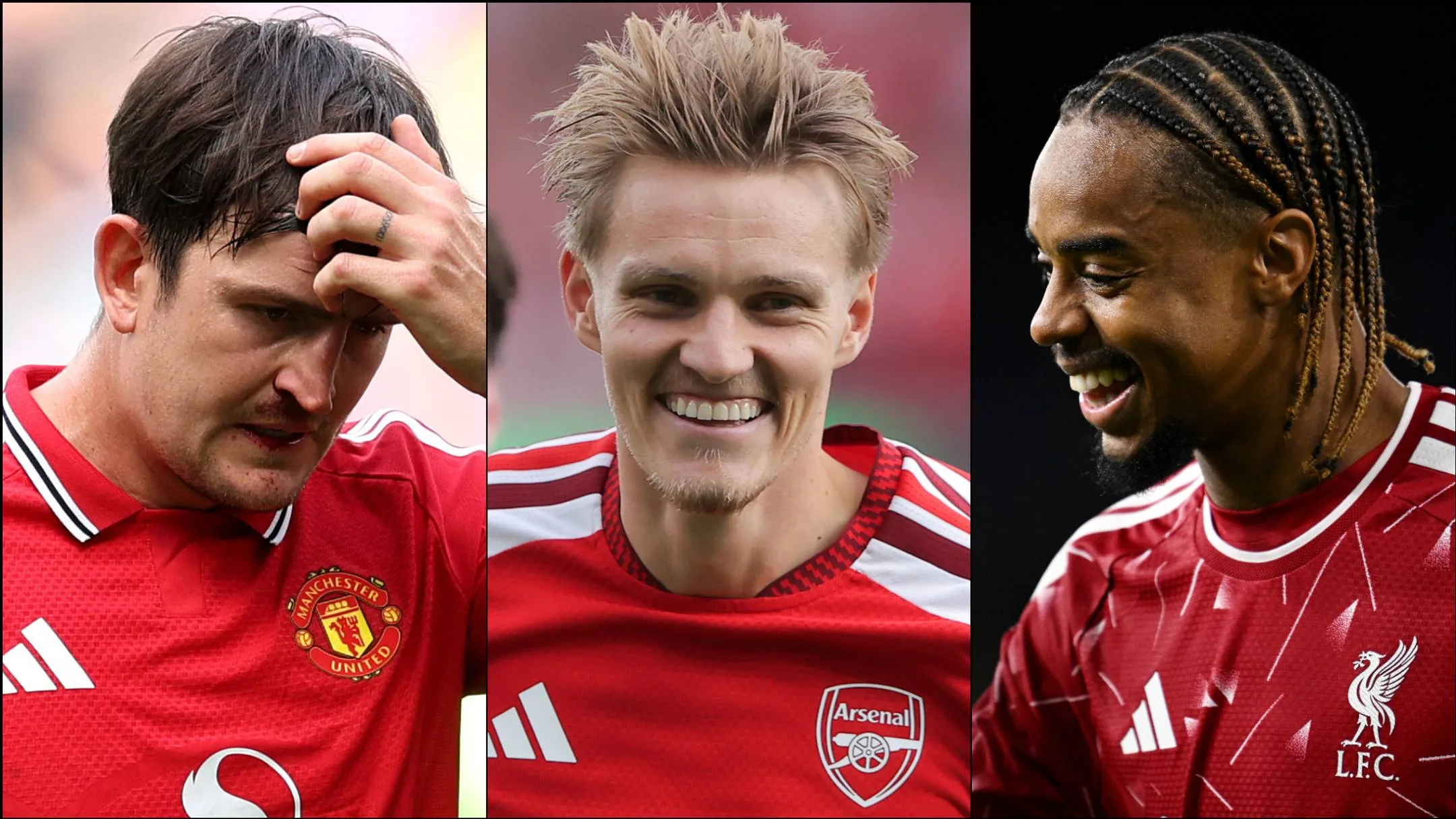
Martin Ødegaard’s claim that “all of the teams are good” has already been tested by three weeks of Premier League football, and matchday three offered more evidence that quality in this division is abundant, but perfection remains elusive.
Across the round, several teams produced encouraging spells without turning them into clean, controlled wins. Some were left to regret missed chances, others survived by narrower margins than expected, and a few drifted into the familiar territory of being competitive without quite being convincing.
At one end of the scale, Liverpool were pushed hard by Ipswich, with Gary O’Neil admitting: “I hate having to talk about good performances when you don’t get points because you need to maximize them,” while Ipswich could not consistently threaten a side that still looked vulnerable at times.
Aston Villa’s visit to the MKM Stadium was harder to explain. Unai Emery insisted the match had gone exactly as intended, although the performance raised obvious questions about how a game plan can survive without even a shot on target.
Chelsea began sharply, with Morgan Rogers’s second-minute volley setting the tone after a set-piece routine, but Arsenal gradually took control. Chelsea created almost nothing after the interval, while Martin Ødegaard’s winner underlined the difference between a bright start and a complete performance.
Elsewhere, Hull’s seven points from three games drew a playful Champions League reference from Sergej Jakirović, while Tottenham remained stubbornly in the middle ground. Roberto De Zerbi’s side were held to a goalless draw that suited neither heaven nor hell.
There were also reminders that strong starts can unravel quickly. Bournemouth led 2-0 at St. James’s Park before another late setback, while Everton earned a point thanks to Ainsley Maitland-Niles’s 96th-minute strike and Manchester United were undone by Everton’s set-piece threat after a flat first half.
Elsewhere, Brighton “woke up too late,” Nottingham Forest were left frustrated by a disallowed goal, Brentford needed a triple half-time change to find a response, and Leeds experienced a textbook game of two halves. Sunderland, meanwhile, secured a different outcome from the same spot and the same goalkeeper, when Enzo Le Fée produced a far better penalty than he had before.
For Manchester City, Erling Haaland again provided the decisive edge, as Coventry’s resistance made the result far less straightforward than expected.
Everton
Everton rescue a point as United are denied at the death
United led twice at Everton, but a late strike denied them all three points in a tense draw.
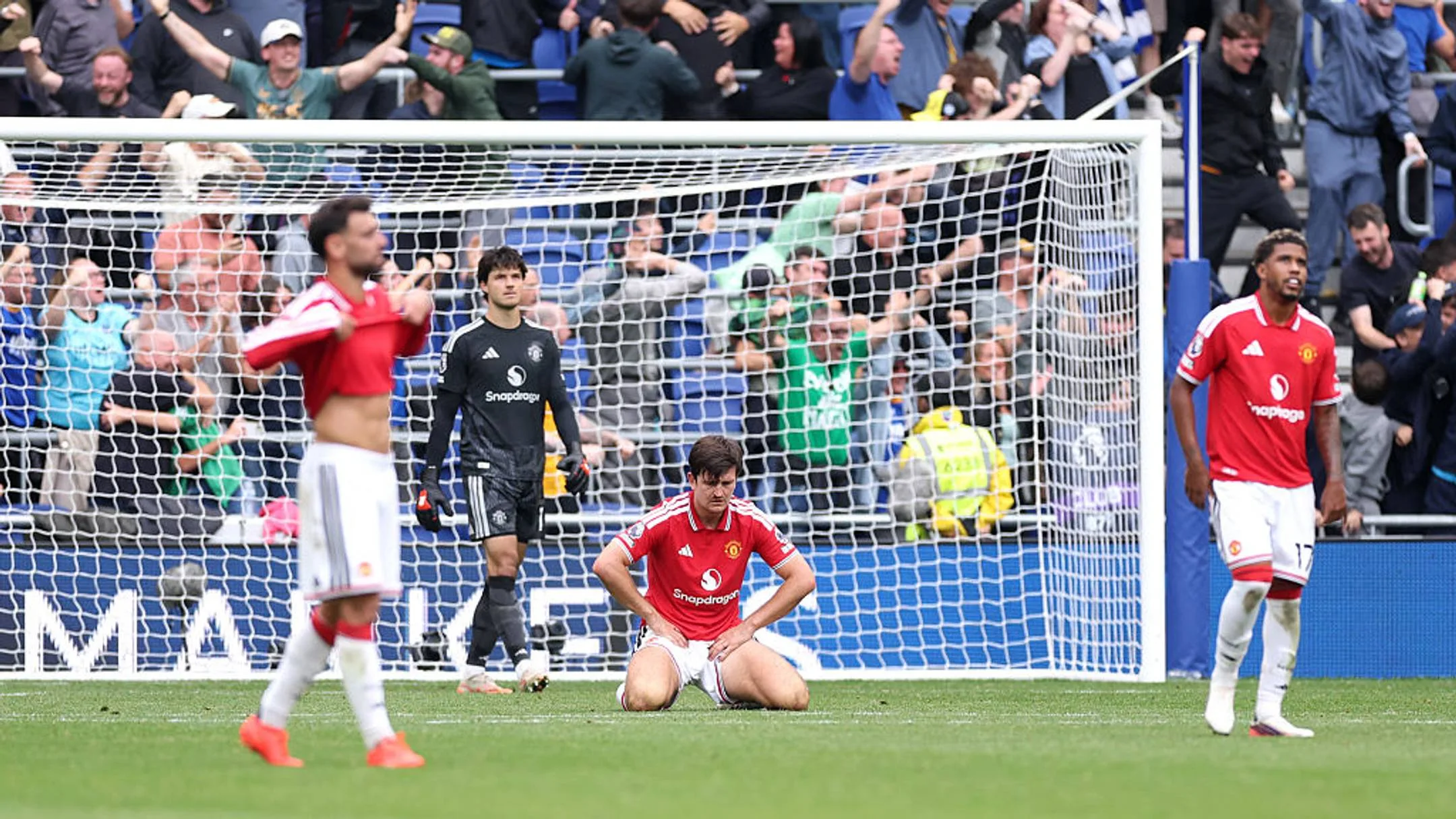
Manchester United looked set to leave Everton with three points, only to be caught by a stoppage-time strike from Ainsley Maitland-Niles that changed the tone of the afternoon in a single moment.
Bryan Mbeumo had put United ahead straight after the interval with a precise finish, and Benjamin Šeško then appeared to have settled the contest when he scored his first Premier League goal of the season. Yet United never fully controlled the game after taking that lead, and Everton built pressure as the visitors dropped deeper.
The home side, still unsettled after a strange Deadline Day, did not find their first equaliser until the 83rd minute, when Tyrique George unleashed a powerful effort beyond Senne Lammens. United briefly recovered when Šeško struck, but they could not close the door on the match, and Maitland-Niles delivered the final blow with the last kick.
For Šeško, the finish was another reminder of his value off the bench. The Slovenian has already built a reputation for making an impact after the break, having scored four times as a substitute last season. United continue to view him as a long-term centre forward, with the combination of athleticism and penalty-box instincts that has drawn comparisons in his development, but his early-season role remains limited by injury and team selection.
There were encouraging individual displays in the United side. Kobbie Mainoo was especially effective in tight areas, while Luke Shaw supplied the cross for Šeško’s goal and also stood out defensively. Bryan Mbeumo produced the early breakthrough, and Youri Tielemans offered calm in possession. But the match was ultimately shaped by United’s inability to manage their two leads.
The numbers reflected a close contest, with United having more possession and Everton edging the expected goals tally. In the end, the scoreline captured the balance of the game and United’s frustration.