
Arsenal
Arsenal’s Most Memorable Shirts: A Concise Ranked Retrospective
An assessment of Arsenal’s most memorable kits, from 1960s home shirts to the 2019-20 adidas return.

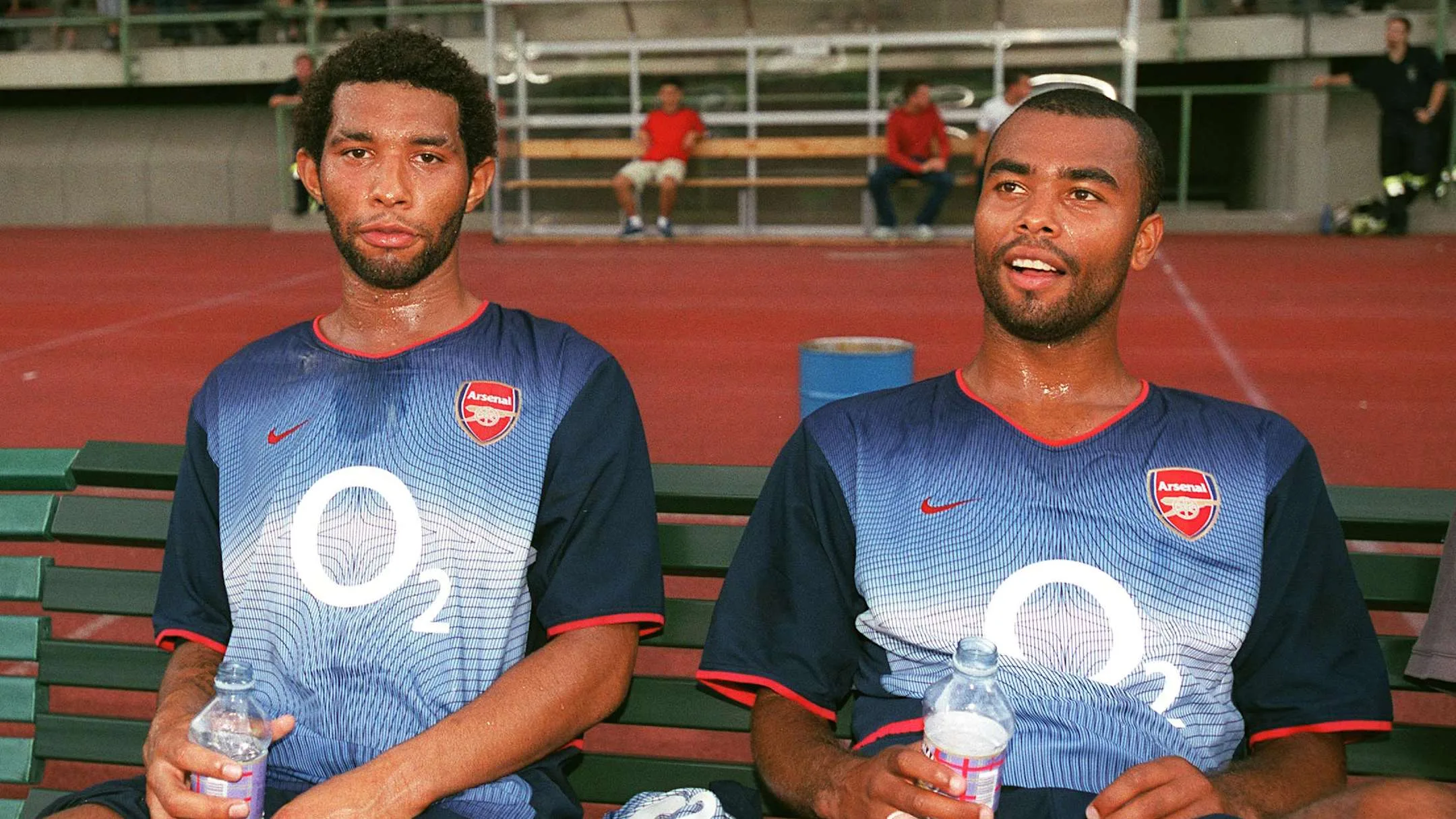
Arsenal’s identity has long been anchored in red and white, but the club’s away and third strips have provided some of the most adventurous designs in modern football. This piece revisits ten of those shirts, from the pared-back early home jerseys to the bold experiments that now feel indispensable to the club’s visual history.
After 25 years with Nike and PUMA, Arsenal reunited with adidas for the 2019–20 season. The home shirt combined a bold red body with crisp white sleeves and a white collar trimmed in red and black. The iconic three stripes returned across the shoulders. It marked Mikel Arteta’s first season in charge and ended with FA Cup glory, giving the shirt instant classic status.
That same year produced an electric away design: a split of deep navy and patterned lighter blue divided by jagged, lightning-bolt-style stripes down the front, finished with sharp red trims and a watercolor-style Arsenal crest across the chest.
At the turn of the millennium Arsenal experimented with dual branding between 1999 and 2002, featuring Dreamcast on home shirts and Sega on away strips. The Sega-sponsored gold away kit of 2001–02 became a showstopper and has since become a cult classic, especially as Arsenal went on to lift the league and FA Cup double wearing it.
The 2022–23 kit introduced black and gold for the first time in club history, featuring a geometric “AFC” pattern inspired by the lettering visible to fans on the way to Emirates Stadium. The design was a tribute to overseas supporters known as the “Little Islingtons” and carried links to the Black Lives Matter movement.
Classic home shirts from the 1960s and ’70s showcased the essentials: red bodies, white sleeves and collars, and a minimalist cannon crest. The 1994–96 home shirt captured the spirit of the 1990s with a woven zig-zag pattern, chunky white collars and a gothic “Arsenal” across the shoulders.
Early-2000s innovation included a bold blue strip first used as the 2002–03 away kit and repurposed as a third shirt during the Invincibles season. Built on Nike’s Total 90 template, it featured a sweeping vertical panel and sharp geometric pattern with red accents. The 2003–04 shirt, itself on the Total 90 template with gold piping and a central crest, became inseparable from Arsenal’s unbeaten title run and remains emblematic of that season.





Arsenal
How Ayyoub Bouaddi’s World Cup Showing Has Put Him on Arsenal’s Summer Radar
Arsenal in dialogue with Bouaddi’s representatives after his World Cup display; Lille value at $80.5m.

Arsenal have opened preliminary contact over Ayyoub Bouaddi after the 18-year-old midfielder’s emergence on the international stage. Bouaddi, who plays for Lille in Ligue 1, joined the club as a young teenager and made his senior debut in 2023, three days after turning 16.
Although born in northern France, Bouaddi switched allegiance to Morocco less than a month before starting Saturday’s 1–1 draw against Brazil to kick off the team’s World Cup campaign. In that match he covered ground across the pitch, hardly misplaced a pass and routinely won possession back, drawing attention to his technical poise and energy.
The Times writes that Arsenal are in contact with the player’s representatives, the preliminary stage of any transfer process to gauge interest from the prospective target. No talks have yet begun between the Premier League champions and Lille, who are thought to value Bouaddi at $80.5 million (£60 million). That is a sum in the same ballpark as the fee that brought Martín Zubimendi to London last July.
Arsenal’s recruitment pattern this summer has leaned toward raw, developing talent. The club has already been linked to other teenage prospects, with 16-year-old Leicester City winger Jeremy Monga considered the “priority” target for the summer—although Brentford appear to hold an advantage in the battle for his signature.
Competition for Bouaddi is reported to come from Real Madrid, Paris Saint-Germain and Chelsea. Given his rapid rise through Lille’s ranks and the visibility of his World Cup performances, it is clear why he is attracting interest from multiple big clubs. For Arsenal, the move would fit a broader strategy of investing in young players with high ceilings, even when valuations demand significant outlay.
Arsenal
Brentford’s renewed interest puts Arsenal at risk in chase for Jeremy Monga
Brentford challenge Arsenal for 16-year-old Jeremy Monga with July 10 contract deadline approaching.

Arsenal face increasing competition from Brentford in the pursuit of 16-year-old Leicester City winger Jeremy Monga this summer. The teenager has been described as a “priority target” for the Gunners as the club looks to consolidate after a summer of heavy spending that helped them become English champions for the first time in 22 years.
Reports in The Times suggest Brentford have “stepped up” their interest and that “formal contact” with the player is expected. Leicester’s relegation from the EFL Championship at the end of 2025–26, and the club’s start to the new season in League One, make Monga’s departure more likely, but there are important timing details that could shape any move.
Monga remains 16 until July 10. That is the date when he turns 17 and can sign a first professional contract with Leicester. If he signs after that date the Foxes can command and negotiate a transfer fee. If he leaves before signing a contract the club would be cut out of the negotiation and would only receive compensation determined by a tribunal under the rules for free agents in England aged 23 or younger, which could be considerably less.
Brentford believe they can offer the young winger more immediate senior opportunities than he might find at a larger club like Arsenal, a factor described as holding “appeal” for the player. There is always the chance that getting stuck on the fringes without consistent opportunities at a bigger club like Arsenal could stall his progress. The Bees can point to a record of developing young players who went on to higher profile moves, such as David Raya and Bryan Mbeumo.
For Arsenal, and for manager Mikel Arteta, missing out would represent a setback in a transfer area identified as a priority. Should Brentford secure Monga, it would shift the balance in a contest that remains time sensitive and highly consequential for all clubs involved. Were Arsenal to prevail, it would leave consequences for Ethan Nwaneri.
Arsenal
Arsenal Consider £34m Move for Christos Tzolis as Attack Targets Multiply
Arsenal weigh a £34m move for Christos Tzolis as they pursue multiple attacking targets this summer.
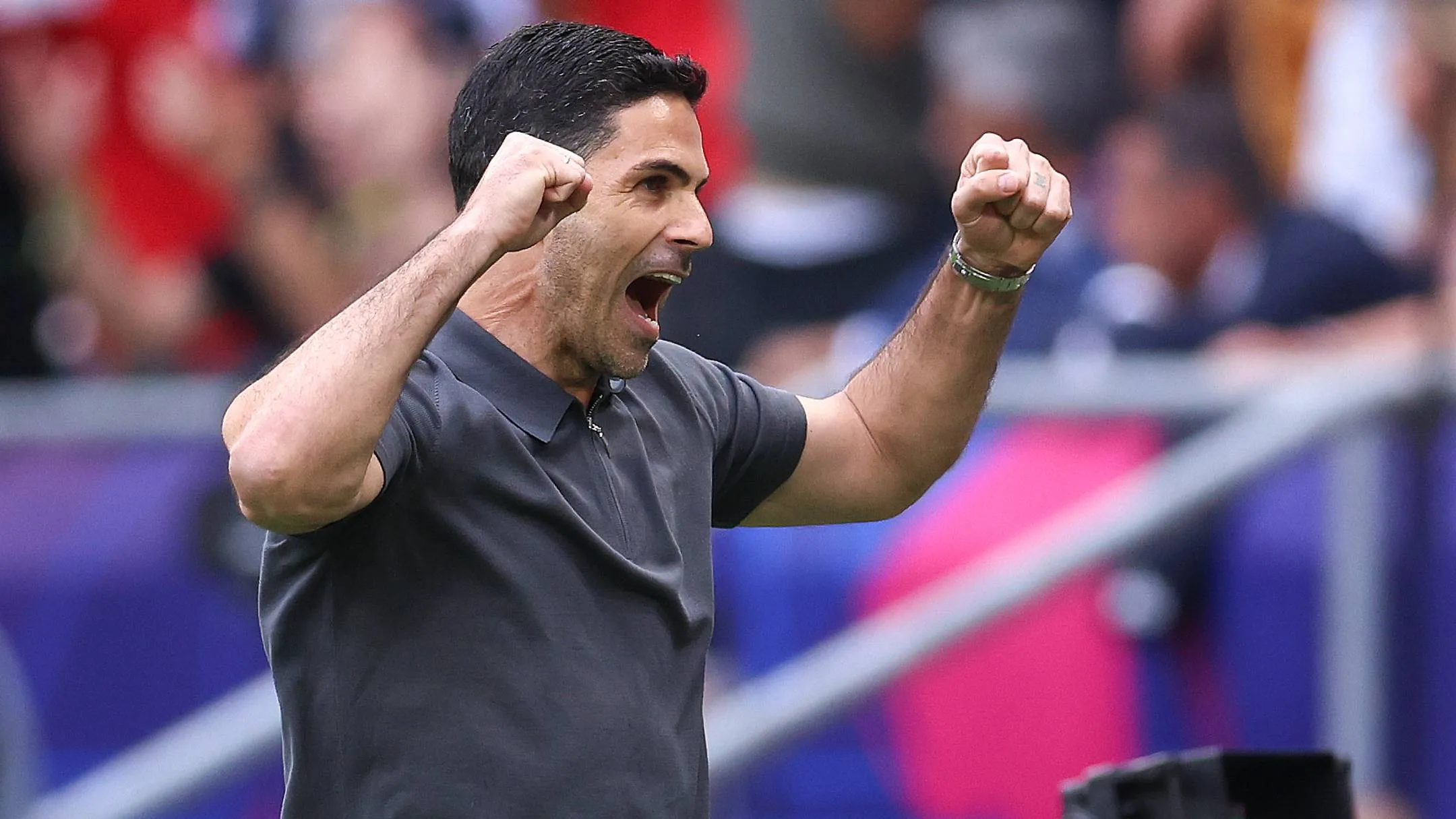
Arsenal are exploring a move to sign 24-year-old Club Brugge winger Christos Tzolis. Any deal, expected to cost around $46 million (£34 million), is not likely to complicate a potential move for a bigger name like Morgan Rogers, whose price tag is believed to be at least double that of Tzolis.
BBC Sport note that Arsenal’s recruitment chief has already watched Tzolis in action and, after being offered the chance to strike a deal, sporting director Andrea Berta is considering trying to wrap up an early summer deal.
The Gunners have been linked to a whole host of big attackers. Alongside Rogers, the club are reported to be admirers of Atlético Madrid striker Julián Álvarez, while an approach for Juventus winger Kenan Yıldız is thought to have been knocked back.
On paper Tzolis’s record at Norwich City gives reason for caution: he made 14 Premier League appearances for Norwich without scoring in the 2021–22 season and struggled at Carrow Road. In Belgium, however, he has produced a markedly different output.
Across two seasons in Belgium’s top flight, Tzolis has racked up 43 goals and 45 assists in all competitions, including three goals and four assists in the Champions League. Those numbers represent elite output, although questions about the level of the league are valid—Belgium’s top flight is not the Premier League but is still accepted to offer strong competition.
A lethal eye for both goals and assists has developed during Tzolis’s time in Belgium, having previously been largely known for his electric dribbling. It is no surprise that a number of top sides are chasing his signature. Quizzed on interest from Manchester United earlier this summer, Tzolis told Het Nieuwsblad: “United could certainly convince me. Such a big club, with so much history. It would be hard to say no to that.”


-
 Chelsea2 months ago
If Xabi Alonso Took Charge at Chelsea: Formation, Principles and a Projected XI
-

 Arsenal2 months ago
Five leading contenders for 2025/26 Premier League Player of the Season
-

 Championship2 months ago
The Fall of Leicester: How Financial Choices, Recruitment and Instability Led to League One