Chelsea
BlueCo Decision Raises Questions After Rosenior Is Favoured Over Filipe Luís
Chelsea appointed Liam Rosenior instead of Filipe Luís, raising questions over BlueCo and APT rules.

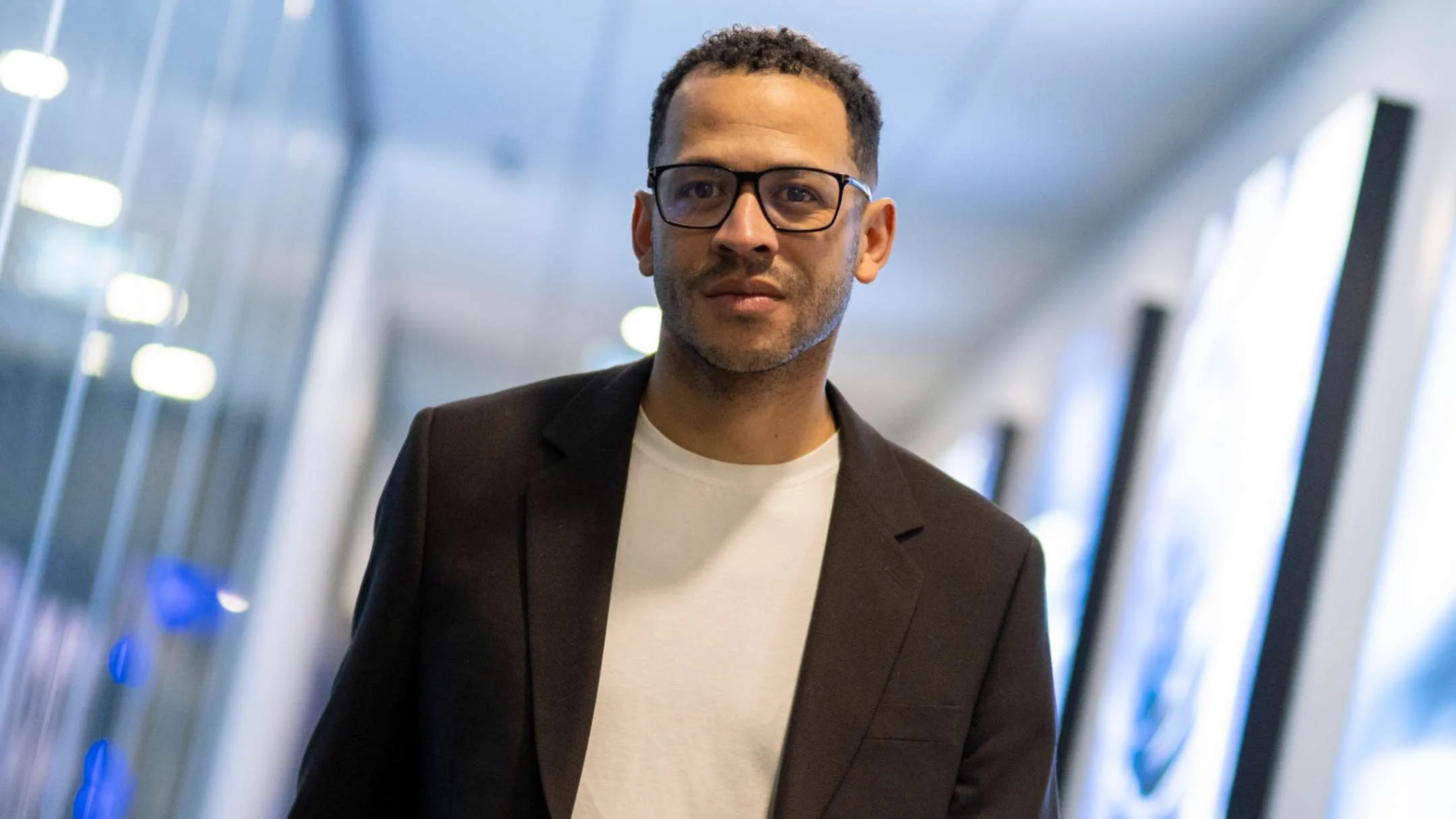
Chelsea appointed Liam Rosenior as first-team head coach after deciding against hiring former player Filipe Luís, a choice that has provoked sharp criticism and raised governance questions. The Telegraph reports that formal permission was given on Monday for Chelsea to discuss the role with Rosenior, and the former Hull City manager quickly agreed to take his first Premier League managerial job.
Chelsea had interviewed Luís, who won the Premier League title with the club during 2014–15 in his only season at Stamford Bridge. Luís has since enjoyed success with Flamengo, winning the Copa Libertadores, Brasileiro Série A and four other competitions in a stellar 2025.
The appointment has stirred controversy because of the ownership links between the clubs. Both Chelsea and Flamengo sit within the BlueCo orbit, the consortium led by Todd Boehly and Clearlake capital, fronted by Behdad Eghbali, which bought Chelsea in 2022. BlueCo added Strasbourg to its portfolio the following year.
Strasbourg’s history is noted in the debate: founded in 1906, a matter of months after Chelsea, the club won the French top flight in 1978–79, fell to the fifth tier in 2011 and climbed back to Ligue 1 six years later. Critics say the club’s identity has suffered since the takeover, with promising talent moved to west London. Captain Emmanuel Emegha will move to Chelsea in the summer, where he will find his former manager.
Chelsea declined to disclose the financial details of Rosenior’s appointment, telling The Times that it fell in line with the “market rate.” Because BlueCo effectively negotiated with itself, the move will be scrutinised under the Premier League’s associated party transaction rules. These APT rules are intended to ensure dealings are at “fair market value.” Manchester City has led a legal battle over those regulations.
When the APT rules were first under review at the start of 2024, Chelsea voted against the changes before surprisingly reversing their approach for the final vote in November 2024.
Supporter distrust is clear: a Chelsea Supporters’ Trust poll found more than 90% lacked confidence in BlueCo decision making, almost 86% saw “significant” weaknesses in the sporting structure and 83% were not confident Chelsea would achieve “sustained on-pitch success” in the next three to five years. The CST was at pains to “wish Liam Rosenior every success” but the 41-year-old arrives in a febrile atmosphere. “What Rosenior lacks in experience he boasts bucket-loads of loyalty to the BlueCo structure.”

Chelsea
Joao Pedro injury leaves Chelsea facing a key spell without their most complete forward
Chelsea must manage without João Pedro after Alonso said the forward will miss several weeks.
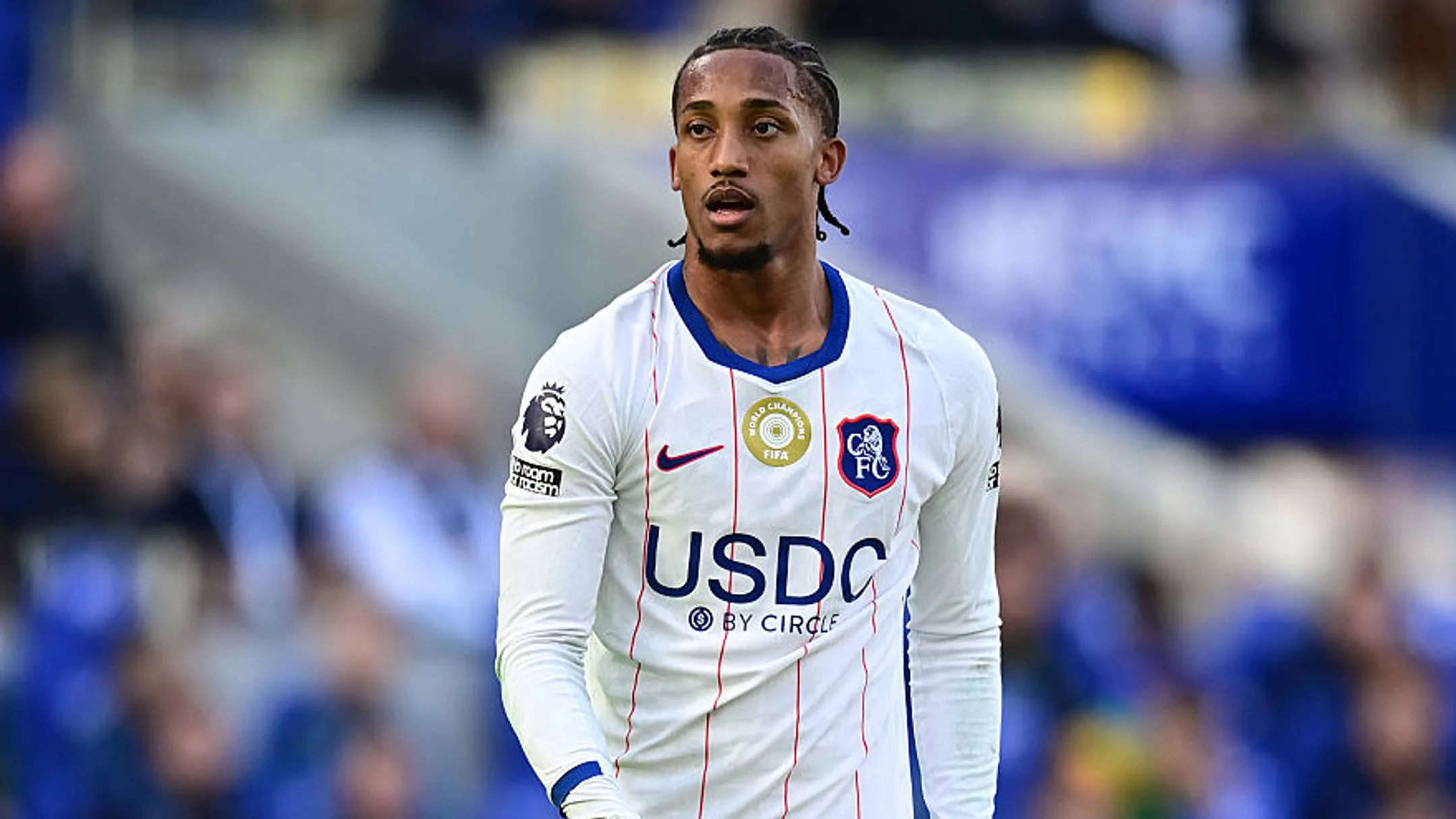
Chelsea’s dependence on João Pedro has become impossible to miss. Across his first year at the club, he scored 23 goals in all competitions and added enough assists to bring his total goal contributions to 32. In 2026/27, he has already been involved in eight goals and assists in seven matches, underlining how central he has become to the team’s attack.
His absence matters beyond the numbers. Chelsea do have other scorers, with Cole Palmer the next most productive player since the start of last season on 15 goals in all competitions. But Pedro offers more than finishing. He helps connect the side, and when he is not there, the team’s balance changes.
That has already been felt when others have been asked to lead the line. Morgan Rogers found it difficult to operate as a No. 9 against Tottenham, away from his preferred role as an inside forward on the left. Danny Welbeck was signed to provide occasional cover, mainly in domestic cup matches, rather than to start regularly. Emmanuel Emegha has still not featured because of injury, while Nicolas Jackson is in strong form, but for Aston Villa.
As a result, Chelsea’s attack loses a major piece when Pedro is unavailable. Alonso was clear about the importance of the issue ahead of the Carabao Cup meeting with Liverpool.
“He is a key player. We will miss him,” Alonso told reporters on Tuesday, building up to the Carabao Cup tie against Liverpool. “But we will have to be ready to deal with the injury and to be competitive and to try to win games with the players that we have available.”
Alonso described the problem as “an injury in his thigh”. Pedro has had similar muscle setbacks before, missing two games with a thigh issue in April last season, spending almost two months out with a hamstring injury in the second half of the 2023–24 campaign, and sitting out around three weeks with a calf problem at Watford in 2022–23.
For now, this is viewed as a setback rather than a long-term alarm, although it is not a trivial one. Alonso said Pedro is expected to be sidelined for “a few weeks”, adding: “Let’s see how many [weeks] … We don’t want to predict that. But he will not be ready for the next games.”
Chelsea
Carrick under pressure after United’s latest barren run
Carrick has tied a unwanted United record as pressure rises, and Chelsea now looms next.
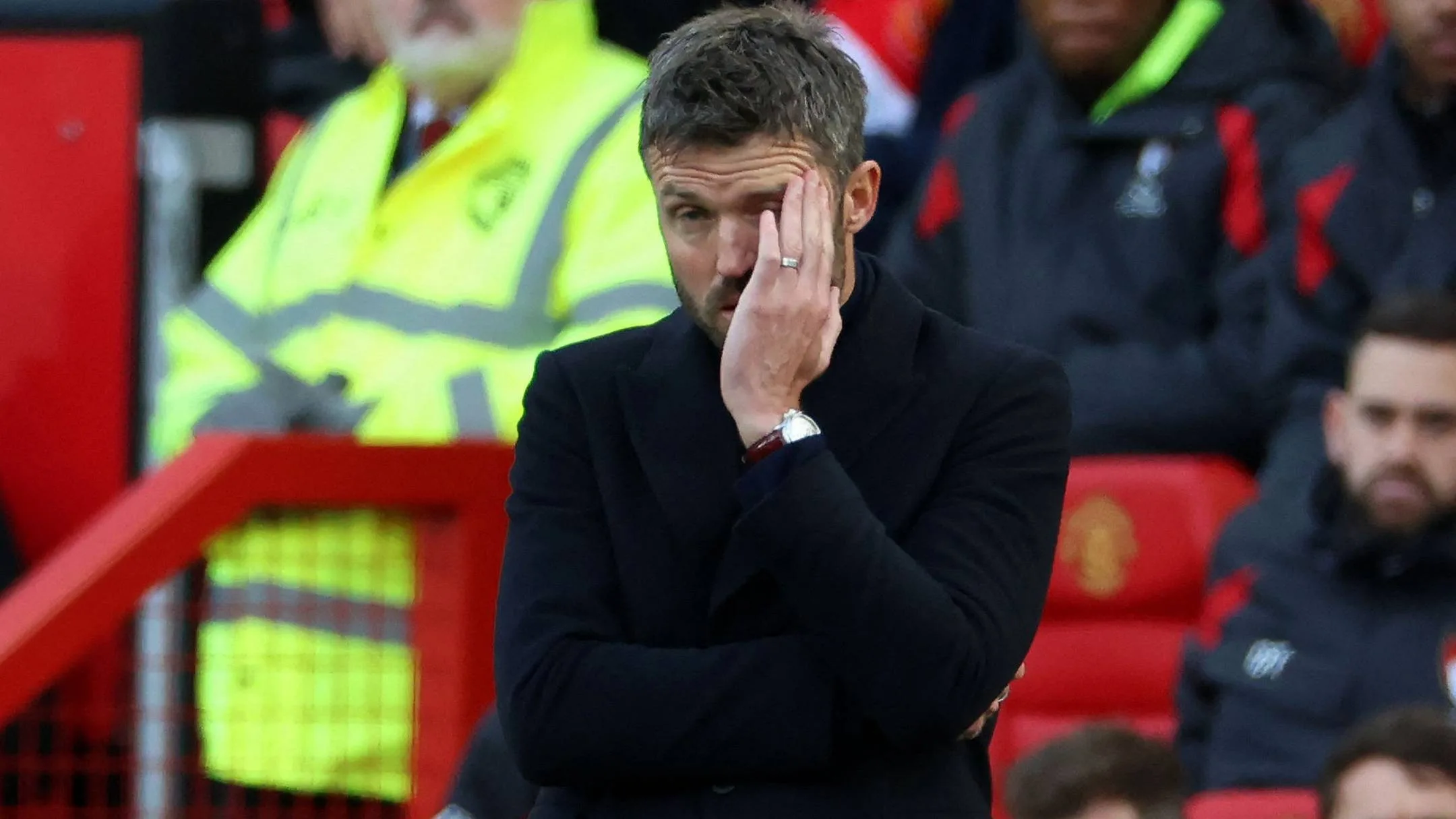
Michael Carrick’s start has become harder to defend after Manchester United’s latest setback at Old Trafford, with the manager now matching a sequence the club had not seen since the early part of the century.
United have never gone nine matches without a win since 2000, but Carrick has now equalled the eight-game stretch previously recorded by Louis van Gaal between November and December 2015. That run remains a familiar reference point, not least because Van Gaal kept his job despite it.
The Dutchman’s sequence ended with a 0-0 draw against Chelsea, a result that appeared to buy him more time. He then opened 2016 with a 2-1 victory over Swansea City, a result that helped him see out the season. Whether Carrick receives the same patience is now the central question.
United’s next fixture is another meeting with Chelsea, and it arrives at a moment when the club need something to shift quickly. The Blues’ performance against Tottenham Hotspur on Saturday was described as awful, which at least leaves open the possibility of a much-needed response from Carrick’s side.
The wider picture is bleak. As the analysis notes, there is effectively little United can do to change matters other than dismiss the manager. Results are demanded immediately, yet the feeling around the club is that Carrick has too few allies in senior positions if performances continue at this level.
The problems extend beyond the dugout. The board are under scrutiny, but any real reset would take time. The ownership need to settle on a direction, the recruitment team need to prioritise properly and the squad needs to be cleared of a toxic culture that is dragging everything down. Those are not fixes that happen overnight.
Pressure is also building around Omar Berrada and Jason Wilcox, but replacing two of the club’s most powerful figures would be another long and complicated process. United do not have the luxury of waiting, with Chelsea, Roma, Aston Villa, Liverpool, Sporting CP and Brentford all next on the schedule. On current form, the winless run could easily grow even longer.
Aston Villa
Matchday 8: A Weekend of Rain, Errors and Narrow Margins Across the Premier League
Stormy conditions, missed chances and decisive errors shaped a Matchday 8 full of fine margins.

There was little sunshine to be found on Matchday 8, as Storm Boelo lashed English grounds with rain and wind. For all the bad weather, only one fixture finished goalless, and the round still produced a sharp series of swings in tone, quality and consequence.
Manchester United’s latest setback stood out for all the wrong reasons. Without Bruno Fernandes, they looked short of attacking life again, while Bournemouth made the most of what they created in a 3-0 win. Elsewhere, Tottenham Hotspur earned a notable victory at Stamford Bridge after Mike Penders handed them the opening goal, with Cole Palmer adding to Chelsea’s problems by picking up two unnecessary yellow cards.
Several matches were defined more by frustration than fluency. Fulham struggled to trouble Coventry, managing just two shots on target, while Crystal Palace surrendered control against Newcastle after leading the shot count at the break. Everton were pushed back by Arsenal and rarely threatened after falling behind early. Ipswich and Nottingham Forest finished level after a match in which neither side found much rhythm, even if the visitors were able to make more of the contest than their hosts.
Brentford’s draw away to newly promoted opposition drew a blunt response from Keith Andrews and Michael Kayode, who both said, “We have to be better.” Sunderland also shared the points in a contest shaped by the conditions, with Régis Le Bris pleased enough to say, “We were Sunderland today.” At the Stadium of Light, the wind played a major role in a game where both teams completed only 73% of their passes.
There were also decisive moments at Anfield and Villa Park. Liverpool saw Brighton’s recent momentum halted as early goals changed the shape of the match, while Villa took control through Nicolas Jackson’s sharp finishing and a commanding display from Zion Suzuki, who produced six saves and 12 line-breaking passes. In another tight contest, Hull and their opponents could not be separated, and Sergej Jakirović called it “a fair result.”
The weekend’s final judgement was not about one storyline alone, but about a league round where weather, missed chances and single moments repeatedly decided the outcome.