Man Utd
Mount setback underlines the midfield work still facing Manchester United
Mount’s injury record has put United’s midfield plans back under the microscope ahead of 2026-27.

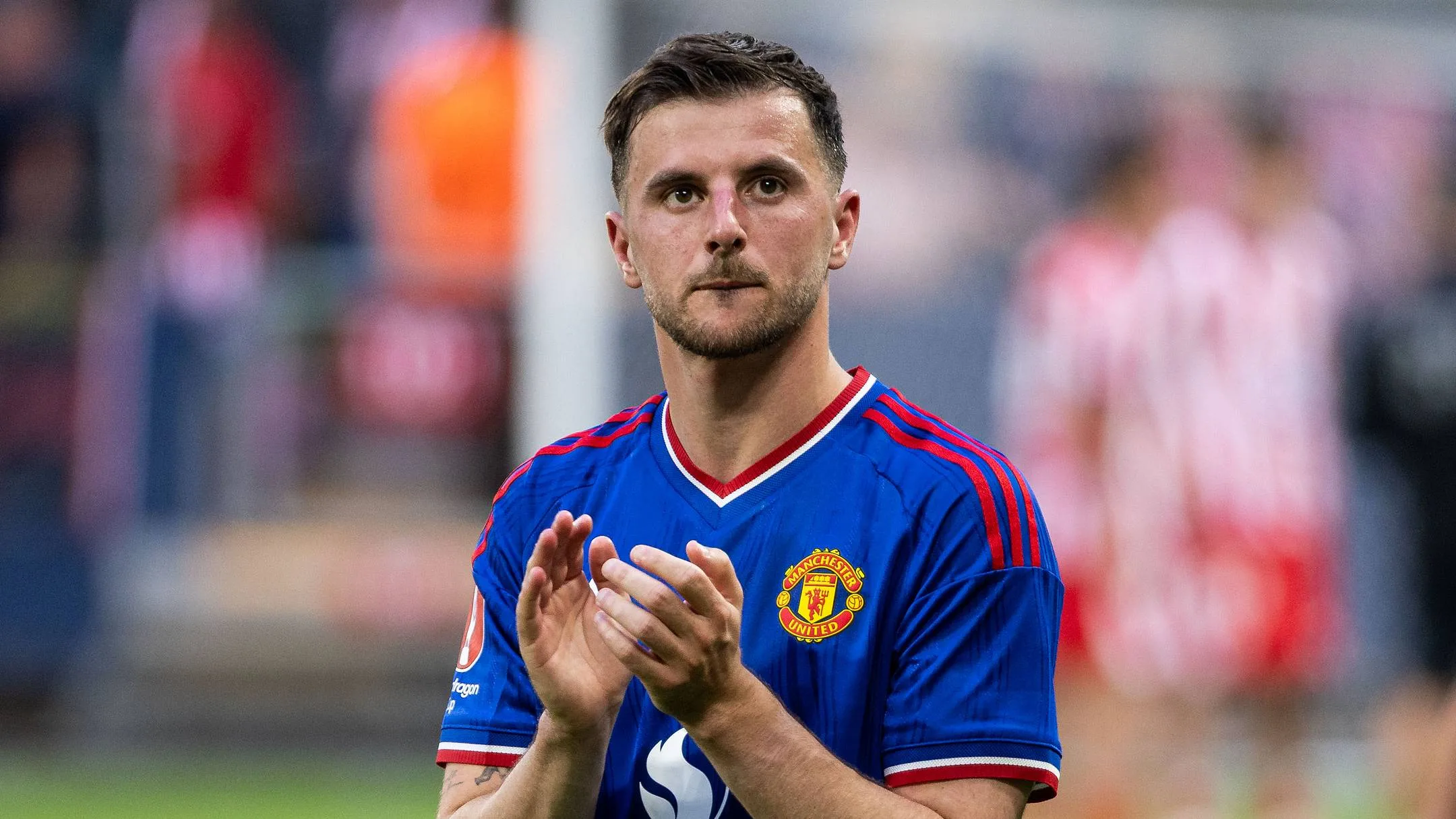
Mason Mount’s latest injury issue has served as a sharp reminder that Manchester United are still not fully equipped in central midfield.
Since arriving from Chelsea in 2023, Mount has already missed 70 competitive United matches through injury. Much of that time has been lost to calf and hamstring problems, while his newest setback, according to BBC Sport, will keep him out of United’s latest preseason friendly against Leeds United. The problem stems from an awkward kick he took against Paris Saint-Germain last Saturday.
Carrick had initially described Mount’s substitution as precautionary, but the fact he has not trained before the Leeds fixture reinforces the need for United to keep moving in the summer market. Central midfield has clearly been a priority, and the suggested additions of Youri Tielemans and Andrey Santos would add technical quality, work rate and some of the attributes lost with Casemiro’s departure. Tielemans is not a natural holding midfielder, yet he can dictate from deep with his passing range. Santos brings more athleticism, carries the ball between the lines and can surge forward himself.
Even so, United still look short of a midfield disruptor, someone who can add bite alongside those options and the current pool of Kobbie Mainoo, Bruno Fernandes and, once fit, Manuel Ugarte.
Mount has shown enough in preseason to suggest he can still help, especially with Fernandes and Mainoo having extra time off after the World Cup, allowing him to operate in a deeper Tielemans-style role. But his wider record is difficult to ignore. He has now been sidelined on 10 separate occasions in three years at Old Trafford, which makes reliability a concern.
With United back in the Champions League, rotation and careful management of minutes will be required. Tyler Fletcher and Shea Lacey are emerging, but Carrick will still want experience to steady the first months of 2026-27. At minimum, United need a more complete midfielder, one with greater tackling power and game reading than Mount.
Among the names linked are Aurélien Tchouaméni, Manu Koné, Tyler Adams and Sander Berge. Yet Brighton & Hove Albion’s Carlos Baleba may be the return to an old target that United are most encouraged by, especially after his valuation eased from $133 million (£100 million) following an indifferent season.




Man Utd
Possible Carrick successors should Manchester United move on
Carrick faces pressure at United, with several managers already linked as possible alternatives.
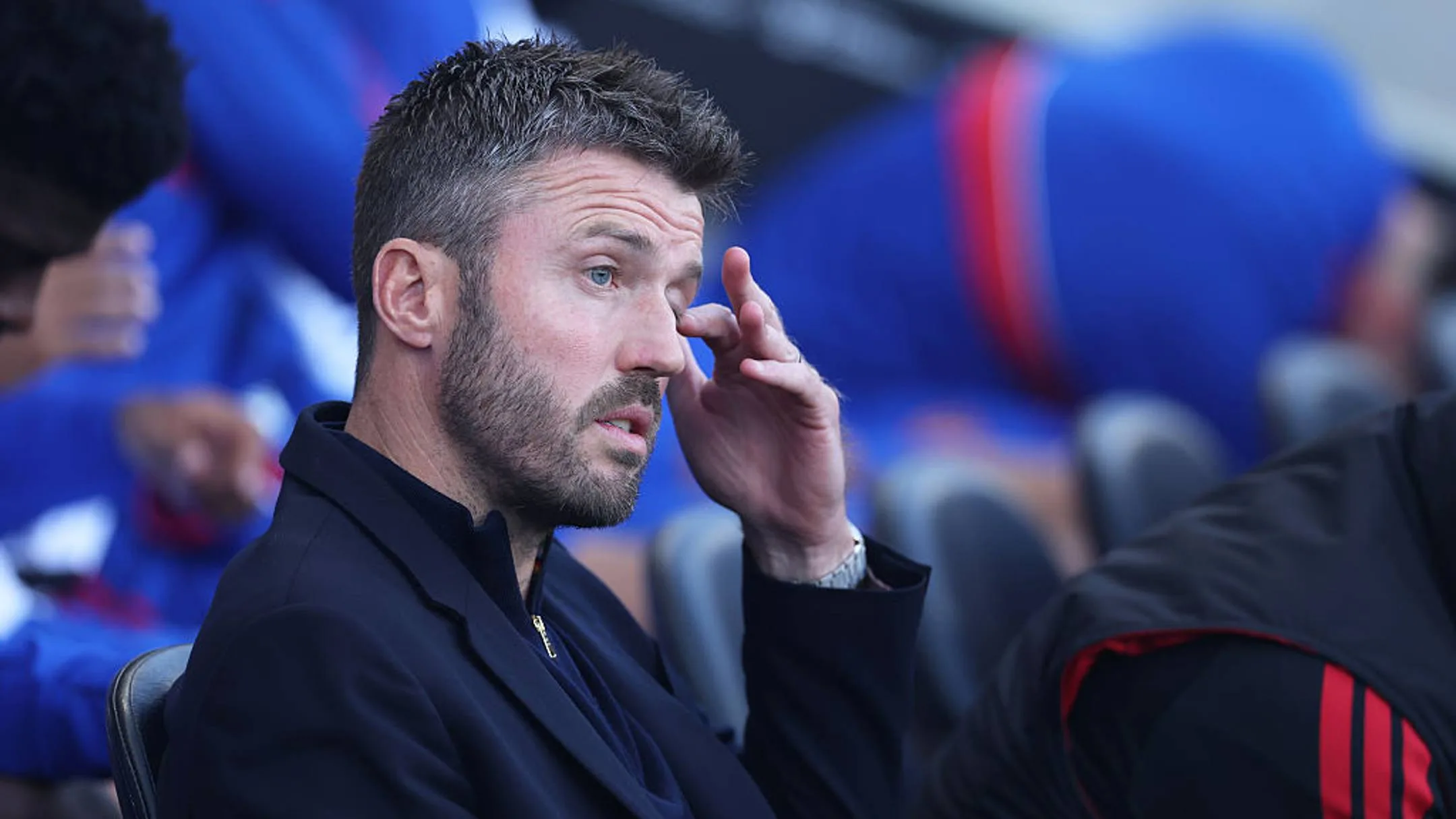
Michael Carrick has been able to shrug off the noise around his Manchester United future for now, but the scrutiny on him is already significant. A difficult start to the 2026/27 season has eroded the stability he brought after returning in January, and the mood around the club can change quickly.
United have often felt only a few poor results away from a crisis, and that tension could intensify if performances do not improve after the break. Tottenham Hotspur visit the Theatre of Dreams on Oct. 10, a fixture that could sharpen the focus even further. There is no clear indication that Carrick is under immediate threat, yet the possibility of another change in the dugout cannot be dismissed if results continue to disappoint.
If INEOS were ever pushed toward that route, there are several names that would come into view.
Eddie Howe remains an obvious point of discussion. He left Newcastle United in the summer after deciding he no longer had the energy to guide them through a rebuild following their exodus. His work there was widely admired, with Newcastle moving away from danger and back into Europe, reaching the Champions League twice and winning the League Cup in 2025. Even so, some will wonder whether he is suited to the unmatched pressure that comes with Old Trafford.
Julian Nagelsmann, once regarded as one of the game’s brightest coaching minds, has seen his reputation cool after mixed spells at Bayern Munich and with the German national team, whose 2026 World Cup ended badly. His link with Christopher Vivell could keep him in the conversation.
Fabian Hürzeler is also drawing attention after Brighton & Hove Albion’s 3–0 win over Arsenal and an encouraging start to his third season in charge. His work and his ideas have made him increasingly prominent.
Unai Emery has shown before how he can manage a rebuild, and at Aston Villa he is again handling a major turnover. The links to United remain limited, though he would require major convincing to leave.
Cesc Fábregas, meanwhile, continues to stand out through the alignment between him and the Como hierarchy, with his rise in management gathering pace.
Man Utd
Neville Questions United Work Rate After Fulham Draw
Neville criticised United’s work rate after Fulham, while Carrick rejected claims about their energy.
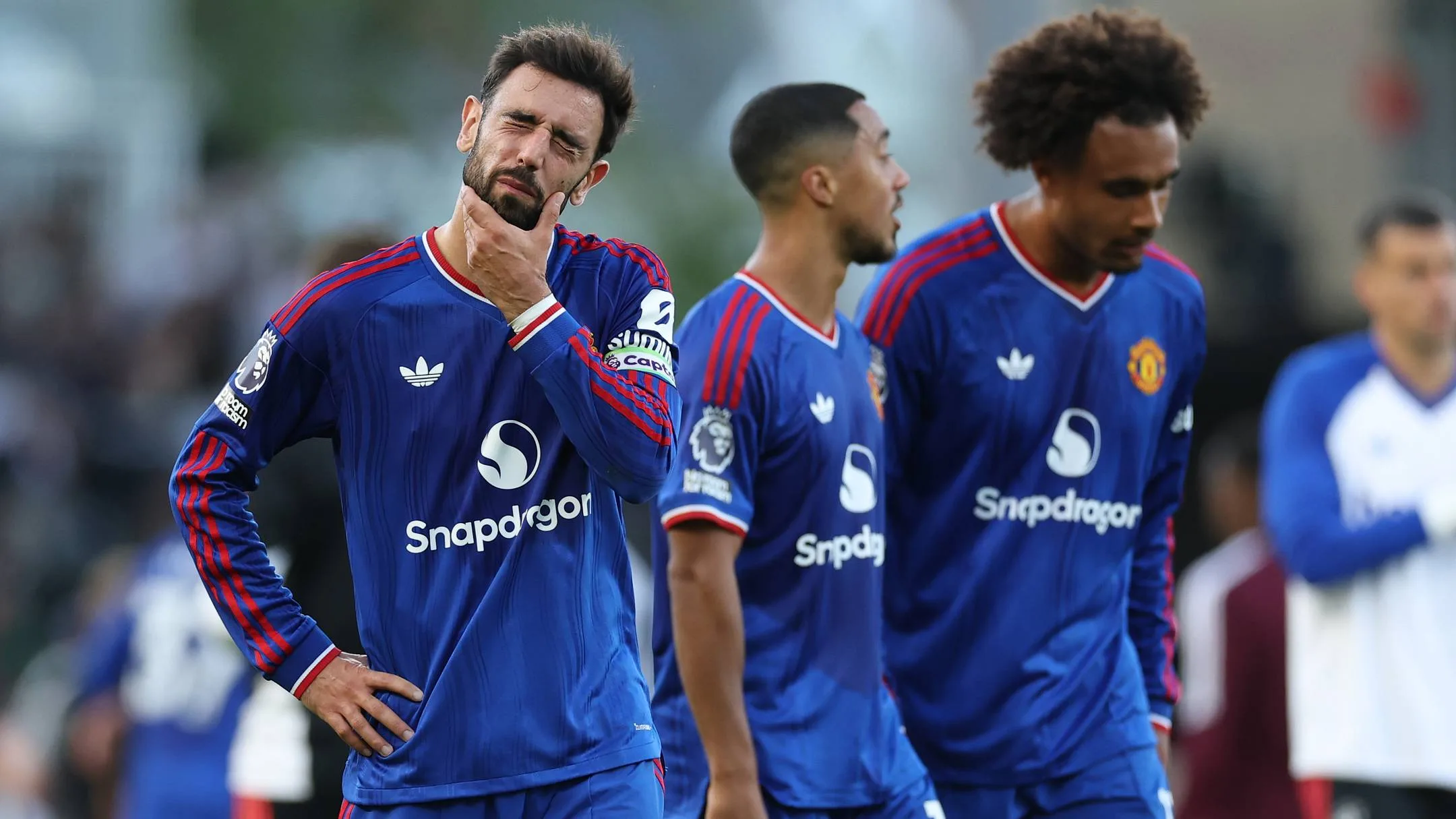
Manchester United’s draw with Fulham has intensified scrutiny around their approach, with Gary Neville labelling the performance as the “ultimate criticism” a team can face. The former defender said Michael Carrick’s side did not do enough without the ball, following a week that already included elimination from the Carabao Cup at the hands of Brighton & Hove Albion.
Carrick tried to keep the discussion focused on the broader picture, but Neville was blunt in his assessment of United’s movement and intensity. “I’ve never seen a Man Utd team walk out of possession as much as that,” Neville reflected. “Michael has just said there was nothing wrong with the team’s energy. Michael has got to stop defending them.
“I get why he’s defending them; he’s loyal, he wants his players to work for him, and obviously there’s a long way to go in the season.
“Both teams were the same. I called them mannequins. I’ve never seen a United team walk around as much as that. No alertness, no aliveness. No ‘on your toes.’ You should always be on your toes.”
Neville continued: “Very rarely do I say a team doesn’t work hard or is lacking in effort. That’s the ultimate criticism you can give a group of players.
“I’m always very careful to say that, but in those first 15 minutes of that second half, Man Utd and generally for the first 60 minutes, were a genuine disgrace. Nowhere near good enough without the ball.”
Goalscorer Cunha offered a different explanation, pointing to energy rather than effort. “In the beginning of the second half, Fulham put in more energy than us and we cannot accept this,” Cunha said, after United covered six kilometers less than Fulham across the full game.
Limited energy has been an issue for United all season, and the numbers back that up. They rank 20th in time at high intensity, 20th in sprints and 20th in time sprinting, while also sitting 17th for time walking.
Asked if he agreed with Cunha’s view, Carrick was unconvinced. “I don’t, particularly.
“The way we finished the game … it didn’t look like that for me. I was quite happy with the way we finished the game. We kept pushing. I don’t think that’s an issue, no.”
Fulham
Cunha Salvages Point as United’s Dip Draws Concern
Cunha’s late equaliser spared United defeat, but a poor second-half dip raised fresh concerns.
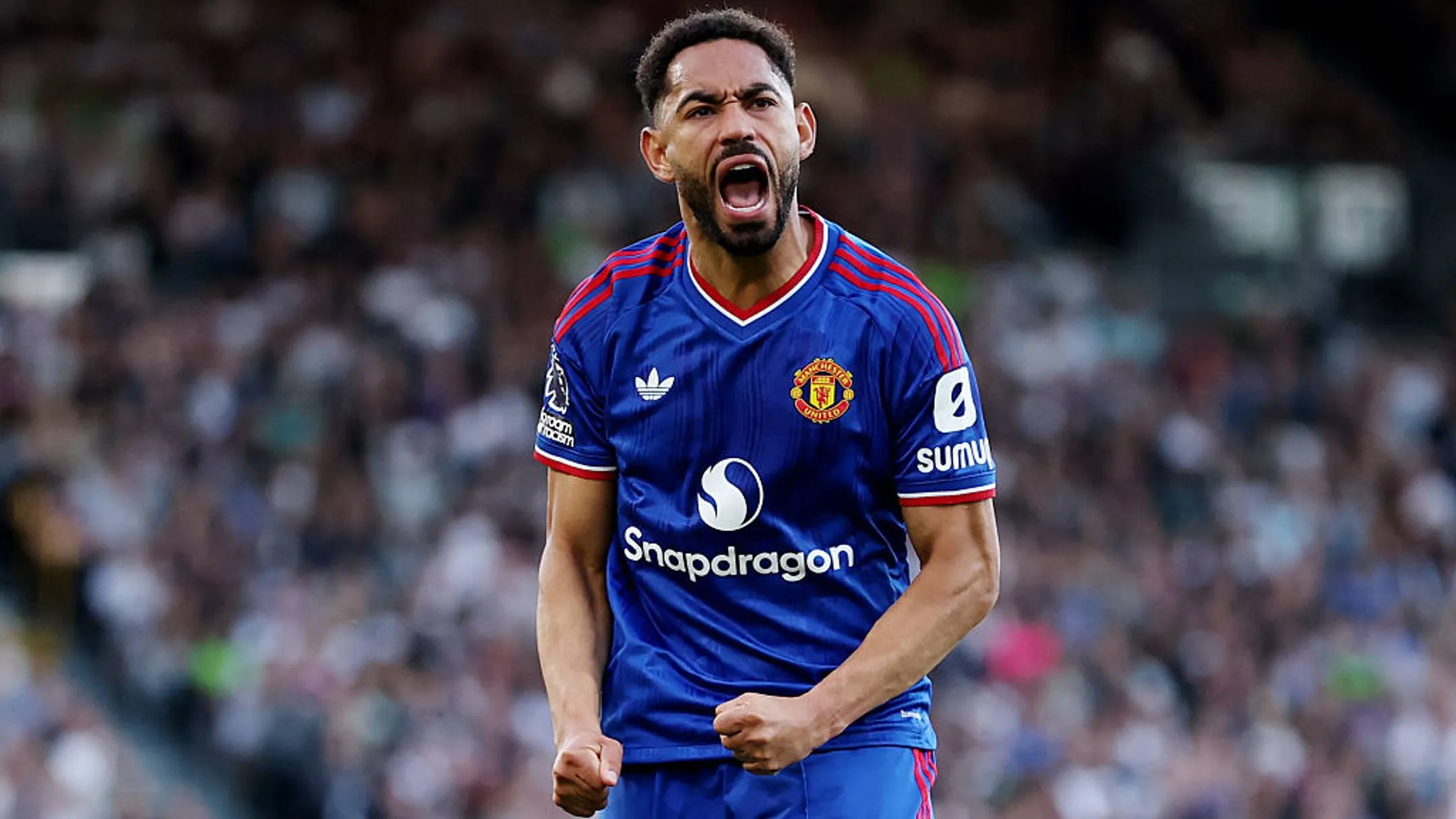
Matheus Cunha rescued a 1-1 draw for Manchester United at Craven Cottage after Lisandro Martínez’s own goal had given Fulham the advantage. It was a result that spared United a defeat, but it did little to calm the criticism that followed a second-half collapse in intensity.
The first half was lively enough without producing a goal, with United showing occasional fluency through quick passing and tidy combinations. After the interval, though, the level dropped sharply. That decline became the major talking point of the afternoon, especially after Gary Neville described the 15 minutes after halftime as the “worst” he’d ever seen his club play since he started watching the Red Devils as a 5-year-old in 1980.
Michael Carrick will take the point, but the performance against one of the Premier League’s early strugglers raised more questions than answers. United looked most dangerous when speed entered their play, yet that rhythm was too infrequent to control the contest for long.
Marcus Rashford’s display summed up the frustration. Having lost some of the momentum that followed his reintegration, the England international wasted several promising openings and never found the conviction United needed. His lack of intensity in front of goal matched the wider drop-off in the team’s attacking cohesion.
There were brighter individual showings. Senne Lammens impressed in the first half despite limited success with Fulham’s goal, while Bruno Fernandes came close to scoring when he struck the post. Kobbie Mainoo also maintained his standards before being withdrawn late on, and Cunha finished with a decisive contribution after earlier involvement in the goal sequence at the other end.
In the end, United left with a draw that felt more like a warning than a recovery.